What Happens in the Two-Hour OHV Classroom
A two-hour OHV classroom can feel like a black box when you are trying to prepare a teen rider or finish a safety course before the season. In Massachusetts, the session is part of a broader learning process, not a substitute for checking age rules, machine requirements, or trail access. Here is what to expect, what to bring, and what to confirm before you go.
What the two-hour classroom is for
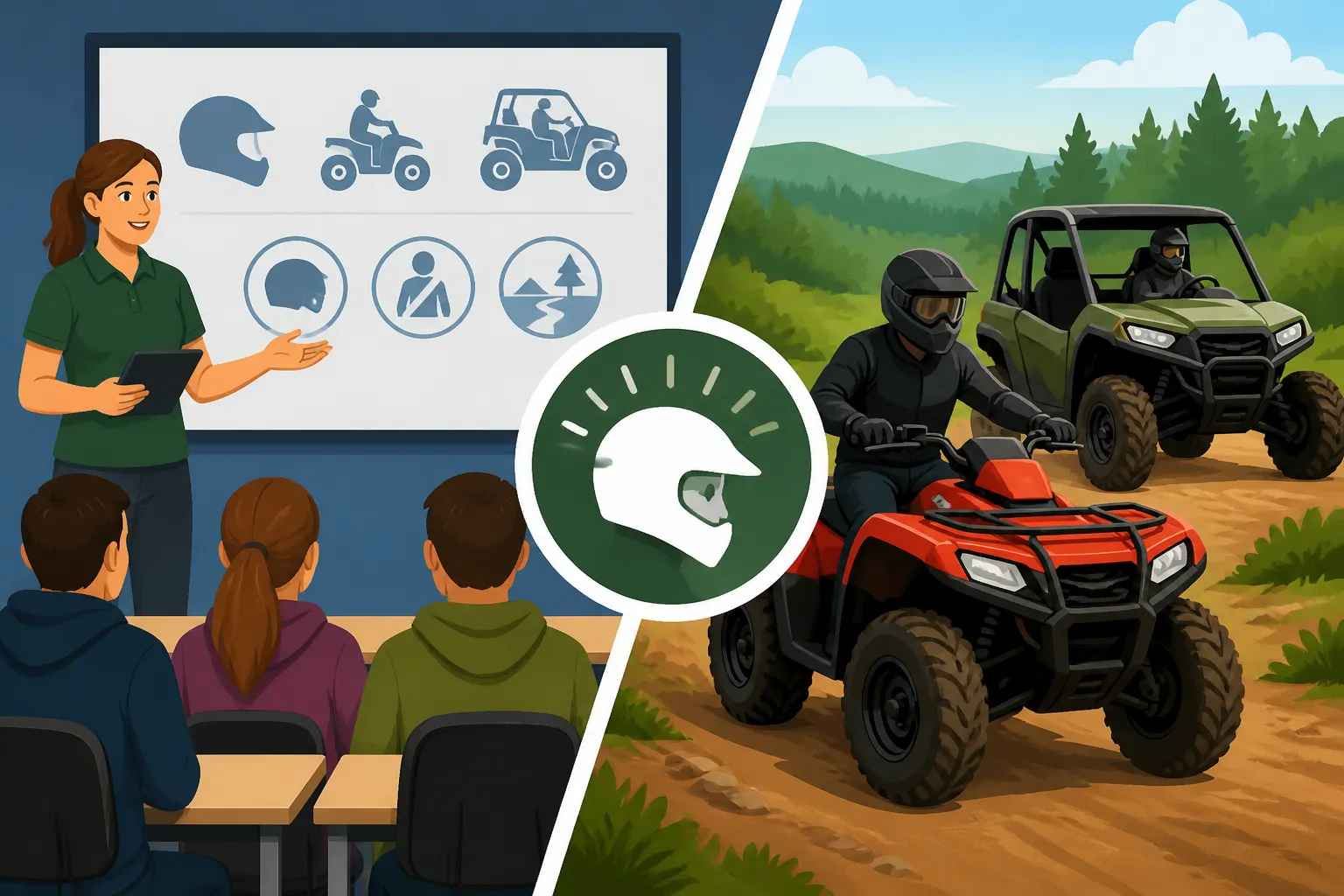
The classroom session is intended to help riders understand how to operate an off-highway vehicle responsibly and make safer decisions around other people, terrain, and the machine itself. It is not simply a lecture about how to use the throttle. Expect attention to judgment and responsibility as well as basic safety practices.
Massachusetts’ OHV safety requirements are especially important for young riders. The certificate rules depend on the rider’s age and where they ride, so do not assume that attending class automatically gives someone permission to ride any machine, on any land, or without supervision. Start with Massachusetts Safety Certificates Under 18 and check the age-specific rules in Massachusetts ATV Age Requirements.
The class is one piece of the process. A rider may also need to complete an online portion, attend an in-person session, take part in a skills evaluation, or meet other course requirements. The exact sequence and completion steps depend on the current course arrangement. The overview in Two Parts to the OHV Safety Certificate can help you understand how the classroom fits into the larger process.
A useful way to think about the session is as a structured opportunity to learn what safe riding involves before heading onto a trail. It can cover principles that apply across many situations, but it cannot prepare a rider for every trail condition or replace hands-on instruction when that is required. Riders still need to use good judgment, follow posted rules, and practice within their ability.
The classroom is also a chance to ask questions. If a rule is unclear, or you are unsure whether it applies to a particular rider, machine, or location, ask the instructor to explain the relevant distinction. Questions about age, supervision, or where a certificate must be carried are worth sorting out before the first ride rather than at a trailhead.
Classroom learning is not a riding permit
Completing a safety course does not, by itself, settle every requirement for riding in Massachusetts. Registration, safety certificates, permission to use land, and trail-specific rules are separate issues. A Massachusetts registration sticker, for example, does not mean every trail is open to your machine. Likewise, a course certificate does not grant permission to ride on someone else’s property.
Before riding, review Massachusetts Requires Its Own Registration if the machine is registered elsewhere, and check Massachusetts Trail Access Without a Pass for the difference between registration and access. If your main question is whether a particular rider needs a certificate, use the age rules and official course information rather than relying on another family’s experience.
| Part of the process | What it generally does | What to confirm |
|---|---|---|
| Online learning, if required | Introduces course material before the in-person component | Whether it must be completed before class and how completion is recorded |
| Two-hour classroom | Covers safety, responsibility, and sound riding decisions | The session location, arrival instructions, and what students must bring |
| Skills evaluation, if required | Checks practical abilities under the course’s process | Whether it is separate, what equipment is needed, and how a student can prepare |
| Certificate completion | Records that the required course components have been completed | How the certificate is issued and when it becomes available |
| Riding in Massachusetts | Requires compliance with applicable age, registration, land-use, and safety rules | The rules for the rider, machine, and specific riding location |
This table is a planning aid, not a guarantee that every session is organized the same way. Confirm the current requirements with the course provider or the appropriate state office before you travel.
What may be covered during the session
The exact lesson plan can vary, and the course provider’s current materials are the authority on what a particular class includes. In general, a responsible OHV safety class is designed to help riders recognize hazards, understand basic operating practices, and appreciate their obligations to other riders and the public.
The session may discuss topics such as preparing for a ride, using protective equipment, checking a machine, managing speed, responding to changing terrain, and avoiding risky choices. It may also address how riders can reduce the chance of collisions, rollovers, or injuries. These are broad areas of safety instruction; do not assume each one will receive equal time or be presented in a specific order.
The course may also discuss how a rider’s actions affect other people. An OHV can create noise, dust, and trail damage if used carelessly. Riders may encounter hikers, landowners, other vehicles, or uneven terrain. Good decisions include slowing down when visibility is limited, leaving room to stop, and respecting restrictions that protect land and other users.
Riding decisions matter as much as controls
New riders often focus on operating the machine: starting, steering, braking, and shifting where applicable. Those skills matter, but safe riding also means deciding when not to continue. A route that looks manageable from the parking area can become difficult because of loose ground, water, steep slopes, poor visibility, or fatigue.
A safety session may help riders think through questions such as:
- Is this route appropriate for the rider’s experience and the machine?
- Is there enough room to stop if another trail user appears?
- Can the rider see what lies beyond a rise or around a turn?
- Is the terrain changing in a way that calls for slowing down or turning back?
- Is the rider tired, distracted, or uncomfortable with the conditions?
These are practical questions to keep asking after class. A certificate is evidence of course completion where required; it is not evidence that a rider can safely handle every machine or trail.
Equipment and pre-ride checks
The class may introduce or reinforce the importance of protective gear and checking the vehicle before riding. Ask the instructor which equipment and checks are part of the course and what is expected for any practical evaluation. Requirements can differ by law, course, and riding location, so do not treat a general equipment discussion as a complete checklist for every ride.
For a family preparing a young rider, make sure the machine is appropriate for that rider and that the rider can reach and use its controls. Massachusetts has age-related restrictions that can affect which machine a young person may operate. The class does not override those limits. Review the rules for the rider’s age and machine before deciding that a particular quad or side-by-side is suitable.
A basic pre-ride routine can include checking that the controls work, looking for obvious damage, and confirming that the machine is in suitable condition for the planned ride. Follow the manufacturer’s instructions for the specific vehicle. If a rider is asked to demonstrate a skill during the course, they should know what the instructor expects rather than improvising with a machine they have not used before.
Laws and responsible conduct
The session may explain legal responsibilities alongside practical safety. Massachusetts rules can address a rider’s age, supervision, safety certification, and where riding is allowed. Those rules are not interchangeable. For example, a rider’s course completion does not replace any supervision requirement that applies to that rider.
It is also important to understand that permission and access are separate from safe operation. A machine can be registered and a rider can have completed training, yet riding may still be prohibited on a particular property or trail. Review land-use rules before setting out, and get the required permission where applicable. [Massachusetts Landowner Permission Forms] is a useful related topic when you are trying to understand permission for private land.
If you are not sure whether a class covered a particular legal detail, ask the instructor to point you toward the current rule or official guidance. An informal explanation can help you understand a topic, but the rule itself controls. Be especially careful with rules that depend on a rider’s exact age, the type of land, or the kind of machine.
How to prepare before you arrive
The best preparation is to confirm what the course requires rather than guessing from the words “two-hour classroom.” A class may expect the student to finish an online component first, bring proof of completion, or arrive with specific equipment. These details can affect whether the student can participate or receive credit for the session.
Use the provider’s current instructions and check Massachusetts Course Schedules by Season before making travel plans. Course dates, locations, registration procedures, and availability can change. If the schedule does not answer a question, contact the course office or organizer before leaving home.
A practical preparation checklist
Before the class:
- Confirm the student is enrolled. Check that the registration is complete and that you have the correct date, time, and location.
- Check prerequisites. Ask whether an online course or other work must be completed first, and how the student should show completion.
- Read the arrival instructions. Confirm when to arrive, where to park, and whether students should bring identification or paperwork.
- Ask about parent attendance. Rules can depend on the student’s age. Review Massachusetts Parent Attendance Rules and confirm whether a parent or guardian must stay for the session.
- Clarify practical requirements. Ask whether the session includes a skills evaluation and whether the student needs to bring a machine, helmet, or other gear.
- Plan for the full session. Leave enough time for check-in and any instructions before class begins. Do not assume the listed classroom time includes every administrative step.
- Bring questions. Write down uncertainties about the student’s age, machine, certificate, or intended riding location.
That checklist is more reliable than assuming the same process applies to every student. A course listing may describe the classroom portion but not explain how to complete all other course requirements. Ask for the full sequence if it is unclear.
If a parent or guardian is involved
For a young student, the parent or guardian should understand the course expectations too. This is not only a matter of attendance. Adults may be responsible for helping the rider choose an appropriate machine, arranging safe practice, and ensuring the rider follows applicable supervision and land-use rules.
If the student is required to have a parent attend, confirm whether that means the parent must be present for the entire session or only a specified part. Do not assume that dropping off the student is acceptable. Where attendance rules apply, the provider’s instructions should settle the practical details.
Parents should also discuss what the student learned after class. Ask the rider to explain how they would respond to a hazard, when they would slow down, and what they would do if a trail became uncomfortable. That conversation can reveal gaps in understanding without turning the ride into a test. It also helps make clear that finishing a course does not remove the need for adult judgment.
What to do if the schedule or instructions are unclear
Contact the course organizer before the session and ask direct questions. For example: Is this the classroom portion only? Does the student need to complete online work first? Is a practical evaluation scheduled separately? What should the student bring? When and how is completion recorded?
If the class is offered through a schedule that has limited openings, plan ahead rather than waiting until a preferred riding date is close. Massachusetts Course Schedules by Season can help with planning, but confirm the specific session details directly. If the student needs a certificate before riding on public land, leave time for every required component and for the certificate record to become available.
What to expect on the day and after class
A two-hour session is a short block of instruction, so arrive ready to listen and participate. Follow check-in directions, silence distractions, and take notes if that helps the student retain important points. If the instructor invites questions, use the opportunity to clarify rules or safety practices that are confusing.
A classroom can include explanation, discussion, and examples. The instructor may ask students to think through situations rather than simply memorize terminology. That is useful because trail decisions are rarely as simple as recalling a single rule: riders may need to account for visibility, surface conditions, other people, and their own ability at the same time.
Do not expect the classroom to replace practical riding instruction. If the course includes a separate evaluation, the skills portion has its own purpose. It may assess whether a student can perform particular tasks safely under the course’s requirements. The classroom and skills components should be treated as complementary, not as two versions of the same lesson. For details about a practical assessment, see What Riders Have to Do on the Skills Test.
Questions worth asking during or after class
If the session leaves a practical issue unresolved, ask before the student leaves or contact the course provider afterward. Useful questions include:
- Which course components must be complete before the student receives credit?
- Is a skills evaluation required, and how is it scheduled?
- How will the student know that the course record is complete?
- Does the student need to carry a physical certificate, or is another form of proof accepted?
- Which age and supervision rules apply to the student’s planned riding situation?
- Where can the family confirm current rules for the specific forest, trail, or private property?
The answer to the last question may depend on the place where the family plans to ride. A classroom instructor can explain general responsibilities, but access details can vary by land manager. Check the riding location’s rules separately, particularly if the trip involves state land or a private riding area.
Keep the certificate and course record straight
After the class, find out how the course provider records completion and how the student receives any certificate or proof. Do not assume that finishing the classroom automatically means all required course work is complete. If there is an online component or separate practical assessment, confirm that each part has been recorded before treating the process as finished. Getting the Certificate After Both Parts Are Done covers the completion step.
Keep the certificate information where it can be found when needed. Massachusetts has rules about carrying safety certificates in certain situations, so check Massachusetts Certificates Carried on Public Land and the current requirements that apply to the rider. A phone photograph or saved email may be useful as a backup, but do not assume it substitutes for any form of proof the rule specifically requires.
Before the first ride, make a separate check of registration and access. The classroom is not a registration appointment, and a course certificate does not register an ATV or UTV. If the machine is not registered for Massachusetts, review Where a Visiting Rider Applies for a Massachusetts Sticker. If the family is sorting out a home-state sticker, see Out-of-State OHV Stickers Are Not Valid in Massachusetts.
Finally, revisit the student’s readiness after the course. A young rider may understand the classroom material but still need cautious practice in an appropriate setting. Keep the first outings manageable, follow age and supervision rules, and choose terrain that matches the rider’s skills. If conditions change, turning around is a sound riding decision, not a failure.
Frequently Asked Questions
Is the two-hour classroom the whole OHV safety course?
Not necessarily. The classroom may be one part of a process that also includes online learning or a practical component. Confirm the required steps with the current course provider before assuming the student is finished.
Does attending the classroom automatically give a rider permission to use trails?
No. Course completion does not replace registration, landowner permission, age restrictions, or trail-specific access rules. Check each requirement separately.
Does a parent need to attend with a young student?
Parent attendance requirements depend on the student’s age and current course rules. Check Massachusetts Parent Attendance Rules and the instructions for the specific session before arriving.
What should a student bring?
Follow the course provider’s directions. Ask whether the student needs proof of prerequisite work, identification, a helmet, or equipment for a practical evaluation. Requirements may differ by session.
How can a family confirm that the student completed every part?
Ask the provider how completion is recorded and how the certificate or proof is issued. If the course has more than one required component, confirm that each one is marked complete.
Disclaimer
This article is for general informational purposes only and does not constitute professional advice. Laws, prices and regulations vary by location and change over time. Consult a qualified professional for guidance on your specific situation.