Checking Rules Before a Long Drive to the Berkshires
A long drive to the Berkshires can end in frustration if a trail is closed, your machine lacks the required Massachusetts registration, or your vehicle does not fit the route. Before loading up, check the rules that affect access, paperwork, parking and trail conditions. A few calls and a short document check can help you avoid towing to a place you cannot ride.
Confirm the machine and rider are ready for Massachusetts
Do not assume that an ATV or UTV registration from another state is enough to ride in Massachusetts. The state does not honor another state’s OHV sticker as a substitute for its own registration. Visiting riders generally need to arrange Massachusetts registration before riding, even if their machine is properly registered at home. Check the current process and requirements in Massachusetts Requires Its Own Registration and Massachusetts Visitors Buy a One-Year Sticker.
Registration is only one part of the check. Make sure the registration is valid for the machine you are bringing, and carry its card on the machine as required. A passenger vehicle glove box is not a useful place for paperwork once you unload at the trailhead. Read The Registration Card You Must Carry in Massachusetts and Out-of-State OHV Stickers Are Not Valid in Massachusetts before you leave.
If someone else recently bought the machine, confirm that the registration and ownership paperwork are in order. A missing bill of sale, unclear VIN or paperwork in a previous owner’s name can take time to sort out. If you are traveling with a newly purchased machine, review Massachusetts Proof of Ownership on the Trail and, if needed, What a Bill of Sale Must Show to Register. Do not wait until you arrive at a forest to find out that an application is incomplete.
Rider age can affect what you need to carry, too. Massachusetts has specific rules for young riders, including safety-certificate and supervision requirements in some situations. If anyone under 18 will ride, check the rules that apply to that rider and make sure required documents are available. Massachusetts Safety Certificates Under 18 explains why it is worth checking this before departure.
Also check the machine itself. Confirm that its registration information matches the machine, that required equipment works, and that its dimensions suit the trail you plan to use. A UTV that is too wide for a route may turn a long tow into a wasted trip. The relevant checks differ by vehicle and trail, so verify access for your particular machine rather than relying on a general statement that a forest allows OHVs.
| Before you leave | What to confirm | Why it matters |
|---|---|---|
| Registration | Massachusetts registration is valid for the machine | A home-state sticker is not a substitute for Massachusetts registration |
| Registration card | The card is with the machine | You may need to show it while riding |
| Ownership records | The VIN and purchase documents are consistent | Problems can delay registration or raise questions about ownership |
| Rider documents | Young riders have any required certificate and supervision | Age rules can affect who may ride and under what conditions |
| Machine fit | The trail allows your vehicle type and dimensions | ATV, dirt-bike and side-by-side access may differ |
| Equipment | Required equipment is present and working | A machine can be turned away or cited if it does not meet applicable rules |
Verify that the specific forest is open to your machine
“Riding in the Berkshires” is not a single access permission. Forests and trail systems have their own rules, operating periods and restrictions. Check the official information for the particular destination, not just a map pin, an old social post or a trail list that does not say when it was updated.
Three Berkshire state forests commonly associated with OHV riding are Beartown, October Mountain and Pittsfield. Access is not interchangeable: each has its own trail network and conditions. Start with the forest-specific information in Beartown State Forest Riding in Massachusetts, October Mountain State Forest Riding in Massachusetts or Pittsfield State Forest Riding in Massachusetts, depending on your destination. For a wider comparison, Massachusetts ATV Trails: Three Berkshire Forests can help you identify which area deserves a closer check.
Pay attention to the exact vehicle category. A page that mentions motorcycles does not necessarily mean ATVs or UTVs are allowed, and access for an ATV does not automatically include a side-by-side. Likewise, a route suitable for a narrow machine may not accommodate a wider UTV. If the rules do not clearly name your vehicle type, contact the forest office or managing agency before you load the trailer.
Check for seasonal limits and temporary closures close to your departure date. Massachusetts DCR OHV riding areas have a defined season, but weather, trail damage, maintenance and management decisions can affect access. Do not assume that a trail is open because it was open on a previous trip or because the surrounding forest is open for other recreation. The season information in Massachusetts DCR Riding Season and Massachusetts Trail Planning and Closures is a useful starting point, but current notices should settle the question.
A route on a map is not proof that riding is allowed along its full length. Trails may end, connect to land with different rules, or pass near roads or other restricted areas. If your ride plan relies on connecting separate forest sections, verify that the connection is authorized for OHV use. Do not plan to bridge a gap by riding on a public road or across land without permission. For route-specific planning, see Massachusetts ATV Trail Map Downloads and Massachusetts Rules for an Out-of-State Machine.
Before you commit to a destination, make a short list of the questions that matter most:
- Is the riding area currently open to OHVs?
- Are ATVs, dirt bikes and UTVs all permitted, or only certain vehicle types?
- Are there width, equipment or other restrictions that could affect your machine?
- Are any trails or access points closed?
- Is the route you plan to ride authorized from end to end?
- Is there a local notice or office update that supersedes older information?
If an answer is unclear, ask the managing office before towing. A brief confirmation can be more valuable than a long drive based on an assumption.
Check parking, permits and the route to the trailhead
A trail sticker is not the same thing as a parking pass. Massachusetts does not have a separate OHV trail pass that replaces registration, and registration does not automatically cover every day-use or parking charge. Check the access and parking rules for the specific forest and lot. Why Massachusetts Sells No OHV Trail Pass and Why the Sticker Does Not Cover Your Parking explain the distinction.
Parking arrangements may depend on the forest, the lot and whether your vehicle is registered in or out of state. Check whether payment is required, how it is collected, and whether a trailer takes up a space or needs a separate parking arrangement. Do not rely on a figure remembered from a past trip; fees and procedures can change. Review Massachusetts DCR Parking and Access Fees and confirm current details with the destination.
If the plan includes Tolland, be especially careful about the kind of riding the route allows. Tolland’s trails are associated with street-legal motorcycles, not general ATV access. A free ranger-station permit does not change which machines may use the trails. Confirm that both the vehicle and the required permit match the current rules by checking Tolland’s Free Permit From the Ranger Station and Tolland’s 15 Miles Are for Street-Legal Bikes.
Your route to the forest matters as much as the trail map. A navigation app may direct you along a road or private connection that is not legal for OHV riding. Plan to transport the machine to an authorized riding area and unload at a permitted location; do not treat ordinary roads as connectors between trails. Confirm trailer parking, gate access and the address of the actual staging area rather than just the forest’s general name.
Give yourself a practical backup plan. If the intended trailhead is closed or full, do you have another permitted destination that allows your machine? Is that second location actually open, or would it require a separate check? A backup is useful only if its registration, machine-access and parking rules have also been confirmed. Massachusetts Trail Conditions Before You Tow is a helpful reminder to check conditions close to departure, not just when building the itinerary.
Make a final check shortly before departure
Trail information can change between the day you plan and the day you tow. Recheck official notices a day or two before leaving, then check again on the morning of the trip if the managing agency provides current updates. Look for closure notices, storm damage, maintenance work, parking changes and seasonal restrictions. If a notice is vague, contact the office and ask whether it applies to the trailhead or route you intend to use.
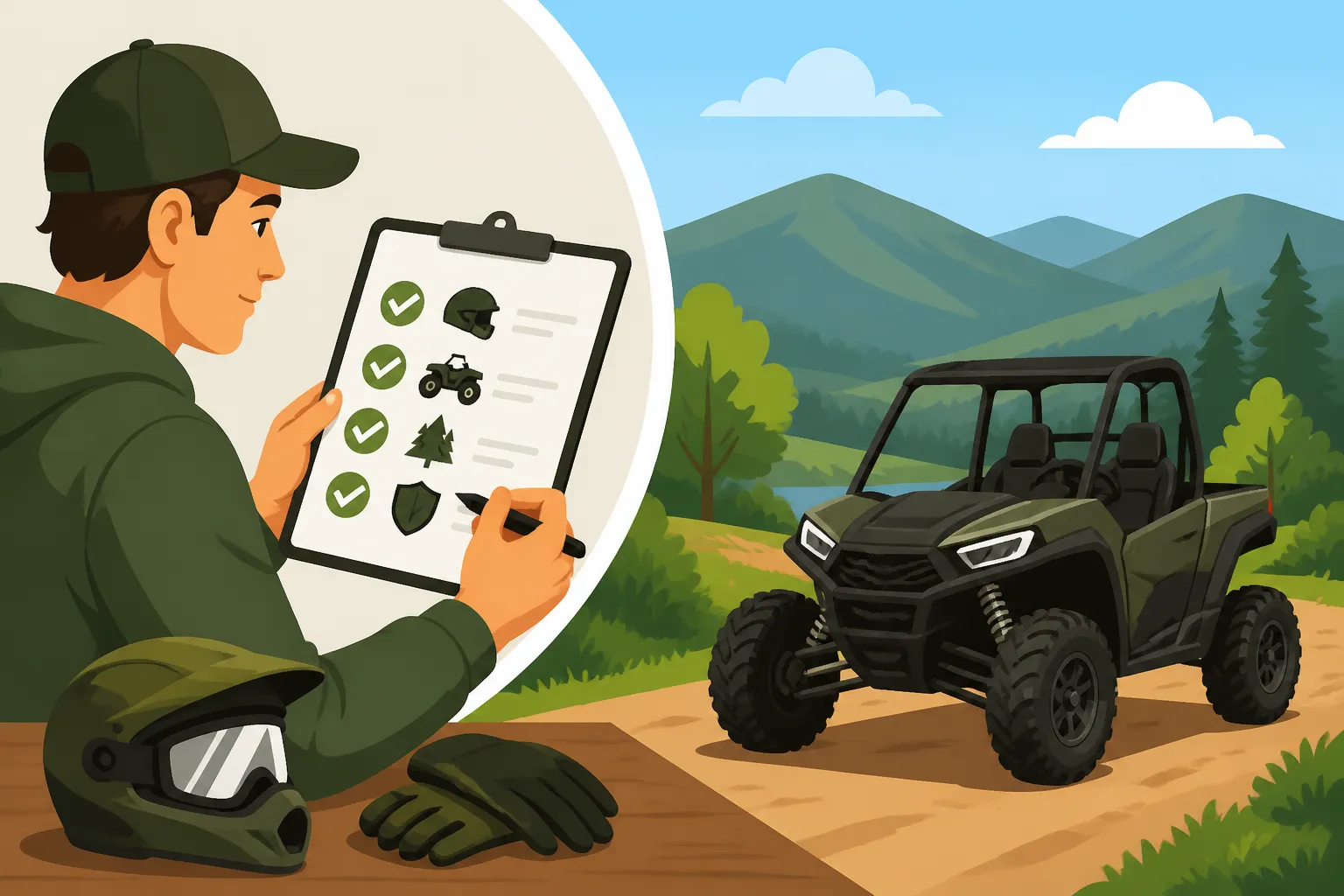
Use a compact trip checklist so a small omission does not undo the planning:
- Massachusetts registration is valid and the registration card is with the machine.
- The rider has any required certificate, and the supervision plan follows Massachusetts rules.
- The destination is open to the specific type and size of machine.
- No current notice closes the trail, lot or access road you need.
- Parking and any local permit requirements are understood.
- The planned route stays on authorized riding areas.
- The trailer, tie-downs, fuel and basic recovery gear are ready.
- You have the forest’s contact details and a realistic backup plan.
Keep important information accessible after unloading. Save the destination address and any current notice offline, since cell service can be unreliable in hilly or wooded areas. A paper map can be useful when a phone loses signal, but it does not replace current closure information. If you need a simple way to keep a printed map dry, a waterproof map case from Amazon may help; check that it is large enough for the map you intend to carry.
If you cannot confirm an essential rule, treat that as a reason to pause rather than a reason to guess. In particular, do not make the drive on the assumption that a different state’s sticker is accepted, that every Berkshire forest allows every machine, or that a parking fee is included with registration. Confirm the point with the relevant agency and keep a note of what you were told. That small step can save the cost and hassle of a trip that ends at the gate.
Disclaimer
This article is for general informational purposes only and does not constitute professional advice. Laws, prices and regulations vary by location and change over time. Consult a qualified professional for guidance on your specific situation.