What a Visitor Pays to Stay in the Berkshires
A Berkshire riding weekend can cost more than the room or campsite you book: visitors may also need to budget for Massachusetts registration, parking, fuel, and meals. This guide breaks down the main expenses, explains how lodging choices affect your total, and shows how to check trail access before you tow a machine across the state line.
Start With Riding Access and Visitor Requirements
A home-state sticker may not be enough
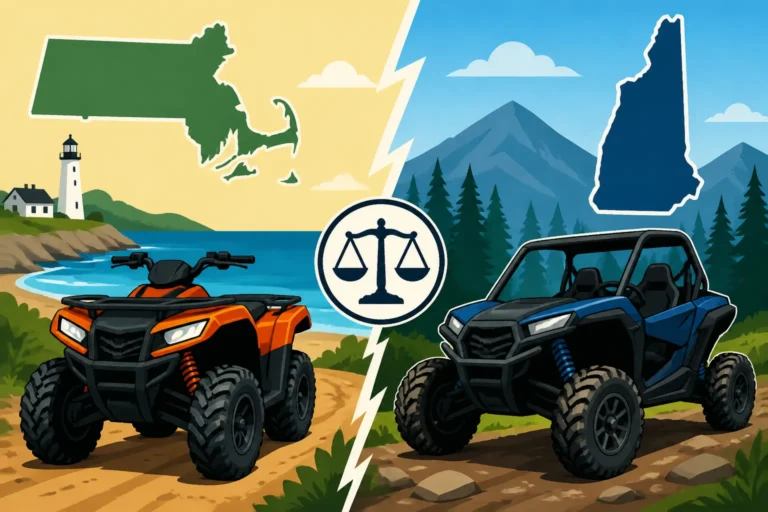
If you are bringing an ATV or UTV from another state, check Massachusetts registration requirements before leaving home. A registration or sticker from your home state may not grant permission to ride in Massachusetts. Visitors generally need to arrange Massachusetts registration for their machine, and the requirements can differ from those for residents. Start with [Massachusetts Stickers for a Visiting Machine] and [Out-of-State OHV Stickers Are Not Valid in Massachusetts].
This is an easy cost to overlook because it is separate from lodging and forest parking. It is also a practical reason not to treat a Berkshire trip as a spontaneous detour: if your paperwork is incomplete, you could arrive with a machine you cannot legally ride on the trails you planned to visit. Confirm the current application steps, documents, and fees with the registration office before traveling.
Registration is not the same as a trail pass, either. A Massachusetts sticker does not automatically cover parking, camping, or admission to a private riding facility. For a helpful breakdown of that distinction, see [Why Massachusetts Sells No OHV Trail Pass]. Build each expense into its own line of your trip budget rather than assuming one payment covers everything.
Check the forest and trail rules before booking
The Berkshires’ best-known state forest OHV riding areas include Beartown, October Mountain, and Pittsfield State Forest. Their locations can make them useful bases for exploring towns such as Lee, Great Barrington, Pittsfield, or Becket, but nearby lodging does not guarantee that a trail is open or suitable for your machine. Seasonal closures, weather, maintenance, and access rules can affect your plans.
Before you commit to a nonrefundable reservation, check the latest information for the specific forest you intend to ride. A route-planning app such as onX Offroad can help you study the area and organize a trip, but don’t treat any map as a replacement for official land-use rules or current closure notices. Confirm the riding area’s rules and the permitted vehicle types directly with the relevant forest office.
This double-check matters especially if you are traveling with a side-by-side. A trail that works for a narrower machine may not accommodate a wider vehicle, and some riding areas limit vehicle types. [Massachusetts Trails That Allow Side-by-Sides] and [Massachusetts ATV Trails: Three Berkshire Forests] are useful starting points for narrowing down your options.
Compare Lodging Choices and Their Full Costs
Camping can keep lodging costs down, but it is not automatically the cheapest plan
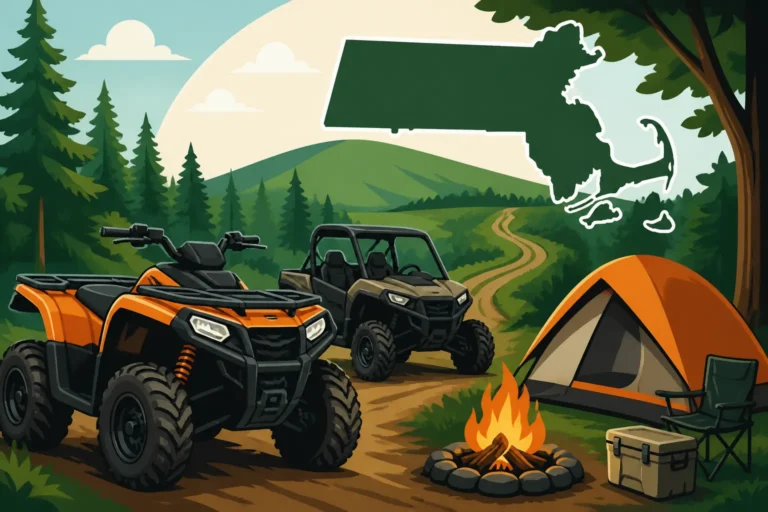
Camping may be an appealing option if you want to spend several days riding without paying for a hotel room each night. Before you count on it, confirm that the campground is open for your dates, accepts your type of camping setup, and has space available. A campground near a forest is not necessarily inside the riding area, and staying nearby does not mean you can ride directly from your site to the trails.
Remember to include more than the campsite reservation in your comparison. You may need to account for parking, firewood if permitted, meals, shower access, and the cost of bringing or renting camping equipment. If you are towing a trailer, a campsite’s turning room and parking arrangements matter too. A cheaper site can become less convenient if you need to make a separate drive to unload your machine or reach the trailhead.
The Berkshire camping options and their rules can differ by location, so check each provider’s own booking page for current availability, fees, and policies. [Massachusetts Camping Near Riding Areas] and [Massachusetts Camping Fees for Visitors] can help you identify the kinds of details to verify. For an overnight stay close to riding, [Camping Overnight Next to a Berkshire OHV Trail] offers another useful angle to consider.
Hotels, inns, and rentals trade campsite logistics for convenience
A hotel, inn, or vacation rental around Pittsfield, Lee, Great Barrington, or North Adams can make a trip more comfortable, particularly if you want a warm shower, a proper bed, and somewhere to dry gear after a wet ride. But the nightly rate is only part of the calculation. Ask whether the property allows trailers, where the machine can be parked, and whether outdoor equipment can be stored securely.
Location can change your total in less obvious ways. A place that looks inexpensive may add a long drive to the riding area, extra fuel use, and more time spent hauling equipment on local roads. A slightly more expensive stay closer to your intended forest could be worthwhile if it reduces repeated towing or lets your group return to town for meals without a long detour.
Compare the whole stay rather than the headline rate. Check cancellation terms, cleaning or service charges, parking arrangements, and whether your group needs one large rental or multiple rooms. If you are traveling with several riders, split the total lodging and travel costs across the group before deciding that one option is clearly cheaper.
| Trip expense | What to check before booking | Why it can change your total |
|---|---|---|
| Massachusetts OHV registration | Visitor requirements, paperwork, and current fee | A home-state sticker may not be accepted |
| Lodging | Nightly cost, added charges, cancellation terms | The advertised rate may not include every charge |
| Camping | Site availability, equipment needs, and campground rules | Gear, parking, and meal plans add to the stay |
| Forest parking | Whether a fee applies and how visitor status is handled | Parking is separate from machine registration |
| Fuel and hauling | Distance to the forest, trailer setup, and tow vehicle needs | Longer drives can increase fuel use and travel time |
| Food and supplies | Whether you will cook, eat out, or pack for the trail | A remote ride day can make last-minute purchases harder |
| Trail planning | Access rules, closures, and vehicle restrictions | A route change can mean extra driving or a missed ride |
Budget for Parking, Travel, and the Riding Day
Separate parking and camping from registration
Visitors often assume that registering the machine means they have paid for all riding-related access. In practice, registration, forest parking, and camping are separate items to investigate. Some locations may charge for parking, and rules can vary by forest, season, and visitor status. Check the specific forest’s information before you arrive, especially if you are bringing a vehicle and trailer that need more than one parking space.
If you are staying at a campground, ask whether the camping reservation includes parking for your tow vehicle and trailer, or whether trailhead parking is handled separately. Don’t assume a campground fee covers access to a riding area, or that a trail sticker covers an overnight stay. Keeping those costs separate in your budget makes it easier to compare a campground-based trip with a hotel stay.
You can use [Massachusetts Day Use Fees at a Forest] and [Massachusetts Camping Reservations at a Forest] as prompts for what to verify. When you check an official page or call an office, ask about the exact forest, your planned dates, the kind of vehicle you are bringing, and whether a trailer changes the parking arrangement. That is more useful than relying on a fee you heard about from someone who visited a different location.
Account for the drive, not just the destination
A weekend budget should include the cost of getting the machine to the Berkshires. For many visitors, that means fuel for both the tow vehicle and the ATV or UTV, plus any trailer-related expenses. Add meals and supplies for the drive, and consider whether your group will need a stop before reaching a trailhead. A remote location can make a forgotten item feel more expensive in both money and time.
Plan your route around your actual riding area rather than using “the Berkshires” as if it were one compact destination. Pittsfield, Becket, Great Barrington, Lee, and North Adams are spread across the region. Pick your forest first, then compare lodging and fuel stops based on that location. onX Offroad can help you review routes and organize waypoints, but confirm that the roads you plan to use are appropriate for your tow vehicle and that the trail itself is authorized for your machine.
Build in a backup plan for poor weather or a closure. A ride that becomes unavailable can leave you paying for lodging while spending the day driving around instead. Check trail conditions shortly before you leave, and have a second activity in mind that does not depend on OHV access. [Massachusetts Trail Conditions Before You Tow] and [Checking Rules Before a Long Drive to the Berkshires] are useful reminders to make that final check.
Make a Practical Berkshire Trip Budget
Use a per-person and per-machine checklist
Start by listing costs that apply to the whole group, such as the rental or campsite, tow vehicle fuel, and trailer parking. Then separate expenses that apply to each rider or machine, including registration requirements, meals, and any equipment or safety needs. This prevents a common budgeting mistake: dividing the lodging bill among friends while forgetting that each machine may involve its own paperwork and access considerations.
A simple planning sequence helps:
- Choose the forest or riding area you intend to visit.
- Confirm the area’s dates, vehicle rules, and trail access.
- Check Massachusetts registration requirements for each visiting machine.
- Compare lodging options based on distance, trailer parking, and cancellation terms.
- Ask whether parking and camping are charged separately.
- Estimate fuel and food for the drive and riding days.
- Recheck closures and conditions shortly before departure.
Keep the current prices in your own notes after checking the relevant official or booking pages. Fees and availability can change, and a rate for one campground or forest should not be assumed to apply somewhere else. If your group is splitting costs, agree in advance on how shared expenses such as fuel, campsite charges, and food will be handled.
Keep a little room in the budget for changes
Even a well-planned ride weekend can change. Rain may make a route unsuitable, a trail may be closed, or a lodging arrangement may not work for a trailer. A modest cushion can help cover an extra meal, a longer drive, or a change of plan without turning a relaxing trip into a series of stressful decisions.
Before you leave, save the registration information, lodging confirmation, and forest contact details somewhere you can reach them without a strong cell signal. Download or otherwise save the maps you need in advance. onX Offroad may be useful for organizing planned routes and reviewing map information, but keep official access details available as well, especially where trail boundaries, seasonal restrictions, or closures matter.
The best-value Berkshire stay is not always the one with the lowest nightly rate. It is the one that fits your riding area, accommodates your trailer and group, and keeps the full combination of lodging, registration, parking, fuel, and meals manageable. A little checking before you book can spare you from arriving at a closed trailhead or discovering that a “cheap” stay requires more driving and extra fees than you expected.
Disclaimer
This article is for general informational purposes only and does not constitute professional advice. Laws, prices and regulations vary by location and change over time. Consult a qualified professional for guidance on your specific situation.