$50 a Night for a Berkshire Forest Cabin
A Berkshire cabin can make an ATV weekend feel much easier: you have a dry place to sleep, room to sort gear, and a base for an early start. The catch is that a cabin’s nightly rate is only one part of the cost—and a nearby cabin does not automatically mean you can ride from its driveway to a legal trail.
What a $50-a-night Berkshire cabin budget should cover
Treat the nightly rate as a starting point
A figure of $50 a night can be a useful planning baseline for a modest forest cabin, but it should not be treated as a guaranteed price for every location or date. Rates and booking conditions can vary by cabin, season, residency, and the reservation details. Before planning around a particular amount, check the listing for your dates and confirm what the quoted rate includes.
The nightly charge may not tell the whole story. A reservation could involve additional charges, a minimum stay, or rules about deposits and cancellations. The listing should also explain what is provided inside the cabin. A simple cabin may offer shelter and basic furnishings without supplying bedding, cookware, or the comforts you would expect at a hotel. If the details are unclear, ask before you book rather than discovering the gap after a long drive west.
It helps to budget for the whole stay rather than comparing cabin prices alone. Add the cost of getting your ATV or UTV to the area, fuel, meals, any forest parking or camping charges that apply, and supplies you need to bring. If you are arriving with a trailer, include the practical cost of finding suitable parking. For a wider view of overnight expenses, see [Massachusetts Camping Costs Added Up] and [Massachusetts Cabins Near a Forest].
Check what “cabin” means before you reserve
Cabins can differ quite a bit in comfort and setup. One might be a basic shelter where you bring sleeping gear and cooking supplies; another may have more amenities. Do not assume that a cabin includes electricity, a private bathroom, running water, or a place to dry wet riding clothes. Read the property description carefully and ask the managing office about anything that affects your plans.
Think through an ordinary evening after a ride. Your group returns dusty and tired, the weather turns damp, and someone needs to charge a phone or dry gloves. If the cabin has limited facilities, you may need a cooler, lantern, power bank, extra towels, and a plan for washing up elsewhere. A little preparation can turn a rustic stay into a comfortable one; assuming hotel-style amenities can make it frustrating.
Also check the rules for your group and your gear. Confirm how many people the cabin can accommodate, whether pets are allowed, and whether you can park a truck and trailer nearby. A cabin that sleeps your group may still be a poor fit if its parking area is tight or the access road is unsuitable for a loaded trailer. For broader booking considerations, review [Booking a Cabin for a Weekend of Riding] and [Massachusetts Cabin Reservations at a Forest].
| Cabin detail | Why it matters for an ATV or UTV weekend | What to confirm |
|---|---|---|
| Total reservation cost | The nightly rate may not be the full amount due | Charges, deposit rules, and cancellation terms |
| Bedding and cooking | Basic cabins may require you to bring supplies | What is provided and what you must pack |
| Bathroom and water access | Facilities may be separate or limited | Where the nearest facilities are and when they are available |
| Parking and trailer space | A cabin may not be set up for a tow vehicle and trailer | Vehicle limits, parking layout, and access |
| Ride access | Nearby lodging does not guarantee legal trail access | Where you can ride and how you reach the trailhead |
| Check-in details | A late arrival can be awkward if access instructions are unclear | Arrival window, key pickup, and office contact |
Choose a cabin around legal riding access
Lodging near a trail is not the same as a trail connection
Berkshire place names can make distances sound deceptively simple. A cabin may be in the same broad area as a riding forest without being close to an authorized OHV entrance. Even when a road appears to connect two locations on a map, that does not make it legal to ride there. Plan to transport your machine to an approved riding area unless the land manager clearly confirms that riding access is permitted.
Before choosing a cabin, identify the riding area you actually intend to use. Beartown State Forest, October Mountain State Forest, and Pittsfield State Forest are among the Berkshire areas people look into for OHV riding, but trail access, allowed vehicle types, and operating conditions are not interchangeable. Check the specific forest’s current rules and trail information rather than assuming that a general “Berkshires” listing tells you what is open. The guides to [Massachusetts ATV Trails: Three Berkshire Forests] and [Massachusetts Trails That Allow Side-by-Sides] can help you narrow down the questions to ask.
A cabin that adds a short drive to the trailhead may be the better choice if it has easier trailer parking, clearer booking terms, or more reliable access. A closer cabin can be less convenient if the road is narrow, the parking area is unsuitable, or there is no legal route to the riding area. For trip planning, compare actual drive-to-trailhead logistics rather than judging by map distance alone.
Confirm the cabin’s location and riding rules separately
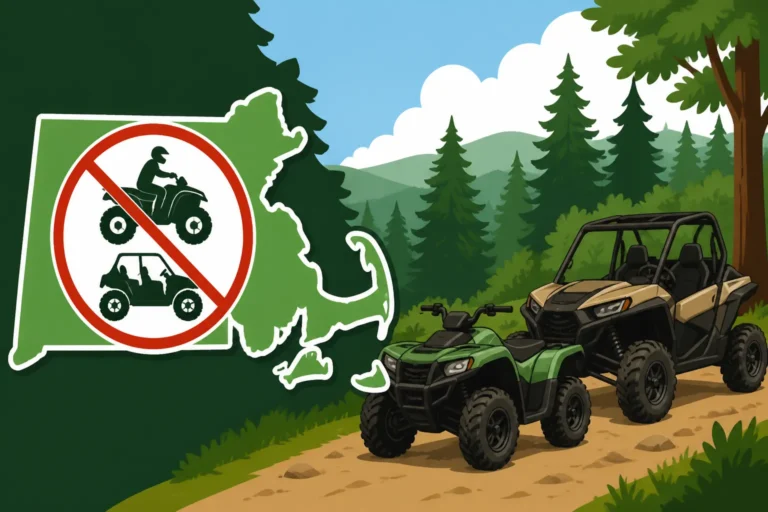
Do not infer riding permission from a cabin’s location on public land. A forest can offer overnight accommodations while restricting OHV use to designated places, routes, seasons, or vehicle types. Some nearby areas may prohibit ATVs altogether. For example, check the specific rules before treating a cabin at Savoy Mountain State Forest as a base for riding; see [Why Savoy Mountain State Forest Bans ATVs].
Ask the cabin or forest contact a direct question: “Where can a registered ATV or UTV be ridden from this location, and where must it be trailered?” That wording is more useful than asking whether the cabin is “near trails,” since that phrase can mean hiking paths, mountain-bike routes, or roads that are not open to OHVs. If you are bringing a side-by-side, confirm that the designated trails permit that vehicle and are wide enough for it.
A map app can help you understand the shape of the area and estimate the drive between a cabin and a trailhead. For example, onX Offroad can be useful for planning and reviewing route options, but treat it as a planning aid rather than permission to ride. Check official land-manager information for closures and access rules. A mapped line is not a substitute for a posted rule, a current closure notice, or written approval where permission is required.
Plan the overnight stay around the ride
Book with the trailer and group in mind
Before you reserve, picture your arrival rather than only the night’s sleep. Will your tow vehicle fit in the designated parking space? Can you unload without blocking another visitor? Is there a secure, permitted place for the machine overnight? These questions matter especially for groups arriving with more than one vehicle or trailer. A low nightly rate is less appealing if the property cannot accommodate the equipment you are bringing.
Contact the booking office if the listing does not answer those questions. Be specific about the vehicle: say whether you have an ATV or a side-by-side, how many trailers are involved, and whether you need to park overnight. Do not assume that a cabin’s parking area can be used for loading, washing, or mechanical work. Ask about those activities directly and follow the property’s rules.
If you are booking for a busy weekend or foliage season, verify arrival instructions and cancellation terms before paying. Have a backup plan in mind in case the cabin is unavailable or your riding area closes. [Massachusetts Trail Conditions Before You Tow] is a useful reminder to check access before committing to the drive. You can also use onX Offroad to organize your planned route, then cross-check it with official trail and forest updates before leaving home.
Pack for a basic cabin, not a hotel room
A simple packing list prevents the familiar end-of-day scramble when you realize the cabin has shelter but not the supplies you expected. Bring bedding unless the listing clearly confirms it is provided. Pack a headlamp or lantern, phone chargers and a power bank, towels, drinking water, food, and any cooking equipment the cabin description requires. Keep clean clothes separate from dusty riding gear so the whole sleeping area does not end up smelling like the trail.
For wet or muddy conditions, bring a change of footwear and a bag for dirty clothing. A small first-aid kit, basic personal medications, and a way to keep food secured are sensible additions. If you are travelling with children, older riders, or anyone with specific mobility needs, confirm the route from the parking area to the cabin and the facilities available before you book.
A paper note with the cabin address, check-in directions, and the contact number for the managing office is useful if phone service is unreliable. Save the trailhead location and your return route offline as well. onX Offroad may help with offline trip planning where its features support your needs, but do not rely on any single app for emergency communication or confirmation of legal access. For a remote ride, tell someone your plan and expected return time.
Build a realistic cabin-and-riding weekend budget
Add the costs that sit outside the nightly rate
The cabin is only one line in your trip budget. Include fuel for the tow vehicle and riding machine, food, parking charges where applicable, registration requirements, and any safety or equipment needs. A trip can become more expensive than expected when people focus on lodging first and leave trail access, transportation, and meals until the last minute.
A simple planning worksheet helps you compare two cabins fairly. Write down the full reservation total, how far you will drive to the legal trailhead, whether trailer parking is available, and what supplies you need to bring. Then compare the combined cost and convenience—not just the advertised nightly figure. One cabin may cost slightly more but reduce driving, while another may be cheaper but require extra meals out or a longer tow each morning.
Keep a little flexibility in the plan. Weather, trail conditions, or a closure may change the ride you expected to take. Check updates before departure and again before unloading. [Massachusetts Trail Closures After a Storm] and [Massachusetts Trail Planning and Closures] are relevant checks when conditions have been wet or changeable. If a trail is closed, do not ride around a barrier or look for an unofficial detour; change the plan.
Use a short pre-booking checklist
Before committing, make sure you can answer these questions:
- What is the complete reservation cost for the dates you want?
- What does the cabin provide, and what must your group bring?
- Where can you park the truck, trailer, and riding machine?
- Which authorized riding area will you use, and how will you get there?
- Are your vehicle type and planned riding dates allowed at that area?
- What are the check-in, cancellation, and after-hours contact arrangements?
- Have you checked for trail closures and access changes close to departure?
If you can answer those questions, the cabin is much easier to evaluate. A $50 nightly figure may be attractive, but it only tells you whether the shelter cost looks manageable. The best stay is the one that fits your group, equipment, and legal riding plan without surprises at check-in or at the trailhead.
Disclaimer
This article is for general informational purposes only and does not constitute professional advice. Laws, prices and regulations vary by location and change over time. Consult a qualified professional for guidance on your specific situation.