Visitors Cannot Ride on a Home-State Sticker
A valid ATV or UTV registration from your home state may feel like enough paperwork for a trip, but Massachusetts does not accept another state’s sticker as a substitute for its own registration. Before you unload at a trailhead, sort out the Massachusetts sticker, where it goes, and what it does—and does not—allow.
Why a home-state sticker is not enough
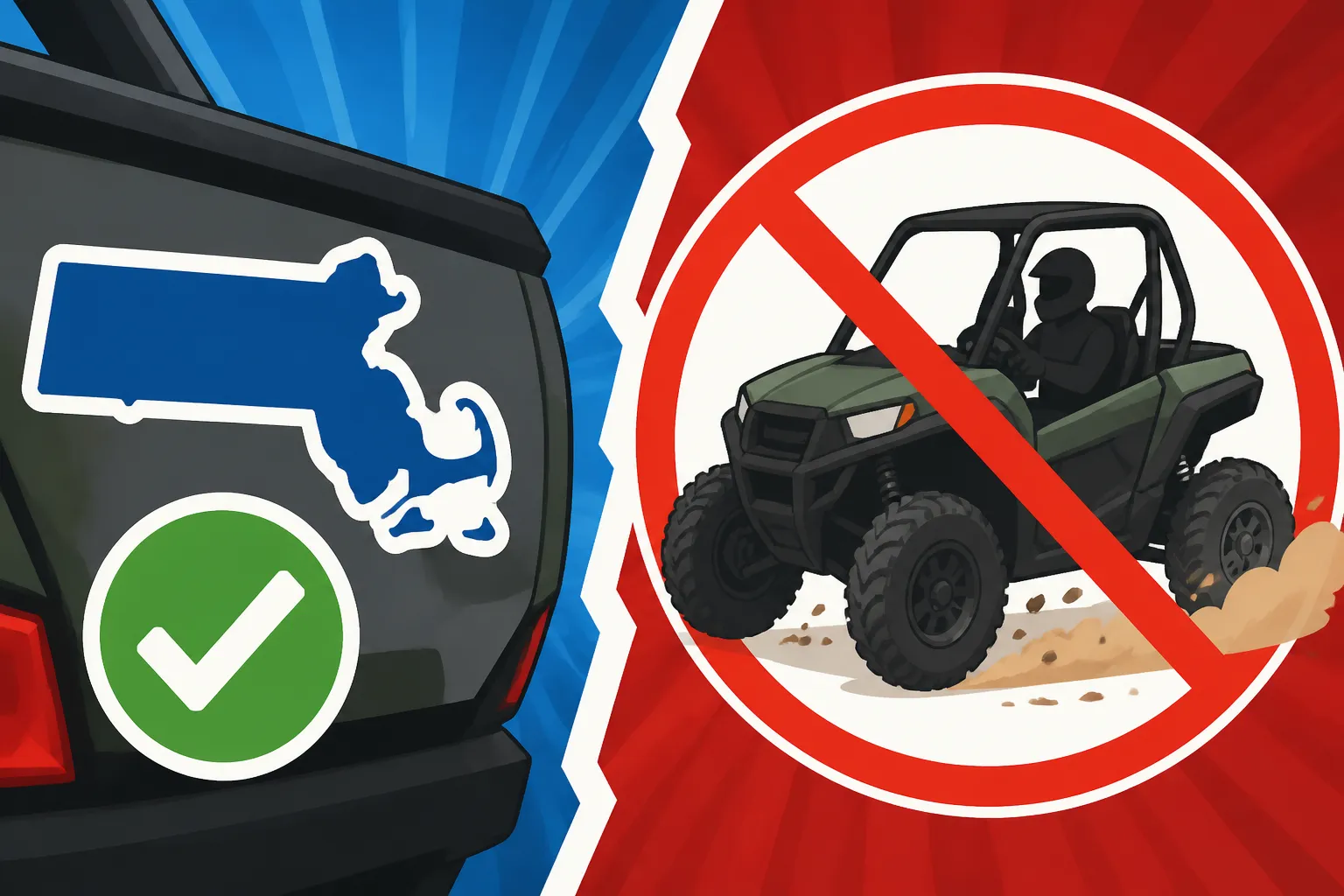
Massachusetts requires its own OHV registration for machines ridden in the state. A registration or trail sticker issued by another state does not replace it, even if your machine is properly registered at home. The rule applies to visitors as well as Massachusetts residents. See Out-of-State OHV Stickers Are Not Valid in Massachusetts and Massachusetts Rules for an Out-of-State Sticker for related details.
For a visitor, the practical answer is to apply for Massachusetts registration before riding. The visitor registration is separate from your home-state registration: do not assume you should cancel or remove the registration required where you live. Keep your home-state paperwork as needed for transport and home-state use, and follow Massachusetts instructions for its registration and decals.
| What you have | Does it replace Massachusetts registration for riding in Massachusetts? | What to do |
|---|---|---|
| A current sticker from your home state | No | Apply for Massachusetts registration |
| A registration card from your home state | No | Keep it as home-state paperwork; obtain the Massachusetts registration too |
| A Massachusetts visitor registration | It satisfies the Massachusetts registration requirement, subject to current rules | Carry the required card and display the decals correctly |
| A Massachusetts registration but no permission to use a particular property | No | Confirm access with the land manager or owner |
This is a registration requirement, not a judgment about whether your machine is road-legal or registered for ordinary street use elsewhere. An ATV or UTV sticker is not a substitute for permission to ride on a trail, forest road, private parcel, or other property. Registration and access are separate questions.
The safest approach is to check the current Massachusetts requirements before leaving home, rather than relying on what a neighboring state accepts. Registration rules and application procedures can change. If you are unsure whether your machine or situation qualifies for a visitor registration, ask the Massachusetts registration office before you tow it to a riding area.
How visitors get the Massachusetts sticker
Visitors apply for a Massachusetts OHV registration, rather than trying to convert a home-state sticker at a trailhead. The state’s registration process is handled through the Environmental Police, not by treating an out-of-state sticker as reciprocal coverage. The Where a Visiting Rider Applies for a Massachusetts Sticker article covers the visitor application route, and Massachusetts Online Registration System explains the online option.
Prepare the machine and ownership details before you begin. Depending on how you acquired it, you may need documents that establish ownership, such as a bill of sale or manufacturer’s certificate of origin. A visitor should not assume that a home-state registration card alone will satisfy every Massachusetts application requirement. Check the current instructions for acceptable documents, identity information, and payment methods.
A straightforward preparation sequence is:
- Identify the machine by its make, model, and VIN or serial number.
- Gather ownership documents and any other paperwork requested for the application.
- Confirm that the registration category is appropriate for a nonresident visitor.
- Submit the application through the available Massachusetts process and keep a record of the submission.
- Wait for confirmation and the registration materials before riding.
- Attach the decals and carry the registration card as instructed.
The process is easier when the name on the ownership paperwork and the application match. If you bought the machine privately, have a clear bill of sale and confirm that its identifying number is legible. For a new machine, keep the dealer paperwork, including the manufacturer’s certificate of origin if you received one. If anything is missing or inconsistent, resolve it with the registration office rather than assuming the out-of-state documents will make up the difference.
Massachusetts offers visitors a one-year registration term; it does not make a visitor’s home-state sticker valid for that year. The visitor registration has its own expiration, so note the date shown on the Massachusetts materials and renew or reapply as directed if you plan another trip. Read Massachusetts Visitors Buy a One-Year Sticker and Why a Non-Resident Sticker Expires a Year Sooner for information about the term. Confirm current requirements and costs with the official registration source before submitting an application.
If you are already near a riding area and realize you have only your home-state sticker, do not treat the trip as a reason to ride first and sort out the paperwork later. Pause and contact the registration office or the relevant land manager. A trailhead sign, another rider’s experience, or a sticker from a different state is not a substitute for confirming your own registration status.
What to carry and how to display it
Once you have Massachusetts registration, follow the instructions for both the card and decals. The card and the sticker serve different purposes: the card is proof to keep with the machine, while the decals provide the required visible registration markings. Carrying only the card or displaying only the decal may leave you short of the requirements.
Keep the registration card on the machine or with the operator in the manner Massachusetts requires. It should be accessible if an officer asks to see it, not buried under gear in a vehicle parked far from the trail. Details are covered in The Registration Card You Must Carry in Massachusetts and Massachusetts Registration Cards Carried on Board.
Apply the decals as directed for your machine type. Do not guess based on how your home state places its sticker. Massachusetts has specific placement rules, including requirements for displaying decals on both sides in applicable cases. Use Massachusetts Decals on Both Sides and Massachusetts Decal Placement Rules to check the placement guidance. A UTV may have different practical surfaces from a quad, so consult Massachusetts Decal Placement on a Side-by-Side if that is what you are bringing.
Before loading up, check that:
- The Massachusetts registration is current and belongs to the machine you are bringing.
- The decals are attached where Massachusetts requires them, are visible, and have not peeled away.
- The registration card is available to the operator.
- Your home-state paperwork is also packed if you need it for your trip or for returning home.
- Any required rider safety certificate or other documents are ready.
If a decal is damaged, missing, or unreadable, do not assume that a photo of it on your phone is enough. Ask the registration office what replacement or correction process applies. For a lost or damaged card, check the official instructions as well. Replacements and corrections are administrative matters, and sorting them out before riding is simpler than trying to explain incomplete paperwork at a trailhead.
Registration does not grant trail access
The Massachusetts sticker addresses registration. It does not authorize riding everywhere, create a general statewide trail pass, or guarantee that a forest or private riding area is open to your machine. Massachusetts has no separate OHV trail pass that turns the registration into universal access. The Massachusetts Has No Separate Trail Pass and Massachusetts Trail Access Without a Pass articles explain that distinction.
Before you set out, confirm that the destination allows your vehicle type and that the route is open on the day you plan to ride. Public land can have designated OHV areas, seasonal operating windows, closures, parking requirements, and machine restrictions. Private land requires the owner’s permission, and a Massachusetts registration does not supply it. Do not assume that a road shown on a map is open to ATVs or UTVs.
For example, a visitor planning a Berkshire trip should verify current access and machine rules for the specific forest, not just search for a nearby trail. Massachusetts ATV Trails: Three Berkshire Forests is a starting point for understanding the region’s designated riding areas, but conditions and rules should be confirmed with the appropriate forest office before towing. A trail may be closed, unsuitable for a wide side-by-side, or unavailable during a particular season.
Parking is another separate issue. A registration sticker does not cover a day-use charge, camping reservation, or other access fee that a site may require. Check the destination’s current information for parking and facilities, and confirm whether the fee differs for visitors or vehicles with out-of-state plates. Why the Sticker Does Not Cover Your Parking discusses this common point of confusion.
Young riders may also have requirements beyond registration, including safety training or supervision rules depending on age and where they ride. A visitor should not assume that a course card or age rule from home automatically answers every Massachusetts requirement. Review Massachusetts Safety Certificates Under 18 and the relevant youth-riding rules before the trip.
A reliable pre-ride check is simple: confirm Massachusetts registration, carry the card, display the decals correctly, verify the destination is open to your machine, and check any separate parking or land-use requirements. If one part is unclear, contact the registration office or land manager before you ride. That avoids the frustrating situation of arriving with a properly registered machine that still cannot legally or practically use the trail you chose.
Disclaimer
This article is for general informational purposes only and does not constitute professional advice. Laws, prices and regulations vary by location and change over time. Consult a qualified professional for guidance on your specific situation.