Massachusetts Visitors From New York
A New York registration or trail sticker does not automatically give you permission to ride in Massachusetts. Before hauling an ATV or UTV across the state line, check what Massachusetts requires, which riding areas allow your machine, and what paperwork and safety rules apply once you arrive.
Does a New York ATV or UTV registration work in Massachusetts?
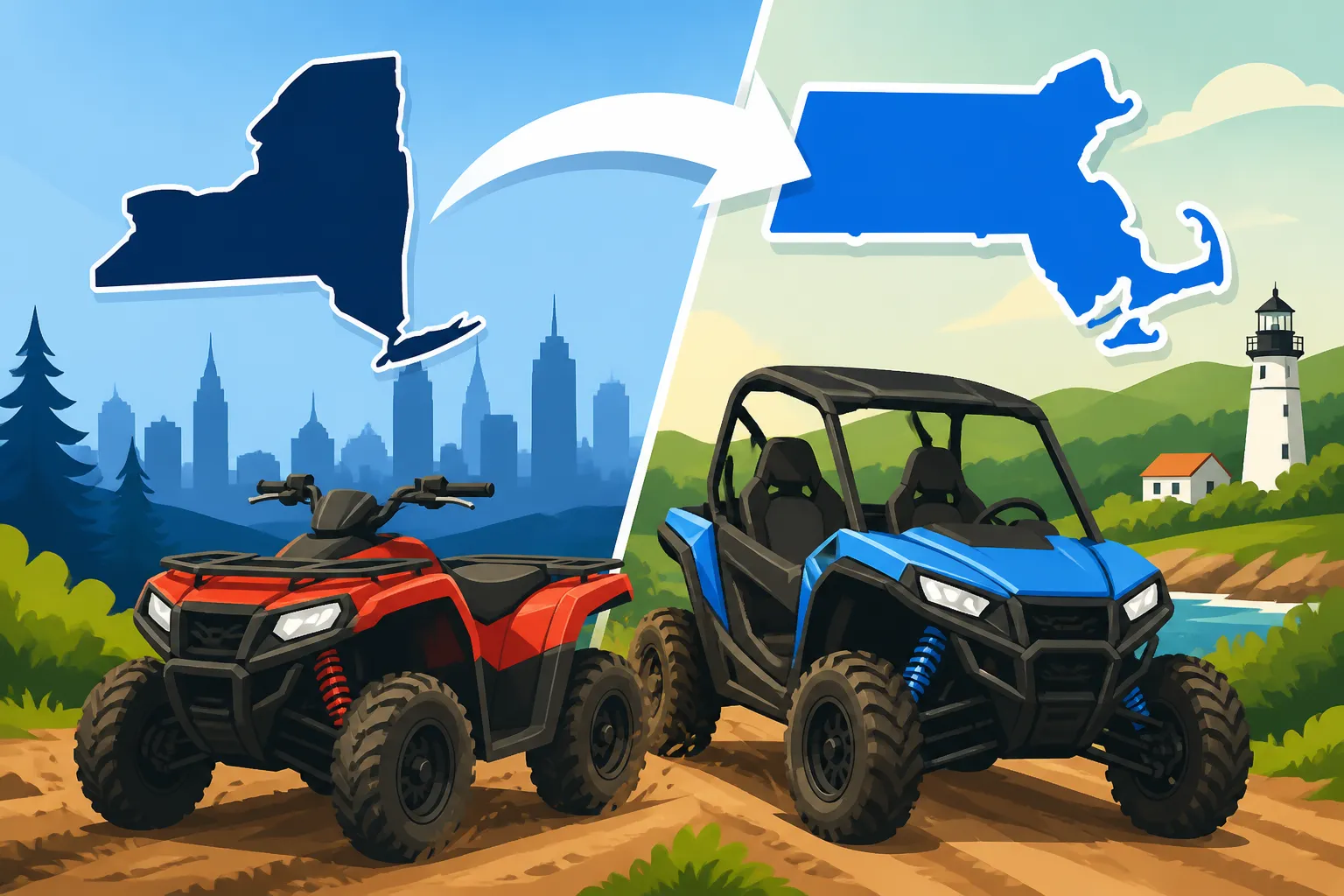
No. Massachusetts does not grant reciprocity to visitors based on an out-of-state OHV registration. A New York registration, plate, or sticker is not a substitute for the Massachusetts registration required to ride here. Visitors generally need to obtain a Massachusetts non-resident OHV registration before riding.
This catches people out because registration rules and trail-access rules are separate. Your machine may be properly registered in New York and still need Massachusetts registration. And having a Massachusetts sticker does not mean you can ride on every trail, road, or piece of public land. For the broader rule, see Massachusetts Has No Reciprocity for Visitors and Out-of-State OHV Stickers Are Not Valid in Massachusetts.
A Massachusetts registration is tied to the machine, not just to the rider’s home state. Plan to register each ATV or UTV you intend to operate. If you are bringing more than one machine, don’t assume a sticker or card for one can be used on another. The Environmental Police issue OHV registrations, rather than the Registry of Motor Vehicles. More detail is available in Massachusetts Requires Its Own Registration and Why the Environmental Police Register ATVs, Not the RMV.
Here’s the practical distinction:
| What you have or need | What it does | What it does not do |
|---|---|---|
| New York registration | Helps document the machine under New York rules | Replace Massachusetts registration |
| Massachusetts non-resident registration | Meets Massachusetts’ registration requirement for a visiting machine | Grant access to every trail or public property |
| Trail or land permission | Allows riding where the owner or managing agency permits it | Replace the required registration |
| Parking or campground payment | Covers the applicable facility or use fee | Function as an OHV registration |
If you ride in Massachusetts without meeting its registration requirement, the fact that the machine is registered at home may not prevent an enforcement problem. Check the Massachusetts process before your trip, rather than waiting until you arrive at a trailhead.
How a New York visitor gets a Massachusetts registration
Massachusetts offers a one-year registration for non-resident riders. It is separate from a New York registration and has its own application and documentation requirements. The state’s process is explained in Massachusetts Visitors Buy a One-Year Sticker.
Start by identifying the machine and gathering its ownership documents. The paperwork you need can depend on how you acquired it and whether the ownership record clearly matches the machine. A bill of sale, manufacturer’s certificate of origin, or other proof may be relevant. If the machine has a complicated history—such as an auction purchase, private sale, or missing paperwork—resolve that before you travel. The Massachusetts Registration Paperwork Checklist can help you organize the documents, while Where a Visiting Rider Applies for a Massachusetts Sticker covers the visitor application route.
A sensible sequence is:
- Confirm that the machine can be registered. Locate its vehicle identification number and compare it with the ownership documents. If the number is hard to read or the paperwork does not match, contact the registration office before submitting an application.
- Gather proof of ownership. Use the document that applies to your purchase or ownership situation. A New York registration document may be useful background, but do not assume it alone will satisfy every Massachusetts documentation requirement.
- Check the current application instructions. Confirm which forms, proof, and payment method are accepted for a non-resident application. Requirements and processing details can change.
- Submit the application and allow time for processing. Do not plan a riding day around an application that has not been approved or around a decal that has not arrived.
- Install the Massachusetts decal and carry the registration card. Follow the state’s placement instructions and keep the card with the machine while riding.
The registration card and decal serve different purposes. The decal is displayed on the machine; the card is the document you need to carry. Massachusetts expects the card to accompany the registered machine, so leaving it in your tow vehicle or at home can create an avoidable problem. See The Registration Card You Must Carry in Massachusetts for more on that requirement.
Do not peel off or cover the New York identification or registration markings unless New York’s rules allow it. Massachusetts’ sticker requirements apply to the Massachusetts decal; they do not automatically settle what you must display to remain compliant at home or while transporting the machine. When instructions appear to conflict, ask the relevant registration offices how to handle both jurisdictions.
Registration costs and payment options can change. Check the current official instructions rather than relying on an old receipt, an online forum post, or a friend’s account of what they paid. For details on how the visitor charge is structured, see Why a Non-Resident OHV Sticker Costs $33, but confirm the current amount with the state before applying.
What else New York riders need before using a Massachusetts trail
A Massachusetts sticker is only one part of a legal and workable trip. Before setting out, confirm that the riding location is open to your type of machine, that you have permission to ride there, and that the riders in your group meet applicable safety and age requirements.
Match the machine to the riding area
Not every OHV area accommodates every kind of vehicle. A trail may allow some ATVs but not wider side-by-sides, or may be limited to a different vehicle category altogether. Check the rules for the specific property and trail system before making the drive. Massachusetts Trails That Allow Side-by-Sides can help UTV owners narrow down options.
State forest access, private riding parks, and other properties can all have different rules. Trails may be temporarily closed, restricted by season, or unsuitable after storms. A Massachusetts registration does not override a closure or give you permission to ride beyond an approved route. Check current conditions directly with the land manager and consider Massachusetts Trail Planning and Closures before towing.
Do not assume that an unpaved road, woods road, power-line cut, or path on a map is an authorized OHV trail. Riding is restricted to places where it is permitted. On private land, get the owner’s consent; on public land, follow the managing agency’s posted rules. A route that connects two legal riding areas is not automatically legal just because it looks passable.
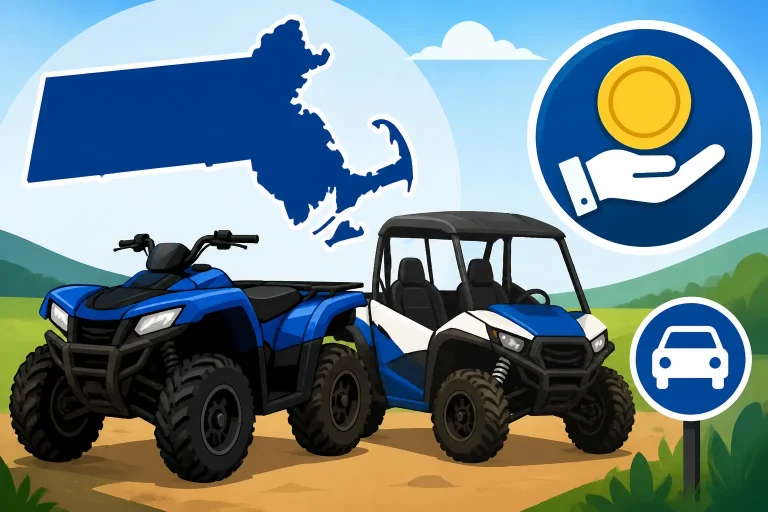
Also account for access costs separately. A registration sticker is not a general trail pass, and it does not necessarily cover parking, camping, or other facility charges. Those rules depend on the place you visit. Check Massachusetts DCR Parking and Access Fees if you are planning a state forest trip, and confirm whether your chosen lot or campground has its own instructions.
Check youth and safety requirements
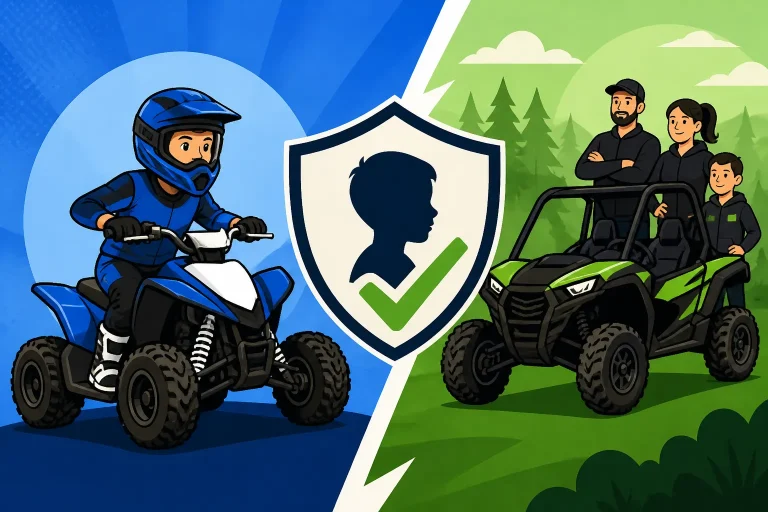
If a young rider is coming along, review Massachusetts’ age and safety rules before travel. Requirements can depend on the rider’s age, the machine, the location, and whether the ride is a sanctioned event. Do not assume that a child who can ride legally in New York can operate under the same conditions in Massachusetts.
Massachusetts has safety certificate requirements for certain young OHV riders. The relevant age and location rules are summarized in Massachusetts Safety Certificates Under 18. If a young rider holds a New York course card or certificate, check with the Massachusetts authority whether it satisfies the applicable requirement; do not count on reciprocity for a safety credential without confirmation. Carry any required certificate while riding where the rules call for it.
The usual preparation matters too. Make sure the machine is in safe working condition, use compliant helmets and protective gear, and bring the documents you may need to show. A registration card is not proof that every rider in the group meets age or safety requirements.
A pre-trip checklist for New York visitors
Use this checklist a few days before leaving, especially if it is your first Massachusetts trip or the machine recently changed owners.
- Registration: Confirm that each machine has its own valid Massachusetts non-resident registration. A New York sticker alone is not enough.
- Ownership documents: Make sure the machine’s identification number and ownership papers are consistent. Resolve missing or conflicting documents before applying.
- Card and decal: Check that the Massachusetts decal is installed as instructed and the registration card will travel with the machine.
- Trail eligibility: Verify that the exact riding area permits your machine type and is open on your planned date.
- Permission: Confirm that the route is authorized and that you have any required permission for private property.
- Riders: Review age, supervision, helmet, and safety-certificate requirements for everyone in the group.
- Access costs: Ask whether the site has separate parking, camping, or other charges, and check current payment instructions.
- Conditions: Look for closures or weather-related restrictions close to departure. A trail that was open when you planned the trip may not be open when you arrive.
- Transport: Secure the machine properly and keep registration and ownership documents accessible. Registration does not take the place of safe trailering.
If any part of the application or trail rule is unclear, contact the Massachusetts registration office or the property manager before driving over. When you call, have the machine type, VIN, ownership document, and intended riding location handy. Specific questions—such as whether a particular document is acceptable or whether a UTV fits a trail’s rules—are easier to answer than a general request for guidance.
The simplest way to avoid a wasted trip is to treat Massachusetts as a separate jurisdiction: register the machine for Massachusetts, confirm where it may be ridden, and carry the required documents and safety credentials. New York paperwork remains relevant to your home-state obligations, but it does not replace the steps Massachusetts requires for riding there.
Disclaimer
This article is for general informational purposes only and does not constitute professional advice. Laws, prices and regulations vary by location and change over time. Consult a qualified professional for guidance on your specific situation.