Massachusetts Trail Riding After Heavy Rain
Heavy rain can turn a Massachusetts trail from firm and enjoyable to rutted, slippery, and vulnerable to lasting damage. The tricky part is that a trailhead may look passable while shaded hollows, steep climbs, and low crossings remain soaked. This guide explains how to judge conditions, protect trails, and decide when to postpone your ride.
Why heavy rain changes Massachusetts trails
Water affects different parts of a trail differently
A short shower and an all-day downpour do not leave the same conditions. Rain can run off a rocky ridge quickly, while soil in a hollow or low-lying section may stay saturated long after the sky clears. Areas beneath dense tree cover also dry more slowly because they receive less sun and airflow.
The Berkshires make those differences easy to encounter on a single ride. A route that starts on firm ground may dip into a wet, shaded stretch or cross a small drainage where water is still moving. A puddle is not always a reliable indicator of depth: it may cover a shallow depression, or conceal a rut, rock, or soft edge.
Trail type matters, too. A compacted, well-drained surface may handle moisture better than loose soil or a narrow track with a steep grade. A slope can concentrate runoff, and repeated wheelspin there may loosen soil and deepen the tread. Even if your machine can get through, that does not necessarily mean the trail is ready for traffic.
For a broader look at how rain affects access and conditions, see [Massachusetts Trail Closures After a Storm]. If you are considering a spring outing, [Massachusetts Trail Riding in Spring] is also useful because wet ground and changing seasonal conditions can overlap.
The damage can outlast the weather
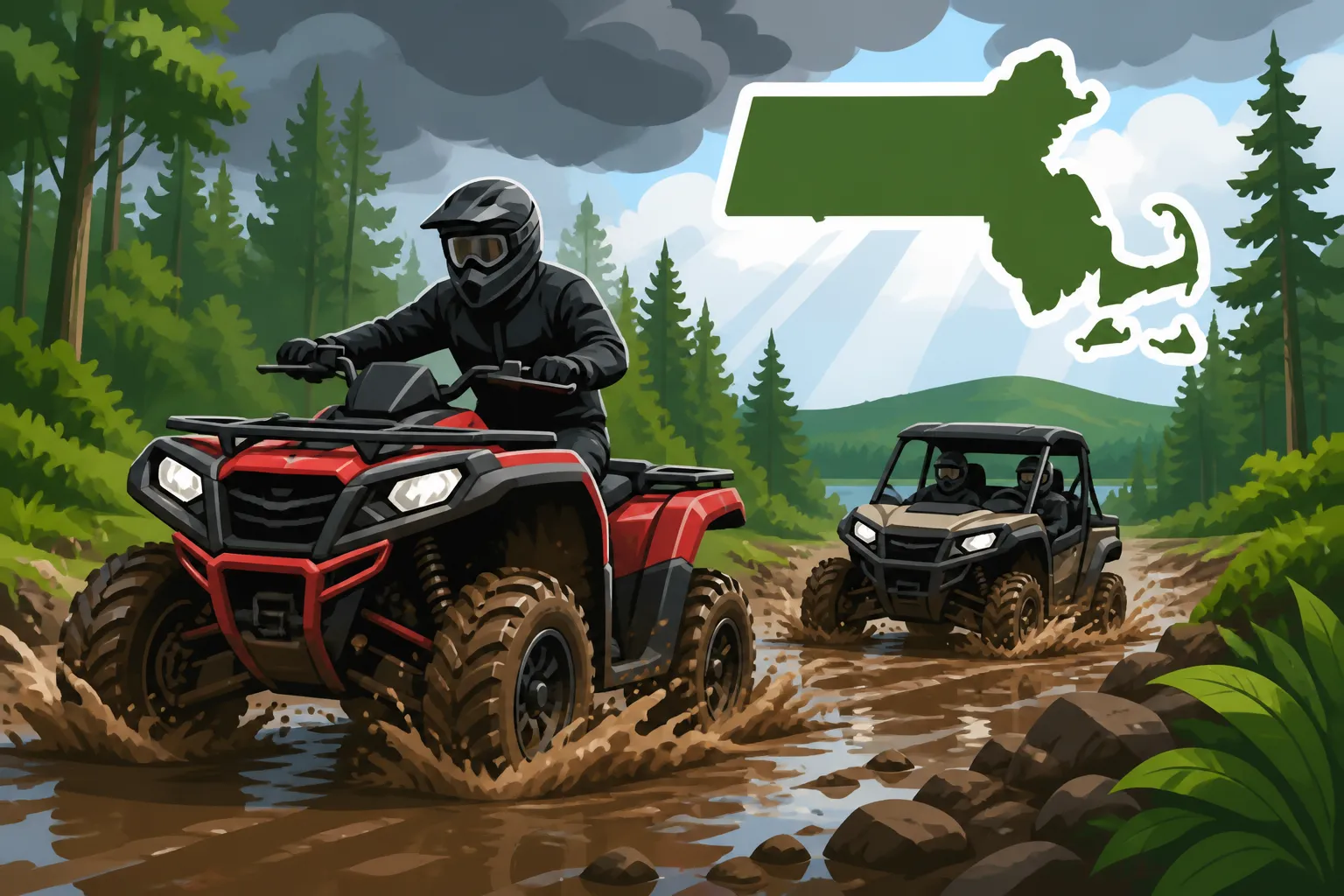
The most visible problem after rain is mud, but the bigger concern is what tires do to soft ground. A spinning tire can cut a rut that channels later rainfall, carrying soil downhill and making the route harder to maintain. Riders who steer around a puddle may widen the trail by creating a second track through vegetation or fragile ground.
Repeated passes make the impact worse. A single machine might leave little evidence on a firm surface, while a group following the same soft line can churn it quickly. Side-by-sides and other heavier machines can also press into saturated ground, especially when turning, climbing, or braking.
That damage is not just cosmetic. Deep ruts can redirect water toward trail edges, expose roots, and make future travel less stable. A detour around a muddy section can gradually become a wider, unofficial trail. The best time to prevent that pattern is before tires start cutting into the soil.
How to decide whether a trail is ready
Check access and conditions before you tow
Start by checking whether the riding area is open and whether any trail-specific restrictions or closures are in effect. Do not assume that clear skies mean trails have reopened or dried out. Conditions can vary within the same forest, and a route may be affected by maintenance, storm damage, or local access rules.
Before loading your ATV or UTV, review [Massachusetts Trail Planning and Closures] and [Massachusetts Trail Conditions Before You Tow]. For a trip to Beartown, contacting the forest office before making the drive can help you avoid arriving to find that conditions or access do not suit your plan; see [Calling Beartown State Forest Before You Tow].
A mapping app such as onX Offroad can help you review your planned route and understand where you expect to travel. Use it as a planning aid, not as proof that a trail is open or suitable after rain. Confirm current access and conditions with the appropriate official or land manager, and follow posted signs when you arrive.
If you are uncertain, postpone rather than treating the first mile as a test run. Turning around after trail damage has begun does not undo the damage, and getting a machine out of a soft or steep section can create more disturbance.
Read the ground, not just the forecast
At the trailhead, take a moment to look for practical clues. Standing water across the trail, fresh runoff, soft shoulders, newly exposed roots, or visible tire grooves can all signal that the surface is vulnerable. A route that looks dry at the entrance may still have wet sections farther in, particularly in shaded low spots.
If you do proceed on a route that is open and appears firm, ride conservatively and reassess as conditions change. Stop before entering a questionable section rather than charging through it. Do not use wheelspin to force a climb, and do not drive around a wet patch if doing so would push you into vegetation or create a new line.
A route app may help you keep track of your intended path, but it cannot tell you whether a particular patch of soil will support your machine. onX Offroad can be part of your planning routine, while signs, land-manager updates, and what you see on the ground should guide your decision to ride.
| Trail condition | What it may indicate | Sensible response |
|---|---|---|
| Water is flowing across the route | Runoff may be active, and the surface may be changing | Do not enter if the crossing or trail condition is uncertain |
| Tires leave deep grooves in soft soil | The ground may not support repeated traffic | Turn around without spinning or widening the track |
| A puddle has an unseen bottom | Depth, rocks, and soft edges may be hard to judge | Avoid driving through blindly |
| The route is signed closed | Access is restricted regardless of how dry it looks | Do not enter |
| The trail is firm and open, with no signs of damage | Conditions may be more suitable, but can still vary farther along | Ride gently and keep checking the surface |
How to ride responsibly when conditions are damp
Avoid making a bad section worse
If a trail is open and the surface is firm enough to ride, use smooth throttle and braking. Sudden acceleration can dig into loose soil, while abrupt braking can scrape the surface or slide a machine across a soft edge. On a climb, steady control is generally more useful than a burst of power that makes the tires spin.
Do not ride through a muddy spot just to prove the machine can manage it. If you cannot tell how deep it is, whether the bottom is stable, or whether there is a safe way through, turn back. On a narrow trail, pause and choose a safe place to reverse rather than attempting a tight turn that tears up the edge.
Avoid widening the trail to bypass mud, a puddle, or an obstacle. A detour that seems harmless to one rider can become a permanent second route after repeated use. [Massachusetts Mud Season and Trail Damage] offers more context on why saturated ground is especially susceptible to rutting and erosion.
When you encounter other trail users, slow down and keep your machine on the established route. Wet shoulders can be fragile, and moving off the tread to make room may damage plants or soft soil. [Massachusetts Trail Etiquette Locals Expect] covers the shared-use habits that help keep trails enjoyable for everyone.
Know when to turn around
A good ride plan includes a point at which you will stop, even if you have already traveled a long way to reach the forest. Turn around if the trail becomes soft enough to rut, water is running across the route, or you find signs of erosion or storm damage. A difficult recovery can cause additional harm, especially when a machine is spinning, sliding, or being pulled from a soft spot.
Do not follow another rider’s tracks as proof that the route is safe. The other machine may have passed before conditions worsened, may have made damaging ruts, or may have taken a different line. Conditions can also change as rain continues or water drains through the area.
If you are riding with a group, agree in advance that anyone can call a stop when the route looks vulnerable. A leader may feel pressure to keep the outing moving, but turning around early is better than asking several machines to cross a section that is already breaking down. Keep the group together and avoid sending riders ahead to “check” a questionable stretch if that would mean creating extra passes.
Massachusetts riding access is subject to seasonal and area-specific rules, so check the applicable information rather than assuming every forest follows the same schedule. [Massachusetts DCR Riding Season] is a useful starting point when planning around seasonal access.
A practical after-rain ride plan
Before you leave home
Begin with the riding area, not the route app. Check official access information, closures, and any posted restrictions. If the area has a contact number or office, ask a specific question: whether the intended route is open and whether recent weather has affected access. General reports that “the forest is open” may not answer whether a particular trail is suitable.
Next, decide what conditions would make you cancel. For example, you might choose not to ride if the route is closed, if water is visibly moving across the trail, or if tires leave deep tracks near the entrance. Setting those limits before the drive helps prevent the familiar temptation to ride simply because the machine is already unloaded.
Use onX Offroad or another mapping resource to review your intended area and keep your plan organized, but do not treat a mapped line as confirmation of current access. Save the land manager’s contact information and be prepared to choose another activity if conditions are poor. [Massachusetts Trail Closures After a Storm] can help you think through why checking access matters after unsettled weather.
Pack for a possible change of plans. If you do ride, carry basic recovery and safety items appropriate to your machine and route, and make sure the group knows the turnaround plan. A remote trail is not the place to discover that the group has different ideas about what counts as “too muddy.”
At the trailhead and after the ride
Before unloading, read posted signs and look at the immediate trail surface. If you see fresh ruts, standing water, active runoff, or a closure notice, do not enter. If conditions look firm and the route is confirmed open, proceed cautiously and reassess at every change in terrain.
During the ride, stay on the established trail and avoid repeated passes over the same soft section. If you need to stop, choose a durable spot rather than parking on a wet shoulder or vegetation. Keep a respectful distance from other trail users and do not assume a wide vehicle can safely pass anywhere the trail appears broad.
After the ride, check your machine for packed mud around moving parts and remove debris responsibly. Cleaning can help you spot damage, but do not wash mud into a stream, wetland, or drainage area. If you notice a damaged or blocked trail, report it through the appropriate land-manager channel rather than trying to repair it yourself.
A patient decision after heavy rain protects the route for the next rider and reduces the chance that one wet outing becomes weeks of erosion and maintenance. When the trail is clearly too soft, the responsible ride is the one you save for a drier day.
Disclaimer
This article is for general informational purposes only and does not constitute professional advice. Laws, prices and regulations vary by location and change over time. Consult a qualified professional for guidance on your specific situation.