Massachusetts Riding Areas With Toilets
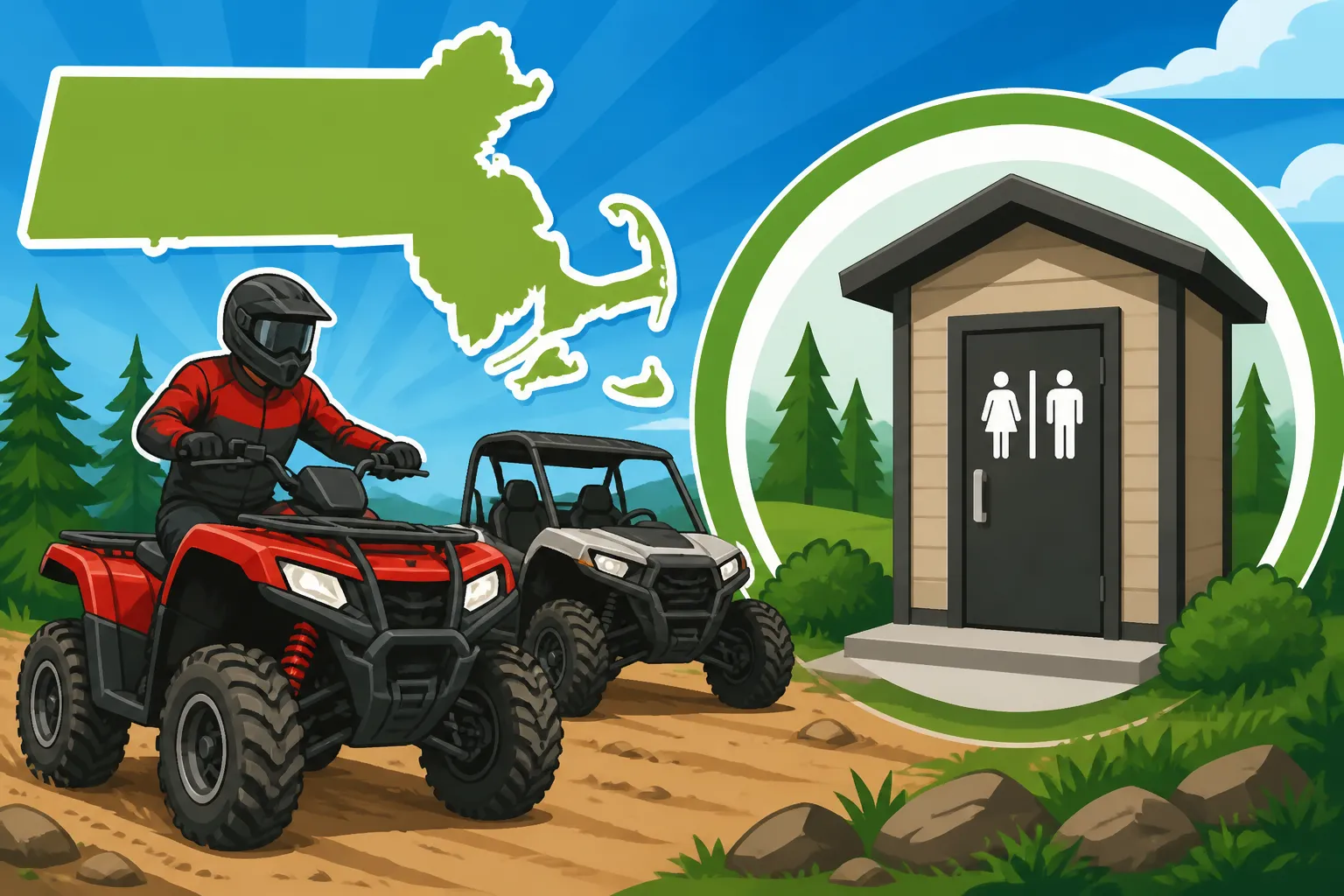
Finding a restroom can be the awkward part of an otherwise great Massachusetts ATV ride, especially when the trailhead is remote and the nearest town is miles away. The key is to plan around developed recreation areas rather than assume a toilet sits beside every riding route. Here’s how to check likely options, prepare for seasonal closures, and avoid a last-minute scramble.
Where to look for toilets near Massachusetts riding areas
Start with developed recreation areas
In Massachusetts, toilets are more likely to be found at developed sites—such as campgrounds, picnic areas, beaches, or visitor facilities—than along a trail itself. A riding area may have a convenient staging lot and still have no restroom at that lot. Even when a forest has facilities elsewhere, they could be a substantial distance from the trails you plan to ride.
That distinction matters in the Berkshires, where riders often focus on Beartown State Forest, October Mountain State Forest, and Pittsfield State Forest. These forests include developed recreation areas, but you should not treat a restroom at a campground or day-use area as proof that there is one at an OHV entrance. The trail system, parking location, and recreation facilities may be separate.
For an overview of the region’s main riding options, start with [Massachusetts ATV Trails: Three Berkshire Forests]. Then look at the specific forest and the particular entrance or parking area you intend to use. A broad listing can help you choose a destination, but it may not answer the practical question of whether a restroom is open near your planned starting point.
Check campgrounds and day-use areas separately
A campground can be a useful place to investigate because it may have facilities that a remote trailhead does not. But campground bathrooms can be seasonal, intended for registered campers, or located far from the riding area. Before relying on one, check whether it is open, whether day-use visitors may access the restroom, and how far it is from your parking or route.
The same caution applies to picnic areas and swimming spots. A developed recreation area may have restrooms during part of the year, but access and operating schedules can change with the season. A facility that was open during a summer visit may not be available on a chilly spring day or late in the fall.
If you are considering staying overnight to make the facilities and logistics easier, review [Massachusetts Camping Near Riding Areas]. It can help you think through the relationship between a campground and a ride, but confirm that the specific campground is open and that its facilities suit your needs. A campsite reservation should not be treated as confirmation that a nearby trailhead has a public restroom.
How to verify restroom access before you tow
Confirm the exact parking area and entrance
“Does the forest have bathrooms?” is less useful than “Is there an open restroom near the lot where I’m parking?” Large forest properties can have multiple entrances and recreation sites. A restroom may exist at one end of the property while the OHV parking area is elsewhere, and driving between the two may take longer than expected.
Before leaving home, write down the name of your intended parking area, the road or entrance you plan to use, and the nearest developed recreation site that might have facilities. If you are meeting friends, send them the same plan. It is easy for one person to assume the group is using the campground entrance while another heads straight to the trail staging area.
For trailhead logistics, [Massachusetts Trailheads With Trailer Parking] can help you think about where you will unload and stage. Parking information and restroom information are separate questions, though, so verify both. If you are heading to Beartown, [Calling Beartown State Forest Before You Tow] is a useful reminder to check with the forest before making a long drive based on assumptions.
Ask specific questions, not just whether bathrooms exist
A quick call or message to the relevant forest office can save a frustrating detour. Ask whether a restroom is open on the day you plan to ride, where it is relative to your chosen parking area, and whether the public can use it without a campground reservation. If the office cannot confirm access, plan as though no public restroom will be available at the trailhead.
It also helps to ask what kind of facility is available. “Restroom” might mean a flush toilet in a developed building, a seasonal facility, or a basic vault toilet. If accessibility, running water, or changing space matters to someone in your group, ask directly rather than assuming every facility offers the same setup.
You can use onX Offroad to help orient yourself to a route and nearby locations, but treat the map as a planning aid—not a promise that a restroom is open or public. Combine it with direct confirmation from the managing office. Before a longer drive, check [Massachusetts Trail Conditions Before You Tow] as well, since access, parking, and trail conditions can affect whether the day works at all.
A practical restroom-planning checklist for ride day
Match the plan to your group
A solo adult who is comfortable waiting may make a different plan from a family with young children, a group with a medical need, or riders who are heading out for several hours. Talk through the stop plan before everyone is geared up. If a restroom is important to anyone, make it a confirmed part of the itinerary—not a hopeful possibility.
For a group ride, identify a restroom stop before the ride begins and agree on when the group will take it. This is especially helpful when riders arrive in separate vehicles or when the route loops away from the entrance. If facilities are available only at a developed recreation site, decide whether the group will stop there before unloading, after the ride, or both.
A group’s size can also affect the plan. Coordinating a large gathering around one facility may take longer than expected, particularly on a busy weekend. [Massachusetts Riding Areas With Group Space] is relevant when choosing a place to stage a group, but space for vehicles or gathering does not necessarily mean restroom access is nearby.
Pack for the possibility that no facility is available
If you cannot confirm a public restroom close to the trail, prepare accordingly. Bring water, tissues, hand sanitizer, and a small bag for packing out used supplies. Store them where they can be reached without unpacking the entire truck or trailer. If a rider uses medication or has a health-related need, build in extra time and choose a shorter route or a destination with confirmed facilities.
Leave facilities clean and follow the posted rules. Do not assume a trail-side location is acceptable for bathroom use, and never leave toilet paper or wipes behind. Wipes labeled flushable should not be flushed into toilets unless the facility specifically allows them; they can cause problems in plumbing and septic systems. Pack out what you bring in.
Also think about weather and timing. A restroom that is open in the afternoon may be closed by the time your group returns, and a facility could be inaccessible during maintenance or seasonal shutdown. Keep a backup plan that does not depend on arriving at a particular building just before it closes.
Comparing restroom options and setting expectations
The table below is a planning guide, not a guarantee that any specific facility is open. Confirm access with the site managing the location before relying on it.
| Possible restroom location | What it may offer | What to confirm before riding |
|---|---|---|
| OHV staging area | Convenient access if a facility is provided | Whether a restroom is actually present and open |
| State forest campground | Facilities may be available at a developed camping area | Seasonal operation, public access, and distance from the trailhead |
| Picnic or day-use area | A possible stop near other recreation facilities | Whether restrooms are open and accessible to non-campers |
| Nearby town business | A backup option away from the forest | Whether it is open, accepts visitors, and is reachable during your ride |
| Trail-side or remote location | Usually no maintained public facility | Plan as though no restroom is available |
Build a backup into the route
Choose a nearby public-facing destination as a fallback, such as a developed recreation area or a town stop you have confirmed will be open. Note how you would get there from your staging lot and how long the detour might take. If your group is riding a remote loop, agree on a point where you can turn around rather than pushing farther away from facilities.
onX Offroad can be useful for understanding the general layout of a riding area and planning a route, while a phone call or official site check can help confirm current access to amenities. Keep those roles separate: a map can support navigation, but it cannot guarantee that a restroom is unlocked, operating, or open to the public. Save the relevant contact details before you lose cell service.
Season matters, too. Developed facilities may operate on a different schedule from trails, and a forest’s riding season does not automatically mean every campground or restroom is open throughout that period. Check [Massachusetts DCR Season From May to November] as part of your broader seasonal planning, then verify the restroom schedule for the specific destination you will use.
Make restroom access part of choosing the ride
If restroom access is a priority, choose your riding area and staging plan together. You might prefer a shorter ride near a confirmed developed facility over a longer route where the closest option is uncertain. That is not overplanning; it is a straightforward way to keep the day comfortable for everyone in the group.
For riders comparing locations, onX Offroad can help with route planning while you separately confirm trail access, parking, and facilities with the land manager. A good pre-ride plan should answer four questions: where you will park, where the nearest confirmed restroom is, whether it will be open, and what you will do if it is not.
Finally, be realistic about what “nearby” means in a large forest. A restroom may be on the same property but still require a drive, a walk, or a detour from the trail. Confirm the distance and access before you unload. That small check can prevent the most uncomfortable surprise of the day.
Disclaimer
This article is for general informational purposes only and does not constitute professional advice. Laws, prices and regulations vary by location and change over time. Consult a qualified professional for guidance on your specific situation.