Why Berkshire Leaf Litter Clogs a Radiator
Berkshire leaf litter can pack into an ATV or UTV radiator surprisingly quickly, especially on damp autumn trails where wet leaves stick to the grille and fins. The result may be restricted airflow, rising engine temperature, and a ride cut short. This guide explains why it happens, how to reduce the risk, and how to clean debris without damaging the cooling system.
Why Berkshire leaf litter clogs a radiator
Wet leaves collect where airflow enters
A radiator needs moving air to carry heat away from the engine coolant. Depending on the machine, the radiator may sit behind a front grille, low in the nose, or in a rear-mounted position on a UTV. As the fan pulls air through that opening, it can draw in loose leaves, pine needles, seed pods, grass, and dust.
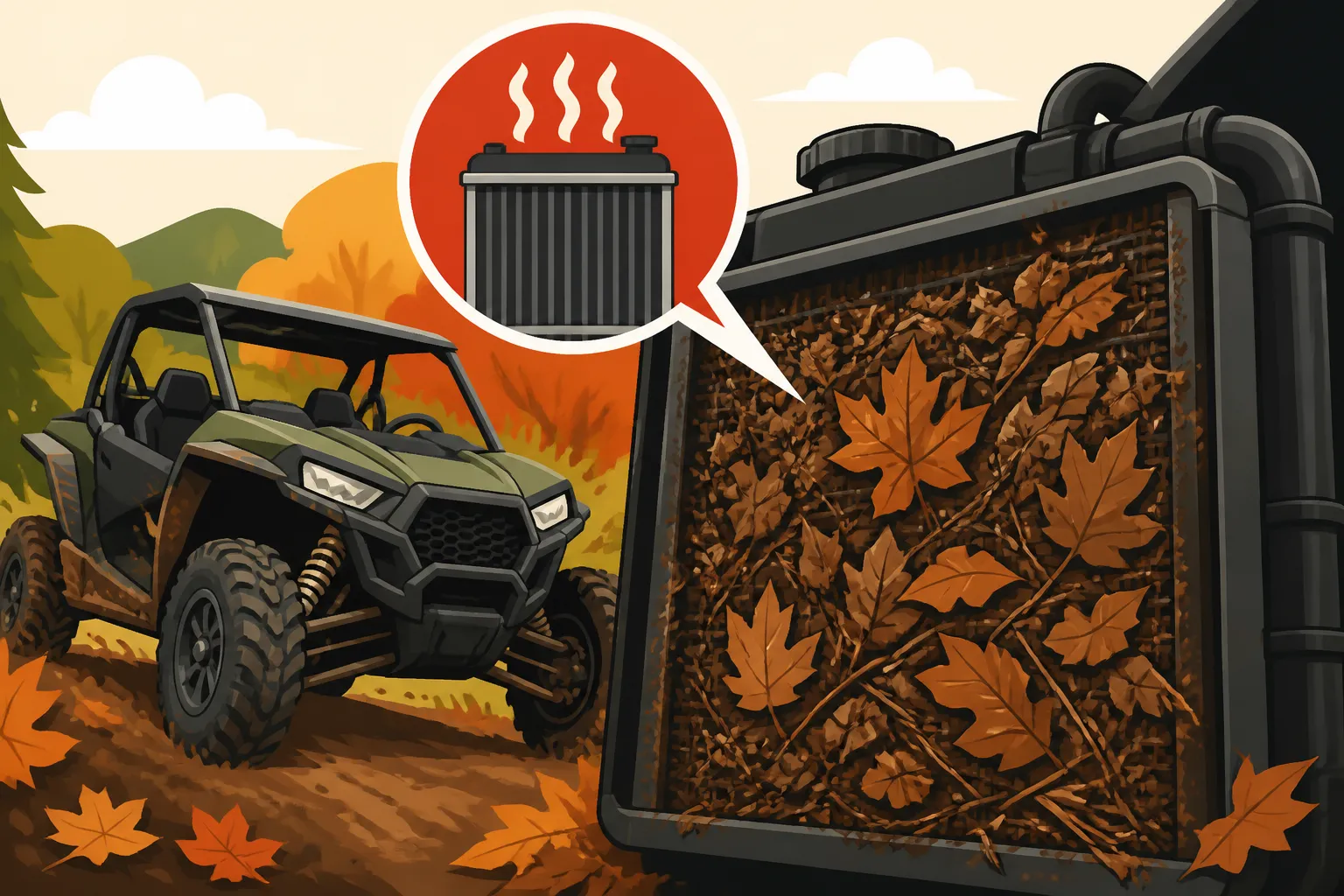
Dry leaves may blow away or fall off, but damp leaves behave differently. They cling to the grille and radiator face, then press together into a mat as more debris arrives. A single leaf may not seem like a problem; a thick layer of crushed leaves can block enough airflow to make the cooling system work harder.
This is especially noticeable in fall, when trails are covered in loose leaves and the ground underneath may be wet. Low-speed riding can add to the problem: there may be less natural airflow from forward movement, so the fan has to do more of the work. If the radiator is already partly covered, the combination can lead to a rising temperature warning.
Leaf litter can hide other debris
Leaves are often only the visible part of the mess. A damp mat can trap fine dirt, seeds, grass, and small twigs against the radiator fins. That packed material can be harder to see than a few leaves sitting on the grille, particularly if the radiator is tucked behind bodywork or a protective screen.
Berkshire routes can also take you through changing terrain in a single ride. A machine may pick up leaves in a wooded section, then encounter mud or spray that turns them into a dense layer. That is one reason it helps to check the radiator during a break rather than waiting until the temperature warning appears.
Trail conditions vary by location and weather, so check access and surface conditions before hauling to a riding area. Guides to Massachusetts Trail Conditions Before You Tow and Massachusetts Trail Closures After a Storm can help you plan around conditions that may increase debris buildup or make a route unsuitable.
A restricted radiator does not always show symptoms right away
A partially covered radiator may not cause an immediate warning. The engine may stay within its normal operating range while the machine is moving quickly or working lightly, then heat up during a slow climb, a stop, or a more demanding stretch.
Pay attention to the temperature display or warning light, changes in fan behavior, steam, an unusual hot smell, or a sudden loss of power. These signs do not prove that leaves are the cause, but they are a reason to stop in a safe place and inspect the machine. Continuing to ride an overheating ATV or UTV can turn a cleanup into a more serious mechanical problem.
Never open a hot radiator cap. Pressurized coolant can cause severe burns. If the machine is overheating, shut it down when safe, let it cool, and follow the owner’s manual. If the warning returns after the radiator is clean, have the cooling system checked rather than assuming the remaining issue is just trail debris.
How to prevent leaves from blocking airflow
Check the radiator during the ride
A quick visual check at a rest stop can catch a leafy mat before it becomes a cooling problem. Park safely, switch off the engine, and look at the grille and radiator face. If you see leaves or grass collecting, clear what you can without pressing on the fins. Avoid reaching near a fan that could start automatically; use the procedure in the owner’s manual and keep hands clear of moving parts.
Make the check part of your normal routine on a leaf-covered route. For instance, if you stop to adjust gear after a long wooded section, take a moment to look for debris before heading into a slow, technical climb. This is more useful than waiting for a warning light, since a machine may be working harder than usual before it signals a problem.
Fall riding brings its own planning challenges, from slippery leaves to changing daylight. Massachusetts Riding in Fall Foliage offers related seasonal context, while October Mountain State Forest Riding in Massachusetts and Beartown State Forest Riding in Massachusetts can help you learn more about two Berkshire riding areas before you go. Check official access information before setting out; a route that looks suitable on a map is not automatically open to every type of off-highway vehicle.
Consider a radiator screen or guard
A suitable screen or guard can help stop larger leaves and sticks before they reach the radiator fins. It is not a substitute for inspection: fine material can still pass through, and debris can collect on the guard itself. A screen that is packed with leaves can restrict airflow just as a radiator can.
Before installing an accessory, check that it is compatible with your ATV or UTV and does not interfere with the fan, airflow, body panels, or required service access. Follow the manufacturer’s directions, and clean the screen as often as the riding conditions require. If a guard is difficult to remove, you may be less likely to clean behind it, so consider maintenance access when choosing equipment.
Adjust your route and pace to the conditions
You cannot keep every leaf off a machine, but you can reduce unnecessary exposure to dense, wet debris. When a route is heavily covered, avoid driving directly into deep piles at speed, where leaves can be forced into openings. After a muddy or leafy section, pause somewhere safe to check the grille before continuing.
Route planning can help you make practical decisions about distance, access points, and where to stop for a check. Riders sometimes use onX Offroad to review their planned route and keep track of where they are, but mapping tools should not replace current land-use rules or posted closures. Confirm that the area is open to your machine and that the route is authorized before riding.
How to clean a clogged radiator safely
Let the machine cool before working on it
If the temperature has climbed or you see debris packed into the grille, stop riding in a safe location. Turn off the engine and allow it to cool. Do not remove a radiator cap while the machine is hot, and do not pour cold water onto a very hot engine. Sudden temperature changes can create additional risks, and hot coolant can spray under pressure.
Once the machine is cool, consult its owner’s manual for the radiator location, access panels, fan precautions, and cleaning instructions. Some machines make the radiator easy to reach from the front; others have panels or guards that must be removed first. If you are unsure how a panel or guard comes off, avoid forcing it. Broken clips or bent fins can make a simple cleanup more complicated.
Clear debris gently and check the fins
Start by removing loose leaves from the grille and accessible radiator surface by hand, wearing gloves if needed. Work gently. Radiator fins are thin and can bend easily, so avoid scraping them with a tool or pushing a clump deeper into the core. If debris is packed between the fins, use the cleaning method recommended by the manufacturer.
Where the manual permits rinsing, use a gentle flow of water and aim to move debris out rather than force it farther in. High-pressure washers can bend fins or drive dirt deeper into the radiator. If you use compressed air, keep the pressure low, hold the nozzle at a safe distance, and follow the machine’s instructions. The goal is to clear the blockage, not blast the cooling system.
After cleaning, look for bent fins, damaged hoses, leaks, or debris still caught behind a screen. A radiator comb may be appropriate for carefully straightening small areas of bent fins, but it is easy to make damage worse if you are unsure how to use one. In that case, a repair shop can inspect the radiator.
Confirm the machine is cooling normally before continuing
Before resuming a long ride, check that the visible debris is gone and that the machine has cooled. Follow the owner’s manual for restarting and monitoring the temperature. If the warning comes back, the radiator still looks blocked, coolant is leaking, or the fan is not operating as expected, stop riding and arrange help.
A clean radiator does not rule out other causes of overheating. Low coolant, a damaged hose, a faulty fan, or another cooling-system problem can produce similar symptoms. If the machine repeatedly runs hot after debris is removed, it needs a proper diagnosis rather than repeated roadside rinsing.
A thorough post-ride wash can help remove leftover leaves and mud before they dry into a dense layer. Use the machine’s recommended washing approach and pay special attention to the grille and radiator area. For more on that routine, see Washing a Machine After a Berkshire Ride.
A practical radiator check for Berkshire rides
Use a short before-and-after checklist
A few simple checks can reduce the chance of discovering a clogged radiator halfway through a ride. Before leaving home, confirm that the grille is clear and that the radiator area is not already packed with dust or old debris. Make sure the temperature display and warning indicators are visible, and carry the owner’s manual or know how to access its instructions.
During the ride, check the radiator after especially leafy, muddy, or slow-going sections. Afterward, inspect the grille again and clean off debris before storing the machine. If you rode in heavy mud, give the radiator area extra attention: dried material can be harder to remove later and may hide leaves caught behind the grille.
| When to check | What to look for | What to do |
|---|---|---|
| Before leaving | Existing leaves, grass, bent fins, or visible leaks | Clear loose debris and address damage before riding |
| During a leafy ride | A mat forming on the grille or radiator face | Stop safely, shut down, and remove accessible debris gently |
| If the temperature rises | Warning light, unusual fan activity, steam, or hot smell | Stop riding, let the machine cool, and inspect it safely |
| After the ride | Damp leaves, mud, or debris behind the screen | Clean according to the owner’s manual and check for damage |
Plan around the machine, not just the route
A route that looks short on a map may involve slow travel, steep sections, or repeated stops where airflow is limited. Plan enough time for checks, especially if the trail is wet or leaf-covered. onX Offroad can be useful for reviewing a planned route and tracking your position, but verify access rules and closures through the relevant land manager before riding. Do not rely on a map alone to decide whether a trail is legal or open to your vehicle.
It also helps to prepare for the conditions you expect. On rocky terrain, protective equipment can help guard vulnerable parts; Tires for Berkshire Rock and Skid Plates for Ledge cover related equipment considerations. For seasonal trail planning, Pittsfield State Forest Riding in Massachusetts provides another Berkshire-specific point of reference. Always check the riding area’s rules and current access information before loading up.
Know when roadside cleaning is not enough
A little loose debris on the grille is usually a routine cleanup. A machine that repeatedly overheats, leaks coolant, has a damaged radiator, or shows signs of fan trouble needs more than a quick trailhead check. Stop riding if a warning persists, and do not keep restarting an overheating engine just to get back to the trailer.
If you are far from your vehicle, think about a safe recovery plan rather than risking engine damage. Route planning with onX Offroad may help you keep track of your location, but tell someone where you are going and follow the riding area’s rules. Carrying basic supplies is useful, but radiator repairs involving coolant leaks, damaged fins, or electrical fan problems are better handled by someone equipped to diagnose the system.
Disclaimer
This article is for general informational purposes only and does not constitute professional advice. Laws, prices and regulations vary by location and change over time. Consult a qualified professional for guidance on your specific situation.