Tolland’s Free Permit From the Ranger Station
A free permit from the ranger station can sound like a simple green light for a day of riding, but it does not mean every off-highway vehicle is allowed at Tolland State Forest. The key is to confirm what the permit covers, which machines may use the trails, and whether access is open before you tow to the Berkshires.
What Tolland’s free permit does and does not mean
A permit is an access requirement, not a vehicle pass
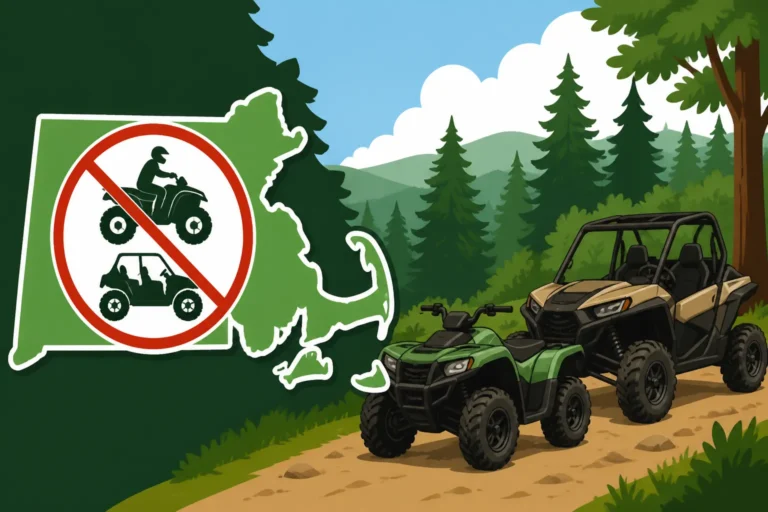
Tolland State Forest is known for a trail system designated for street-legal motorcycles. The ranger-station permit is part of the access process for eligible riders, but it does not turn the forest into an ATV or UTV riding area. If you own a quad or side-by-side, this distinction matters: having a permit in hand does not make a vehicle eligible for trails that are restricted to another type of machine.
That can be a frustrating detail to discover only after loading a trailer or arriving at the forest. Before planning around Tolland, check the vehicle-specific guidance in [Tolland's Street-Legal Trails in Massachusetts] and [Tolland's 15 Miles Are for Street-Legal Bikes]. If the trip is specifically for an ATV or UTV, look for a riding area that expressly permits that vehicle type rather than assuming an OHV designation covers every off-road machine.
The same caution applies to the word “free.” A free permit does not necessarily mean the whole trip has no requirements or costs. Registration, eligible vehicle equipment, parking arrangements, and any other posted forest rules can still matter. Treat the permit as one part of the access checklist, not as a substitute for confirming the rest.
The vehicle restriction is the first question to settle
Before thinking about the ranger station, identify the machine you intend to ride. A street-legal motorcycle and an ATV are not interchangeable in the eyes of a trail system with vehicle-specific rules. A side-by-side is different again: its width, configuration, and permitted use may rule it out even where some other motorized riding is allowed.
Use this quick check before making plans:
| Question | Why it matters |
|---|---|
| Is the trail open to my exact vehicle type? | A permit does not expand the forest’s vehicle eligibility rules. |
| Does the machine meet the street-legal requirement, if applicable? | Tolland’s designated motorcycle trails are not a general ATV or UTV area. |
| Do I need to obtain a permit before riding? | Confirm the current process and where it is issued before leaving home. |
| Is the forest or trail open on my planned date? | Seasonal conditions, maintenance, closures, or posted notices can change access. |
| Are registration and equipment documents required? | Access permission and vehicle compliance are separate checks. |
If any answer is unclear, pause and ask the forest office before you haul the machine. It is much easier to adjust the plan at home than to arrive in Tolland with a vehicle that cannot legally use the intended trails.
A free permit does not replace registration or other rules
A permit is not the same thing as vehicle registration. Massachusetts has its own OHV registration requirements, and an out-of-state sticker should not be assumed to meet them. Riders should review [Massachusetts Requires Its Own Registration] and [Massachusetts Rules for an Out-of-State Sticker] when they are bringing a machine from another state.
The exact requirements can depend on the vehicle and the kind of riding involved. Do not assume that a forest permit replaces a registration card, a safety certificate, or any vehicle equipment requirement that applies to your ride. For younger riders in particular, check the relevant rules before setting out; [Massachusetts Safety Certificates Under 18] covers an important part of that planning.
How to get the permit from the ranger station
Confirm the process before you drive to Tolland
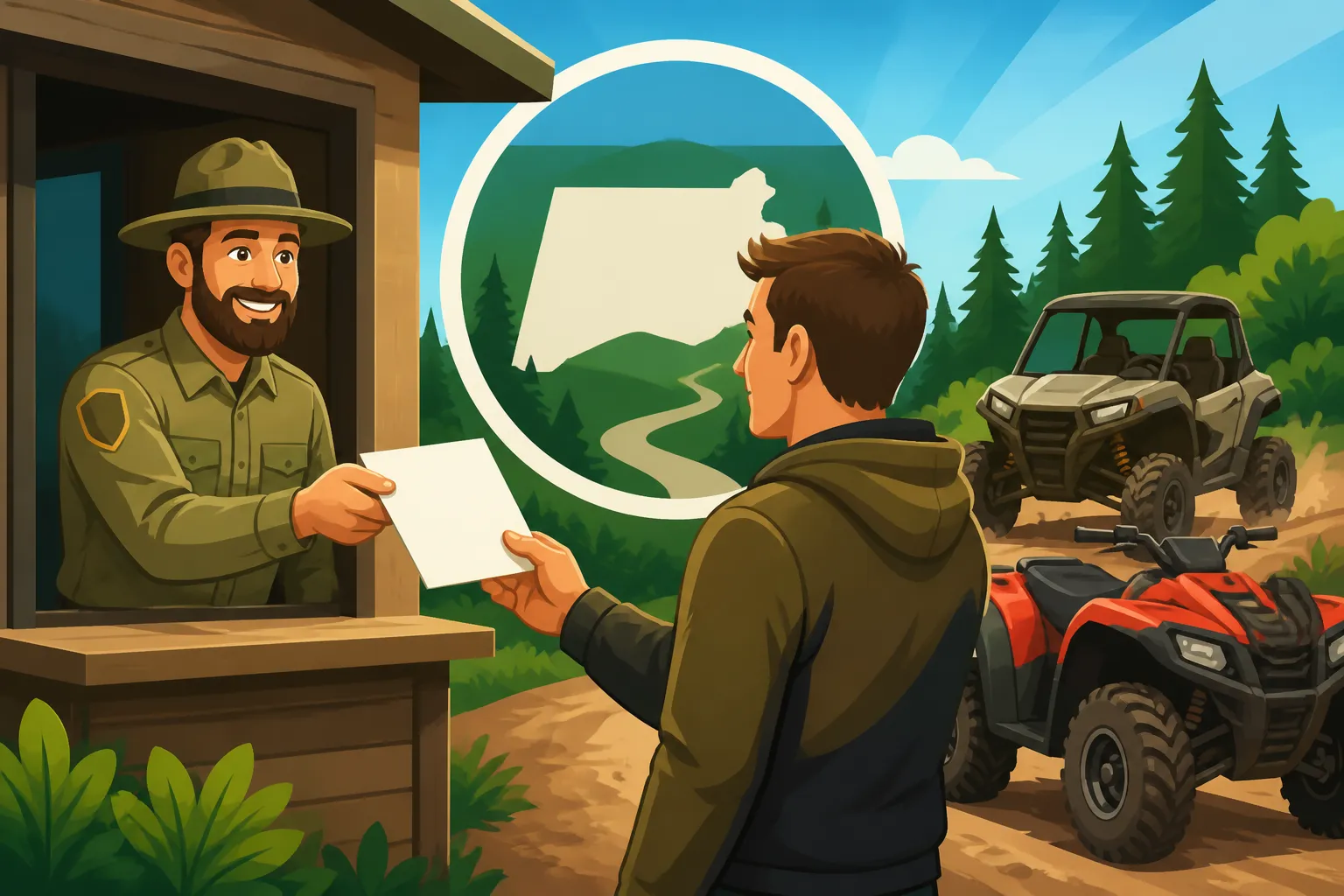
The practical starting point is to contact the appropriate forest office and ask how permits are being issued. The permit is described as free and available through the ranger station, but you should confirm whether you need to pick it up in person, whether it is issued on the day of your ride, and what information you need to provide. Do not plan around an assumption that a station will be open or staffed when you arrive.
This is especially important if you are traveling from outside the immediate area. A ranger station is not necessarily a walk-up service counter with predictable availability every day. Call ahead, ask about the current procedure, and write down any instructions about where to go, where to park, and whether the permit must be displayed or carried.
For a broader view of the permit process, see [Massachusetts Tolland Ranger Permits] and [The Permit You Need Before Riding Tolland]. Those details are worth checking even if someone in your riding group has visited before. Access procedures can be updated, and a friend’s experience from a prior season may not answer what you need to know for your planned visit.
Ask specific questions, not just whether permits are free
A quick call is most useful when you have the details of your trip ready. Tell the ranger or forest office the vehicle type, the date you hope to ride, and whether you are a Massachusetts resident or visiting from another state. Then ask the questions that could change your plan.
For example, instead of asking only, “Do I need a permit?” ask whether your exact machine is allowed, whether the trails are currently open, and whether the permit has to be obtained before entering the trail system. If you are riding with a group, ask whether each rider needs a separate permit or whether one permit covers a particular vehicle or party. Do not guess at the answer based on another forest’s rules.
A useful call checklist:
- “Are the trails open to my specific vehicle type?”
- “Is the permit still obtained at the ranger station?”
- “Do I need to collect it before riding, and when is the station available?”
- “What registration or documents should I bring?”
- “Are there current closures, maintenance notices, or access changes?”
- “Where should I park and unload?”
This kind of call can save you from a long, avoidable trip with a machine that cannot ride there. It also gives you an opportunity to ask how to interpret any posted vehicle restrictions that seem unclear.
Keep the permit and instructions easy to find
Once you have the permit, follow the ranger’s instructions for carrying or displaying it. If the permit is paper, keep it somewhere protected from rain, mud, and accidental loss. If you receive written instructions, save them with your registration documents rather than relying on memory once you are at the trailhead.
Make sure every rider in the group understands the conditions, too. A common group-ride problem is that one person checks the rules while the rest assume the permit covers everyone and every machine. Share the details before the ride, especially if the group includes different vehicle types or riders arriving separately.
If you are unsure how the permit should be handled, ask before leaving the station. A quick clarification is better than trying to interpret a rule at the trail entrance or after an officer asks to see your paperwork.
Plan the trip around the trail rules
Check the whole route, not only the permit
A permit answers one part of your access question. It does not automatically confirm that the trails are open, suitable for your vehicle, or reachable using the route you have planned. Conditions can vary with weather, maintenance work, and seasonal access rules, so check the forest’s latest notices close to your departure date.
The approach to a forest can also create confusion. A road that appears on a map may be a public road, a forest road, or a route with restrictions. Do not assume that being able to reach a trailhead on a map means you may ride every connecting path. Confirm where riding is permitted and where the designated trail begins.
A mapping app such as onX Offroad can help you review an area and keep track of your planned route, but a map layer is not permission to ride. Compare any digital route with official forest information and signs on the ground. If a route appears to cross a closed area or an unmarked connection, stop and verify rather than treating the line on a screen as authorization.
Build in time for the ranger-station stop
If the permit must be collected in person, include that stop in your travel plan. Leave room for questions, parking, and unloading rather than aiming to arrive just as you expect to ride. A rushed arrival can lead to missed instructions or confusion about where the permitted riding area starts.
Bring the basics you may need to show or confirm: vehicle information, registration documents, identification if requested, and the contact details for the office you spoke with. Keep the trailer and machine secured while you handle the permit process, and follow posted directions about where vehicles may be parked or unloaded. If the process changes or the office is unavailable, call the contact number you were given before improvising.
It is also wise to have a backup plan. If Tolland is closed or your machine is not eligible, do not assume you can simply move to a nearby forest and ride there. Each property has its own rules and permitted vehicle types. Check an alternative destination in advance, using resources such as [Massachusetts Trail Conditions Before You Tow] and [Checking Rules Before a Long Drive to the Berkshires].
Use mapping tools as a planning aid, not a rulebook
For riders unfamiliar with the area, onX Offroad can be useful for reviewing terrain and organizing a route before the trip. It may help you keep a group oriented, especially when riders are coordinating from different starting points. It can also be helpful to save a route or reference point before cell service becomes unreliable.
Still, do not let a mapped route override a gate, sign, ranger instruction, or posted closure. Digital maps can be incomplete or show roads and tracks that are not open to the public. At Tolland, the first question remains whether your vehicle is allowed on the designated trail system at all.
A sensible approach is to use onX Offroad for preparation, then confirm access with the forest office and follow signs once you arrive. If a map and an official instruction appear to conflict, follow the official instruction and ask a ranger for clarification before proceeding.
Avoid common mistakes before heading out
Do not confuse a motorcycle trail with an ATV trail
The most important planning mistake is assuming that “off-highway vehicle” or “motorized trail” means ATVs, UTVs, dirt bikes, and street-legal motorcycles are all welcome. They are not automatically treated as one category. Tolland’s designated riding opportunity is associated with street-legal motorcycles, so ATV and side-by-side owners should verify eligibility before they make the trip.
This matters even when a machine is small, quiet, or capable of fitting on a narrow trail. Physical fit is not the same as legal access. A vehicle that can travel along a trail may still be prohibited from using it, and a permit cannot change that restriction.
If your goal is to ride a quad or UTV, use a destination guide that specifically identifies places allowing that machine type. [Massachusetts Trails That Allow Side-by-Sides] is a useful starting point for side-by-side owners, while [Massachusetts Trails That Allow Dirt Bikes Only] can help riders distinguish motorcycle-oriented options from broader OHV access.
Do not rely on an old permit or a friend’s memory
Someone may tell you, “We got a permit there last time,” but that does not settle what is required now or whether the same trail conditions apply. They may have ridden a different kind of machine, visited under a different procedure, or misunderstood what the permit allowed.
Ask for the details behind the story. What vehicle did they ride? Where did they obtain the permit? Was it for the same trail system and season? Did they speak with a ranger, or did they simply see other riders on the trail? These questions help separate firsthand, relevant information from an assumption that has been repeated until it sounds official.
Before every trip, recheck the permit process and trail status. Make a short note of the office’s instructions and the date you confirmed them. That habit is especially useful when a group is planning several rides over a season and different people take turns organizing.
Do not treat parking access as riding permission
A forest entrance, parking area, or trailhead may be accessible even when a particular trail is closed or restricted. Likewise, permission to park or unload does not mean you may ride every road or path beyond that point. Follow signs at the entrance and along the route, and ask the forest office when a sign or map leaves room for interpretation.
Keep the riding area itself in mind when choosing where to stop. Avoid blocking gates, access roads, emergency routes, or other visitors’ parking spaces. Load and unload where directed, keep trailers organized, and leave room for other vehicles to turn around safely. These small details can make a busy trailhead easier for everyone to use.
If the day’s plan changes because of a closure or eligibility issue, do not try an unmarked route as a workaround. Turn back, contact the office if needed, and use a destination confirmed for your vehicle. A free ranger-station permit is useful only when it matches the machine, trail, and access conditions for the ride you are actually taking.
A practical pre-ride checklist
Before leaving home
Use this list to catch the questions that are easy to overlook while you are loading gear:
- Confirm that Tolland’s designated trails allow your exact vehicle type.
- Contact the forest office to verify how and when to obtain the free permit.
- Ask about current closures, trail conditions, and any changes to access.
- Check the registration and equipment requirements that apply to your machine.
- Confirm where to park, unload, and begin the permitted ride.
- Save the office’s instructions and contact details.
- Prepare a backup riding destination that allows your vehicle.
- Use a map tool, including onX Offroad if helpful, for orientation rather than as proof of permission.
A little checking can prevent a disappointing drive, especially for riders coming from farther away in Massachusetts or from a neighboring state. The most efficient plan is to confirm vehicle eligibility first, then sort out the permit and logistics.
At the forest
When you arrive, follow the instructions given by the ranger station and read posted notices before unloading. If anything differs from what you were told, stop and ask for clarification. Do not assume that an open gate means the whole trail system is open or that other riders’ presence proves your vehicle is allowed.
Keep the permit and required documents accessible, and make sure everyone in your group knows the rules for the day. If you encounter a closure, a confusing junction, or a route that does not match your approved plan, do not push ahead just to keep the ride moving. Turn around or contact the forest office for guidance.
The short version is straightforward: Tolland’s free ranger-station permit is not a universal ATV or UTV pass. Confirm the exact vehicle rules, get the permit through the stated process, and check current access before you tow. That preparation is what turns a promising Berkshire ride into a well-planned one.
Disclaimer
This article is for general informational purposes only and does not constitute professional advice. Laws, prices and regulations vary by location and change over time. Consult a qualified professional for guidance on your specific situation.