Hydration on a Summer Berkshire Ride
A summer ride through the Berkshires can turn hot and demanding faster than you expect, especially when you’re focused on rough terrain and forget to drink. Planning water stops is not always simple on remote trails. This guide explains how to prepare, carry fluids, recognize heat trouble, and adjust your plan so hydration doesn’t become an afterthought.
Plan Hydration Before You Reach the Trail
Check the day, not just the forecast
A comfortable morning at home can feel very different once you’re riding in the sun, wearing protective gear, and working through uneven terrain. Heat, humidity, direct sun, and physical effort all affect how much fluid you may need. Heavy gear can also make it harder to notice how hot you’re getting until you’re already uncomfortable.
Look beyond the headline temperature when planning. Check the expected conditions for the riding area and think about how long you’ll be exposed, how strenuous the route is, and whether the trail has shaded sections. A route that looks short on a map can take longer than planned if you’re navigating rocky stretches, waiting for a group, or stopping to deal with a machine issue.
Use a weather check as one part of your decision, not a guarantee that the ride will feel manageable. If the day is unusually hot, consider an earlier start, a shorter loop, more frequent breaks, or postponing the ride. Before hauling out, check Massachusetts Trail Conditions Before You Tow and Massachusetts Trail Closures After a Storm so your route plan reflects conditions on the ground as well as the weather.
Estimate the whole outing
Hydration planning should cover more than the time spent moving. Include the drive to the riding area, unloading, gearing up, trail time, breaks, and the trip back to your vehicle. It’s easy to drink a bottle before the ride, then discover that the only water you brought was meant to last several hours.
Build your plan around the longest likely stretch between reliable opportunities to refill. Don’t assume a store, working tap, or convenient service station will be close to the trailhead. If your route or schedule changes, your original water plan may no longer be enough. Bringing extra water in the tow vehicle gives you a reserve without requiring you to carry every drop on the machine.
For a group ride, plan for the slowest pace and the rider who may need the most frequent breaks. A newer rider, a child, or someone wearing heavier protective clothing may feel the heat sooner than an experienced adult. Agree in advance that anyone can call for a stop without needing to explain or apologize.
Make the route part of the safety plan
Knowing where you are can make it easier to judge how far you are from your vehicle, a road, or a planned rest stop. A paper map can be a sensible backup, especially where phone reception is unreliable. Some riders use onX Offroad to review routes before leaving and save map information for offline use where available. Check the app’s coverage and download options before you depend on it.
A map is not a substitute for local trail rules or current closure information. Confirm that the route is open to your machine and appropriate for your group, then share the general plan with someone who is not riding. Massachusetts ATV Trails: Three Berkshire Forests can help you get oriented to the region, while Cell Dead Zones in the Berkshire Hills is a useful reminder not to assume your phone will connect when you need it.
Carry Water You Can Reach and Actually Drink
Choose a setup that works with your machine
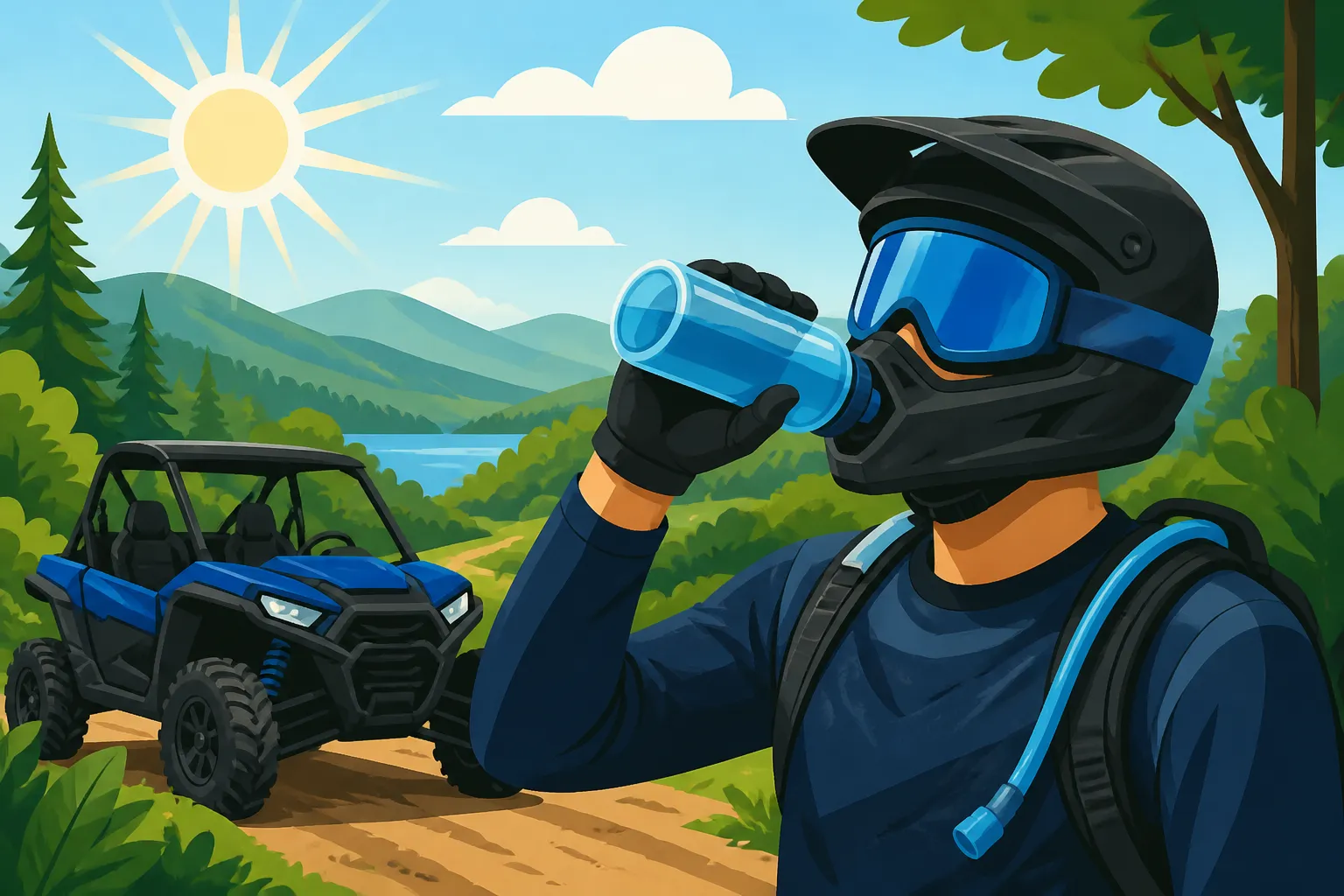
The best hydration setup is the one you can use safely and consistently. Some riders prefer a hydration pack because the drinking tube makes small sips easy during a break or in a safe, stationary moment. Others prefer bottles secured in a pack or stored in a stable, protected location on the machine. A combination can work well: water you can reach during the ride, plus a reserve kept with the vehicle.
Whatever you choose, secure it so it cannot shift, spill, snag, or interfere with controls. Avoid placing a bottle where it could fall into the riding area or affect your ability to operate the ATV or UTV. Do not try to drink while steering through a technical section. Stop in a safe place, take off your gloves if needed, and drink without rushing.
Before the ride, test the setup at home. Check that the tube valve works, caps are easy to open, and containers don’t leak when jostled. A frustrating bottle that requires two hands or a pack that rubs under your gear is easy to ignore once the trail gets busy.
Keep the water easy to find
Store your ride water separately from the extra supply in the tow vehicle. That way, you can quickly see what you brought onto the trail and avoid accidentally leaving it beside the cooler or tool kit. Clear bottles can make it easier to track how much remains, while labeled containers help prevent mix-ups during a group ride.
In warm conditions, a water container left in direct sun may become unpleasant to drink. Keep supplies shaded when practical and use an insulated container if you already have one. Don’t leave bottles somewhere they could become contaminated by fuel, oil, mud, or trail debris. If a container’s cap or mouthpiece gets dirty, clean it before drinking.
Riders using onX Offroad or another navigation tool may find it helpful to mark a planned stop or turnaround point in their route notes. The important part is not the app itself; it’s having a plan that makes breaks visible rather than waiting until everyone is exhausted.
Decide when water alone may not be enough
For a short, moderate ride, water may be all you need. Longer outings, sustained effort, and heavy sweating can change the equation. Some riders choose an electrolyte drink or a suitable electrolyte product for a demanding day, but products vary, and they are not a replacement for rest or cooling down.
Avoid turning hydration into a contest or forcing large amounts of water quickly. Drinking excessively can also be harmful. A practical approach is to drink regularly, pay attention to thirst and how you feel, and take breaks before you become drained. If you have a medical condition, take medication that affects fluid balance, or have been told to limit fluids or sodium, ask a healthcare professional what approach is appropriate for you.
Use Breaks to Catch Problems Early
Take planned breaks before you feel wiped out
Waiting until you feel parched or weak can make it harder to recover comfortably. Set a rhythm for brief stops, especially during a hot afternoon or a demanding route. At each break, get off the machine in a safe place, loosen or remove gear as appropriate, drink, and give everyone a moment to cool down.
A useful group habit is to check in with each rider rather than asking only, “Everyone good?” People may say yes because they don’t want to slow the group. Ask specific questions: Has anyone finished their water? Is anyone unusually tired, dizzy, nauseated, or getting a headache? Does anyone feel chilled despite the heat? A straightforward check-in can make it easier to speak up.
A route onX Offroad helped you plan may still take longer than expected because of a detour, a slow section, or a mechanical issue. Leave room in the schedule for those delays. If you’re falling behind, shorten the ride instead of skipping breaks to make up time.
Recognize warning signs of heat illness
Heat-related illness can begin with symptoms that are easy to dismiss as ordinary fatigue. Watch for unusual weakness, headache, dizziness, nausea, muscle cramps, heavy sweating, or feeling faint. If someone develops symptoms, stop the ride and move them to a cooler, shaded place. Remove unnecessary outer gear, offer fluids if they are alert and able to drink, and keep checking how they respond.
Confusion, fainting, seizures, or very hot skin can signal a medical emergency. Call emergency services and follow their instructions. Don’t leave a seriously unwell person alone or try to continue the ride to see whether the problem passes. If you’re unsure how serious the symptoms are, treat the situation cautiously and seek professional help.
Before a remote ride, make sure the group knows how to contact emergency services and how to describe its location. A downloaded map, a paper map, and clear route notes can be useful if phone service drops. For more preparation ideas, see First Aid on a Remote Berkshire Loop.
Let the group’s pace set the plan
A ride leader should make breaks part of the plan rather than treating them as a reward for finishing a difficult section. If one rider is struggling, the group should stop together in a safe place. Splitting up can create more problems if someone gets turned around or runs low on water.
Be especially thoughtful when riding with children or inexperienced riders. They may not recognize early signs of overheating or may feel pressure to keep up. Give them permission to speak up, and check in directly. The supervising adult should also carry enough water and supplies to respond if a young rider needs a longer rest.
Local trail etiquette matters during breaks, too. Keep machines and gear out of the trail where possible, avoid blocking other users, and pack out bottles and wrappers. Massachusetts Trail Etiquette Locals Expect offers a useful reminder that responsible riding includes how you behave when you stop, not only how you ride.
Build a Berkshire Summer Hydration Kit
Match supplies to the ride
You don’t need an elaborate kit for every outing, but a little organization helps prevent the common problem of having water in the truck and none where you need it. Use the table as a planning prompt, then adjust for your route, group size, conditions, and personal needs.
| Item | Where to keep it | Why it helps |
|---|---|---|
| Water for the trail | Secured on your person or machine | Keeps drinking water accessible between vehicle stops |
| Extra water | Tow vehicle or staging area | Provides a reserve if the outing runs long |
| Electrolyte option | Pack or vehicle, as appropriate | Gives you an option for a long, sweaty day |
| Reusable cup or bottle | With your trail supplies | Makes it easier to drink during planned breaks |
| Map or saved route information | Phone and paper backup | Helps the group follow its plan if reception is limited |
| Small first-aid supplies | Secure, accessible pack | Supports basic response while waiting for help |
Pack based on the actual outing rather than an optimistic estimate. If you’re riding with several people, don’t assume everyone will share one reserve comfortably. Each person should know which water is theirs and where the group’s backup supply is stored.
Keep the plan flexible
A ride may need to change because the weather feels harsher than expected, a rider is slowing down, or the route is taking longer than planned. Treat turning back as a normal decision, not a failure. Choosing a shorter loop can protect the rest of the group and leave everyone in better shape for another day.
Before loading up, confirm practical details such as access, parking, and whether the planned riding area is suitable for your machine. Massachusetts Riding Areas With Fuel Nearby may help with broader trip planning, but don’t assume fuel or drinking water will be available at the trailhead. For seasonal clothing and temperature swings, Packing for a Cool Mountain Morning can help you prepare for a start that feels very different from the warmest part of the day.
If your group rides often, keep a simple checklist with your helmet, protective gear, first-aid kit, navigation, and water. Refresh it before each outing rather than relying on memory. A couple of minutes of checking bottles and packs at home is much easier than discovering an empty container after you’ve reached a remote section of trail.
Disclaimer
This article is for general informational purposes only and does not constitute professional advice. Laws, prices and regulations vary by location and change over time. Consult a qualified professional for guidance on your specific situation.