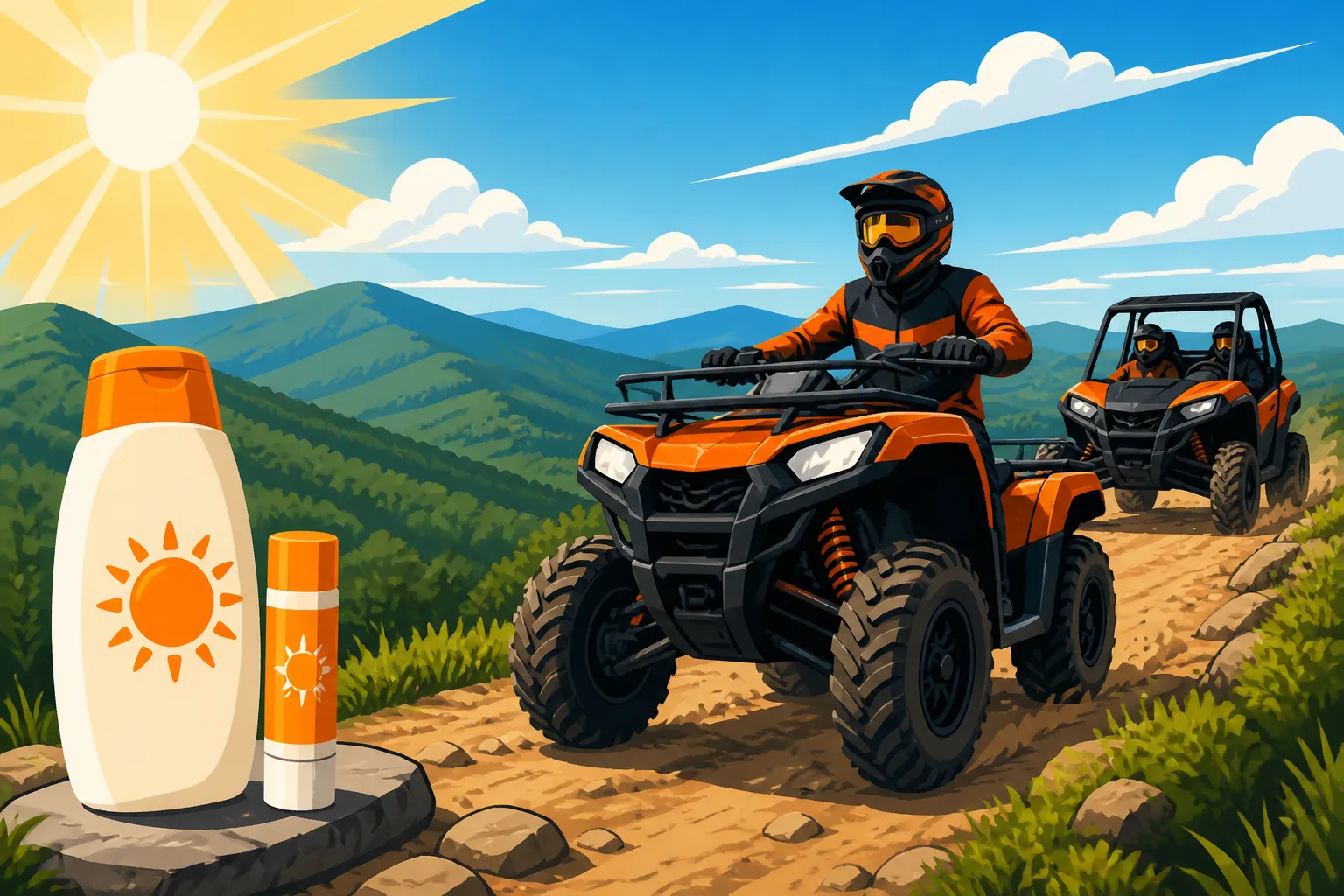
Sunscreen on an Exposed Berkshire Ridge
A Berkshire ride can feel cool in the woods, then suddenly hot and bright when the trail opens onto a ridge. That change catches people out: sunscreen gets left in the truck, or a quick morning application wears off under sweat and dust. This guide explains how to protect exposed skin before, during, and after an ATV or UTV ride.
Why exposed Berkshire trails can catch riders off guard
Cool air does not mean low sun exposure
A breezy ridge can feel comfortable enough that sunscreen seems unnecessary. But temperature and sun exposure are different things. On an open stretch, your face, neck, ears, and hands may be in direct sunlight even while the air feels cool. A partly cloudy sky can also make the day seem less intense than it is.
The contrast between shaded woods and an exposed opening is especially easy to underestimate. You might spend much of a ride beneath trees, then stop for a break or travel along a more open section with the sun on one side of your face. That repeated shift can leave areas such as the left side of your neck, the backs of your hands, or the tops of your ears exposed longer than you realize.
Wind adds to the confusion. It can cool sweaty skin and make a sunny ride feel mild, while dust and vibration keep you focused on the machine and trail rather than on how long you have been outside. Treat sun protection as part of your riding gear, not something you need only on a hot beach day.
Riding gear leaves its own sun-exposed gaps
A helmet, goggles, and gloves cover important areas, but they do not automatically protect every patch of skin. Commonly missed spots include the skin beneath the helmet edge, the bridge of the nose, the ears, the back of the neck, and the gap between a glove cuff and sleeve. A UTV’s roof or windshield may shade some areas while leaving hands, lower arms, or the side of the face exposed.
Before you leave the parking area, check your outfit as if you were checking the machine. Look at the places where fabric and gear meet. If your shirt rides up when you reach for the handlebars, or your gloves leave a strip of wrist uncovered, you have found a place to address before the ride.
That quick check can be more useful than simply putting sunscreen on your face and assuming the rest is covered. For practical ideas on staying comfortable when the morning starts cool, see Packing for a Cool Mountain Morning and What to Wear on a Cold Berkshire Morning.
How to apply sunscreen before a ride
Choose a sunscreen you will actually use
For a day outdoors, many riders look for a broad-spectrum sunscreen labeled SPF 30 or higher. Broad-spectrum labeling indicates protection against both UVA and UVB rays. Use a product that suits your skin and feels comfortable under your helmet and riding clothes; an unpleasant texture or strong fragrance can make it tempting to skip reapplication later.
Sunscreen comes in lotions, creams, sticks, and sprays. A lotion or cream can be easier to apply carefully around the ears, hairline, nose, and neck. A stick can be handy for touch-ups around the face, especially if you want to avoid getting product on your palms. If you use a spray, follow its label directions, apply it thoroughly, and avoid breathing it in. Sprays can also be hard to apply evenly in a breezy parking lot.
| Product type | Where it can be useful | A practical riding consideration |
|---|---|---|
| Lotion or cream | Face, ears, neck, and arms | Give it time to settle before putting on gloves or helmet padding |
| Stick | Nose, cheekbones, ears, and small areas | Handy for touch-ups, but check that you have covered the full area |
| Spray | Larger areas such as arms and legs | Wind can carry it away, so apply carefully and follow the label |
Follow the product’s own directions, including how much to use and how often to reapply. If you have sensitive skin, a history of reactions, or questions about which product is appropriate for you, ask a qualified health professional.
Apply it early and cover easy-to-miss areas
Put sunscreen on before you gear up, allowing it to dry or settle according to the label. Applying it at home or before unloading the machine is often easier than trying to do it beside a dusty trailhead with gloves, keys, and helmets in your hands.
Work systematically rather than dabbing a little onto the obvious spots. Cover your face, ears, exposed neck, and any skin visible at the wrists or shirt collar. If your hair is short or pulled back, remember the hairline and scalp part. Use a lip product with sun protection if you will be outside for an extended period, and follow its directions for reapplication.
Keep sunscreen away from your palms, grips, brake and throttle controls, and the inside of goggles. If you apply it with your hands, wipe your palms thoroughly before riding. Greasy residue can make controls uncomfortable to handle and can transfer onto gear. A small towel or wipe in your pack can help if you notice product on your fingers after applying it.
Staying protected through a full day on the trail
Reapply during breaks, not just when skin feels warm
Sunscreen is not a one-and-done step. Sweat, wiping your face, rubbing against clothing, and time outdoors can reduce the protection on your skin. Follow the reapplication interval on your product label, and reapply sooner if its directions call for it after sweating or towel-drying.
Build the habit into a natural pause: when you stop to drink water, check your map, or regroup with friends, take a moment to check exposed skin. Riders often remember the first application but forget once the day gets busy. A reminder on your phone or a note in your gear checklist can help, particularly on a longer outing.
Carry the product in a secure, accessible place rather than buried under tools or spare layers. If you are riding with a group, a small shared supply can help when someone realizes they missed their ears or neck. Avoid leaving sunscreen somewhere it can leak onto maps, electronics, or clothing.
A basic ride-day check might look like this:
- Apply sunscreen before putting on gloves and helmet.
- Check your ears, neck, wrists, and the edges of your riding clothes.
- Pack sunscreen where you can reach it without unpacking your entire bag.
- Reapply during breaks according to the product label.
- Wash or wipe your hands before returning to the controls.
For other warm-weather planning considerations, Hydration on a Summer Berkshire Ride and Massachusetts Riding in Summer are useful companions to a sun-protection plan.
Combine sunscreen with clothing and shade
Sunscreen works best as one part of a broader approach. Long sleeves, riding pants, gloves, a helmet, and suitable eye protection can reduce the amount of skin exposed in the first place. Lightweight, breathable clothing may feel more comfortable than relying on bare skin, but choose gear that fits securely and is appropriate for riding.
Look for shade when stopping, especially if the group is taking a longer break. A tree line or shaded parking spot can make a rest more comfortable, though shade alone should not be treated as complete protection. Keep drinking water and take breaks when you need them. If someone in your group feels unwell, stop riding and respond to the situation rather than pressing on to finish a planned loop.
Dust, sweat, and sunscreen can also accumulate on riding equipment. Keep a clean cloth available for goggles and wipe your hands before touching the throttle or steering controls. Be considerate when applying spray products around other riders, and avoid spraying near machines, open flames, or anyone’s face.
Plan the ride and your sun-protection stops
Check the route before you leave
Trail conditions and access can change, so check current information from the relevant land manager before hauling to a riding area. A map can help you understand the shape of a route and plan where your group may want to pause, but do not treat a mapping app as confirmation that a trail is open or authorized. Massachusetts Trail Conditions Before You Tow is a useful starting point for preparing before a drive.
Some riders use onX Offroad as one planning reference for reviewing routes and organizing a ride. If you use it, download or prepare the information you need before heading into areas with limited service, and compare your plan with official trail and land-manager information. A map can support preparation, but it cannot replace posted signs, closures, or on-the-ground instructions.
For Berkshire trips, route planning can also help you think through the practical details of a day outside: how long the group expects to ride, where a reasonable break might fit, and whether everyone has enough water and sun protection. For forest-specific background, see October Mountain State Forest Riding in Massachusetts and Pittsfield State Forest Riding in Massachusetts. Conditions and permitted access should always be checked before your trip.
Make a small, repeatable ride kit
A little preparation prevents the familiar trailhead scramble where someone is looking for sunscreen while everyone else is already buckled into helmets. Keep a compact sun-care pouch with your riding supplies, and check it when you prepare the machine. Useful items can include sunscreen, lip protection with sun protection, a small towel or wipes, and a resealable bag to keep everything contained.
The kit should match the length and style of the ride. A short outing close to the truck may need less backup than a full day with a group, but every rider should have a way to protect exposed skin and reapply. If you are riding with children, make sure an adult checks their coverage and helps them reapply according to the product directions.
A simple checklist can make the routine stick:
- Sunscreen applied before departure
- Sunscreen packed for reapplication
- Exposed areas checked around helmet, collar, and glove cuffs
- Long sleeves and gloves available where appropriate
- Water and a clean cloth packed
- Route and trail access checked with official information
Respectful behavior matters at stops, too. Apply products away from other people, pack out wipes and wrappers, and keep breaks from blocking trail access. These small habits fit naturally with Massachusetts Trail Etiquette Locals Expect.
Disclaimer
This article is for general informational purposes only and does not constitute professional advice. Laws, prices and regulations vary by location and change over time. Consult a qualified professional for guidance on your specific situation.