What a Savoy Mountain Cabin Costs a Visitor
A stay in a Savoy Mountain State Forest cabin can look like a simple lodging expense, until you add visitor access, parking, food, and the cost of getting to a separate riding area. This guide explains what to include in your budget, how to check the current cabin charge, and why a Savoy cabin does not mean ATV or UTV access inside the forest.
What a visitor should budget for a Savoy Mountain cabin
The cabin charge is only one part of the trip cost
The amount you pay to stay in a cabin is the main lodging expense, but it may not be the only charge connected with your visit. Before booking, check the reservation details for the total due, how payment is collected, and whether any separate fees apply to parking, access, or optional services. Charges and booking rules can change, so use the official reservation information for the dates you want rather than relying on an old travel post or a price someone remembers from a previous season.
For a visitor coming from outside Massachusetts, it is especially helpful to distinguish the cabin rate from other recreation costs. A reservation may cover your overnight accommodation without covering day-use parking, a riding-area fee elsewhere, or the cost of transporting and fueling your machine. That distinction matters if you are comparing a cabin weekend with a motel stay near a trailhead.
A practical trip budget can include the following:
| Budget item | What to check before you go |
|---|---|
| Cabin reservation | Total charge, payment timing, cancellation rules, and any booking conditions |
| Parking or day-use access | Whether parking is charged separately and how visitor rates are handled |
| Food and supplies | What you need to bring, based on the cabin’s listed amenities |
| Fuel and transportation | Driving distance to the cabin and any separate riding area |
| Riding-area costs | Whether the destination has its own parking, permit, or access requirements |
| Equipment and contingency | Towing needs, weather gear, and a reserve for unexpected trip costs |
If you are comparing overnight options, review [Massachusetts Camping Fees for Visitors] and [Massachusetts Parking Fees for Visitors] as separate budget questions. A cabin reservation should not be assumed to cover every fee you encounter during a recreation weekend.
Confirm what the reservation includes
Before paying, read the cabin listing closely. Look for the stated occupancy limit, what furnishings are supplied, what you must bring, and whether there are rules about check-in, vehicles, pets, quiet hours, or food storage. These details affect cost in ordinary ways: if bedding, cooking equipment, or basic supplies are not included, you may need to pack them or buy them before arriving.
It is also worth checking the cancellation and change policy before you commit. A rainy forecast, a road closure, or a change in your group can turn a weekend plan upside down. Understanding the policy in advance is less stressful than discovering after the fact that a change is restricted or that a fee may apply.
Do not assume the reservation covers every vehicle in your party. If you are arriving with a truck and trailer, verify where they can be parked and whether space is limited. A larger rig can affect how you plan the trip even when the cabin charge itself is clear. For a broader look at what to ask before booking, see [Massachusetts Cabins Near a Forest] and [Massachusetts Camping Near Riding Areas].
Treat parking and riding fees as separate line items
A common source of confusion is assuming that paying to stay at a state forest also pays for every activity nearby. Overnight lodging, day-use parking, and access to an OHV riding area are different things to check. Even if one charge applies at a particular location, do not assume it transfers to another forest or trail system.
Visitors should also check whether parking rules differ by vehicle or residency. If your plan involves more than one destination, look up the access details for each stop individually. For instance, an overnight stay in Savoy does not automatically settle the parking arrangements at a different riding forest the next morning.
This is a good place to build a simple cost checklist: cabin total, any applicable parking charges, riding-area access details, and travel expenses between locations. The separate overview [Massachusetts Parking and Access Fees] can help you think through those categories, but confirm the rules for the specific destination you plan to visit.
Savoy Mountain cabins and ATV or UTV riding
A cabin stay does not create riding access in Savoy Mountain
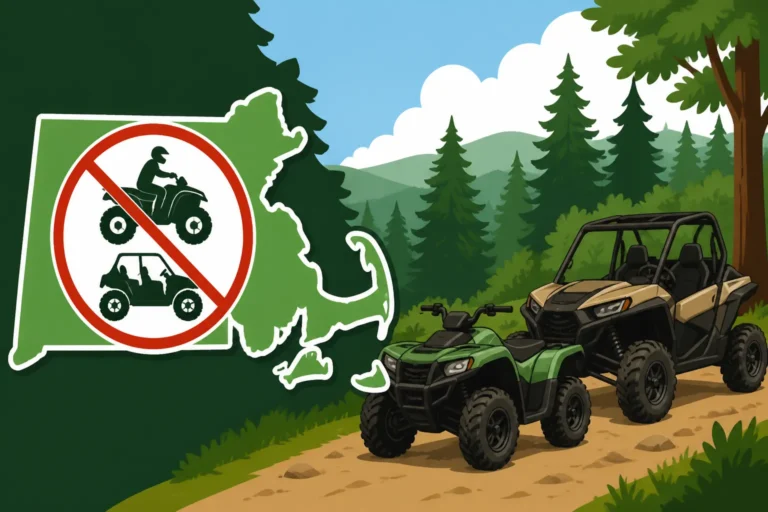
This is the detail visitors need to understand before they plan around a machine: Savoy Mountain State Forest is not an ATV riding destination. A cabin reservation does not grant permission to ride an ATV or UTV on forest roads, trails, or other land where motorized riding is not authorized. The forest’s cabin and recreation opportunities should be treated separately from legal OHV access.
That can be frustrating if you pictured unloading at the cabin and riding straight from the door. It is better to know before booking than to arrive with a trailer and discover that the riding portion of the plan does not fit the location. Review [Why Savoy Mountain State Forest Bans ATVs] and confirm current land-use rules with the responsible forest office before making a riding itinerary.
A legal ride may require driving to a different designated area, and that adds time and expense. Do not use a public road or an unmarked woods road as a shortcut between trail systems. A trail that appears connected on a map is not necessarily open to OHVs, and a road’s surface alone does not tell you whether riding is allowed.
Choose a separate riding destination before booking
If riding is the main purpose of your trip, identify the legal riding area first, then decide whether Savoy is a practical overnight base. Massachusetts OHV opportunities in the Berkshires are limited to designated locations, and rules vary by forest and vehicle type. A cabin’s proximity to a forest does not make that forest’s trails open to ATVs or side-by-sides.
Before you tow, check the destination’s current access information, season, trail conditions, parking arrangements, and vehicle restrictions. Trail access can be affected by weather, maintenance, seasonal closures, or damage. [Massachusetts Trail Conditions Before You Tow] is a useful planning topic, while [Massachusetts Trails That Allow Side-by-Sides] can help distinguish destinations that may accommodate UTVs from places with different restrictions.
Mapping apps can help you understand distances and organize a route, but they are not permission to ride. For example, onX Offroad can be useful for reviewing terrain and planning where to check next, but confirm trail legality and closures through the land manager. Do not treat a line displayed on a map as proof that an ATV or UTV may travel there.
Use the same caution when a route appears to connect a cabin area with a riding area. onX Offroad may help you see the broader landscape, but public roads, private land, and closed forest roads still require separate attention. If the route depends on a road or trail whose status is unclear, ask the relevant office before you set out.
Compare the overnight stay with the full riding weekend
A cabin can be a comfortable base for a Berkshire trip, but the right choice depends on what you want the weekend to involve. If your group mainly wants to hike, relax, or explore the area, staying at Savoy may fit the trip well. If everyone expects to ride each day, a different lodging location may reduce driving and simplify trailer logistics.
Think through a realistic schedule. For example, a group might arrive at the cabin in the afternoon, unload personal belongings, and use the next day for a separate riding area. The drive, parking, and machine transport still belong in the plan. If your group has young riders or multiple machines, allow extra time for loading, safety checks, and getting everyone organized.
You can use onX Offroad to help compare the general location of a planned riding destination with your lodging, then verify the route and access rules independently. For a broader destination-planning checklist, see [Checking Rules Before a Long Drive to the Berkshires]. It is much easier to adjust the plan at home than at a trailhead after a long tow.
How to check the cabin cost and plan a visitor stay
Verify the total before you reserve
Start with the official cabin listing for your chosen dates. Check the total charge at checkout, not only a headline nightly amount. Confirm whether the reservation includes any required charges, whether a separate parking payment may apply, and what happens if you need to cancel or change the booking.
Then make a second list for the rest of the trip. Include the route from home, fuel, meals, equipment, and any charges connected with your separate riding destination. If you are traveling with a trailer, verify parking arrangements in advance instead of assuming there will be space at the cabin or trailhead.
Keep a screenshot or written copy of the reservation details and any access instructions. This is useful if you arrive after a long drive and need to confirm check-in information or cabin rules. It also helps your group distinguish what has already been paid from what may be due at another location.
Check the cabin’s practical fit for your group
The lowest lodging total is not always the least expensive option once you account for what you need to bring and how far you must drive. Compare the listed facilities and occupancy limits with your group’s needs. A cabin that suits a couple may not be convenient for a larger family or a group carrying riding gear, helmets, coolers, and wet-weather equipment.
Ask practical questions before arrival: Is there enough room for everyone listed on the reservation? Are cooking facilities available? What should guests bring? Where can vehicles be parked? Are there restrictions that affect trailers or outdoor gear? The answers can prevent last-minute purchases and awkward surprises.
Pack for the season and the setting. Berkshire weather can shift, and a cabin stay does not eliminate the need for layers, rain protection, or a plan for muddy gear. If riding is part of the trip, keep machines and personal belongings organized separately, and follow the rules at both the cabin location and the riding area.
Use a final checklist before leaving home
A quick review the day before departure can prevent avoidable costs and wasted travel. Confirm the reservation, directions, check-in process, and the current rules for the places you plan to visit. Recheck riding access and trail conditions rather than assuming a destination is open because it was open on a previous trip.
Before loading, make sure your planned route does not rely on unauthorized forest roads or private property. onX Offroad can support route research, but use official information to confirm whether a route is open to your machine. If you cannot confirm an access point, contact the relevant office or choose a clearly authorized destination.
Use this checklist:
- Confirm the cabin reservation total and booking instructions.
- Check parking arrangements for your vehicle and trailer.
- Identify a separate legal riding area if ATV or UTV riding is part of the trip.
- Verify that the riding area allows your vehicle type and is open for your planned visit.
- Check current trail and weather conditions before towing.
- Pack supplies based on the cabin listing rather than assuming amenities are provided.
- Keep reservation details and access information available during the trip.
A Savoy Mountain cabin can make a relaxing base for a Berkshire visit, but the final cost depends on more than the room charge. Budget lodging, parking, transportation, and any separate riding-area expenses on their own, and verify the rules before you go. That small bit of planning helps keep a cabin weekend enjoyable instead of turning into an expensive detour.
Disclaimer
This article is for general informational purposes only and does not constitute professional advice. Laws, prices and regulations vary by location and change over time. Consult a qualified professional for guidance on your specific situation.