Massachusetts Tick Season and Riding Gear
A Massachusetts ride can leave you thinking about mud, fuel, and a sore back—not whether a tick is tucked into your riding pants. But ticks are part of the outdoor season, especially around brushy trail edges and leaf litter. This guide explains when to be alert, what gear helps, how to check yourself after riding, and what to do if you find a tick.
When ticks are a concern on Massachusetts trails
Spring, summer, and fall all deserve attention
Tick activity in Massachusetts is not limited to one brief stretch of warm weather. Blacklegged ticks can be active whenever conditions allow, and riders may encounter them in spring, summer, and fall. Adults are often active in cooler parts of the year, while smaller nymphs can be easy to miss during warmer months. That’s one reason it helps to make tick precautions part of every ride rather than trying to guess whether a particular weekend is “tick season.”
Ticks are often found in wooded or brushy places, tall grass, and leaf litter. They don’t usually leap or fly onto riders; they wait on vegetation and attach when a person or animal brushes past. An ATV or UTV ride does not eliminate the risk. You may still walk around a trailhead, step into brush to check a machine, or kneel near the edge of a route while strapping down gear.
Conditions change as the year moves along. Spring rides may mean wet trails and layers that cover your skin, while summer rides often involve more exposed skin and sweaty clothing. In fall, leaf litter can hide ticks and make them difficult to spot on dark fabric. If you’re planning around changing ground conditions, [Massachusetts Riding in Spring] and [Massachusetts Riding in Fall Foliage] can help you think through the broader seasonal trade-offs.
Trail edges matter as much as the trail itself
A rider may spend most of the day on a machine and still have several opportunities for tick exposure. Common moments include unloading at a trailhead, walking around a parking area, taking a break beside tall grass, or helping someone whose machine is stuck near brush. A dog riding along or waiting at camp can also pick up ticks and bring them closer to people.
The risk is not a reason to avoid every wooded ride. It is a reason to notice where you stop and what you brush against. When you can, take breaks in a maintained, open area rather than sitting in tall grass or leaning against thick vegetation. Keep riding clothes and bags off the ground, and avoid pushing through brush when an authorized route gives you a clearer path.
Trail conditions can influence where you end up walking. A washed-out section, mud, or a blocked route may tempt riders to step off the trail and search for a way around. Stay on authorized routes and follow posted closures instead of making a new route through vegetation. Before hauling out, review [Massachusetts Trail Conditions Before You Tow] and [Massachusetts Mud Season and Trail Damage] so a difficult section doesn’t turn into an unnecessary off-trail detour.
| Ride situation | Tick-aware choice | After the ride |
|---|---|---|
| Unloading at a brushy trailhead | Keep pants tucked into boots or socks where practical | Check ankles, socks, and lower legs |
| Taking a break | Choose an open, maintained spot and keep gear off vegetation | Brush off clothing before getting back on |
| Riding in warm weather | Use breathable coverage and an appropriate repellent | Check exposed skin and clothing |
| Riding in leaf litter | Wear clothing that makes ticks easier to see | Inspect folds, seams, and hems |
| Returning home with dusty or damp gear | Change out of riding clothes promptly | Check clothing, shower, and do a full-body tick check |
What to wear and bring for tick protection
Choose clothing that covers skin without making the ride miserable
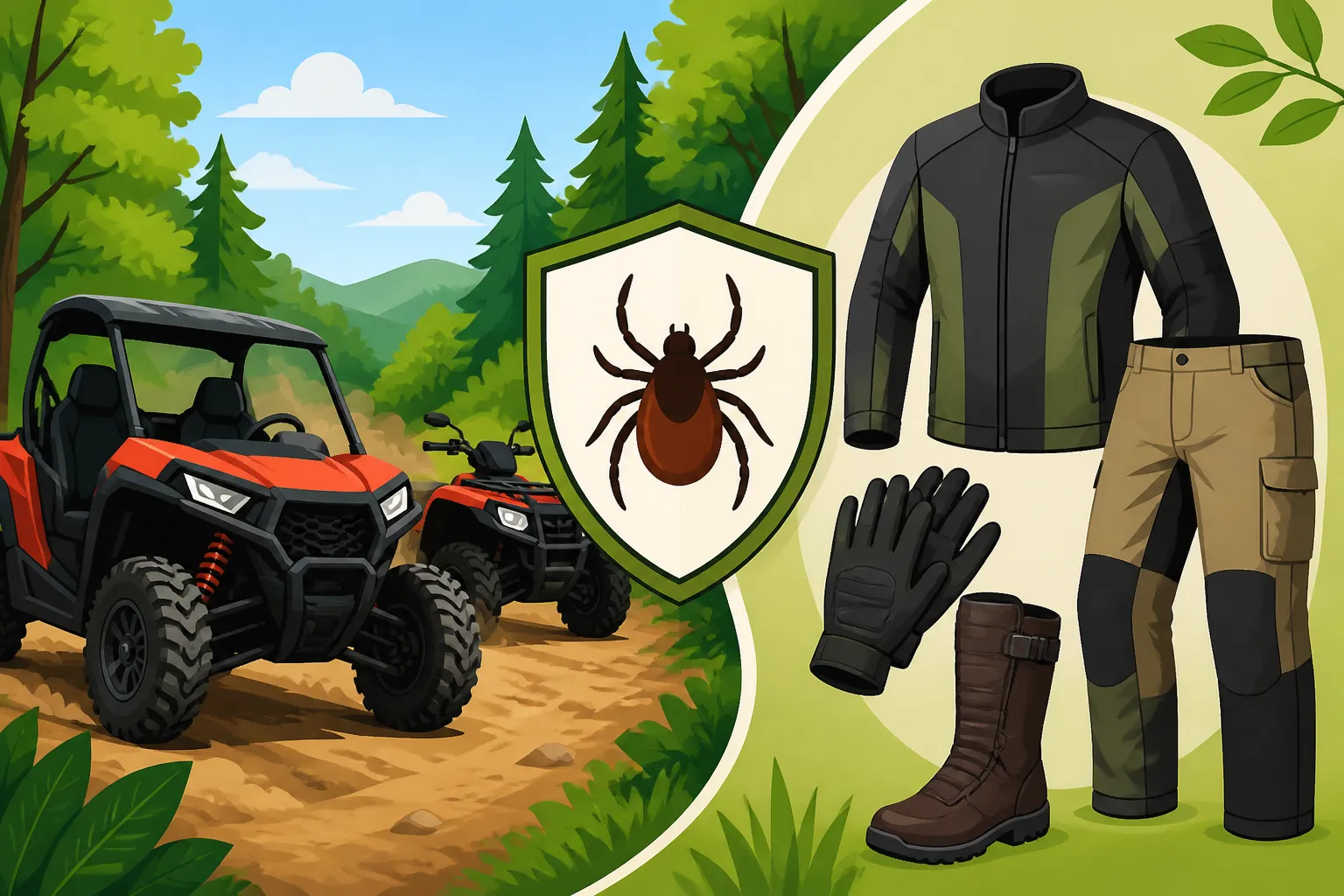
Long sleeves, long pants, and closed footwear create a physical barrier between your skin and vegetation. That can be uncomfortable on a hot, active ride, so focus on practical choices rather than piling on heavy layers. Lightweight, breathable riding clothes can cover more skin without making the day unbearable. Tall boots or gaiters can help protect the gap between pants and footwear, and tucking pants into boots or socks makes it harder for ticks to crawl underneath.
Light-colored clothing can make a crawling tick easier to notice, although it does not prevent one from attaching. Check that cuffs, waistbands, and collars sit comfortably and do not leave large gaps. If you regularly ride in brush, consider keeping a dedicated set of riding clothes that you can remove as soon as you get home.
Gear needs to work for the ride, too. A layer that catches on controls or limits movement is not a good solution. Try your clothing before a long day, especially if you have added gaiters, a neck covering, or another layer. For a summer ride, balance coverage with ventilation, hydration, and breaks. [What Bug Spray to Pack for a Berkshire June] offers additional seasonal packing ideas for a Berkshire outing.
Use repellents according to their labels
A repellent can add another layer of protection, but the product label matters. Use an EPA-registered skin repellent according to its directions, paying attention to where and how often it can be applied. Do not apply it to skin that the label says to avoid, and take care around your eyes and mouth. If you are applying repellent to a child, follow the product’s age guidance and adult-application instructions.
Permethrin products intended for clothing or gear are different from skin repellents. Follow the product label carefully, and do not apply clothing-treatment products directly to skin. If you buy factory-treated clothing, follow its care instructions. Avoid combining products or reapplying them more often than their labels direct just because the ride is long or the weather is sweaty.
It helps to make application part of your pre-ride routine. Put on the clothing you plan to wear, apply products as directed, and allow any treated clothing to dry as instructed before riding. Keep products stored safely in your vehicle or at home, rather than loose where they could spill onto helmets, food, or a child’s gear. If you want help planning a route and locating a trailhead, onX Offroad can be part of your preparation; it does not replace repellent, protective clothing, or a tick check.
Pack for checks and unexpected stops
A small personal kit can make tick checks and basic cleanup easier. Consider carrying a fine-tipped pair of tweezers, a small sealed bag or container, tissues, and a spare layer of clothing. A hand mirror can help you inspect areas that are difficult to see. Keep the kit somewhere accessible instead of buried under tie-downs and riding equipment.
If you use onX Offroad to plan a route or mark a parking spot, remember that mapping tools help with navigation, not tick prevention. Set up your route before you leave, and keep a separate plan for checking yourself and your gear after the ride. Cell service can be limited in wooded areas, so do not rely on an app as your only source of directions or emergency planning.
A quick routine is easier to follow when the whole group knows it. Before heading home, brush visible debris from clothing, check exposed skin, and look over the places where ticks are most likely to hide. Make the stop practical rather than elaborate: a few focused minutes at the truck can catch a tick before it disappears into a waistband or a seat.
How to check yourself, your gear, and your riding group
Do a full-body check after every ride
Once you’re home, change out of your riding clothes and check your body carefully. Pay special attention to the scalp and hairline, behind the ears, under the arms, around the waist, behind the knees, and in the groin area. Ticks can be small and easy to overlook, so take your time and use a mirror or ask someone you trust to check areas you can’t see well.
Showering soon after coming indoors can help you spot ticks that have not attached yet. Check children and other riders in your group, too, especially if they spent time walking through brush. Pets should be checked as well; follow your veterinarian’s advice on tick prevention for animals. A pet’s prevention plan is not a substitute for checking people or the vehicle.
Do not forget the machine and the gear. Look over boots, cuffs, gloves, helmets, jackets, bags, and straps before putting them away. Ticks can be carried indoors on clothing or equipment. If clothing may have ticks on it, handle it carefully and use a dryer or other laundry approach according to the garment and care-product instructions. For longer trips, keep worn clothing separate from clean layers in a closed bag.
Remove an attached tick promptly and carefully
If you find an attached tick, use fine-tipped tweezers to grasp it as close to the skin as possible. Pull upward with steady, even pressure. Try not to twist or jerk it, and avoid crushing the tick with your fingers. After removal, clean the bite area and your hands. Do not use petroleum jelly, heat, nail polish, or other folk remedies to make the tick detach.
If the mouthparts appear to remain in the skin and cannot be easily removed with clean tweezers, avoid digging deeply into the skin. Keep an eye on the area and contact a health professional if you have concerns. You can save the tick in a sealed container or take a clear photograph if you want to discuss it with a clinician. If you do, note the date and where you were riding.
Pay attention to how you feel after a bite. A rash, fever, chills, headache, muscle or joint aches, or other new symptoms warrant a call to a healthcare professional. Not every bite leads to illness, and symptoms can have different causes, so avoid self-diagnosing from a photo or a single sign. Share when the bite happened and where you were riding, and follow the clinician’s advice about monitoring or care.
Make tick checks part of your ride routine
Before you leave home
Start by checking the forecast and choosing clothing that suits both the weather and the terrain. Pack skin repellent and any clothing treatment you plan to use, following their labels. Add tweezers and a clean change of clothes to your kit. If you ride with family or friends, agree on a simple post-ride check so nobody feels awkward about bringing it up later.
Planning the route is another part of a smooth day. Use current trail information and respect closures and access rules; a navigation app can help you organize a route, but it cannot confirm that every track is open or permitted. onX Offroad may help you identify and save a planned route or trailhead, but check local information separately before you haul a machine to the area. For seasonal ideas, [Massachusetts Riding in Summer] and [Massachusetts Trail Closures After a Storm] can help you plan around conditions and access.
During the ride and at stops
Stay on the route you are allowed to ride, and avoid brushing through vegetation to bypass a muddy or blocked stretch. When you stop, choose an open spot when possible. Keep jackets and bags on a clean surface or inside the vehicle rather than on grass or leaf litter. If someone needs to inspect a machine, they can do so without kneeling in brush when there is a safer, clearer place nearby.
Be considerate of other trail users, too. A group that spreads out into vegetation can create avoidable exposure and trail damage. Give hikers room, keep to the designated route, and do not cut across the edge to pass. [Massachusetts Trail Etiquette Locals Expect] and [Riding Etiquette When You Meet Hikers] provide useful reminders for sharing trail space responsibly.
At the trailhead and back home
Before loading, make a quick check of lower legs, socks, waistbands, and visible clothing. Once home, change clothes, check your body, and inspect the gear before storing it. If you rode with other people, remind them to do the same; a short, friendly prompt can be more useful than assuming everyone has a routine.
Tick prevention is not about making a ride feel risky or turning a day outdoors into a checklist marathon. It is about a few habits that fit naturally around loading, riding, and unloading. Wear practical coverage, use repellent as directed, limit unnecessary contact with brush, and check yourself after each ride. With those steps in place, you can focus more on the route and less on wondering what might have crawled home with you.
Disclaimer
This article is for general informational purposes only and does not constitute professional advice. Laws, prices and regulations vary by location and change over time. Consult a qualified professional for guidance on your specific situation.