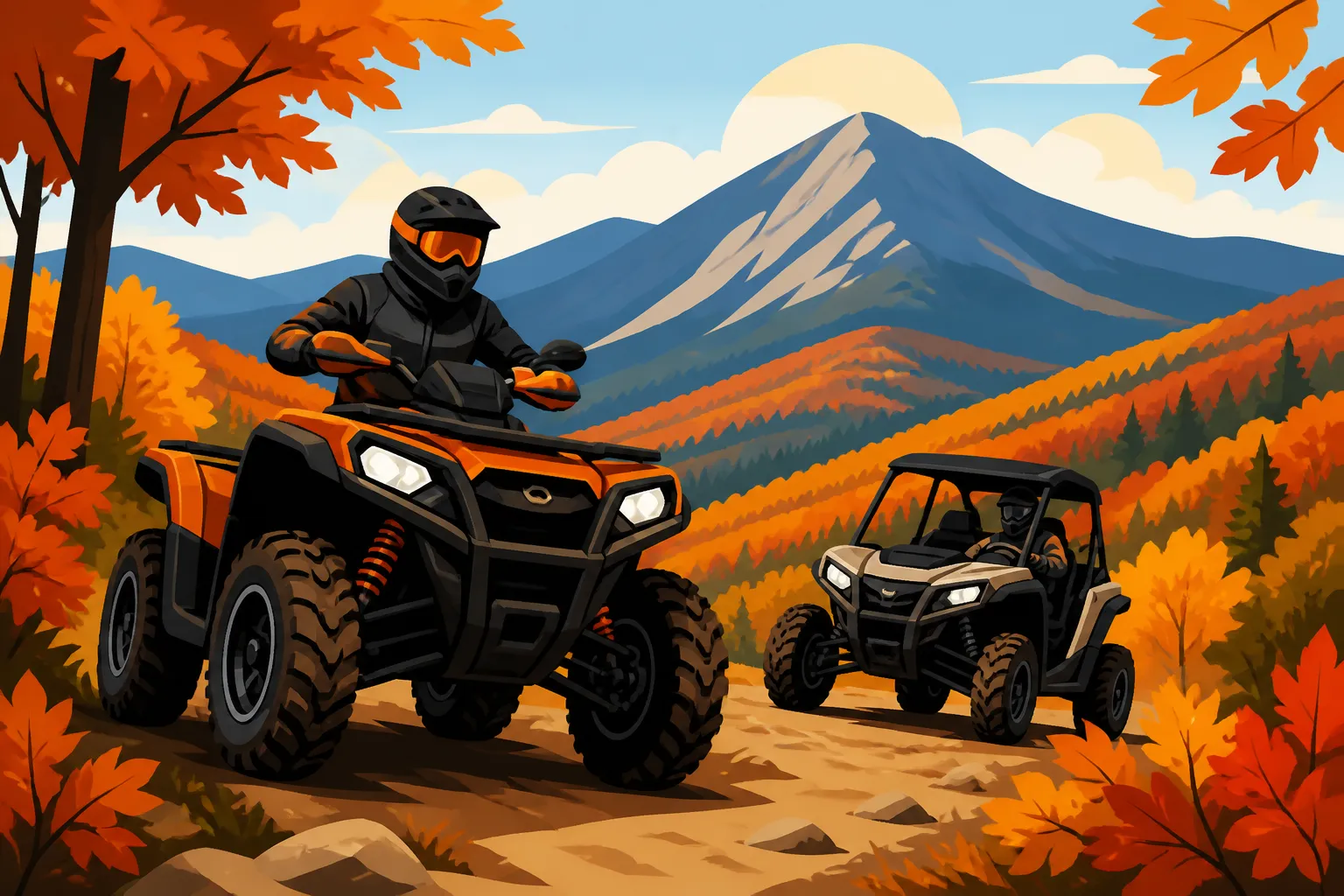
October Mountain’s 30 Miles in Massachusetts
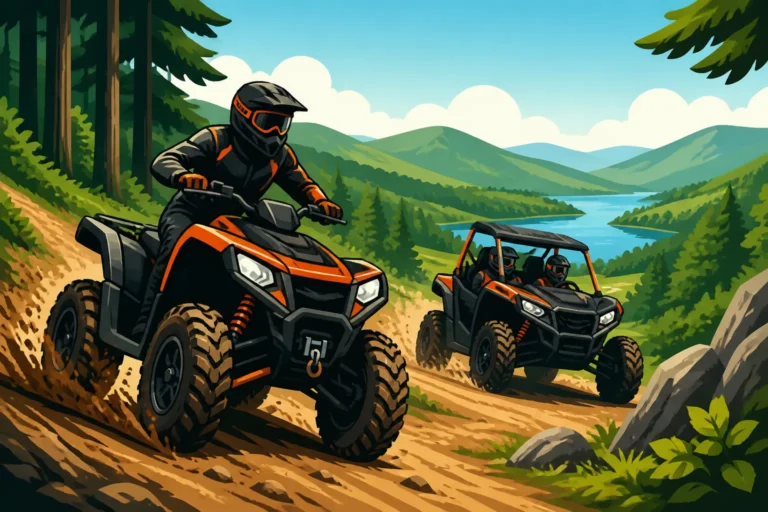
October Mountain State Forest draws riders to the Berkshires for roughly 30 miles of designated off-highway vehicle trails, but mileage alone doesn’t tell you whether the ride will suit your machine, skill level, or plans for the day. This guide explains how to prepare, what trail conditions to expect, how to plan a route, and what to check before hauling your ATV or UTV to the forest.
What to Expect From October Mountain’s OHV Trails
The forest’s riding network is a designated route, not an open playground
October Mountain State Forest is in the central Berkshires, with access points in the Lee, Lenox, Washington, and Becket area. Riders often describe the OHV network as having about 30 miles of trails. That figure is useful for setting expectations, but it doesn’t mean all forest roads, logging tracks, or visible paths are open to motorized riding. Stay on routes specifically designated for OHVs and obey posted closures and signs.
This distinction matters when you reach a fork that looks promising. A path may appear wide and well used yet still be closed to motorized vehicles, reserved for another use, or outside the authorized riding network. Taking a wrong turn can mean trespassing or damaging a route that is not maintained for OHVs. A paper or digital map can help you keep your bearings, but signs and current forest instructions should take priority.
If you’re comparing the area with nearby riding options, [Massachusetts ATV Trails: Three Berkshire Forests] gives useful context for thinking about the region’s designated OHV areas. Each forest has its own route layout and access conditions, so don’t assume that a machine, trail, or riding habit suitable at one location will automatically fit another.
Thirty miles can make for a full day
The listed mileage can sound modest if you’re used to long, fast routes. In practice, trail mileage doesn’t tell the whole story. Rocky footing, uneven surfaces, steep sections, turns, stops to check the map, and time spent helping a newer rider all slow a group down. A route that looks short on a map may take longer than expected when you ride it carefully.
Plan your day around the group’s pace rather than trying to cover every available mile. For example, a family group with a novice rider may want to start with a shorter outing, take a break, and decide whether everyone feels comfortable continuing. A group of experienced riders can still be slowed by a mechanical issue, an unexpected obstacle, or a route choice that takes them away from their planned loop.
For riders who want to understand how the mileage fits into a day, [Riding October Mountain's 30 Miles in a Day] is a useful companion topic. The key is to treat a mileage estimate as a planning aid, not a promise that every route will be open or that the full network will be manageable in one visit.
| Planning factor | What to keep in mind |
|---|---|
| Trail mileage | The network is commonly described as roughly 30 miles, but access and closures can affect what you can ride |
| Riding pace | Rough surfaces, stops, and group experience can make a short route take much of the day |
| Route choice | Ride only designated OHV routes and follow signs at junctions |
| Machine fit | Confirm that your ATV or UTV is permitted and appropriate for the route |
| Season | Check the forest’s current riding-season information before traveling |
| Navigation | Use maps to plan, but follow current official notices and on-site signs |
Choose a Route That Fits Your Rider and Machine
Expect uneven ground and changing trail conditions
Berkshire riding can involve rocky stretches, roots, ruts, and uneven ground. Conditions vary by route and weather, and a trail that felt manageable on a dry day may become more demanding after rain. Even experienced riders can find that a slow, technical section asks more of them than a longer, smoother route would.
Before the trip, be honest about your group’s abilities. If one rider is new to trail riding, avoid building the day around the most difficult terrain you can find. Set a pace that allows everyone to stop safely, communicate, and make decisions without feeling rushed. A rider who is struggling early in the day may tire quickly, and fatigue can make obstacles and mistakes more likely.
Use [Massachusetts Trail Difficulty Ratings] as a starting point for understanding trail descriptions, while remembering that a rating cannot account for every rider or every day’s conditions. For a more complete look at the local network, [October Mountain State Forest Riding in Massachusetts] can help you frame your expectations before you set out.
Match your vehicle to the route and riding group
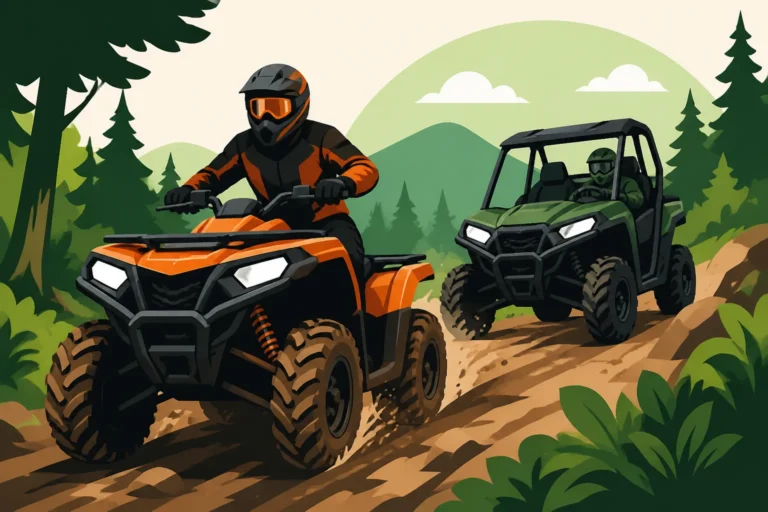
A capable machine is not automatically a suitable machine for every trail. Consider the vehicle’s width, turning room, ground clearance, tires, brakes, and condition. A side-by-side may feel stable and comfortable, but its width can be a constraint on routes built for narrower machines. A quad that fits through tight turns may still need good ground clearance and tires suited to rough surfaces.
Check the current rules for the type of machine you plan to bring rather than relying on what another rider drove on a previous visit. If you have a UTV, confirm that the specific routes you intend to use allow it. If someone in your group has a youth-sized ATV, make sure the rider’s age, supervision, and safety requirements are handled before the trip. Machine type and rider eligibility are separate questions; meeting one requirement does not settle the other.
Avoid treating a machine’s advertised capability as a substitute for a careful inspection. Check tires, brakes, throttle operation, lights, steering, and visible damage before leaving home. A worn belt, weak battery, damaged tire, or loose component can turn a fun day into a difficult recovery, especially when the group is away from the trailhead.
Plan the Trip Before You Tow to the Berkshires
Check access information and conditions before departure
A long drive is frustrating enough without arriving to discover a closure, a seasonal restriction, or a parking limitation you didn’t anticipate. Before leaving, check the latest information from the managing agency and any posted forest notices. Confirm the riding season, permitted vehicle types, access locations, and any temporary closures that could affect your route.
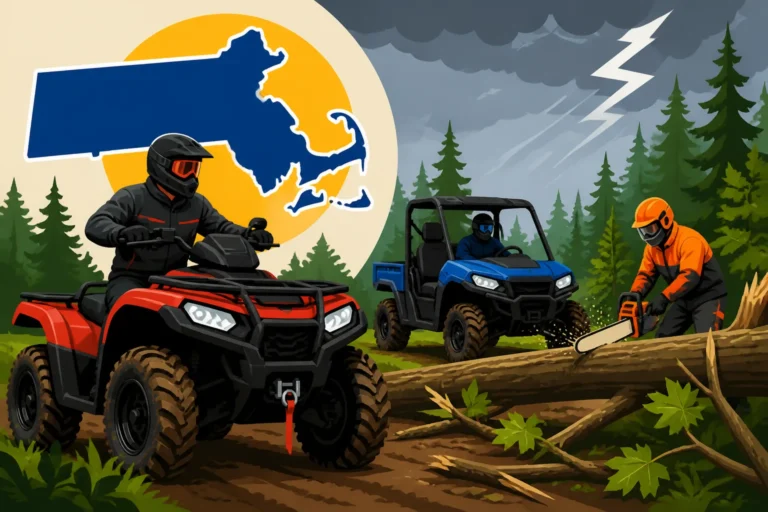
This step is especially important after heavy rain or a storm. Water can deepen ruts, wash away loose material, and leave branches or other debris across a trail. A route may be technically open but still be a poor choice for your machine or group that day. [Massachusetts Trail Conditions Before You Tow] covers the kind of pre-trip checks that can spare you a wasted drive and an uncomfortable ride.
If you’re unfamiliar with October Mountain, avoid assuming that a road you can drive to is also an OHV trailhead or that every access point has room for a truck and trailer. Check the route to the intended staging area, parking arrangements, and any local instructions. [Massachusetts Trailheads With Trailer Parking] is relevant when you need to think through the practical details of unloading and securing a trailer.
Bring registration, required safety items, and a route plan
Handle registration and required riding credentials before the day of the ride. Massachusetts has its own OHV registration requirements, and visitors should not assume that an out-of-state sticker alone is enough. Review [Massachusetts Requires Its Own Registration] and [Out-of-State OHV Stickers Are Not Valid in Massachusetts] if you’re traveling from another state. Riders should also check the safety-certificate rules that apply to their age and where they plan to ride.
Keep required documents available and make sure each rider understands the basic plan. Agree on a meeting point if the group gets separated, decide who will lead and sweep, and set a simple rule for what to do if someone stops unexpectedly. On a wooded trail, a small disagreement about which fork to take can quickly split a group if nobody has agreed to pause at junctions.
For navigation, some riders use onX Offroad to review routes and mark a planned ride before leaving home. A phone app can be helpful for orientation, but don’t treat it as proof that a route is open or authorized. Download or save what you need before entering areas with poor service, carry a backup map when practical, and use official notices and posted signs to make final decisions. [Massachusetts ATV Trail Map Downloads] is another useful starting point for map planning.
Ride Responsibly on Shared and Sensitive Forest Land
Follow trail etiquette at every encounter
A designated OHV route still exists within a larger forest setting. You may encounter other riders, hikers, maintenance crews, or people using nearby roads and facilities. Slow down when visibility is limited, stay alert at bends and junctions, and give other trail users room. Dust, noise, and speed can affect people well beyond the immediate group, particularly near trailheads and forest facilities.
When you meet another rider on a narrow section, avoid squeezing past in a way that risks contact or damages the trail edge. Stop in a safe spot, communicate clearly, and let the other person pass when there is room. If you encounter hikers, give them time to move to a safe location and continue at a controlled pace. A friendly greeting and a little patience can prevent a tense interaction.
Noise is part of off-highway riding, but unnecessary revving and aggressive riding near other visitors create problems for everyone. Stay within the designated route, use a suitable muffler, and ride at a speed that lets you respond to what is ahead. [Massachusetts Trail Etiquette Locals Expect] offers more guidance for sharing trails respectfully.
Protect the route by avoiding wet-ground damage
Riding through standing water or deep mud may seem like a harmless way to keep moving, but repeated passes can widen a trail, deepen ruts, and send sediment into nearby drainage. If a section is saturated, consider turning around rather than trying to power through it. Spinning tires can make a temporary soft spot into a lasting problem, and detouring around the mud can damage vegetation beside the route.
This is one reason to check conditions before you go and to make conservative choices once you arrive. If a route is marked closed, don’t ride around a barrier or follow a new-looking track to get past it. Closures may protect a damaged trail, address a safety issue, or prevent further harm while work is underway. A detour that seems convenient can create more damage and threaten future access.
A responsible ride also includes taking out everything you bring in. Secure loose gear, pack out food wrappers and litter, and leave the staging area clean. If you see a hazardous obstruction or a damaged sign, note its location and report it through an appropriate forest contact rather than attempting a repair that could put you at risk.
Prepare for a Safer, More Enjoyable Riding Day
Use a simple pre-ride checklist
A checklist helps because the small things are easy to forget when you’re loading machines, arranging a group, and trying to get on the road. Before departure, verify that each machine is in safe working order and that all required registration and safety documents are ready. Make sure helmets and other protective gear fit properly, and bring water, food, basic tools, and a first-aid kit appropriate to the group.
A sample checklist can be adjusted to your machine and the day’s plan:
- Confirm the forest’s riding access, season, closures, and vehicle rules.
- Check registration and applicable safety-certificate requirements for every rider.
- Inspect tires, brakes, steering, throttle, lights, and visible fasteners.
- Pack helmets, eye protection, water, snacks, first aid, and weather-appropriate layers.
- Save your route information and agree on a meeting point.
- Secure the trailer and confirm the staging and parking plan.
- Tell someone who is not riding where you plan to go and when you expect to return.
Bring more water and layers than you think you’ll need. Berkshire weather can feel different once you’re moving through shaded forest or exposed areas, and a ride can last longer than planned. A light rain layer and a warm extra layer take up little space compared with the discomfort of being cold or wet far from the parking area.
Have a plan for delays and mechanical trouble
Even a well-prepared ride can be interrupted by a flat tire, a machine that won’t restart, a rider who needs a break, or a route that takes longer than expected. Make sure your group knows how to stop safely and where to regroup. If one machine develops a problem, don’t leave a rider alone while everyone else continues. Stay together and decide whether the issue can be handled safely on site or whether the group needs to head back.
Phone coverage can be inconsistent in wooded areas, so avoid relying on a call or live map as your only backup. Save essential information before the ride and carry basic tools suited to your machine. Some riders use onX Offroad to review their position and route, but a battery problem or poor signal can limit a phone’s usefulness. Keep the device charged, consider a portable battery, and know how to read a saved map without a data connection.
Give yourself a generous return window. If the group is running behind, skip an extra loop rather than rushing the last stretch or riding after the forest’s permitted hours. A satisfying day is not measured by squeezing in every mile. It’s a day when everyone gets back safely, the machines are intact, and the trail remains in good shape for the next visit.
Disclaimer
This article is for general informational purposes only and does not constitute professional advice. Laws, prices and regulations vary by location and change over time. Consult a qualified professional for guidance on your specific situation.