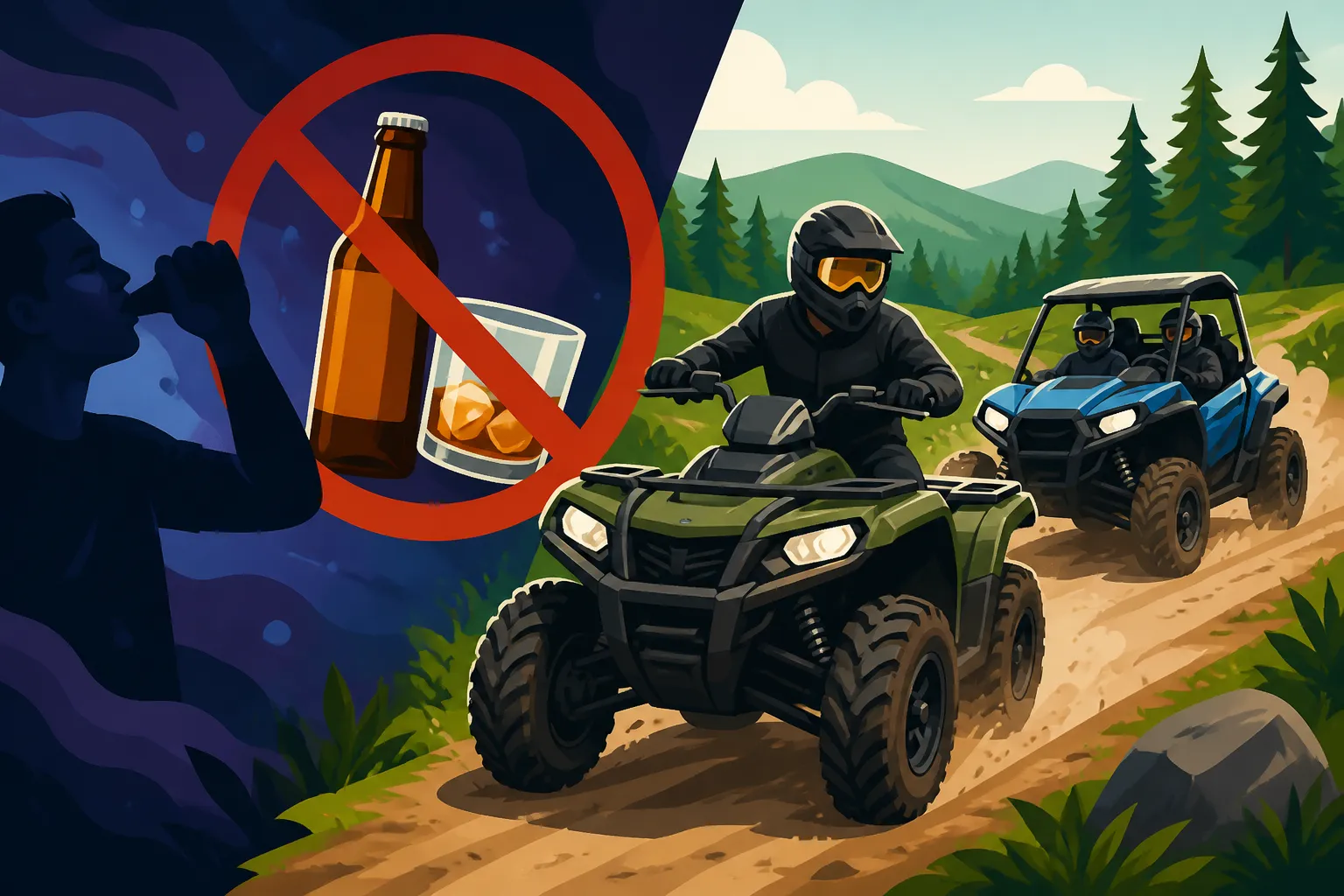
Riding Under the Influence on a Berkshire Trail
There's a certain allure to enjoying the wide-open spaces of Massachusetts, perhaps deep in the Berkshires, with friends and your trusty ATV or UTV. For many, that mental picture might include kicking back with a cold beverage after a ride, or even a casual drink while out on the trails. However, what often gets dangerously overlooked are the serious legal repercussions of operating an off-highway vehicle (OHV) under the influence in the Bay State. This guide will walk you through the very real, often surprising, ways that Massachusetts DUI laws apply to your recreational machines, and why taking that risk isn't worth it.
The Harsh Reality: Massachusetts DUI Laws Apply Off-Road
It’s a common, yet utterly false, assumption: "I'm not on a public road, so drunk driving laws don't apply to my ATV." This misconception can lead to severe penalties, not just a slap on the wrist. Massachusetts is very clear: operating any motorized vehicle, including ATVs and UTVs, while impaired by alcohol or drugs, is against the law, regardless of whether you’re on a paved highway or a remote woodland trail.
What "Operating Under the Influence" Truly Means in Massachusetts
In Massachusetts, "operating under the influence" (OUI) isn't just about feeling "drunk." It legally means that your ability to operate the vehicle safely has been impaired by alcohol, marijuana, or other drugs (including prescription medications that might make you drowsy). For individuals 21 and over, a blood alcohol content (BAC) of 0.08% or higher is considered per se evidence of impairment. For anyone under 21, Massachusetts has a zero-tolerance policy, meaning even a trace amount of alcohol can lead to an OUI charge.
Think about it this way: you’ve been out all day, riding hard, and decide to have a couple of beers back at a makeshift campsite in October Mountain State Forest before heading back to your trailer. Even if you feel fine, that alcohol could easily put you over the legal limit, especially if you’re fatigued from a day of riding. Your reaction time, judgment, and coordination, all crucial for safe OHV operation, are compromised long before you might feel intoxicated. It’s not just about how much you drink, but how it affects your body and your ability to safely control a powerful machine that requires constant attention.
Why Off-Road Machines Are Not Exempt
This is where many riders get into trouble. There's a pervasive myth that because ATVs and UTVs aren't "street legal," they exist in some kind of legal vacuum when it comes to OUI. Nothing could be further from the truth in Massachusetts. Our state’s laws, specifically Chapter 90B of the Massachusetts General Laws, explicitly cover "recreational vehicles," which include your ATVs, dirt bikes, and side-by-sides. This means that an Environmental Police Officer on a state forest trail has the exact same authority to enforce OUI laws as a State Trooper on I-90.
These officers are patrolling the very trails you ride, from Pittsfield State Forest to Beartown, ensuring rider safety and compliance with all regulations. If you're observed driving erratically, involved in an accident, or exhibit signs of impairment, they have every right to stop you, administer field sobriety tests, and if necessary, place you under arrest for OUI. Many riders are shocked to learn this when they find themselves pulled over, miles from any paved road, facing the same serious charges as someone driving a car on a public highway.
The Immediate Consequences of an OHV OUI in Massachusetts
When an Environmental Police Officer stops you for suspected OUI on a Berkshire trail, the situation escalates quickly and has immediate, tangible impacts. It's not just a warning or a simple fine; it's a full-blown legal process that begins right there on the trail.
On-the-Spot Enforcement and Machine Seizure
The moment an officer determines there's probable cause for an OUI arrest, things get very real. You'll be asked to perform field sobriety tests, and if you fail or refuse, you'll likely be arrested. But it doesn't stop there. Your ATV or UTV, which you’ve likely invested a significant amount of money and time into, will be impounded. That means it's towed off the trail, often at your expense, and stored in a secure location. Getting it back is usually a bureaucratic process involving proof of ownership, payment of towing and storage fees, and arranging for a sober, licensed driver to retrieve it. This alone can be a major headache, not to mention a significant financial hit, especially if you're miles from home. Don't forget, there are specific procedures for [Getting a Seized Quad Back From the State].
Imagine planning a fun weekend ride in the Berkshires with friends, only to have your machine seized on Saturday morning. Suddenly, your plans are ruined, you're facing an arrest, and your expensive off-road vehicle is in impound. This immediate inconvenience and financial burden are just the tip of the iceberg when it comes to the full consequences of an OHV OUI. It's a stark reminder that the serene setting of a state forest trail doesn't grant immunity from the law.
Fines, Penalties, and Court Proceedings
An OUI charge, even if it originated on a remote trail, is a criminal offense in Massachusetts. This means you’ll be facing court appearances, potentially legal fees for a defense attorney, and a range of penalties that can significantly disrupt your life. For a first offense, you could be looking at substantial fines, and even a period of incarceration, though this is often suspended for a first offense. More importantly, you'll likely face a suspension of your regular driver's license, not just your privilege to operate an OHV. This is a critical point many riders overlook: an OUI on an ATV can prevent you from driving your car to work, picking up groceries, or any other daily task requiring a driver's license.
Subsequent offenses carry even harsher penalties, including mandatory jail time and longer license suspensions. The legal process is lengthy, stressful, and expensive. Beyond the immediate fines, there are court costs, potential probation fees, and the long-term impact on your criminal record. It's far more than just a "trail infraction"; it's a serious legal battle that can follow you for years.
| Offense | Minimum Fines (General) | Potential Jail Time | Driver's License Suspension | OHV Privileges |
|---|---|---|---|---|
| 1st OUI | Substantial Fines | Up to 2.5 years (often suspended for first offenders) | Minimum 1 year | Suspended |
| 2nd OUI | Higher Fines | Minimum 30 days | Minimum 2 years | Suspended |
| 3rd OUI | Even Higher Fines | Minimum 150 days | Minimum 5 years | Suspended |
Please note: These are general descriptions. Actual penalties depend on specific circumstances, prior record, and judicial discretion. Always consult a legal professional for specific advice.
Long-Term Impacts Beyond the Trail
The repercussions of an OHV OUI extend far beyond the initial arrest and court case. They can ripple through various aspects of your life, impacting your ability to drive, your financial stability, and even your personal and professional reputation.
Your Driver's License and Future Driving Privileges
Perhaps one of the most surprising and impactful consequences for many is the effect an OHV OUI has on your regular driver's license. Massachusetts law treats an OUI on an ATV or UTV with the same gravity as an OUI in a car. This means that a conviction will almost certainly lead to the suspension of your driver's license, making it impossible for you to legally operate any motor vehicle, including your daily commuter car. The duration of this suspension can range from several months to several years, depending on whether it's a first or repeat offense.
Reinstatement of your driver's license isn't a simple matter either. You'll likely need to complete specific alcohol education programs, pay significant reinstatement fees, and potentially face an Ignition Interlock Device requirement in your vehicle. For many, losing their driver's license means losing independence, difficulty getting to work, and a drastic change in daily life. This is why understanding [Massachusetts DUI Law and Off-Road Machines] is so crucial; it's not just about your off-road fun, but your entire mobility.
Insurance, Employment, and Personal Life
An OUI conviction can be a red flag that follows you for years. Your auto insurance premiums will almost certainly skyrocket, making it significantly more expensive to insure your car, and potentially even your OHV (though [Does Massachusetts Require Insurance on a Registered ATV?] usually answers no, you might choose to get it anyway). Some insurance companies may even refuse to cover you. The financial strain can be substantial and long-lasting.
Beyond finances, an OUI can impact your employment. Many jobs require a clean driving record, especially those involving company vehicles or significant travel. A conviction could lead to job loss or make it difficult to secure new employment. Furthermore, the social stigma associated with an OUI can strain personal relationships and damage your reputation within your community. It’s a serious mark that goes beyond just a temporary inconvenience. Even if you're using high-quality parts from brands like SuperATV to keep your machine in top shape, they can't protect you from the legal consequences of impairment.
Accident Liability and Other Legal Headaches
If you're involved in an accident while operating an OHV under the influence, the legal ramifications multiply exponentially. Not only will you face OUI charges, but you'll almost certainly be found liable for any damages or injuries that occur. This means you could be personally responsible for medical bills, property damage (for instance, if you hit a stone wall or another machine), and even long-term care costs if someone is seriously injured. Without insurance (which, as we know, isn't legally mandated for ATVs in Massachusetts but is always a good idea), these costs can be financially devastating.
The civil lawsuits that can arise from such an accident can drag on for years, adding immense stress and financial burden to your life. The legal system looks very unfavorably upon impaired operation, making it exceedingly difficult to defend against liability claims. Knowing [Who Pays When a Rider Hits a Stone Wall] takes on a whole new, much more serious, meaning when alcohol is involved.
Staying Safe and Legal on Berkshire Trails
Given the severe consequences of an OHV OUI, the best and only sensible course of action is to completely avoid alcohol and drugs when you're planning to operate your ATV or UTV. The beauty and excitement of the Massachusetts trails, especially in the scenic Berkshires, are best enjoyed with a clear head and an unimpaired judgment.
Planning for a Sober Ride
Preparation is key to a safe and legal ride. If you plan on consuming alcohol, make sure you have a designated sober operator for your OHV, or, more practically, a designated driver for your truck and trailer who will handle all transportation to and from the trails. Better yet, pack plenty of non-alcoholic beverages – water, juices, sports drinks – for your trail adventure. There are endless ways to enjoy the camaraderie and the stunning natural environment of the Berkshires without introducing the risk of impairment.
Remember that [Why Alcohol at a State Forest Trailhead Is Trouble] isn't just about public consumption, but about the very real potential for making poor choices before operating your machine. Embrace the natural high of navigating challenging terrain, exploring new trails, and spending quality time outdoors. This responsible approach ensures everyone's safety and protects you from serious legal trouble.
Understanding the Rules of the Road (and Trail)
Beyond sobriety, being a responsible OHV rider in Massachusetts means knowing and adhering to all the state's regulations. This includes ensuring your machine is properly registered with the Massachusetts Environmental Police, carrying your [Massachusetts Registration Cards Carried on Board], and having the appropriate safety certificates if you're under 18. Familiarize yourself with [Massachusetts ATV Laws Under Chapter 90B], which outlines everything from age restrictions to equipment requirements.
Always wear a helmet and appropriate safety gear. Conduct pre-ride inspections, perhaps checking those robust SuperATV accessories you’ve installed. Adhere to posted speed limits, stay on marked trails, and always obtain [Massachusetts Landowner Permission in Writing] if riding on private land. These practices, combined with sober operation, are the cornerstones of safe and enjoyable off-roading in the Bay State.
Disclaimer
This article is for general informational purposes only and does not constitute professional advice. Laws, prices and regulations vary by location and change over time. Consult a qualified professional for guidance on your specific situation.