Reflective Gear Worth Adding to Your Quad
Many of us love the thrill of off-road riding in Massachusetts, but sometimes our trails cross public roads or we need to navigate dimly lit areas. The reality is, sharing space with cars, trucks, and even other off-roaders can be nerve-wracking, especially when visibility is low. This guide is all about boosting your presence and peace of mind by exploring essential reflective gear for your ATV or UTV.
Why Reflective Gear is Crucial for Massachusetts ATV/UTV Riders
Let's be honest, the trails in Massachusetts can be absolutely gorgeous, but they also bring you into contact with roads, driveways, and other areas where your machine might not be easily seen. It's a real frustration when you're trying to be safe, but the conditions conspire against you. This isn't just about following rules; it's about protecting yourself and everyone else.
The Problem of Visibility on and Near Roads
Even with factory-installed headlights and taillights, ATVs and UTVs can be surprisingly hard to spot, especially during those magical hours of dawn and dusk, after dark, or when the weather turns on you with fog or rain. Our machines are often smaller than other vehicles sharing public ways, and their lights might blend into the ambient light, making them less distinct. This isn't just a minor inconvenience; it's a significant safety hazard for both you and others. Imagine coming around a blind curve on a quiet country road, only to be met by a fast-moving vehicle that didn't register your presence until it was too late. It’s a terrifying thought, and reflective gear is one of our best defenses against that kind of scenario. It adds an extra layer of conspicuity that your standard lights alone might not provide.
Legal Considerations for Road Crossings
Massachusetts has pretty strict laws about riding ATVs and UTVs on public roads, largely prohibiting it outside of specific, designated crossings. Even these brief moments of road interaction, however, are incredibly high-risk. While [Massachusetts Rules for Crossing a Road] mandate specific behaviors, like coming to a complete stop and yielding to traffic, they don't always explicitly require extra reflective gear beyond basic lighting. However, simply meeting the bare minimum legal requirement doesn't always equate to maximum safety. An Environmental Police officer, during an [Massachusetts Equipment Checks by Officers], will look for required lights, but they're also assessing overall safe operation. Adding reflective elements means you're not just complying with the letter of the law; you're actively making yourself significantly safer and more visible, which is something any officer (and certainly any other driver) would appreciate.
Enhancing Your Presence, Day or Night
Reflective materials work by bouncing light back to its source, making you and your machine pop out to anyone whose light hits it. This isn't just for when your lights are on in the dark. Even during the day, in heavily shaded wooded areas, or under heavy cloud cover, reflective gear can catch a stray beam of sunlight or the glare of an oncoming headlight. This dramatically draws attention to your presence. This active visibility is a game-changer for preventing accidents, whether you're making a quick road crossing, riding a power line cut, or just traversing a shared-use trail where other vehicles might be present. It's about being seen, even when you think you are already, because often, what we perceive as visible isn't what others perceive, especially if they're distracted or conditions are less than ideal.
Types of Reflective Gear to Consider for Your ATV/UTV
When it comes to reflective gear, there's a whole spectrum of options, from simple additions to more integrated solutions. It's not about choosing just one; it's about building layers of visibility.
Reflective Tape and Decals
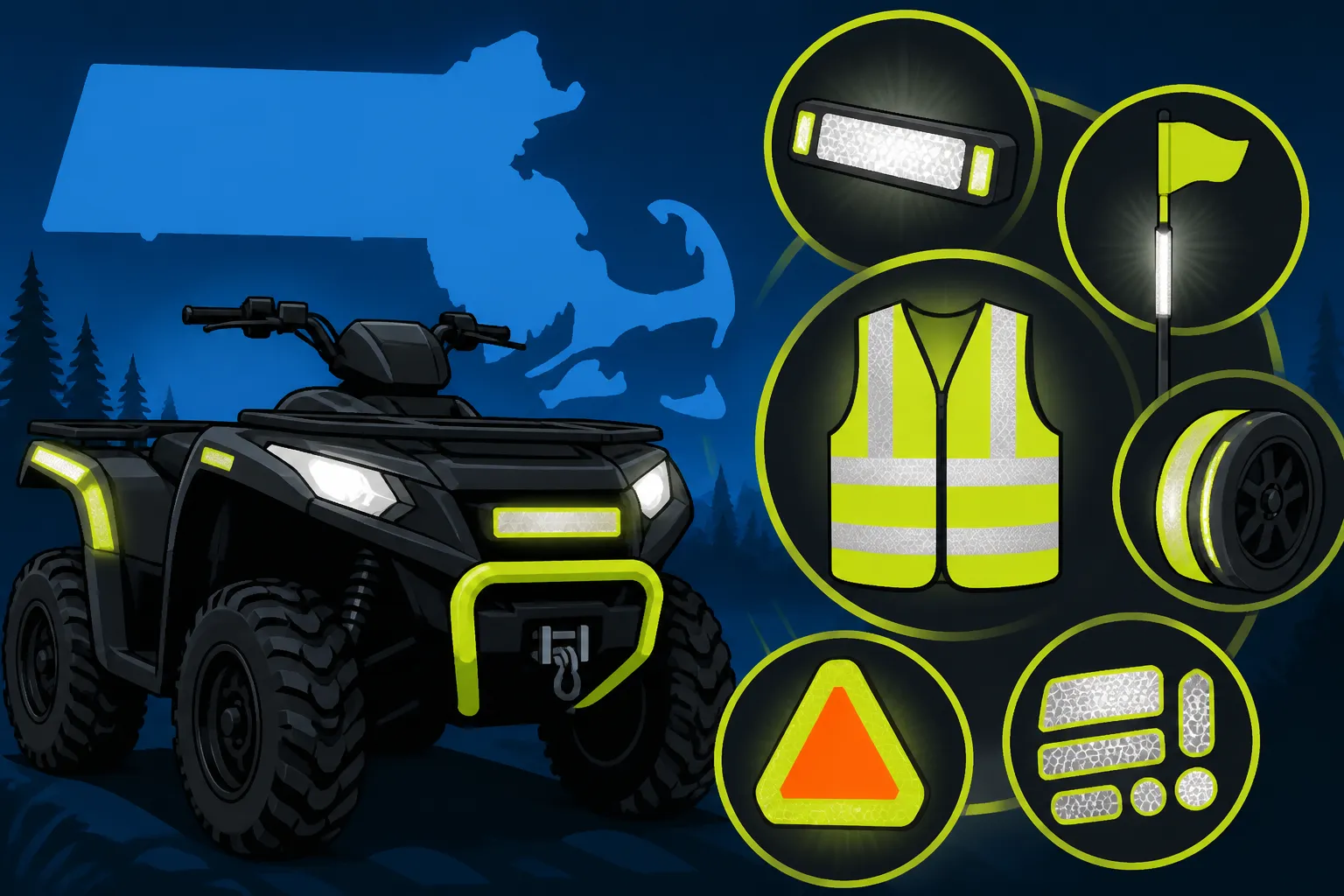
This is often the first and most accessible step for many riders, and for good reason. Reflective tape comes in a rainbow of colors and various widths, making it incredibly versatile for application on almost any surface of your machine. You can outline your fenders, accent your roll cage, highlight your bumpers, or even create custom designs that serve both an aesthetic and a safety purpose. While [Massachusetts Decal Placement Rules] exist for your official registration decals, there are absolutely no rules against adding extra reflective decals. Companies like SuperATV offer a range of accessories, from storage boxes to fender flares, that can be further enhanced with reflective tape, turning functional parts into even stronger safety features. This type of gear is relatively inexpensive and easy to apply, offering a huge bang for your buck in terms of increased visibility. It's crucial, however, to choose high-quality, weather-resistant tape that will withstand the constant abuse of off-road use, including mud, grit, and rigorous power washing. Cheap tape will peel and fade quickly, rendering it useless.
Reflective Clothing and Helmets
Your machine isn't the only thing that needs to be seen; you do too! Wearing reflective clothing is paramount. This can range from a simple reflective vest worn over your riding jacket to jackets and pants with integrated reflective piping or panels. For helmets, many manufacturers offer reflective stickers or designs directly on the shell, or you can add your own. [Massachusetts Helmet Standards] ensure a certain level of protection, but adding reflective elements to your helmet directly enhances your head's visibility, which is often the highest point of your silhouette, making it an excellent target for reflecting light back to drivers. Remember, when you're dismounted from your machine – perhaps to clear a fallen branch from the trail, assess an obstacle, or help a buddy – your personal reflective gear becomes your primary safeguard against being unseen by another rider or vehicle.
Specialized Reflective Accessories and Auxiliary Lighting
Beyond basic tape and clothing, a whole world of specialized reflective accessories exists to further enhance your presence. This includes things like reflective flags for whip antennas, which are especially useful in wide-open areas or dunes, though perhaps less common or necessary on the denser, more wooded typical Massachusetts trails. You might also find reflective wheel stripes, reflective mirror accents, or even reflective paint that can be applied to certain components for a custom look with added safety. For UTVs, consider reflective covers for the roof or cargo bed, which significantly increases your upper profile's visibility. While Massachusetts doesn't mandate specific equipment like whip flags, anything that increases your profile and reflectivity is a smart addition, especially if you find yourself riding [Massachusetts Trails That Allow Side-by-Sides] where machines are wider and other vehicles might be present. In addition, don't forget that [Massachusetts Lighting After Sunset] rules exist, so consider augmenting your machine's built-in lights with high-quality LED auxiliary lights for even better active illumination. While reflective gear is passive, good lights are active, and combining both is the ultimate strategy.
Where and How to Apply Reflective Gear for Maximum Impact
It's not enough to just slap some reflective tape on your machine; thoughtful placement makes all the difference. Think about how other people, whether they are in cars, on bikes, or walking, will perceive you.
Strategic Placement on the Machine
The goal is to make your ATV or UTV visible from every angle: front, rear, and both sides.
- Front: Apply reflective tape along the edges of your front fenders, bumper, and even your grill guard. If you have a winch, a strip on the winch fairlead can be surprisingly effective. These areas are often the first points of contact with light from oncoming traffic.
- Rear: This is absolutely critical for preventing rear-end collisions, especially if you're making a road crossing. Outline your rear fenders, bumper, and the back of any cargo boxes you have mounted. If you have a spare tire carrier, use reflective tape on the tire itself or the carrier frame. The more distinct your rear profile is, the better.
- Sides: Run strips along the sides of your floorboards, the edges of your roll cage (especially on a UTV), and along the side panels. For a UTV, the B-pillar and C-pillar sections of the roll cage are excellent spots as they are often very visible from the side. The goal here is to break up the machine's silhouette with bright, reflective lines that catch light, making it easier to discern what you are.
- Hard-to-Miss Parts: Don't overlook components like the A-arms or even the suspension links if they're exposed. These moving parts can sometimes catch light in unique ways, adding to overall visibility.
Rider-Centric Placement for Personal Gear
For the rider, the focus should be on high-movement areas and points that naturally catch light, maximizing your individual presence.
- Jacket/Vest: Ensure reflective strips are prominently placed on the shoulders, arms, and back. The wider the strips, the better for long-distance visibility. Many riding jackets, including those from brands focused on off-road utility, incorporate reflective piping right into their seams.
- Pants: Reflective panels or strips on the lower legs, especially near the ankles, are great for visibility as they are in motion, drawing the eye. This is particularly effective for dirt bike riders but also applies to ATV/UTV riders when dismounting or walking around.
- Helmet: The sides and rear of the helmet are prime real estate for reflective decals. Choose colors that contrast sharply with your helmet color for maximum effect. For example, if you have a black helmet, white, bright yellow, or lime green reflective tape will stand out far more than, say, dark gray tape.
- Backpack/Hydration Pack: If you carry one, add reflective strips or choose one with integrated reflective elements. This adds another layer of visibility, especially when you're hunched over the handlebars or walking away from your machine.
Installation Best Practices
Proper installation ensures your reflective gear stays put and performs its job.
- Cleanliness is Key: Before applying any tape or decals, thoroughly clean the surface with rubbing alcohol and let it dry completely. Any dirt, grease, or wax will prevent proper adhesion, leading to peeling.
- Smooth Application: Apply reflective tape smoothly, pressing firmly to remove air bubbles. For curved surfaces, a heat gun or even a hairdryer on a low setting can help the tape conform and prevent wrinkles.
- Visibility, Not Just Aesthetics: While you might want your machine to look cool, prioritize safety over intricate designs that might reduce the effective reflective surface area. Large, continuous strips are generally far more effective than small, scattered pieces for catching a driver's attention.
- Durability Check: After installation, make it a habit to regularly inspect your reflective gear for peeling, fading, or damage. Massachusetts weather can be tough, and mud, branches, and power washing can take a significant toll. Replacing worn-out reflective materials is part of routine safety maintenance and shouldn't be overlooked.
Beyond the Machine: Rider Reflective Gear and Other Considerations
Making your machine a beacon of visibility is excellent, but your personal safety as a rider goes hand-in-hand with it. We also need to think about how all these elements work together for maximum protection.
Personal Reflective Clothing Choices
As mentioned earlier, personal reflective clothing dramatically increases your individual visibility, and it's so much more than just a yellow vest. Many high-quality riding jackets and pants for off-road use now incorporate reflective materials directly into their design, meaning you don't necessarily have to layer a separate vest. Look for gear from reputable brands; sometimes even those that also make ATV parts, like SuperATV, understand the rigors of the environment and build in these features. Even something as simple as reflective gloves can make a difference, as your hands are often moving and can catch a driver's eye. Always choose bright, contrasting colors for your base riding gear (fluorescent yellow, orange, or green are excellent choices) and then build on that with additional reflective strips. This layered approach ensures you're visible even if one element is obscured.
Additional Lighting Solutions
While reflective gear enhances passive visibility by reflecting existing light, sometimes you need to generate your own light to truly cut through adverse conditions or darkness. Consider auxiliary LED lights for your ATV or UTV. These can include brighter headlights, additional floodlights or spot lights for trail illumination, and even accent lighting that can make your machine more visible from a distance. While [Massachusetts Lighting After Sunset] rules exist, adding more powerful and broadly visible lights, particularly those that illuminate your machine's profile, is a smart move. Remember, brighter doesn't always mean better for other trail users if not aimed properly, so focus on broad visibility rather than blinding intensity, and always be mindful of not shining directly into another person's eyes.
General Safety Practices for Enhanced Visibility
Reflective gear is a powerful tool, but it's fundamentally part of a larger safety strategy. It’s about a holistic approach to being seen and staying safe.
- Maintain Your Lights: Regularly check that your factory headlights, taillights, and brake lights are clean and fully functional. A dirty or burnt-out bulb completely negates any reflective efforts and can also lead to citations.
- Ride Predictably: When on or near roads (even for permitted crossings), signal your intentions clearly. Don't make sudden, unexpected turns or stops. Use hand signals if your machine doesn't have turn indicators, and make eye contact with drivers whenever possible.
- Scan Your Surroundings: Always be hyper-aware of your environment, not just directly in front of you. Anticipate what other drivers or riders might do, especially at intersections or blind spots.
- Avoid Poor Visibility Conditions: If at all possible, avoid riding in heavy fog, torrential rain, or deep twilight/night without absolutely adequate lighting and reflective gear. Sometimes, the safest choice is simply to wait for better conditions or to reschedule your ride.
- Educate Others: If you frequently ride with a group, encourage your fellow riders to adopt similar reflective safety measures. A visible group of riders is significantly safer than a single visible rider surrounded by less visible ones. [Massachusetts Registration Cards Carried on Board] is one required item, but encouraging group safety goes far beyond that.
The Big Picture: Safety First
In Massachusetts, where off-road opportunities are cherished but often involve sharing some spaces with the general public, prioritizing visibility is simply non-negotiable. Whether you're navigating a short road crossing, traversing a utility right-of-way, or riding in a shared state forest, every effort you make to be seen contributes not only to your safety but also to the safety of those around you. Reflective gear, from simple tape to integrated apparel, is a fundamental part of responsible riding. It's not just about avoiding [Massachusetts Penalties for Illegal Riding]; it's about coming home safe after every single adventure.
| Type of Reflective Gear | Best Use Case | Placement Examples | Key Benefits |
|---|---|---|---|
| Reflective Tape/Decals | Permanent machine visibility | Fenders, bumpers, roll cage, cargo boxes, side panels, A-arms. | Cost-effective, customizable, provides all-angle visibility for the machine itself. |
| Reflective Clothing | Rider visibility, active safety | Jackets, vests, pants, gloves, helmet decals, backpacks. | Ensures the rider is seen even when dismounted or away from the machine. |
| Reflective Whip Flags | High-profile visibility in open areas | Mounted on whip antennas (less common in dense MA trails). | Increases vertical profile, good for wide-open spaces or group identification. |
| Reflective Wheel Stripes | Dynamic side visibility | Edges of wheel rims. | Catches attention due to rotational movement, enhances side profile. |
| Auxiliary LED Lights | Active illumination, especially at night | Additional headlights, floodlights, accent lights. | Generates its own light, significantly boosts presence, complements reflective materials. |
Disclaimer
This article is for general informational purposes only and does not constitute professional advice. Laws, prices and regulations vary by location and change over time. Consult a qualified professional for guidance on your specific situation.