Which Helmets Meet the RMV Standard for Riders
Riding an ATV or UTV in Massachusetts is an absolute blast, whether you're tackling the trails in October Mountain or exploring the vastness of Beartown State Forest. But let's be real: all that fun comes with important responsibilities, and one of the biggest points of confusion for many riders is figuring out exactly what kind of helmet is required. It's not enough to just strap on any helmet; Massachusetts law, focused intently on rider safety, has specific standards. This guide will cut through the jargon and explain exactly which helmets meet the Massachusetts Registry of Motor Vehicles (RMV) standard for riders, ensuring you're both safe and legal out on the trails.
Understanding Massachusetts' Helmet Law for ATVs and UTVs
When you hit the dirt roads or wooded trails of the Bay State, your helmet is your first line of defense. It's not just a suggestion; it's a critical piece of safety equipment mandated by law. This isn't about bureaucracy; it's about protecting you from serious injury, which can happen even on seemingly minor spills.
Why the Right Helmet Isn't Just a Suggestion, It's the Law
Massachusetts General Laws, specifically Chapter 90B, are pretty clear: every person operating or riding as a passenger on an ATV or UTV, regardless of age, must wear a helmet. This isn't a rule that changes depending on whether you're on public or private land; if you're riding, you need a helmet. This blanket requirement underscores the state's serious commitment to preventing head injuries, which can be devastating.
Imagine you're out exploring some of the challenging terrain near Pittsfield State Forest. You come around a bend, hit an unexpected rock, and the machine lurches. In that split second, a properly fitted and certified helmet can be the difference between a scary moment and a life-altering injury. The law is designed to mitigate those risks, protecting riders young and old. If an Environmental Police officer stops you for any reason, one of the first things they'll check is your safety gear, including your helmet. Not complying can lead to a citation, and honestly, nobody wants to deal with fines and court appearances when they'd rather be riding. It's truly a no-brainer when it comes to prioritizing your safety and staying on the right side of the law. For more on this, check out [Massachusetts Helmet Law for Every Rider].
The Role of the RMV Standard in Off-Road Riding
Now, this is where some confusion can sneak in. While your ATV or UTV registration in Massachusetts is handled by the Environmental Police, the standards for your helmet often refer back to those established for on-road vehicles, which are traditionally overseen by the Registry of Motor Vehicles (RMV). So, when people talk about the "RMV standard" for an ATV helmet, they're generally referring to the safety certifications that are considered acceptable for motorcycles and other street-legal vehicles. This means your helmet needs to meet robust testing requirements.
Think of it this way: the dangers of hitting your head are similar whether you're on pavement or a dirt trail. A bicycle helmet, while great for cycling, isn't designed for the speeds, impacts, and types of collisions that can occur on an ATV or UTV. The "RMV standard" implicitly points to helmets that are engineered to withstand higher energy impacts and offer more comprehensive protection, particularly around the face and jaw, which are vulnerable areas in an off-road incident. This is why you'll find that the certifications discussed below are crucial – they are the benchmarks for serious head protection.
Decoding the "RMV Standard": What Certifications to Look For
So, what exactly does a helmet need to have to meet this "RMV standard" for ATVs and UTVs? It boils down to specific safety certifications. These aren't just fancy stickers; they represent rigorous testing processes that ensure a helmet can perform when it matters most.
The Big Three: DOT, Snell, and ECE
When you're looking at helmets, you'll typically encounter three main certifications that are widely recognized and accepted as indicators of a quality, protective helmet. For riding in Massachusetts, at a minimum, you'll need one of these.
- DOT (Department of Transportation): This is the baseline legal requirement for motorcycle helmets in the United States, and by extension, for ATVs and UTVs in Massachusetts. The DOT certification means the helmet complies with Federal Motor Vehicle Safety Standard (FMVSS) 218. It's a self-certification by the manufacturer, but they are legally obligated to meet the standard. This means the helmet has passed tests for impact attenuation (how well it absorbs energy during a crash), penetration resistance (how well it prevents sharp objects from piercing the shell), and retention system effectiveness (how well the chin strap stays fastened). If your helmet doesn't have a DOT sticker, it simply doesn't meet the legal minimum for riding on Massachusetts' public trails, and you could face penalties.
- Snell (Snell Memorial Foundation): This is a higher, voluntary standard established by a non-profit organization dedicated to helmet safety. Snell certifications, like M2020 (the current motorcycle standard), go above and beyond the DOT requirements. Snell testing is much more rigorous, involving multiple impacts at various points on the helmet, more advanced penetration resistance tests, and tests for shell integrity. Many serious off-road riders, especially those who participate in competitive events, prefer Snell-certified helmets because they offer an enhanced level of protection. While not legally required over DOT in Massachusetts, choosing a Snell-certified helmet provides an extra layer of peace of mind.
- ECE (Economic Commission for Europe): The ECE 22.05 or the newer 22.06 standard is the European equivalent and is widely accepted internationally. ECE testing is comprehensive, evaluating impact, penetration, rigidity, and retention systems. Many consider ECE standards to be comparable in their rigor to Snell, often surpassing DOT in certain areas. Helmets with ECE certification are increasingly popular in the U.S. and are perfectly acceptable for meeting Massachusetts' safety requirements.
The key takeaway here is that for riding an ATV or UTV in Massachusetts, your helmet must be DOT certified at a minimum. Opting for Snell or ECE certified helmets offers even greater protection. These certifications are the benchmarks for safety and the way the state ensures you have adequate protection. You can learn more about specific regulations at [Massachusetts Helmet Standards].
How to Spot a Certified Helmet
Knowing about DOT, Snell, and ECE is one thing, but how do you actually verify a helmet's certification when you're buying one? It's fairly straightforward once you know what to look for.
Every helmet that meets the DOT standard will have a white sticker on the back of the helmet that clearly states "DOT" along with "FMVSS No. 218" and other manufacturing information. This sticker is mandatory. For Snell-certified helmets, you'll typically find a Snell sticker inside the helmet, often affixed to the padding or liner. ECE-certified helmets usually have a label stitched onto the chin strap, often a white square with "ECE" and the standard number (e.g., "22.05" or "22.06").
Always purchase your helmet from a reputable dealer, whether it's a local powersports shop or a well-known online retailer. This helps ensure that the certifications are genuine and that you're getting a quality product. Be wary of extremely cheap helmets from unknown sources, as counterfeit certifications exist, and such helmets offer little to no real protection. When you're choosing your gear, remember that reputable brands, including accessories from SuperATV, will always complement, not compromise, the safety standards of your certified helmet. For example, a quality visor or robust goggle setup from a trusted manufacturer should integrate seamlessly without impacting the helmet's core protective features.
Choosing the Right Helmet for Your Massachusetts Adventures
Beyond the crucial certification sticker, selecting the right helmet for your ATV or UTV adventures in Massachusetts involves several other factors. A certified helmet is only truly effective if it fits correctly and suits your riding style and environment.
Fit, Comfort, and Style: Beyond the Sticker
Even the most highly certified helmet won't protect you properly if it doesn't fit your head like a glove. A helmet that's too loose can shift during an impact, negating its protective qualities, while one that's too tight can cause discomfort, headaches, and distract you from the trail.
Here’s how to check for a proper fit:
- Measure Your Head: Use a cloth tape measure to find the circumference of your head, just above your eyebrows and ears. Compare this measurement to the manufacturer's sizing chart.
- Try It On: When you put the helmet on, it should feel snug all around your head, with even pressure. It shouldn't have any painful pressure points.
- Check for Movement: With the chin strap fastened, try to move the helmet from side to side and up and down. Your skin should move with the helmet, and there should be no excessive play. The helmet should not slide around on its own.
- Peripheral Vision: Ensure you have an adequate field of vision.
Beyond fit, consider the type of helmet that best suits your riding.
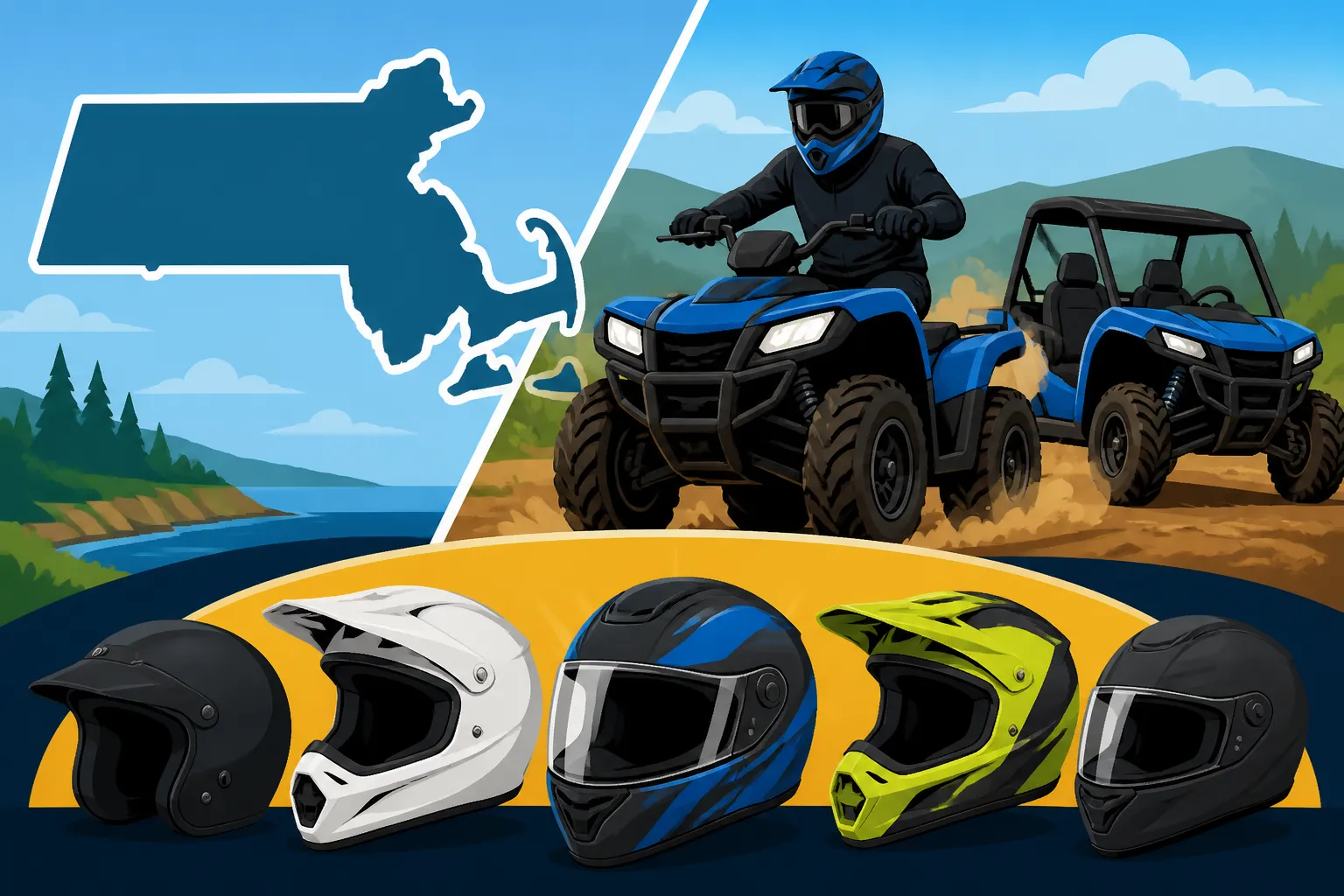
- Off-road specific helmets: These typically feature an extended chin bar for face protection, a large visor to block roost and sun, and are designed to be worn with goggles. They offer excellent airflow, which is a blessing on warm [Massachusetts Riding in Summer] days.
- Full-face helmets: Offering complete head and face protection with a built-in face shield, these are often preferred by UTV riders or those who prioritize maximum wind and debris protection.
- Modular helmets: These have a chin bar that can flip up, offering the versatility of an open-face helmet for quick breaks while providing full-face protection when closed.
Your choice should align with whether you're tackling aggressive single-track trails, cruising on wider forest roads, or using your UTV for utility work. Think about the season too; some helmets offer better ventilation for summer, while others are more insulated for chilly [Massachusetts Riding in Winter] rides.
Features That Enhance Safety and Experience
Once you've narrowed down your choices by certification and fit, look for features that enhance your comfort, safety, and overall riding experience.
- Ventilation: Good airflow is critical, especially when you're working hard on the trails or riding in warmer weather. Look for multiple intake and exhaust vents that allow air to circulate, keeping you cool and helping to prevent fogging if you're using a face shield.
- Visors and Goggles: For off-road helmets, high-quality goggles are non-negotiable. They need to be impact-resistant, offer a wide field of view, and ideally have anti-fog coatings. For full-face or modular helmets, ensure the face shield is scratch-resistant and provides clear optics. Many riders opt for tinted shields or even photochromatic options for varying light conditions. Companies like SuperATV offer robust goggle choices and accessories that can enhance your visibility and comfort.
- Removable/Washable Liner: You’re going to sweat. A lot. Having a liner that can be easily removed and washed is a huge advantage for hygiene and extending the life of your helmet. It also helps keep things fresh for your next adventure.
- Weight: While safety is paramount, a lighter helmet can significantly reduce neck fatigue on long rides, allowing you to enjoy your time on the trails more comfortably. Advanced materials like carbon fiber or fiberglass can help reduce weight without compromising protection.
- Retention System: Most certified helmets use either a double D-ring strap (very secure, common in racing) or a quick-release buckle system. Both are effective, but some riders prefer the convenience of a quick-release for recreational riding.
Considering these features ensures that your chosen helmet not only meets the Massachusetts safety standards but also provides a comfortable and enjoyable experience every time you hit the trails.
Here's a quick comparison of the helmet certifications:
| Feature | DOT (FMVSS 218) | Snell M (e.g., M2020) | ECE 22.05/22.06 |
|---|---|---|---|
| Origin | USA (Federal Law) | USA (Non-Profit Standard) | Europe (International Standard) |
| Requirement | Minimum legal standard | Voluntary, higher standard | Required in many countries |
| Testing | Impact (hemispherical anvil), penetration, retention | Multiple impacts, penetration, roll-off, shell integrity | Multiple impacts, penetration, abrasion, retention |
| Rigorousness | Baseline protection | More stringent, often for racing | Very stringent, comparable to Snell |
| Labeling | White DOT sticker (rear) | Snell sticker (inside) | ECE sticker (chin strap, label) |
| Key Takeaway | Legal minimum in MA | Enhanced protection, often superior | Excellent protection, widely accepted |
The Repercussions of Non-Compliance
Ignoring helmet laws or wearing a non-compliant helmet in Massachusetts isn't just a minor oversight; it carries both legal and, more importantly, safety consequences that can significantly impact your riding experience and well-being.
Legal Fines and Consequences
When you're out on the trails or making a permitted crossing of a public way, you might encounter an Environmental Police officer. These officers are specifically tasked with enforcing OHV laws, and checking for proper safety equipment, including helmets, is part of their routine. They are authorized to ask for your registration, proof of ownership, and to inspect your machine and gear. For more details on what they might ask, see [What an Environmental Police Officer Can Ask].
If you're caught riding without a helmet, or with one that clearly doesn't meet the RMV standard (like a bicycle helmet), you'll likely face a citation. These aren't just slaps on the wrist; [Massachusetts Ticket Costs for Riders] can add up, and repeat offenses can lead to even steeper fines and other penalties. The goal of these penalties isn't to punish riders but to encourage adherence to safety regulations that are proven to save lives and prevent severe injuries. Nobody wants their day of fun ruined by a costly ticket, let alone the hassle of dealing with court. It's a preventable headache that takes away from your passion for riding. The state takes these safety measures seriously, and you should too. For a broader look at consequences, check [Massachusetts Penalties for Illegal Riding].
Safety Risks and Insurance Implications
Beyond the legal ramifications, the most critical consequence of not wearing a compliant helmet is the profound risk to your own safety. The state's helmet laws exist because head injuries from ATV and UTV accidents can be incredibly severe, leading to long-term disability or even death. A helmet that doesn't meet DOT or higher standards simply won't offer the protection you need in an impact. It's built to different specifications for different risks, and an off-road crash often involves higher speeds and harder impacts than, say, falling off a bicycle.
Imagine a scenario where you're riding through October Mountain State Forest, and you misjudge a rut, leading to a rollover. If you're wearing a non-compliant helmet, its structural integrity might fail, or it might not adequately absorb the impact, leaving your head vulnerable. This isn't just about a bump or bruise; we're talking about traumatic brain injuries that can change your life forever.
While Massachusetts does not mandate ATV insurance, many riders wisely choose to carry it for liability and comprehensive coverage. If you do have a policy and are involved in an accident resulting in a head injury while not wearing a compliant helmet, your insurance provider might scrutinize your claim. Although it's not a universal rule, some policies could potentially reduce payouts or even deny certain aspects of a claim if they determine you were not in compliance with state safety laws. This can leave you facing significant medical bills out of pocket, on top of the physical trauma. It's a risk that simply isn't worth taking when a certified helmet is so readily available and such an essential piece of your riding gear. For more on this, you can check out [Does Massachusetts Require Insurance on a Registered ATV?]. Ultimately, investing in a proper, certified helmet is an investment in your own future and safety.
Disclaimer
This article is for general informational purposes only and does not constitute professional advice. Laws, prices and regulations vary by location and change over time. Consult a qualified professional for guidance on your specific situation.