Yielding Before You Cross
Let's be honest, those fleeting moments where a beautiful trail meets a paved road can be a real head-scratcher for ATV and UTV riders in Massachusetts. It's not always clear what you're supposed to do, and the rules around "crossing a public way" often feel like they're designed to trip you up, not keep you safe. Many riders have faced fines or worse, accidents, simply because they weren't entirely sure about the proper procedure. This guide is here to untangle those rules, explaining exactly what "yielding before you cross" means, why it matters so much in our Bay State, and how you can navigate these tricky intersections safely and legally.
The Core Rule: Stopping and Yielding Before You Cross
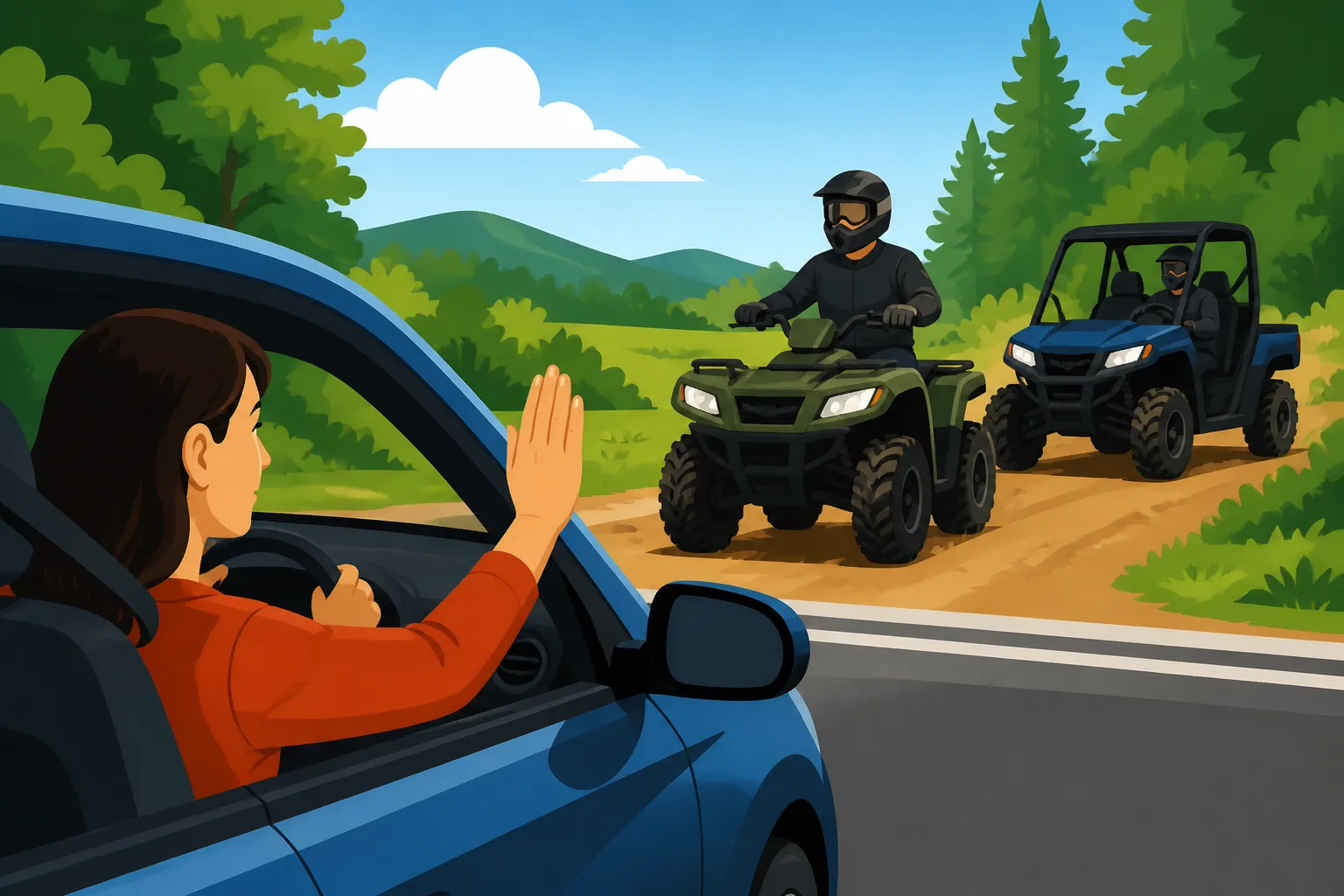
When you're out enjoying the fantastic trails of October Mountain or Beartown State Forest, that sudden break in the woods where a road appears can throw you off. You're in the zone, enjoying the ride, and then bam – pavement. Massachusetts law is crystal clear on what you need to do here: you absolutely must come to a complete stop and yield to all oncoming traffic before you attempt to cross any public way. This isn't just a polite suggestion; it's a legal requirement designed to protect you, other drivers, and even the future of our trail systems.
Why Massachusetts is Strict on Road Crossings
Massachusetts has always taken a very cautious approach to off-highway vehicles (OHVs) and public roads. Unlike some other states where certain classes of OHVs might be deemed "street legal" or allowed to travel short distances on less-trafficked roads, our state essentially draws a hard line. The underlying philosophy is one of public safety: OHVs are not designed for road use, and mixing them with traditional vehicle traffic creates significant hazards. Think about it – ATVs and UTVs handle differently, they're often not as visible as cars, and their operators aren't always trained in road etiquette. This is why you'll often hear that [Massachusetts Bans Riding on Public Ways] as a general rule. The crossing rule is the only exception to this ban, and even then, it comes with strict conditions. The Environmental Police, who enforce these regulations, are particularly vigilant about road crossings because it’s a high-risk area for collisions and public complaints. They want to prevent accidents that could lead to serious injury or even fatalities, and they also want to minimize disruptions to residential areas and other road users. Ignoring these rules could not only land you a hefty fine but could also jeopardize access to the very trails we all love.
What "Public Way" Actually Means for OHVs
This is where a lot of confusion often creeps in. Many riders assume that "public way" only refers to heavily trafficked paved roads, like a state highway or a major town thoroughfare. But in Massachusetts, the definition is much broader. It includes pretty much any road that's maintained by the state, county, or town, regardless of whether it's paved, gravel, or even just a dirt track. If the town plows it in winter, or grades it in summer, chances are it's a public way. Even an unassuming dirt road connecting two sections of a state forest could very well be classified as a public way if it's open for public use and maintained by a municipality. This is why it's so important to understand [Which Dirt Roads Count as a Public Way] before you head out. A private road, owned and maintained by an individual or a private entity, is a different story, but you still need permission to be on it. The key takeaway is this: if you're uncertain, treat it as a public way and assume the stricter rules apply. It's always better to be safe than sorry, especially when an Environmental Police Officer could be just around the bend.
The "Yield" in Practice: What It Looks Like
So, you've identified a public way you need to cross. What does "yielding" actually entail? It's more than just a momentary pause.
- Approach with caution: Slow down significantly as you approach the road. Don't come roaring out of the woods. You need ample time to assess the situation.
- Come to a complete stop: This isn't a rolling stop. Your wheels must cease all motion before the edge of the road, preferably at a point where you have a clear view of both directions of traffic, but are not obstructing the road or shoulder.
- Look both ways, then look again: Scan left, then right, then left again. Pay attention not just to immediate traffic but also to anything approaching in the distance.
- Listen: Sometimes you'll hear a vehicle before you see it, especially around blind corners or crests of hills. Turn off your engine if you need to, to hear better.
- Wait for a clear window: Do not attempt to cross if there's any doubt about whether you have enough time and space to cross safely without forcing oncoming traffic to slow down or swerve. You must yield to all traffic, including bicycles, pedestrians, and other vehicles.
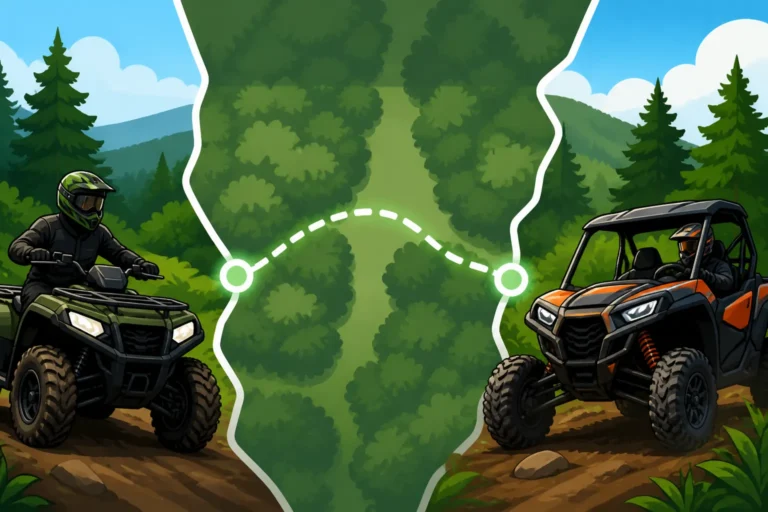
- Cross directly and efficiently: Once the path is clear, proceed directly across the public way at a 90-degree angle to the road. Do not travel along the road, even for a few feet, and do not make any unnecessary stops on the pavement. The goal is to minimize your time on the public way.
- Maintain control: Keep a firm grip on your handlebars or steering wheel and be prepared for potential uneven pavement edges or gravel, especially if you're running aggressive off-road tires from a brand like SuperATV. These tires are great for mud and rocks but can feel a bit squirrely on hard asphalt.
Age, License, and Safety Certificates Impacting Crossings
The rules for crossing a public way aren't a one-size-fits-all situation. Who you are, how old you are, and what certifications you hold can significantly change the requirements and, frankly, the risks involved. Massachusetts has specific laws concerning youth riders, and these laws definitely come into play when it's time to briefly leave the trail system to get to another section.
How Age Affects Your Right to Cross
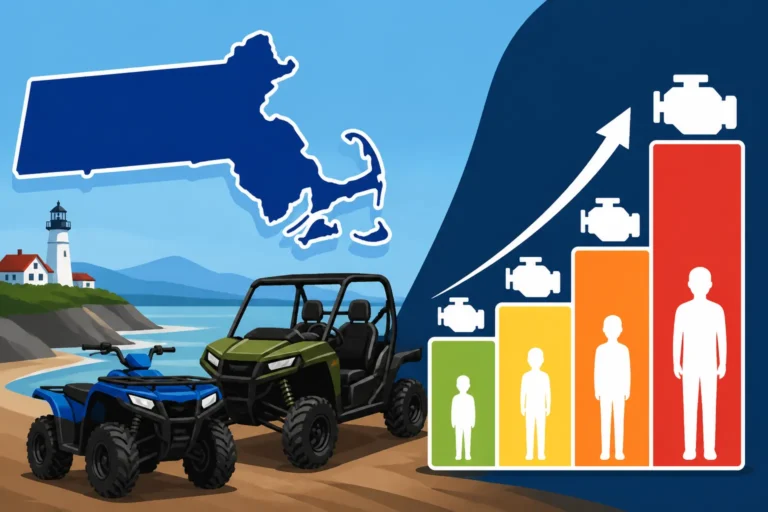
Massachusetts has some of the strictest youth OHV laws in the country, largely due to "Sean's Law" enacted in 2010. These regulations have a direct impact on who can cross a public way and under what conditions.
- Riders Under 14: If you're under 14 years old, you are absolutely forbidden from operating an ATV or UTV on any public way in Massachusetts, including for the purpose of crossing. The only exception is if you are participating in a sanctioned race or event, and even then, specific conditions apply regarding supervision and engine size. For general trail riding, this means if you're under 14, you simply cannot make that road crossing, even with adult supervision. This is a critical point that many parents overlook.
- Riders 14 to 16: These riders can cross a public way, but only if they are directly supervised by an adult (18 years or older) and are operating an ATV or UTV with an engine size no greater than 90cc. This engine size restriction is crucial and often forgotten.
- Riders 16 to 18: Riders in this age group are allowed to cross a public way without direct adult supervision, provided they possess a valid OHV safety certificate. They do not have the 90cc engine size restriction.
- Riders 18 and Over: If you're 18 or older, you can cross a public way without direct supervision and without an engine size restriction, but you must still possess a valid OHV safety certificate to ride on public lands and often to make these crossings.
It's clear that [Massachusetts Rules for Crossing a Road] are complex and highly dependent on age. Always know the age and engine size of every rider in your group.
The Role of a Supervising Adult
If you're an adult riding with a minor who is permitted to cross a public way (i.e., between 14 and 16 years old), your role as a supervising adult is paramount. The law defines a [Massachusetts Supervising Adult Defined] as someone who is at least 18 years old and maintains continuous visual and verbal contact with the minor. This isn't just about being in the same general area; it means you need to be able to see and communicate with the young rider at all times, especially during a road crossing.
- Proximity: You should be close enough to immediately intervene if a problem arises. For a road crossing, this means you should be stopping, watching, and crossing with or immediately before/after the minor, ensuring their safety through the entire maneuver.
- Guidance: It's your responsibility to ensure the minor understands and executes the stop and yield procedure correctly. This might involve giving clear verbal instructions before, during, and after the crossing.
- Liability: Be aware that as a supervising adult, you can be held legally responsible for any violations committed by the minor under your supervision. This means a mistake during a road crossing could result in a fine for you, the adult, as well as for the minor.
Carrying Your Safety Certificate
No matter your age (if you're 14 or older and crossing), carrying your Massachusetts OHV safety certificate is not just a good idea, it's a legal requirement when you're riding on public lands. And since you're making a temporary foray onto a "public way" (even for a quick crossing), you absolutely need to have it on you. An Environmental Police Officer could ask to see this certificate at any point, especially if they observe you making a road crossing. [Carrying a Safety Certificate on State Land] is crucial for proving you've met the state's educational requirements.
- Physical or Digital: While a physical card is traditional, some state agencies allow for digital proof, but always check current regulations. It's often safer to have the physical card in a waterproof pouch.
- Availability: The certificate must be readily available for inspection. Don't bury it at the bottom of your pack.
- Consequences: Failure to produce a valid safety certificate when required can result in fines, even if you technically completed the course. It's proof that you know the rules, and the crossing procedure is one of the most important rules covered in the course.
Practical Steps for a Safe Crossing
Let's walk through the actual process of making a safe and legal road crossing. This isn't just about avoiding a ticket; it's about making sure everyone gets home safely.
Before You Even Approach the Road
Preparation is key. A safe crossing starts long before you see the pavement.
- Know Your Route: If you're riding in a familiar area like October Mountain State Forest, you probably know where the trail intersects roads. If you're new to an area, study a map beforehand. Sites like SuperATV often have accessories and GPS mounts that can help you keep your trail maps accessible. Knowing a road crossing is coming gives you time to prepare mentally and physically.
- Communicate in a Group: If you're riding with others, especially with youth riders or less experienced individuals, establish a clear protocol for road crossings. Who goes first? Who watches for traffic? How will you signal "all clear"?
- Check Your Machine: Ensure your brakes are working perfectly. Check your lights, especially if visibility is low or it’s getting dark, as even during the day, extra visibility can't hurt. A properly functioning machine is critical for a quick, safe traverse.
- Increase Visibility: Wear bright colors. If you have aftermarket lighting or reflective gear, consider activating it. Some riders even add small flags to their OHVs for better visibility, especially if they frequently cross roads.
The Stop: Where and How Long
Once you're close to the public way, executing the stop correctly is paramount.
- Early Braking: Begin slowing down well before you reach the edge of the road. This gives you more time to react if you suddenly spot oncoming traffic or pedestrians.
- Clear Line of Sight: Stop your machine at a point where you have the best possible view of traffic in both directions without obstructing the public way or its shoulder. Don't creep out into the road to get a better look; wait until it's completely clear.
- Complete Halt: Your wheels must be absolutely stationary. This isn't a "yield to oncoming traffic" sign where you might roll through a turn; it's a hard stop.
- Patient Observation: Don't rush. Take your time to thoroughly scan the road. Remember, even if there's no car for miles, a bicycle or a runner could suddenly appear. Your yield means waiting until the road is truly clear. You are responsible for ensuring that.
The Traverse: Quick and Direct
Once you've confirmed the coast is clear, it's time to cross.
- Direct Path: Proceed straight across the road at a right angle (90 degrees) to the flow of traffic. Do not turn and travel along the road, even for a short distance, unless you are involved in an emergency and directed by law enforcement. This means Yielding Before You Cross and then immediately continuing off the road.
- Maintain Speed: Cross efficiently and with purpose. Don't crawl across, but also don't accelerate recklessly. A steady, controlled pace is best.
- Stay Alert: Even as you cross, keep an eye out. Conditions can change in an instant. A vehicle might have been hidden by a blind spot, or a child might dart out.
- Regroup Safely: Once you've safely reached the other side and are back on the trail or private land, ensure any group members have also crossed safely before moving on.
What to Do If an Officer Sees You
It's a common scenario: you're just trying to cross, and suddenly, an Environmental Police officer is there. Your best course of action is always cooperation.
- Stay Calm: Don't panic. Pull your machine over to a safe spot, turn off the engine, and remove your helmet.
- Provide Documents: The officer will likely ask for your OHV registration, your safety certificate, and possibly your driver's license (if applicable). Make sure these are readily accessible. You can read more about [Massachusetts Registration Cards Carried on Board].
- Be Polite and Honest: Answer their questions truthfully and respectfully. If you made a mistake, acknowledge it. Arguing or being uncooperative will only make the situation worse.
- Understand the Citation: If you receive a citation, listen to the officer's explanation. You have the right to dispute it in court, but that conversation is for later. For the moment, comply with their instructions.
Common Mistakes and Misconceptions
Despite the clear rules, riders still make mistakes when crossing public ways in Massachusetts. Understanding these common pitfalls can help you avoid them.
Assuming a Dirt Road Isn't a "Public Way"
This is perhaps the biggest and most frequent misconception. Many riders equate "public way" with "paved road." They'll encounter a dirt road, think it's just a continuation of the trail, and cruise right across without stopping or yielding. As we discussed, if that dirt road is maintained by the town or state and open to public travel, it is a public way, and all the crossing rules apply. This is particularly true in rural areas of the Berkshires where many "roads" are unpaved. Always operate under the assumption that an unpaved road is still a public way unless you have definitive proof otherwise, such as a "Private Road" sign or a clear barrier. The Environmental Police are well aware of this common misunderstanding and will not hesitate to issue a citation.
The "Quick Dash" Mentality
Another dangerous mistake is the "I'll just quickly dash across" mentality. Riders might see a break in traffic and think they can just gun it across the road before anyone else arrives. This is incredibly risky. Even on a quiet rural road, a vehicle can appear faster than you expect, or you might misjudge the speed of an approaching car. The law requires you to yield, which means you must wait until the crossing can be completed safely without impeding other traffic. A "quick dash" often means you're not truly yielding. This impulsive behavior is a leading cause of accidents at trail-road intersections, especially for riders on faster sport quads who might be tempted to exploit their machine's acceleration. Accessories from SuperATV might make your machine faster, but they don't change the laws of physics or Massachusetts traffic law!
Ignoring Signs or Markers
Sometimes, local municipalities or land managers will place signs warning of upcoming road crossings or explicitly stating "No OHV Travel on Road." Ignoring these signs is not only illegal but also shows a disregard for local regulations and public safety efforts. While [Massachusetts Has No Street Legal Path] for OHVs, these signs are part of the broader effort to manage trail access and road interaction. Similarly, trail markers themselves might implicitly indicate a road crossing by showing a break in the trail system. Always pay attention to signage, whether official road signs or trail markers.
Riding Parallel to a Road
While crossing a public way is a limited exception, riding along a public way, even for a short distance, is generally prohibited. Some riders might be tempted to travel a short stretch down the shoulder or even the pavement to reach an easement or another trail entrance, especially if the trail on the other side isn't directly opposite. This is a common violation. The law specifies crossing, not traveling. If you need to access a trail that's a short distance down the road, you'll generally need to transport your OHV by trailer or truck to the appropriate staging area. This goes back to the core principle: OHVs are for off-road use, and their interaction with public roads is strictly limited to direct, perpendicular crossings.
Here's a quick reference for age-based crossing requirements:
| Rider Age Group | Can Cross Public Way? | Supervision Required? | Engine Size Restriction | Required Documentation |
|---|---|---|---|---|
| Under 14 | No | Not Applicable | Not Applicable | Not Applicable |
| 14 to 16 | Yes | Yes (Adult 18+) | Max 90cc | OHV Safety Certificate |
| 16 to 18 | Yes | No | None | OHV Safety Certificate |
| 18 and Over | Yes | No | None | OHV Safety Certificate |
Note: All riders must always stop and yield to traffic before crossing. "Supervision Required" for 14-16 means continuous visual and verbal contact from an adult 18 or older.
Navigating the trails in Massachusetts is an incredible experience, and understanding how to safely and legally cross public ways is a crucial part of it. By adhering to the stop and yield rules, being aware of age-specific requirements, carrying your safety certificate, and avoiding common mistakes, you'll not only keep yourself and others safe but also help preserve access to our beautiful riding areas for years to come. Remember, an Environmental Police officer's goal is safety, so make their job easier by riding responsibly.
Disclaimer
This article is for general informational purposes only and does not constitute professional advice. Laws, prices and regulations vary by location and change over time. Consult a qualified professional for guidance on your specific situation.