Massachusetts Equipment Checks by Officers
Riding your ATV or UTV in Massachusetts is an incredible way to experience the state's beautiful landscapes, but it also comes with a clear set of responsibilities. Many riders worry about what might happen if they're stopped by an Environmental Police Officer out on the trails or a forest road. This guide is here to shed light on exactly what officers are looking for when it comes to your machine's equipment, helping you ride confidently and legally.
What Environmental Police Officers Are Looking For: The Core Equipment
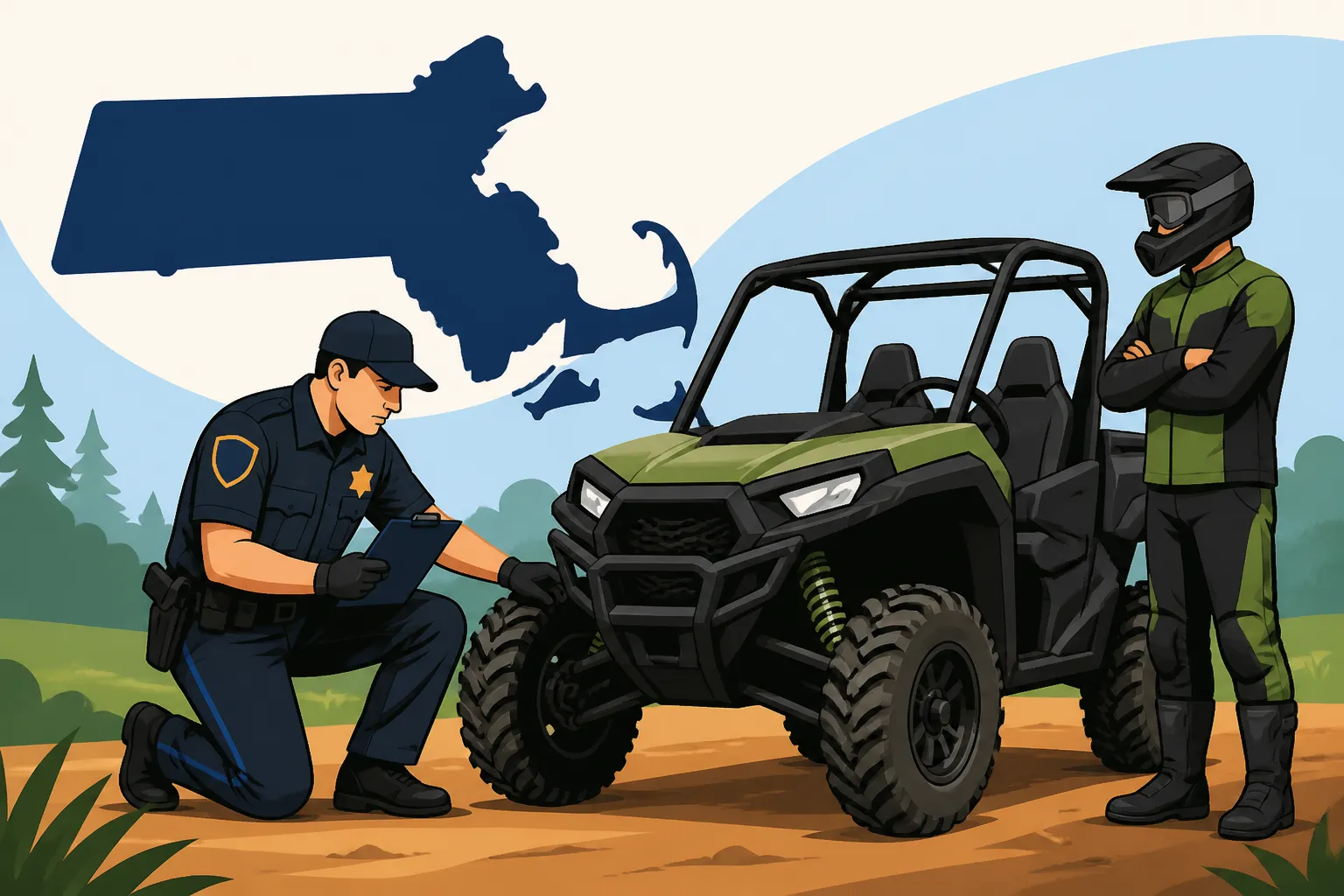
When you're out on the trails in Massachusetts, whether it's the winding paths of October Mountain State Forest or the challenging terrain of Beartown, you might encounter an Environmental Police Officer (EPO). Their primary role is to ensure everyone is riding safely and legally, and a big part of that involves checking your machine's equipment. They're not just looking for registration; they're inspecting your machine's readiness and compliance with state law.
Registration and Decals
First and foremost, an EPO will check your registration. This is non-negotiable in Massachusetts. If your machine isn't properly registered, you're looking at potential fines and headaches right from the start. They'll want to see your physical registration card, which, as many experienced riders know, must always be carried on board the machine whenever it's being operated. This isn't something to leave in your truck or at home; it needs to be with you on the trail.
Beyond the card itself, officers meticulously check for proper decal placement. Massachusetts has specific rules about where your registration decals should be affixed – typically on the forward half of both sides of your machine, clearly visible. The expiration decal also has its own designated spot, usually on the left side. These aren't just decorative stickers; they're proof of your compliance and must meet certain size requirements, like the [Massachusetts Number Height Requirements] of at least three inches high for the registration numbers. They're quick visual cues for officers to see you're riding legally, even from a distance. If these aren't right, it's an immediate flag.
Braking System Integrity
The braking system on your ATV or UTV is critical for safety, and Environmental Police Officers take its functionality very seriously. They're not just checking if you have brakes; they're checking if they actually work. This means inspecting both the front and rear brakes (if equipped) to ensure they engage properly and are capable of bringing the machine to a safe, controlled stop. Loose brake levers, spongy pedals, or brakes that barely engage are major red flags.
Imagine you're navigating a steep descent in Pittsfield State Forest. If your brakes fail, it’s not just an inconvenience; it’s a serious accident waiting to happen. Officers understand these dangers acutely. They might ask you to demonstrate the brakes, or they might visually inspect the brake lines, pads, and rotors for excessive wear, leaks, or damage. Any component that compromises the effective stopping power of your machine could lead to a citation for [Massachusetts Equipment Requirements] that aren't met, and rightfully so, to protect both you and others on the trail.
Muffler and Spark Arrester Compliance
Noise is a common concern in many riding areas, and Massachusetts law, like [Massachusetts Muffler Requirements], aims to balance rider enjoyment with community peace. Officers will be checking your muffler to ensure it's in good working order and hasn't been modified in a way that significantly increases noise output. Aftermarket exhaust systems are popular for performance, but if they make your machine excessively loud, they can draw unwanted attention from an EPO.
Even more crucial, especially during dry seasons, is the presence and functionality of a spark arrester. This device is designed to prevent hot carbon particles from escaping your exhaust and potentially igniting dry leaves or brush, which is a significant fire hazard in our forests. [Massachusetts Spark Arrestor Checks at a Park Gate] are not uncommon. Officers know that a missing or damaged spark arrester can quickly turn a fun ride into a dangerous situation, leading to environmental damage and fines. They will absolutely be checking for this, as preventing forest fires is a high priority for land management.
Diving Deeper into Massachusetts Equipment Requirements
Beyond the basics, Massachusetts law goes into more detail about specific equipment that your ATV or UTV must have to be considered trail-ready and legal. These aren't just suggestions; they're mandated to ensure rider safety and minimize environmental impact.
Lighting and Reflectors for Visibility
Riding after dark, or even in low-light conditions like heavy fog or dense tree cover, requires adequate lighting. [Massachusetts Lighting After Sunset] specifies that your machine must be equipped with at least one headlight and one taillight. These lights need to be fully functional, emitting sufficient illumination to make you visible to others and to light your path safely. Officers will often check to make sure both are working properly.
Furthermore, a red rear reflector is required. This reflector provides an additional layer of passive safety, ensuring that even if your taillight fails, you still have some visibility from the rear. While you might be focusing on the trail ahead, being seen from behind is equally important, especially when crossing public ways or sharing trails with slower-moving groups. For many riders, adding extra reflective gear to their machine or even their riding attire is a smart move, going beyond the minimum to maximize safety. Companies like SuperATV offer a range of auxiliary lighting options that can significantly enhance visibility and safety, though the state primarily mandates the basic headlight and taillight.
Safety Helmets: A Universal Mandate
This one should be obvious, but it bears repeating because it's so fundamental: [Massachusetts Helmet Law for Every Rider] is strict and universal. Every person operating or riding as a passenger on an ATV or UTV, regardless of age, must wear a helmet. This isn't just about protecting your head; it's about adhering to a law designed to save lives and prevent severe injuries. Officers will absolutely check for helmet compliance.
They're not just looking for any helmet, either. The helmet must meet specific safety standards, typically those set by the Department of Transportation (DOT). This means a simple bicycle helmet or construction hard hat won't cut it. The helmet needs to be properly fastened too; a helmet dangling off your arm offers no protection. Officers frequently see riders make this mistake, especially those who might momentarily remove their helmet for a break and forget to re-fasten it before moving again. It’s one of the easiest tickets to get if you’re not compliant.
Machine Width and Trail Restrictions
While not strictly an "equipment" check in the same way brakes are, the physical dimensions of your machine, particularly its width, are crucial in Massachusetts. Our state forest trails are designed for specific types of machines, and many have width restrictions. For instance, some sections might be too narrow for wider side-by-sides. If your UTV is excessively wide, you could be cited for riding in an unauthorized area, even if you’re technically on a marked trail.
EPOs are familiar with the trails and the types of machines that can safely and legally navigate them. They understand that trying to force an oversized machine down a narrow trail not only causes environmental damage (widening the trail, damaging vegetation) but also creates hazards for other users. Before heading out, especially with a wider side-by-side, it's always a good idea to check the specific regulations for the riding area you plan to visit. This can prevent a frustrating and costly encounter with an officer who determines your machine is simply too large for the designated path.
Avoiding Common Equipment Pitfalls and Staying Legal
It's easy to overlook minor details, but these can often lead to unnecessary stops and potential citations from Environmental Police Officers. Being proactive and performing regular checks can save you a lot of hassle and ensure your rides are always enjoyable and lawful.
Pre-Ride Checks Are Your Best Friend
Think of your ATV or UTV like any other vehicle: it needs regular attention. Before every ride, especially before heading out to a state forest, take a few minutes to do a quick inspection. Check your lights, test your brakes, ensure your muffler is secure, and glance at your spark arrester. Are your decals still firmly attached and clearly visible? Is your registration card actually in your pocket or the machine's storage compartment? This routine, like the pre-flight check of an airplane, can catch small issues before they become big problems or attract an officer's attention.
It’s not just about avoiding a ticket; it’s about safety. A loose headlight might not seem like a big deal until dusk, or a slightly worn brake pad until you need to stop short on a tricky section. Many riders customize their machines, often with robust aftermarket parts from companies like SuperATV, but even the best parts need to be properly installed and maintained. A thorough pre-ride check is a habit that every responsible rider should cultivate.
Understanding Aftermarket Modifications
Aftermarket parts can significantly enhance your machine's performance, comfort, and utility. However, not all modifications are created equal when it comes to legality. For example, lifting your machine too high or adding tires that are excessively large might inadvertently make your ATV or UTV too wide for certain trails, as discussed. Similarly, some aftermarket exhausts, while sounding powerful, might exceed local noise ordinances.
It’s crucial to understand how any modification affects your compliance with Massachusetts law. If you're considering a new exhaust, research its sound output. If you're adding a light bar, ensure it doesn't interfere with your standard lighting requirements or blind other trail users. Environmental Police Officers are trained to spot non-compliant modifications, especially those that impact safety or environmental concerns. When in doubt, err on the side of caution or consult with an experienced local dealer who understands [Massachusetts ATV Laws Under Chapter 90B] before making significant changes.
What to Do If Stopped by an Environmental Police Officer
Even if you’re confident your machine is in perfect order, you might still get stopped. The key here is to remain calm, cooperative, and respectful. An EPO is simply doing their job to ensure everyone's safety and compliance. When an officer signals you to stop, pull over safely to the side of the trail or road and turn off your engine. Keep your hands visible and avoid any sudden movements.
When the officer approaches, be ready to present your registration card, and if asked, your safety certificate, especially if you are under 18. They may ask to inspect your machine, and it's best to comply unless you have a very specific, legal reason not to. Answer their questions clearly and honestly. If you receive a citation, listen to their explanation, and if you believe there’s an error, you can politely ask for clarification. Remember, arguing on the spot is rarely productive. You’ll have an opportunity to address any issues later if you decide to dispute the citation. Understanding [What an Environmental Police Officer Can Ask] beforehand can help you feel more prepared.
| Equipment Item | Massachusetts Requirement | Officer Check Focus |
|---|---|---|
| Registration | Current card on person/machine, decals 3" high, correct placement | Card present, decals visible, size, and location correct |
| Brakes | Fully functional front & rear (if equipped) | Functionality, pad wear, fluid leaks, lever/pedal play |
| Muffler | Secure, no excessive noise modification | Sound level, physical integrity, aftermarket modifications |
| Spark Arrester | Present and functional | Presence, condition, signs of tampering |
| Headlight | At least one, fully functional | Working, adequate illumination |
| Taillight | At least one, fully functional | Working, visible from rear |
| Red Rear Reflector | Present and visible | Presence, cleanliness, visibility |
| Helmet | DOT-approved, properly worn and fastened by all riders/passengers | Proper type, secure fit, fastened strap, all occupants wearing |
Disclaimer
This article is for general informational purposes only and does not constitute professional advice. Laws, prices and regulations vary by location and change over time. Consult a qualified professional for guidance on your specific situation.