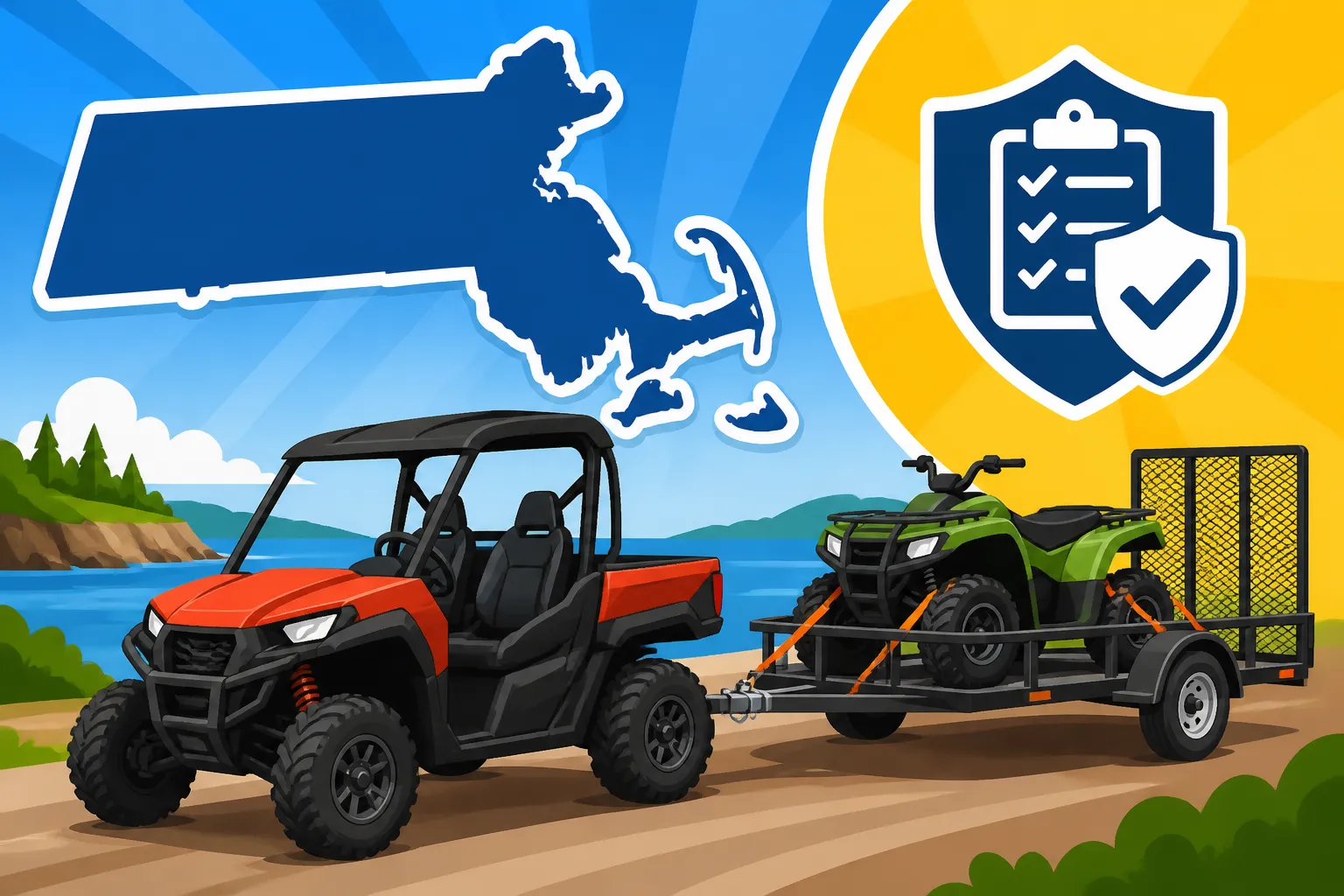
Massachusetts Rules for Towing a Trailer
It's incredibly frustrating when you're looking to put your ATV or UTV to work, whether it's hauling firewood, clearing brush, or getting camping gear to a remote spot, only to be unsure about the legalities of towing a trailer in Massachusetts. Many riders want to maximize the utility of their machines, but the rules around trailers, especially when they might touch a public road, are often murky and lead to a lot of anxiety. This guide is here to clear up that confusion, diving deep into what's allowed, what's definitely not, and how to stay safe and legal while towing with your off-highway vehicle (OHV) in the Bay State.
The Basic Legal Landscape for OHV Trailer Towing in Massachusetts
Let's cut right to the chase: using your ATV or UTV to tow a trailer might seem straightforward, but in Massachusetts, it's wrapped in specific regulations, particularly concerning where you can actually do it. The Commonwealth is pretty clear about the primary purpose of these machines, and it’s not for regular road use, even with a trailer in tow.
Why Towing on Public Roads is a No-Go
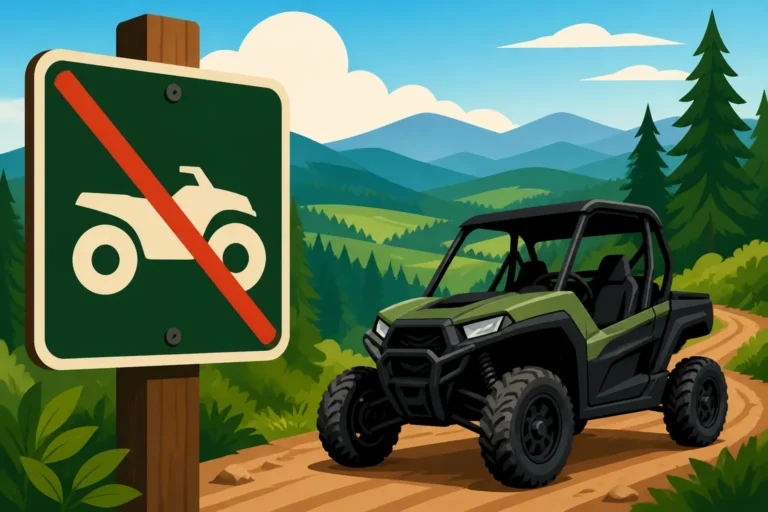
This is the foundational rule that trips up many riders. In Massachusetts, ATVs and UTVs are classified as Off-Highway Vehicles (OHVs), and by law, they are generally prohibited from operating on "public ways." This isn't just a suggestion; it's enshrined in Chapter 90B of Massachusetts General Laws. What exactly constitutes a "public way" can sometimes feel like a moving target, but generally, it includes paved roads, unpaved roads maintained by the state or a town, and even some public easements.
The moment you hitch a trailer to your quad or side-by-side and consider pulling it down a main road, even for a short distance, you're likely stepping into illegal territory. The state views these machines as recreational or utility vehicles meant for off-road environments. Attaching a trailer doesn't magically make them street-legal. The dangers are obvious: ATVs and UTVs aren't designed for road speeds, they lack the typical safety features of cars (like crumple zones, advanced braking systems, and often turn signals or mirrors), and their handling characteristics change dramatically with a loaded trailer. Ignoring this fundamental rule can lead to significant penalties, from hefty fines to having your machine impounded. [Massachusetts Penalties for Illegal Riding] can be quite severe, and adding a trailer to the mix often compounds the violation.
Permissible Towing on Private Land
Now for the good news: while public roads are largely off-limits, towing a trailer on private land is where your ATV or UTV truly shines. This is their domain! Farmers, loggers, landscapers, and even homeowners with large properties frequently use their OHVs to haul all sorts of materials. Think about pulling a small utility trailer loaded with bags of mulch across your acreage, towing a log splitter through a woodlot, or moving tools and equipment for a job around a large estate. This is perfectly acceptable, assuming you have the proper [Massachusetts Landowner Permission in Writing] if it's not your own property.
On private land, the sky's largely the limit regarding what you can tow, within reason and within your machine's capabilities. You'll see everything from small dump carts for yard work to specialized log trailers designed to navigate rough terrain. These are typically purpose-built trailers that connect to a standard hitch on your ATV or UTV, designed to move heavy loads over uneven ground. The key here is "private land" – it’s about using your machine for its intended utility purposes without venturing onto areas designated for conventional vehicle traffic.
Equipment and Safety Considerations for OHV Trailer Towing
Even when you're legally towing a trailer on private land, safety isn't something to take lightly. The right equipment and proper technique are absolutely critical to prevent accidents, damage to your machine, or injury.
Essential Towing Equipment
Having the right gear is the first step to safe and effective towing. It’s not just about hooking up and going; it’s about ensuring compatibility and capability.
- Hitches: Most ATVs and UTVs come equipped with a receiver hitch or a tow ball mount. Receiver hitches are usually more versatile, allowing you to swap out different ball sizes or even a pintle hook. Ensure your hitch is securely mounted and rated for the weight you intend to tow. A robust, well-designed hitch is non-negotiable. Many aftermarket companies, like SuperATV, offer heavy-duty receiver hitches and tow straps specifically designed for the demanding conditions off-road machines often face, ensuring a secure connection to your trailer.
- Trailers: The type of trailer you choose should match the job and your OHV's capacity.
- Small Utility Trailers: These are perfect for hauling firewood, gardening supplies, tools, or even camping gear. They typically have a low profile and a light tare weight.
- Dump Carts: Ideal for moving soil, sand, gravel, or manure, as they allow for easy unloading.
- Log Trailers: Designed specifically for forestry work, often with bunks and sometimes even small cranes, for moving cut timber.
Always check the trailer’s gross vehicle weight rating (GVWR) and compare it against your OHV’s towing capacity.
- Brakes: For heavier loads, especially with UTVs, a trailer with its own braking system can be a lifesaver. This could be surge brakes (hydraulic or electric) that activate when the towing vehicle slows, or a manual brake system. Without trailer brakes, your OHV’s braking system might be severely overloaded, making it difficult to stop safely, particularly on declines or slippery surfaces.
- Lighting/Reflectors: Even on private property, visibility is key. If you're towing in low light conditions or through areas where others might be present (like a large farm with other workers), ensure your trailer has reflectors. Battery-powered tail lights can be a good investment for enhanced safety.
Safe Towing Practices and Capacity Limits
Just because your machine can pull something doesn't mean it should or that it can do it safely. Adhering to manufacturer specifications and common-sense safety rules is paramount.
- Manufacturer's Towing Capacity: Every ATV and UTV has a specified maximum towing capacity. This is not a suggestion; it's a hard limit. Exceeding it puts undue stress on your engine, transmission, frame, and brakes, leading to premature wear, mechanical failure, or a catastrophic loss of control. Always know your machine's limit, and factor in the weight of the trailer itself plus its cargo. For larger UTVs or those frequently used for heavy utility, considering performance parts like upgraded axles or suspension components, perhaps from a reputable brand like SuperATV, could help manage the load more effectively within the manufacturer’s limits.
- Tongue Weight: This is the downward force the trailer exerts on your hitch. Too little tongue weight can make the trailer sway dangerously, while too much can lift the front wheels of your OHV, reducing steering control and traction. Aim for roughly 10-15% of the total trailer weight (trailer + cargo) to be on the tongue.
- Load Distribution: Distribute the heaviest items over the trailer’s axle(s) to maintain stability. Secure all cargo using straps, nets, or tie-downs to prevent shifting during transit. A shifting load can drastically alter the trailer's balance and lead to a loss of control.
- Speed Considerations: Towing dramatically changes how your OHV handles. Reduce your speed significantly, especially over uneven terrain, through turns, or on inclines/declines. Fast speeds amplify any instability in the trailer.
- Maintenance: Before each towing session, do a quick inspection. Check tire pressure on both the OHV and the trailer, ensure lug nuts are tight, and verify that all hitch components are secure. Your [Massachusetts Equipment Requirements] for safe operation apply to the machine itself, but common sense extends them to anything you attach.
Specific Scenarios and Practical Advice
Let's look at some real-world applications and how Massachusetts towing rules might apply. Knowing these specifics can help you avoid problems and make the most of your OHV's utility.
Towing on Farm or Forestry Land
This is perhaps the most common and accepted use of an ATV or UTV with a trailer. Imagine a crisp autumn day in the Berkshires, and you're using your side-by-side to haul several cords of cut firewood from your back acreage to the woodshed. Or a spring morning, moving bags of fertilizer and seed across sprawling fields. These are scenarios where OHVs, especially larger UTVs, excel.
- Hauling Essential Materials: Whether it’s feed for livestock, fence posts, tools, or lumber, your OHV can access areas that a truck might struggle with, especially after heavy rains. The maneuverability of a [Registering a Side-by-Side in Massachusetts] makes it ideal for navigating tight paths between trees or around farm buildings.
- Navigating Uneven Terrain: With a trailer, going slow and steady is the golden rule. Avoid sudden movements, sharp turns, or excessively steep grades. Your OHV’s four-wheel drive (if equipped) will be invaluable, but even then, traction can be compromised by heavy loads. For those who frequently tackle demanding terrain with heavy loads, looking into aftermarket components like heavy-duty axles or suspension kits from SuperATV can provide enhanced durability and performance, allowing your machine to handle the strain more reliably.
- Utility of a UTV: Side-by-sides often have higher towing capacities and a more stable platform due to their wider stance and longer wheelbase, making them a preferred choice for serious utility work on farms and in forests. Their cargo beds can also carry a good amount of material, reducing the need for a separate trailer for smaller tasks.
Crossing Public Ways While Towing
This is where things get tricky, and it's imperative to understand the very narrow exceptions. As established, regular use on public ways is forbidden. However, Massachusetts law does allow for brief, perpendicular crossings of public ways if specific conditions are met. This is generally for connecting two pieces of private land or accessing a trail.
When towing a trailer, this brief crossing becomes even more complex and risky. The law still states you must come to a [Massachusetts Rules for Crossing a Road], yield to all traffic, and cross directly and perpendicularly to the road. You cannot ride down the shoulder, even for a few feet, and you definitely cannot travel along the road. Adding a trailer means you need even more caution, awareness of traffic, and a wider turning radius. An Environmental Police Officer will expect you to execute this maneuver flawlessly. It's often advisable to offload a trailer if possible, or consider whether the crossing is truly necessary and safe with a trailer in tow. If there's any doubt about visibility or traffic, don't attempt it.
Trail Maintenance and Group Rides
Your ATV or UTV, especially with a small trailer, can be a fantastic asset for maintaining trails and supporting group rides. This is typically done on authorized OHV trails within state forests or on private club lands where [Massachusetts Clubs That Maintain Trails] do their invaluable work.
- Hauling Tools for Trail Work: Imagine a workday where your local OHV club is clearing downed trees or repairing washouts. Your UTV with a small trailer can efficiently carry chainsaws, rakes, shovels, and other equipment to the work site. This saves time and effort compared to carrying everything by hand or relying on larger, less agile vehicles.
- Carrying Emergency Supplies or Recovery Gear: For long group rides, especially in remote areas, a small cargo trailer can carry a first-aid kit, extra fuel, recovery equipment (like a winch or tow straps), or even spare parts. This adds a layer of safety and preparedness.
- Camping Gear and Coolers: If your ride involves an overnight stay at an OHV-friendly campground, a utility trailer is perfect for hauling tents, sleeping bags, coolers, and cooking supplies. Just remember to adhere to any size or weight restrictions the campground or trail system might have. It's about enhancing the experience, not creating a hazard.
Avoiding Common Mistakes and Penalties
Even with the best intentions, it's easy to make mistakes when it comes to towing a trailer with your OHV. Understanding the potential pitfalls can help you steer clear of legal trouble and dangerous situations.
The Lure of the "Short Cut" and Its Consequences
It’s tempting, isn't it? You’re on private land, loaded with firewood, and the nearest public road section is just a quarter-mile straight shot to your house. You think, "I'll just zip down there, nobody will see me." This is one of the most common and riskiest mistakes. That "short cut" on a public way, even with a trailer in tow, is a direct violation of Massachusetts law.
- Legal Ramifications: As mentioned earlier, [Massachusetts Penalties for Illegal Riding] are not minor. You could face significant fines, and your ATV or UTV could be impounded. The Environmental Police are well-versed in OHV laws and actively patrol areas where such shortcuts are tempting. [What an Environmental Police Officer Can Ask] you for includes your registration card, proof of ownership, and to verify you're operating legally. Attempting to tow a trailer illegally on a public way will raise immediate red flags.
- Insurance Implications: This is often overlooked. Your ATV or UTV insurance policy (which, by the way, [Massachusetts Has No Insurance Mandate] for, making many policies optional for private land use) is almost certainly voided if you're operating illegally on a public road. If you were to get into an accident while towing on a public way, you would be personally liable for all damages, injuries, and legal fees. That shortcut could end up costing you tens of thousands of dollars, or more.
Overloading and Equipment Failure
Pushing your machine beyond its limits, especially when towing, is a recipe for disaster. The consequences go beyond legal penalties and can result in severe damage and injury.
- Damage to Your OHV: Overloading stresses the engine, transmission, axles, and suspension system. You might overheat your engine, burn out your clutch or belt, or even bend your frame. These are often costly repairs that could have been avoided by respecting your machine's towing capacity.
- Loss of Control: An overloaded or improperly balanced trailer can lead to dangerous situations. The trailer could sway violently, causing you to lose control of your OHV. On a downhill grade, the weight of an unbraked, overloaded trailer can push your OHV, making it impossible to stop or steer, potentially leading to a jackknife situation or rolling the machine.
- Injury to Riders or Bystanders: The worst-case scenario is an accident resulting in injury. If a trailer detaches due to a failed hitch, or if you lose control and strike someone or something, the consequences can be devastating for everyone involved.
- Knowing Your Machine's Limits: Always refer to your owner's manual for specific towing capacities and guidelines. If you're frequently towing near the limit, invest in high-quality, heavy-duty towing accessories. A good winch kit, perhaps from a brand like SuperATV, is a valuable recovery tool if you find yourself stuck or unable to move a heavy load on challenging terrain, but it's not a substitute for proper planning and adhering to weight limits.
Here's a quick summary to help keep you on the right path:
| Action | Do's | Don'ts |
|---|---|---|
| Location for Towing | Tow on private land with permission. | Operate with a trailer on any public road, highway, or public way. |
| Equipment | Use a properly rated hitch and trailer. Consider trailer brakes for heavy loads. | Exceed your OHV's stated towing capacity. Use a hitch or trailer not designed for off-road use. |
| Loading | Distribute weight evenly over the trailer's axles. Secure all cargo tightly. | Allow cargo to shift freely. Have too much or too little tongue weight. |
| Speed and Maneuvering | Reduce speed significantly. Drive slowly and steadily, especially on rough terrain. | Make sudden turns or rapid acceleration/deceleration. Attempt high speeds with a trailer. |
| Public Way Crossings (Very Limited) | Come to a full stop, yield to all traffic, cross perpendicularly and quickly. | Travel any distance along a public way. Cross if visibility is poor or traffic is heavy. |
| Maintenance | Inspect your OHV and trailer before each use (tires, hitch, cargo security). | Neglect pre-ride checks. Assume everything is fine if you towed without issue last time. |
| Legal Compliance | Always have landowner permission for private property. Understand all Chapter 90B rules. | Ignore signs or private property boundaries. Assume a "short cut" on a road is harmless. |
Towing a trailer with your ATV or UTV in Massachusetts can be incredibly useful, enabling you to accomplish tasks and enjoy experiences that would otherwise be impossible. However, it's crucial to distinguish between what's legal and safe on private land versus what's absolutely prohibited on public ways. By understanding and adhering to the regulations, investing in the right equipment, and practicing safe towing habits, you can harness the full utility of your machine without running into trouble. Always remember, the convenience of a tow is never worth the risk of a fine, an accident, or an injury.
Disclaimer
This article is for general informational purposes only and does not constitute professional advice. Laws, prices and regulations vary by location and change over time. Consult a qualified professional for guidance on your specific situation.