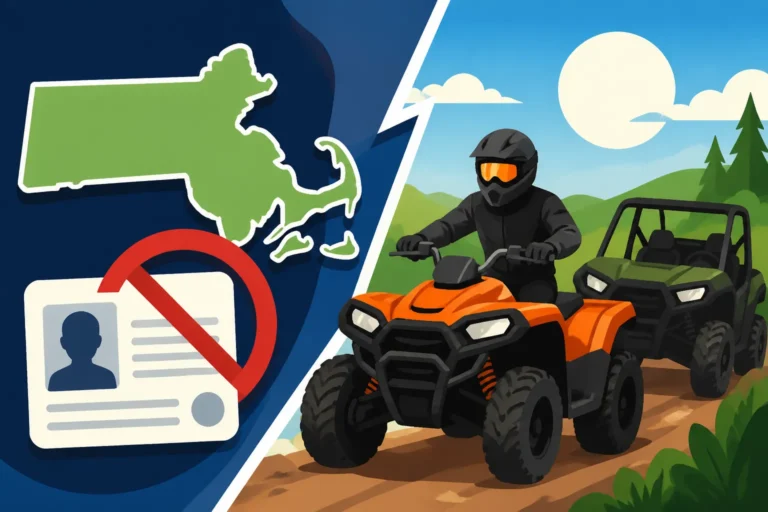
Massachusetts Rules for a Child Passenger
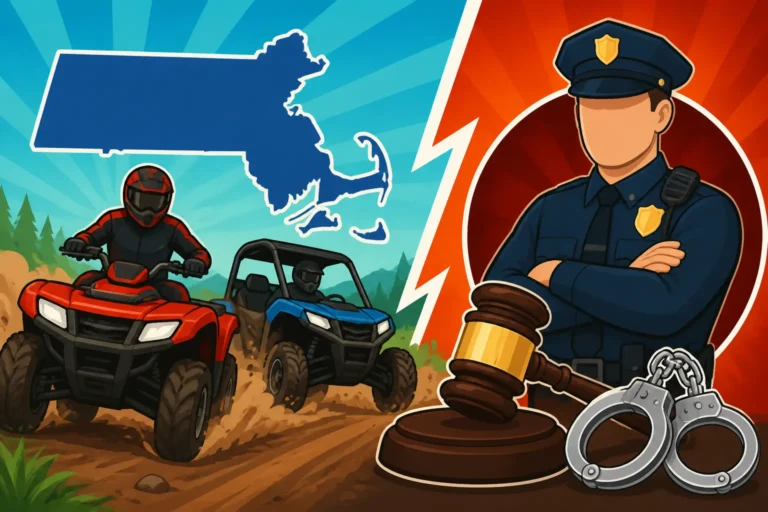
Bringing your child along for an off-road adventure on an ATV or UTV can seem like a natural part of family fun, but in Massachusetts, the rules around child passengers are far stricter than many parents realize. It's a common misconception that simply having a helmet and adult supervision is enough, leading to frustration and potential legal trouble for unsuspecting families. This guide will walk you through the specific regulations for child passengers on both ATVs and UTVs in the Bay State, ensuring you understand how to keep your family safe and legal on the trails.
The Harsh Reality of Youth Riding in Massachusetts: Sean's Law and Beyond
Navigating the world of off-road vehicle (OHV) laws in Massachusetts, especially when it comes to kids, can feel like trudging through thick mud. Many states have fairly relaxed rules about children riding as passengers or even operating smaller machines with supervision, but Massachusetts operates under a much stricter framework. Parents often discover these stringent regulations the hard way, after encountering an Environmental Police officer or trying to register a youth machine. The foundation of these strict rules lies heavily in what’s known as "Sean's Law," a pivotal piece of legislation that dramatically changed the landscape for young riders in the Bay State.
What Sean's Law Means for Young Riders
Sean's Law, enacted in 2010, was a direct response to a tragic accident involving a young rider. Its core intent was to enhance safety and reduce injuries among children on ATVs and other OHVs. While the law primarily focuses on the operation of these machines by minors, its spirit and broad language have profound implications for passengers as well. Essentially, if a child cannot legally operate a machine, the state views them as being at greater risk in any capacity on that machine, especially if it's not designed for multiple riders. This law made Massachusetts one of the toughest states in the nation regarding youth OHV use, and it's something every parent with an interest in off-roading needs to understand thoroughly. [Sean's Law and Massachusetts Youth Riders] explains more about the law's origins.
One of the most impactful provisions of Sean's Law is the outright ban on children under the age of 14 from operating ATVs under almost all circumstances. This isn't just a suggestion; it's a hard-and-fast rule with significant penalties for both the child and the supervising adult. This strict stance trickles down into passenger regulations because the state's philosophy is rooted in preventing all potential hazards for young children on these powerful machines. The law doesn't differentiate much between public and private land when it comes to this age restriction, which often catches property owners by surprise.
Why Massachusetts Stands Apart in Strictness
Massachusetts didn't just tweak its OHV laws; it fundamentally reshaped them. Unlike some states that might allow a child to ride a small ATV on private land with parental consent, Massachusetts generally takes a much harder line. The rationale is often tied to the perceived inherent dangers of OHVs, especially for developing minds and bodies that may lack the judgment, strength, or coordination to react safely in unpredictable off-road environments. This paternalistic approach, while sometimes frustrating for experienced riding families, is designed to minimize risk.
The state's strictness also stems from a lack of widespread, dedicated OHV trail networks compared to other states with more expansive public lands open to off-road recreation. With fewer designated areas, the risk of informal, unsupervised, or unsafe riding practices in inappropriate locations increases, leading lawmakers to err on the side of caution. [Massachusetts ATV Age Requirements] further details the specific age restrictions for operating various types of machines. It's this overarching philosophy that shapes every rule, including those concerning who can and cannot be a passenger.
Child Passengers on ATVs: A Strict Prohibition
Now, let's get to the critical point that often surprises new riders and families moving into Massachusetts: carrying a child passenger on an ATV is generally not allowed. This is perhaps one of the most misunderstood aspects of Massachusetts OHV law, and it’s where many families inadvertently find themselves in violation. An ATV, by definition, is typically designed for a single operator, and the state's laws reflect this design intent.
Single-Rider Design and Legal Implications
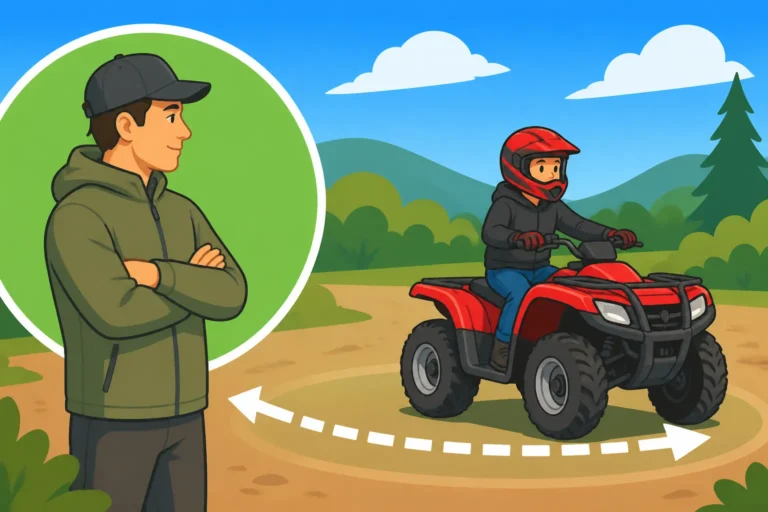
Most ATVs, or "All-Terrain Vehicles," are manufactured as single-rider machines. They have a saddle-style seat meant for one person, handlebars for steering, and footpegs for the rider's feet. Their design emphasizes dynamic weight shifting by the operator to control the machine through turns, over obstacles, and on varied terrain. When you add a second person, especially a child, it fundamentally changes the balance, handling, and safety dynamics of the ATV. The machine becomes top-heavy, harder to control, and the passenger has no secure handholds or proper foot placement, making them vulnerable to being thrown off.
The legal implications of this design are clear: operating an ATV with a passenger, particularly a child, when the machine is not designed for it, is a violation of Massachusetts law. The law does not make exceptions for "just a short ride," "on private property," or "with a helmet." The design of the machine dictates its use, and a single-rider ATV means exactly that. This is a crucial distinction that separates ATVs from other vehicles like UTVs, which we'll discuss next. For instance, putting a child on the back of a sport quad, even if they're holding on tight, is against the rules and incredibly dangerous.
The "No Passenger" Rule on the Trails
So, to be absolutely clear: if your ATV is designed for one rider, you cannot legally or safely carry a child passenger on it in Massachusetts. This means no doubling up with your young one on the seat in front or behind you. This rule is strictly enforced by the Environmental Police, who patrol the state forests and other designated riding areas. A violation can lead to fines and other penalties. The law aims to prevent accidents where children are injured due to improper seating, lack of control, or being ejected from a machine not designed to carry a second person.
This "no passenger" rule for single-rider ATVs applies regardless of the child's age, whether they are wearing a helmet, or how experienced you are as a rider. The focus is squarely on the machine's design and its intended safe use. It's a tough pill for some parents to swallow, especially if they're used to more lenient rules in other states or have fond memories of riding with their own parents as children. However, the law in Massachusetts is unequivocal on this point. Even on your own land, while direct enforcement might be less frequent, you're still liable for any accidents or injuries that occur due to operating outside the manufacturer's recommendations and state law. Massachusetts Rules for a Child Passenger outlines these restrictions in detail.
Child Passengers on UTVs (Side-by-Sides): A Different Story, But Still Strict
While ATVs present a clear "no child passenger" scenario for single-rider models, Utility Terrain Vehicles (UTVs), commonly known as side-by-sides, offer a different situation. UTVs are specifically designed for multiple occupants and typically come equipped with bucket or bench seats, seat belts, and roll-over protection structures. This multi-passenger design is what differentiates their legal treatment for carrying children in Massachusetts, though important restrictions still apply.
Manufacturer Designations and Seat Belts
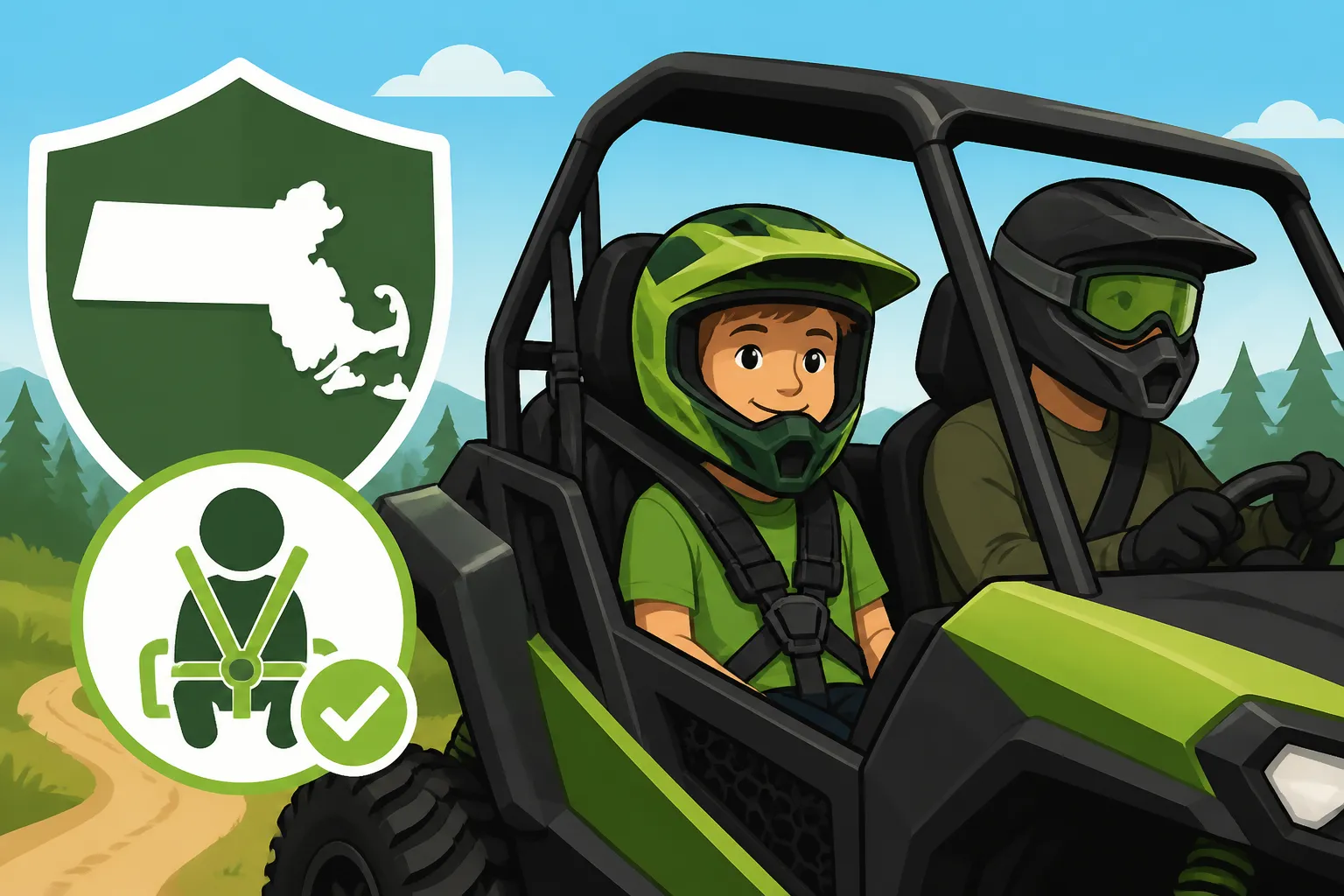
The key to legally carrying a child passenger in a UTV in Massachusetts lies in the manufacturer's design. If a UTV comes from the factory with multiple seating positions, complete with proper seat belts and handholds, it is generally permissible to carry passengers up to its designated capacity. This means a side-by-side with two seats can carry one driver and one passenger, and a four-seater can carry a driver and three passengers.
It is absolutely crucial that every passenger, including children, uses the factory-installed seat belts. These are not optional; they are a fundamental safety feature designed to keep occupants secure within the vehicle's protective cage. Before heading out, always ensure your UTV is in good working order, and that all seat belts are fully functional and properly adjusted for each passenger. Some UTVs may even have compatible accessory seats or harnesses designed for smaller occupants, which can be useful. Companies like SuperATV offer a range of accessories, including harnesses and storage solutions, that can enhance safety and comfort in your UTV, but always ensure any modifications comply with state law and the manufacturer's recommendations for passenger safety.
Age and Supervision Requirements for UTV Passengers
Even with a multi-passenger UTV, simply having a seat belt isn't a free pass for any child to ride. Massachusetts still has age-related rules, though they are less restrictive than those for operating an ATV. The primary focus here is that the child must be able to sit properly, securely use the seat belt, and have their feet reach the floor or footrests, preventing them from being thrown around the cabin during bumps and turns. There isn't a specific minimum age mandate for a UTV passenger like there is for an operator, but common sense and the ability to safely secure the child are paramount.
Furthermore, a child passenger in a UTV, just like a child operator on any OHV, must always wear an approved helmet. [Massachusetts Helmet Law for Every Rider] is non-negotiable for all OHV riders, regardless of age or machine type. A child being transported in a UTV is still considered a "rider" under this law. Beyond legal requirements, strict adult supervision is always expected. The operator of the UTV, who must be at least 16 and a half years old and hold a valid motor vehicle driver's license (or be 18+ and have completed a safety course), is responsible for the safety and conduct of all passengers. This means being mindful of terrain, speed, and ensuring the child remains safely seated and belted throughout the ride.
It's also worth noting that when it comes to UTVs, the general prohibitions of [Massachusetts Bans Riders Under 14] from operating OHVs still apply. So, while a child under 14 might be a passenger in your UTV, they absolutely cannot take the wheel. The operator must meet the age and licensing requirements, ensuring a capable adult is always in control.
Essential Safety Considerations for Young Riders and Passengers
Regardless of whether your child is riding as a passenger in a UTV or (if of age) operating their own youth quad, safety should always be the absolute priority. The legal requirements in Massachusetts are just the baseline; going above and beyond those requirements can make all the difference in preventing accidents and ensuring a positive experience for everyone. Off-roading, by its very nature, carries risks, and young riders need extra protection and guidance.
Essential Safety Gear and Practices
First and foremost, a properly fitted, DOT-approved helmet is mandatory for every rider and passenger in Massachusetts, no exceptions. This isn't just a rule; it's the single most important piece of safety gear. Beyond the helmet, consider investing in additional protective equipment:
- Eye Protection: Goggles or a full-face shield on the helmet are crucial to protect against dust, debris, and insects.
- Gloves: Protect hands from scrapes and provide a better grip on handlebars or grab handles.
- Long-Sleeved Shirt and Pants: Durable clothing helps protect against branches, scrapes, and sun exposure. Avoid loose clothing that could snag.
- Over-the-Ankle Boots: Sturdy footwear protects feet and ankles and provides good grip on footpegs or floorboards.
Beyond gear, instill safe riding practices from day one. Always conduct a pre-ride inspection of your machine, checking tires, brakes, lights, and fluid levels. Review the route and discuss potential hazards with your child. Emphasize the importance of staying seated and keeping all limbs inside the UTV's cage. For young operators, reinforce the rules of the trail, staying within their skill level, and never riding beyond their capabilities. [Massachusetts Equipment Requirements] provides a basic checklist of what's needed for the machine itself.
| Feature / Vehicle Type | ATV (Single Rider) | UTV (Side-by-Side) |
|---|---|---|
| Child Passenger Allowed? | Generally NO | YES, if designed for multiple occupants |
| Minimum Age for Operator | Varies by CC & training (e.g., 14-16 with 90cc cap & safety course; 16.5+ with license for larger) | 16.5+ with valid driver's license OR 18+ with OHV safety course |
| Seat Belts Required for Passengers? | N/A (not designed for passengers) | YES, factory-installed |
| Helmet Required for Passengers? | N/A (not designed for passengers) | YES, DOT-approved |
| Safety Certificate for Operator? | YES (if under 18) | YES (if under 18, or if 18+ and no driver's license) |
| Designation for Multi-Occupancy | NO | YES |
Making Smart Choices for Your Family's Off-Road Adventures
The beauty of off-roading is the connection to nature and the thrill of exploration. To ensure these adventures remain positive, making smart choices is key. This includes selecting the right machine for your family's needs. If carrying children is a priority, a UTV is undoubtedly the safer and legal option in Massachusetts. Consider models with robust roll cages and ample space. Companies like SuperATV also produce aftermarket parts that can improve the utility and safety of your UTV, such as enhanced roll cages, mirrors, and storage, which can further prepare your machine for family outings.
Moreover, enroll your children (and yourselves if you haven't already) in an approved OHV safety course. Even if your child is only a passenger, understanding the dynamics of the vehicle and basic trail etiquette is invaluable. [Massachusetts Safety Certificates Under 18] and [Massachusetts Two-Part Safety Course] elaborate on the state's training requirements. This education builds confidence, teaches critical decision-making skills, and reinforces good habits. Always ride within your limits and the limits of the terrain. Never push too hard, especially with children on board. The goal is to have fun and make memories, and the safest way to do that is by being prepared, educated, and always prioritizing safety over speed or stunts.
Ultimately, Massachusetts's strict laws regarding child passengers on OHVs are designed to protect our most vulnerable riders. While they may require adjustments for some families, they are in place for a reason. By understanding and adhering to these rules, and by making safety a personal priority, you can ensure that your family's off-road experiences in the Bay State are enjoyable, thrilling, and most importantly, safe.
Disclaimer
This article is for general informational purposes only and does not constitute professional advice. Laws, prices and regulations vary by location and change over time. Consult a qualified professional for guidance on your specific situation.