Massachusetts Brake Requirements
There’s nothing quite like hitting the trails on your ATV or UTV in Massachusetts, feeling the power under you as you navigate the varied terrain, from the sprawling state forests to the more technical sections. But as any experienced rider knows, that feeling of control isn’t just about acceleration; it’s profoundly tied to your ability to stop effectively. It’s a common frustration to hear new riders, or even some seasoned ones, underestimate the critical role brakes play, not just for personal safety but for staying on the right side of Massachusetts law. This guide will dive deep into everything you need to know about Massachusetts brake requirements for your off-highway vehicle, ensuring you're safe, compliant, and ready for any adventure the Bay State throws your way.
The Absolute Must-Have: Massachusetts' Core Brake Requirements
Let's be real: nobody wants to discover their brakes aren't up to snuff when they're halfway down a steep incline or suddenly need to stop for a fallen tree. Beyond the sheer terror of that scenario, Massachusetts law is very clear about the necessity of properly functioning brakes on all off-highway vehicles (OHVs), which include ATVs and UTVs. This isn't a suggestion; it's a mandate designed to keep everyone safe.
Why Working Brakes Aren't Just a Suggestion
The Commonwealth of Massachusetts, through Chapter 90B of its General Laws, lays out the rules for OHVs, and brake systems are right at the heart of it. The law doesn't just casually mention brakes; it insists on "adequate brakes" that are in good working order. This isn't just bureaucratic red tape; it's a critical safety measure. Imagine trying to navigate the winding trails of October Mountain State Forest without reliable stopping power. The risks of colliding with trees, other riders, or even wildlife become astronomically high.
Properly maintained brakes are your first line of defense against accidents. They allow you to react quickly to unexpected obstacles, control your speed on challenging descents, and simply enjoy your ride with confidence. Without them, you're not just risking a citation; you're risking serious injury to yourself, your passengers, and potentially others sharing the trail. It's about personal responsibility and ensuring that every time you head out, you're doing so with a machine that's prepared for the unexpected.
What "Adequate Brakes" Actually Means in the Bay State
So, what exactly does "adequate" mean in the eyes of Massachusetts law? While the statute doesn't specify a particular type of brake system, it implies a system that can safely and effectively bring your OHV to a complete stop under normal operating conditions. This typically means that your ATV or UTV should have a braking system that controls both the front and rear wheels, or at least provides substantial stopping power. Most modern ATVs and UTVs come equipped with hydraulic disc brakes on all four wheels, which are more than capable of meeting this standard when properly maintained.
During a routine stop or an inspection at a trailhead, an Environmental Police Officer (EPO) will definitely be looking for functional brakes. They'll check for proper lever and pedal travel, ensuring that the brakes engage firmly and without excessive play. They might even ask you to demonstrate your machine's stopping capability in a safe area. If your brakes feel spongy, make grinding noises, or simply don't stop the machine effectively, you're likely to be deemed non-compliant. Remember, the goal is for your machine to stop predictably and reliably every single time you hit that lever or pedal.
Common Brake Systems on ATVs and UTVs and Their Functionality
Over the years, OHV braking systems have evolved significantly, but you'll still encounter a couple of primary types on the trails, each with its own quirks and maintenance needs. Understanding how your machine's brakes work is fundamental to keeping them in top condition and ensuring they meet Massachusetts' requirements.
Hydraulic Disc Brakes: The Modern Standard
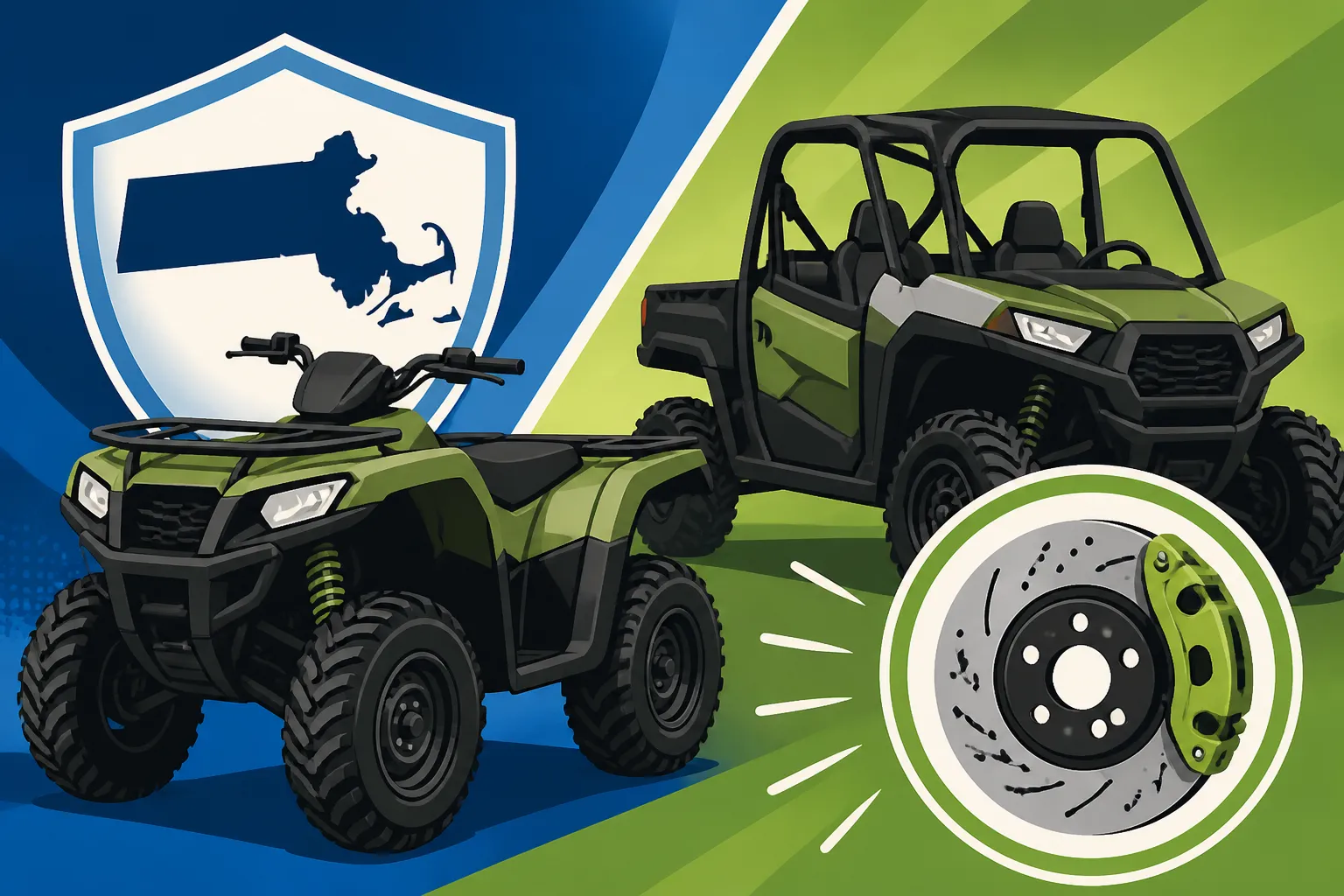
Most contemporary ATVs and UTVs, especially those built for performance or heavy utility, feature hydraulic disc brakes. These systems are the gold standard for a reason. When you squeeze a brake lever or press a pedal, hydraulic fluid is pushed through lines to calipers, which then squeeze brake pads against a spinning rotor attached to the wheel. This friction is what slows and stops your machine.
The advantages of disc brakes are numerous. They offer excellent stopping power, consistent performance even in wet or muddy conditions, and they're generally resistant to "fade" during heavy use. However, they do require attention. You'll need to periodically check your brake fluid levels and ensure there are no leaks in the lines. Brake pads wear down over time and need replacement, and rotors can become grooved or warped if neglected. Many riders, especially those pushing their machines hard, opt for aftermarket upgrades like those offered by SuperATV, which can provide even better stopping performance and durability through enhanced calipers, pads, and rotors.
Drum Brakes: What You Might Still See (and Maintain)
While less common on newer, larger machines, drum brakes can still be found, particularly on the rear wheels of some older or smaller displacement ATVs. With drum brakes, pressing the lever or pedal forces brake shoes outwards against the inside of a spinning drum. This friction brings the wheel to a halt.
Drum brakes tend to be less powerful and more prone to heat fade than disc brakes, especially during prolonged use, like a long descent in Pittsfield State Forest. They can also be less effective when wet, as water can get trapped inside the drum. Maintenance for drum brakes often involves adjusting the shoes as they wear, and occasionally disassembling the drum to clean out dust and inspect the components. While they might seem like a simpler system, keeping them properly adjusted and free of debris is key to their effectiveness. For those with machines still running drum brakes, regular inspection is paramount to ensure they remain "adequate" by Massachusetts standards.
Parking Brakes: Not Just for Parking
A parking brake might seem like a minor detail, but it's an essential safety feature on your ATV or UTV. Its primary function is to keep your machine stationary when parked, especially on uneven terrain. Picture stopping on a slight incline on a trail to consult your map or take a photo; without a parking brake, your machine could easily roll, leading to damage or injury.
While Massachusetts law explicitly focuses on the main service brakes, a functional parking brake contributes significantly to overall safety and good riding practice. EPOs will often notice if a parking brake is broken or ineffective, as it speaks to the general state of maintenance of the vehicle. For UTVs especially, with their increased weight, a reliable parking brake is non-negotiable for securing the vehicle. Ensure it engages firmly and holds your machine securely, preventing any unexpected rolls.
Brake Maintenance for Massachusetts Trail Readiness
Consistent and diligent brake maintenance isn't just about passing an inspection; it's about ensuring your safety and the longevity of your machine. Massachusetts trails can be demanding, and your brakes are arguably the most important safety system on your ATV or UTV.
Routine Checks You Can Do at Home
Before every ride, or at the very least, before every major outing, you should be performing some basic brake checks. Think of it as your pre-flight checklist. Start by squeezing the brake levers and pressing the brake pedal. Do they feel firm and responsive, or are they spongy and soft? Excessive travel before engagement could indicate low fluid, air in the lines, or worn pads. Check your brake fluid reservoir levels if you have hydraulic brakes; low fluid can be a sign of a leak or worn pads.
Visually inspect your brake pads and rotors. Are the pads thick enough, or are they worn down to the metal backing? Are the rotors smooth, or do they show deep grooves or discoloration? For drum brakes, listen for any grinding or squealing sounds when you apply them, which can indicate worn shoes. These simple checks, as part of your broader [Massachusetts Equipment Requirements] review, can catch small problems before they become dangerous and expensive failures out on the trail.
When to Seek Professional Help (or Dive Deeper Yourself)
There are times when a simple visual check isn't enough, or when you encounter issues that require more than basic adjustment. If your brake lever or pedal is consistently spongy, even after checking fluid levels, you likely have air in your hydraulic lines, which means it's time for a brake bleed. If you hear grinding noises, it's almost certainly worn pads, and possibly rotor damage. A "pulling" sensation where your machine veers to one side when braking could indicate a seized caliper or uneven pad wear.
While some experienced DIYers can tackle these repairs, including pad and rotor replacement, caliper rebuilds, or brake bleeds, don't hesitate to consult a professional if you're unsure. Brakes are too critical to mess up. Aftermarket suppliers like SuperATV offer a wide range of replacement parts, from pads and rotors to full caliper assemblies, making it easier to find quality components for those who prefer to do their own wrenching. Just make sure you follow your machine's service manual closely for torque specs and fluid types.
Aftermarket Upgrades and Enhancements
For many riders, the stock brake system is perfectly adequate. However, if you frequently ride aggressive terrain, carry heavy loads in your UTV, or just want an extra margin of safety, aftermarket brake upgrades can be a game-changer. These can range from simple pad upgrades to more comprehensive kits.
Performance brake pads, often made from different compounds, can offer better initial bite and improved heat resistance. Braided stainless steel brake lines replace rubber lines, providing a firmer, more consistent lever feel by reducing line expansion under pressure. Larger diameter rotors, paired with performance calipers, can dramatically increase stopping power and heat dissipation, which is especially valuable for larger, heavier UTVs. Brands like SuperATV are well-known for offering high-performance brake upgrades that can withstand the rigors of serious trail riding and provide that extra confidence when you need to shed speed quickly on a steep Berkshire descent.
The Legal Ramifications of Faulty Brakes in Massachusetts
Understanding the mechanical aspects of your brakes is one thing, but knowing the legal consequences of neglecting them is equally important. Massachusetts takes OHV safety seriously, and that includes ensuring your machine can stop when it needs to.
What an Environmental Police Officer Will Look For
When an Environmental Police Officer (EPO) stops you on a Massachusetts trail, whether for a routine check or after observing a violation, your brakes will likely be on their inspection list. As covered in [Massachusetts Equipment Checks by Officers], they aren't looking for brand-new components, but rather for functionality and safety. They'll typically check the feel of your brake levers and pedal, ensuring they're not excessively loose or spongy. They'll visually inspect the calipers, rotors, and pads for obvious signs of severe wear, damage, or leaks.
Beyond the static check, an officer might observe your braking while you're riding, or ask you to demonstrate your ability to stop your machine effectively and safely. The key takeaway is that your brakes must be in good working order, capable of bringing your ATV or UTV to a controlled stop, especially in an emergency. If your brakes fail this assessment, you could be facing more than just a stern warning.
Penalties for Non-Compliance
Riding an ATV or UTV with inadequate or faulty brakes in Massachusetts is a violation of Chapter 90B, and it carries real consequences. You could be issued a citation and a fine. While the exact amount can vary, it's certainly more than the cost of new brake pads or a fluid flush. More importantly, an EPO has the authority to deem your machine unsafe and prevent you from continuing your ride. This could mean having to arrange for your OHV to be trailered out of a state forest, cutting your day short and adding significant hassle and expense.
Imagine being deep in Beartown State Forest, far from any paved road, only to have your day ended because your brakes weren't up to par. It's a frustrating situation that is entirely avoidable with proper maintenance. These penalties, while inconvenient, are ultimately in place to enforce safety and prevent serious accidents. They serve as a stark reminder that regular inspection and maintenance are part of responsible OHV ownership. For more on the broader consequences, you can look into [Massachusetts Penalties for Illegal Riding].
Brake Failure and Accident Liability
Beyond fines and trail closures, the most severe legal ramification of faulty brakes comes into play if you're involved in an accident. If an accident occurs and it's determined that your brakes were inadequate or poorly maintained, you could face significant liability. This could include damages for injuries sustained by others, property damage, and even criminal charges in severe cases of negligence.
Maintaining your brakes isn't just about following the law; it's about mitigating your risk in the event of an unfortunate incident. Documentation of regular maintenance, or at least proof of recent professional inspection, could be vital if you ever find yourself in a legal dispute following an accident. Knowing [Massachusetts Accident Reporting Rules] is important, but preventing the accident in the first place through proper maintenance is always the best approach. Don't give anyone a reason to point to your negligence due to faulty equipment.
Adapting Brakes for Specific Riding Conditions in Massachusetts
The trails across Massachusetts present a dynamic range of conditions that can put varying demands on your brake system. From muddy bogs to rocky climbs, your brakes need to be ready for anything.
Mud, Water, and Slippery Trails
Massachusetts is no stranger to wet weather, and its trails often feature mud puddles, stream crossings, and slick, waterlogged surfaces. Water and mud are the arch-nemeses of brake performance. Water can reduce the friction coefficient of brake pads, while mud and grit can get trapped in calipers or drum assemblies, leading to reduced effectiveness and accelerated wear. After powering through a deep mud section, it's always a good idea to gently apply your brakes a few times at a low speed to help dry them out and clear any debris.
If you know you'll be riding in consistently wet or muddy conditions, consider brake components designed for these environments. Some aftermarket pads are formulated to perform better when wet. Regular cleaning of your brakes, especially after a particularly dirty ride, is crucial to prevent premature wear and maintain optimal stopping power. Mud can quickly cake onto rotors and pads, so a thorough wash-down after a ride, focusing on the wheels and braking components, will go a long way. This is particularly important after [Massachusetts Riding After Heavy Rain] when trails are at their messiest.
Steep Climbs and Descents in the Berkshires
The majestic Berkshire Mountains offer some incredible riding, but their steep grades can be a true test of your machine's braking system. During a long, steep descent, your brakes can heat up significantly due to continuous application, leading to a phenomenon called "brake fade," where their effectiveness diminishes. To prevent this, it's wise to utilize engine braking as much as possible by downshifting and allowing your engine's compression to slow you down.
When you do need to use your friction brakes, try to apply them intermittently rather than dragging them continuously. This allows them to cool slightly between applications. For riders who frequently tackle aggressive inclines and descents, upgrading to high-performance brake fluid with a higher boiling point can be beneficial, as can more robust brake pads and rotors. SuperATV offers specific heavy-duty brake components that can handle the extreme demands of mountain riding, giving you that critical confidence when gravity is working against you.
Carrying Passengers or Hauling Loads
Many UTVs are designed to carry multiple passengers or haul significant loads, whether it's firewood for camp or gear for an overnight trip. While this versatility is fantastic, it's crucial to remember that added weight drastically impacts your machine's stopping distance and puts significantly more stress on your brake system. A fully loaded UTV simply takes longer to stop than an empty one.
Before loading up your UTV for a day out with friends or a work project, ensure your brakes are in perfect condition. Inspect your pads for wear and confirm your hydraulic fluid is topped off and fresh. If you routinely carry heavy loads, consider upgrading your brake system. Heavier-duty brake pads, larger rotors, and even complete brake kits can dramatically improve your stopping power and overall safety. SuperATV provides options tailored for utility and heavy-duty use, ensuring your machine can stop effectively even when fully burdened. Always adjust your riding style to account for the increased stopping distance when carrying extra weight.
Common Brake Issues and Solutions Table
Here's a quick reference for some common brake problems you might encounter on your Massachusetts ATV or UTV, along with their likely causes and potential fixes.
| Issue | Symptom | Likely Cause(s) | Solution(s) |
|---|---|---|---|
| Spongy/Soft Brake Lever/Pedal | Brake lever/pedal pushes almost to the grip/floor without much resistance. | Air in the brake lines, low brake fluid, worn master cylinder seals, stretched rubber lines. | Bleed the brake system to remove air, check and top off fluid, inspect for leaks, replace master cylinder/lines if necessary. |
| Grinding/Squealing Noise | Loud scraping or squealing sound when braking. | Severely worn brake pads (metal-on-metal), debris trapped in caliper/drum, warped rotor/worn drum. | Replace brake pads immediately, inspect rotor/drum for damage and replace if needed, clean caliper/drum. |
| Reduced Stopping Power | Machine takes longer to stop, requires more effort on lever/pedal. | Worn pads, contaminated pads, brake fade (overheating), low fluid, air in lines, seized caliper. | Inspect/replace pads, clean rotors/drums, bleed brakes, check for seized calipers, upgrade brake fluid/components if chronic. |
| Machine Pulls to One Side | OHV veers left or right when brakes are applied. | Uneven pad wear, seized caliper on one side, contaminated brake fluid, air in one line. | Inspect calipers and pads on both sides, clean/rebuild/replace seized caliper, bleed system, ensure even fluid pressure. |
| Brake Lever/Pedal Sticks | Brake lever/pedal does not return fully after release. | Seized caliper piston, rusted/dirty pivot points, damaged brake cable (for mechanical systems). | Clean/lubricate pivot points, inspect caliper for seizure and rebuild/replace, check cable for damage. |
| Vibration During Braking | Pulsating or shaking sensation when applying brakes. | Warped brake rotor, uneven pad wear, loose wheel bearings. | Inspect/replace warped rotor, check and adjust/replace wheel bearings. |
| Parking Brake Not Holding | Machine rolls when parking brake is engaged, especially on inclines. | Stretched cable, worn parking brake shoes, improper adjustment. | Adjust parking brake cable, inspect and replace worn shoes, ensure proper engagement mechanism. |
Disclaimer
This article is for general informational purposes only and does not constitute professional advice. Laws, prices and regulations vary by location and change over time. Consult a qualified professional for guidance on your specific situation.