Massachusetts Riders 16 to 18 and Certificates
It can feel like a maze trying to figure out all the rules for ATV and UTV riding in Massachusetts, especially when you're in that in-between age bracket of 16 to 18. You're not a little kid anymore, but you're not quite a full-fledged adult in the eyes of the law either, and the question of safety certificates, engine sizes, and supervision can get incredibly confusing. This guide is here to untangle those specific requirements and empower 16-18 year old riders and their families with clear, actionable information so you can hit the trails confidently and legally.
Understanding the Massachusetts Safety Certificate Mandate
Massachusetts has a strong focus on safety when it comes to off-highway vehicles (OHVs), and a big part of that is ensuring riders, especially younger ones, have the foundational knowledge and skills to operate these powerful machines responsibly. The safety certificate program is designed to do just that.
Who Needs a Safety Certificate in Massachusetts?
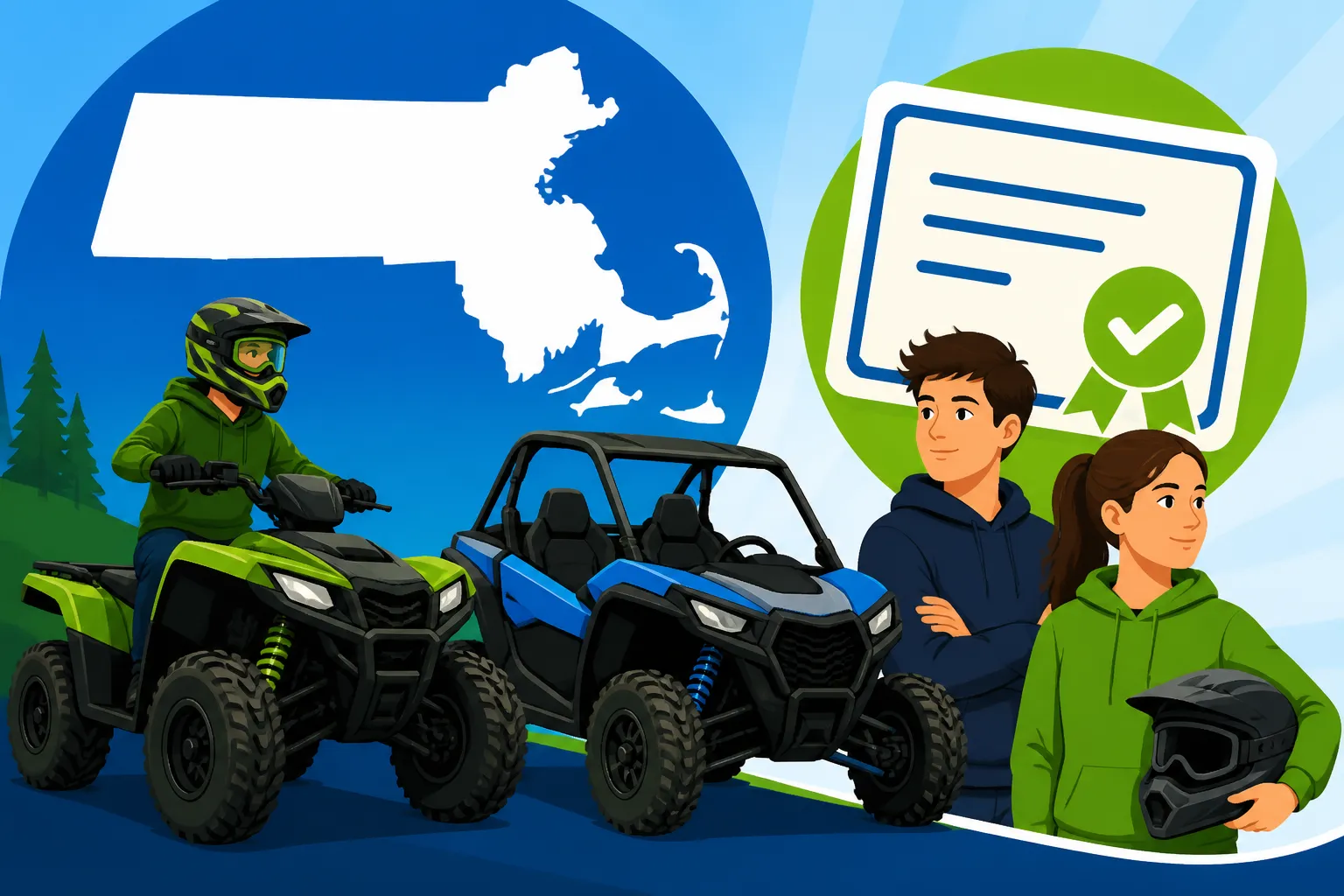
Here in the Bay State, if you're under the age of 18, you absolutely need to hold an OHV safety certificate to legally operate an ATV or UTV on public land or any land that isn't your own private property. This isn't just a suggestion; it's a legal requirement that the Environmental Police take very seriously. The rationale behind this is simple: ATVs and UTVs are not toys. They require skill, judgment, and an understanding of both the machine and the environment. Younger riders, while often quick learners, may lack the experience or risk assessment abilities that come with age. The certificate program aims to instill those critical elements from the start.
Now, if you're 18 years old or older, the good news is you are not legally required to carry a Massachusetts OHV safety certificate. You're assumed to have the maturity and judgment to operate the machine safely, though, of course, taking a course is always a smart idea regardless of age! But for anyone from the youngest eligible rider up to the moment they turn 18, that certificate is your golden ticket to the trails. It's the state's way of saying, "We've made sure you've got the basics down, now go have fun safely!"
The Two-Part Safety Course Requirement
Obtaining your Massachusetts OHV safety certificate isn't just about passing a quick online quiz. It's a comprehensive process designed to ensure you truly understand what you're doing. The state mandates a [Massachusetts Two-Part Safety Course] that covers both theoretical knowledge and practical, hands-on skills.
The first part typically involves an online or classroom-based educational component. This is where you'll learn about the rules and regulations specific to Massachusetts, such as age and engine size restrictions, helmet laws, environmental impact, and trail etiquette. You'll also dive into critical topics like risk assessment, how to handle various terrains, proper riding posture, and pre-ride inspections. Think of it as your textbook learning phase – absorbing all the crucial information before you even touch a machine. It's vital to pay close attention during this part, as it lays the groundwork for everything else. Many riders find this section incredibly eye-opening, realizing just how much goes into safe OHV operation.
The second part is where the rubber meets the trail, literally. This is an in-person, hands-on skills test conducted by certified instructors, usually Environmental Police officers or trained volunteers. During this segment, you'll actually get on an ATV or UTV and demonstrate your ability to perform essential maneuvers safely. This includes things like starting and stopping, turning, shifting, emergency braking, riding over obstacles, and navigating tight spaces. It's one thing to read about how to handle a steep hill; it's another to actually do it under supervision. This practical test ensures you can apply the knowledge you gained in the classroom in a real-world setting, and it’s often the most rewarding part for young riders eager to prove their abilities.
Specific Rules for Riders Aged 16 to 18
The jump from 15 to 16 in Massachusetts is a pretty big deal for OHV riders. It marks a significant shift in some of the restrictions, granting a bit more freedom while still emphasizing the importance of that safety certificate.
The Significance of Turning 16
Once you blow out those sixteen candles, a few key things change regarding your ATV and UTV riding privileges in Massachusetts. For starters, the stringent engine size limitations that apply to younger riders typically loosen. Previously, if you were 14 or 15, you were generally restricted to machines with engine capacities of 90cc or less. This was a crucial safety measure to ensure young riders weren't on machines too powerful for their size and skill level. However, upon turning 16, and as long as you possess that all-important safety certificate, that 90cc restriction typically lifts. This means you can now legally operate larger, more powerful ATVs and UTVs, opening up a whole new world of riding possibilities.
This age milestone also impacts the level of direct supervision required. While younger riders often need continuous visual contact from an adult, the rules for 16 to 18-year-olds are less about constant hovering and more about general accountability. You're still considered a minor, so a supervising adult is typically responsible for you, but the specifics of that supervision can be more flexible compared to, say, a 12-year-old. This transition acknowledges that 16-18 year olds have more developed judgment and experience, but still benefit from adult oversight. It's important to remember that while the engine size cap is lifted, choosing a machine that matches your skill and experience is paramount. Just because you can ride a 700cc beast doesn't mean you should if you're not ready for it.
Carrying Your Certificate on the Trail
Here's a rule that's absolutely non-negotiable for riders aged 16 to 18: you must carry your OHV safety certificate with you whenever you are operating an ATV or UTV on public land or land that is not your own private property. Think of it like a driver's license for a car – you wouldn't drive without it, and you shouldn't ride your OHV without your certificate. Environmental Police officers frequently patrol state forests and other designated riding areas, and one of the first things they'll often ask for is proof of registration and your safety certificate.
Forgetting your certificate at home, even if you've completed the course, can lead to a citation and ruin your riding day. It’s an easy mistake to make, especially when you’re excited to get out on the trails. My advice? Laminate it or keep it in a waterproof pouch in your riding gear or a secure compartment on your machine. Make it part of your pre-ride checklist: helmet, gloves, boots, and certificate. You can find more details about this requirement in [Massachusetts Certificates Carried on Public Land]. Imagine pulling up to the trailhead at October Mountain State Forest, ready for a day of fun, only to be turned away or ticketed because your certificate is sitting on your dresser at home. It’s a frustrating scenario that’s easily avoided with a little planning.
Engine Size Limitations and Age Brackets
Understanding the progression of engine size limitations in Massachusetts is crucial for young riders, and it’s where turning 16 makes a significant impact.
The 90cc Cap and Its Expiration
Before you hit 16, specifically between the ages of 14 and 16, Massachusetts law restricts ATV riders to machines with an engine displacement of 90 cubic centimeters (cc) or less. This rule, like many others, is rooted firmly in safety. A smaller engine means less power, less speed, and a more manageable machine for someone who is still developing their riding skills, strength, and judgment. It helps prevent situations where a younger rider might be overwhelmed by a powerful machine, leading to a loss of control and potential injury.
However, once a rider celebrates their 16th birthday and successfully obtains their Massachusetts OHV safety certificate, this 90cc restriction typically expires. This is a huge milestone for many young riders! It means they are no longer legally constrained by engine size and can now operate larger ATVs and UTVs, including those commonly used by adults for trail riding, recreation, or even utility work. This change reflects the state's acknowledgment that by 16, with proper training, riders have generally developed the physical and mental capacities to handle more robust machines. It's a rite of passage, in a way, allowing access to a wider range of vehicles and terrains.
Stepping Up to Larger Machines
The lifting of the 90cc engine cap at age 16 opens up a world of possibilities for Massachusetts riders. Now, instead of being limited to youth models, you can consider a full-size sport quad for agile trail riding, a utility ATV for tackling more rugged terrain or even helping out with chores, or a multi-passenger side-by-side to share the adventure with friends and family. This freedom means you can truly match your machine to your intended use and skill level, rather than being restricted by age.
When considering a larger machine, it’s not just about engine size. It's about stability, weight, and features. A 16-year-old might be physically capable of handling a larger machine, but it’s crucial to choose one that feels comfortable and controllable. Test rides (in appropriate, legal settings) are invaluable. You’ll also want to consider upgrading your safety gear. While a helmet is always mandatory, riders on larger, faster machines might invest in more robust body armor, specialized boots, and neck braces. Aftermarket accessories, like heavy-duty bumpers, skid plates, or enhanced roll cages for UTVs, available from brands like SuperATV, can add an extra layer of protection and utility, especially when navigating the varied terrain of state forests like October Mountain or Beartown. The goal is to progressively challenge your skills safely, always prioritizing control and protection.
Parental Responsibility and Supervision for 16-18 Year Olds
Even though riders aged 16-18 are gaining more independence, the legal framework in Massachusetts still places a significant emphasis on parental or guardian responsibility. This isn't about stifling their fun; it's about ensuring a safe environment for everyone.
When Supervision Is Still Required (and When It Isn't)
For riders under 16, Massachusetts law is quite clear about requiring direct adult supervision, often defined as "continuous visual contact" and "verbal communication." When a rider turns 16, and especially between 16 and 18, the letter of the law regarding direct supervision starts to shift. While the strictest "continuous visual contact" rules might not apply in the same way as they do for, say, a 12-year-old, the underlying principle of adult oversight remains. A supervising adult is still legally liable for a minor's actions and compliance with OHV laws on public land.
This means that while a 17-year-old with a certificate might be able to ride a separate trail loop from their parent in a state forest, the parent is still ultimately responsible for ensuring the rider adheres to all laws and behaves safely. It's less about holding hands and more about having a clear understanding and agreement before riding. On private land, the rules might be more relaxed, but the responsibility still falls to the property owner or the supervising adult who granted permission. For a deeper dive into these nuances, you can refer to [Massachusetts Supervising Adult Defined]. The best practice is always to have a clear communication plan and to ensure that the adult responsible is aware of where the minor is riding and what precautions are being taken.
Liability and Legal Implications
This is a really important point that often gets overlooked: parents or legal guardians can still be held liable for any violations, accidents, or damages caused by a minor operating an OHV, even if that minor is 16 or 17. This isn't just about tickets for not having a certificate; it extends to property damage, injuries to others, or even environmental infractions. Imagine a scenario where a 17-year-old, riding a powerful UTV in a state forest, accidentally veers off a designated trail and damages sensitive wetlands. The penalties for such an act could be significant, and the parent or guardian would likely be held accountable alongside the rider.
This potential liability is why it's so crucial for parents to have serious conversations with their 16-18 year old riders about responsible operation. It's not enough to simply ensure they have the certificate and a machine. Parents need to set clear expectations, discuss trail etiquette, emphasize respect for private property, and review emergency procedures. Some families even choose to purchase optional liability insurance for their OHVs, even though it's not mandated in Massachusetts, specifically to protect against these types of scenarios. Having a clear understanding of [Massachusetts Supervisors Held Liable] can help families make informed decisions about their riding practices. It truly highlights the partnership between the young rider's growing independence and the parent's continuing oversight.
Practical Steps to Obtain and Maintain the Certificate
Getting your OHV safety certificate in Massachusetts is a clear process, but it requires a bit of planning and execution. It's not something you can do at the last minute before a big riding trip.
Finding and Completing the Course
The first step is to find an approved OHV safety course. The Massachusetts Environmental Police manage the program, and they typically provide a schedule of upcoming courses on their official website. These courses are offered at various locations across the state, and sometimes there are online components that can be completed from home. It's a good idea to search for [Massachusetts Course Schedule Lookups] well in advance, especially if you plan to ride during peak seasons like spring or fall, as slots can fill up quickly.
Once you've found a suitable course, you'll need to register. There's usually a fee associated with both the online portion and the in-person skills test. Make sure you understand all the costs involved and any prerequisites. The online portion generally involves reading through materials, watching videos, and passing quizzes. Take your time with this, as the information is crucial. For the in-person skills test, you'll typically need to bring your own helmet, protective gear, and often, your own ATV or UTV (though some courses may have machines available for use). The instructors will guide you through the practical exercises, providing feedback and ensuring you meet the safety standards. It’s a learning experience designed to build confidence and competence.
What to Do If Your Certificate is Lost or Damaged
Life happens, and sometimes important documents get misplaced, damaged, or even accidentally run through the washing machine. If your Massachusetts OHV safety certificate meets an unfortunate end, don't panic, but don't just hope for the best either. It's imperative to get a replacement before your next ride. Operating without the physical certificate when you're under 18 is a violation, even if you know you passed the course.
The process for obtaining a duplicate certificate is usually straightforward. You'll typically need to contact the Massachusetts Environmental Police's Boat and Recreation Vehicle Safety Bureau. They are the ones who issued your original certificate and maintain the records. You may need to fill out a simple form and pay a small fee to cover the administrative costs of issuing a new card. It's always a good idea to have a copy of your original certificate details, if possible, or at least remember the date you took the course. The Bureau will then process your request and mail you a new certificate. For specific steps and contact information, looking up [Replacing a Card You Lost] can provide you with the most current guidance. Being proactive about getting a replacement ensures that an unexpected check by an officer doesn't turn your fun day into a ticket.
Beyond the Certificate: Essential Laws for 16-18 Year Old Riders
While the safety certificate is paramount, it's just one piece of the puzzle. Riders aged 16-18, like all OHV operators in Massachusetts, must adhere to a broader set of laws that govern where and how they can ride.
Road Crossings and Public Way Rules
One of the most frequently misunderstood rules, regardless of age, concerns crossing public ways. In Massachusetts, ATVs and UTVs are generally not street legal. This means you cannot legally operate them on paved roads, highways, or most public ways. However, the law does allow for specific, controlled crossings of public ways to get from one section of a trail to another, or to access an approved riding area. This is a privilege, not a right, and comes with strict rules that apply to riders of all ages, including 16-18 year olds.
When making a road crossing, you must bring your machine to a complete stop before entering the paved surface. You must yield to all vehicular traffic and pedestrians. The crossing must be made at approximately a 90-degree angle to the public way, at the nearest point of access between two trails, and you must proceed directly across without driving on the public way any further than absolutely necessary. This is not the time to be casual or take shortcuts. An Environmental Police officer can and will issue citations for improper crossings. For specific guidance, review [Massachusetts Crossings Require a Full Stop]. It’s about minimizing risk and ensuring you don't impede traffic or create a hazardous situation.
Helmet Use and Other Equipment Mandates
Massachusetts has a universal helmet law for OHV operation, and this applies to everyone, regardless of age. If you're riding an ATV or UTV, you must wear a helmet that meets the standards established by the Registry of Motor Vehicles (RMV). This isn't just about avoiding a ticket; it's about protecting your head, which is arguably the most important piece of safety gear you have. A proper helmet can literally be the difference between a minor tumble and a life-altering injury. Even if you're just riding slowly around your yard, put on your helmet. The consequences of not doing so are simply not worth the risk. My blog often stresses this: safety first, always. For more information, check out [Massachusetts Helmet Law for Every Rider].
Beyond helmets, there are other critical equipment requirements. Your ATV or UTV must have functioning brakes, a proper muffler to keep noise levels within legal limits, and, if you're riding after sunset or before sunrise, working headlights and taillights. These aren't optional upgrades; they're legal necessities. Regularly inspect your machine to ensure all these components are in good working order. A malfunctioning brake or a missing headlight can not only lead to a fine but, more importantly, can compromise your safety and the safety of others on the trails. It's part of being a responsible rider, showing respect for the environment, and adhering to the shared rules of the trail.
Here’s a handy table summarizing some key rules by age for Massachusetts OHV riders:
| Age Group | Safety Certificate Required? | Engine Size Restriction | Adult Supervision Requirement (Public Land) | Helmet Required? | Road Crossing Rules Apply? |
|---|---|---|---|---|---|
| Under 10 | Yes | N/A (Event specific) | Direct, Continuous Visual | Yes | No (Generally prohibited) |
| 10 – 13 | Yes | Up to 90cc | Direct, Continuous Visual | Yes | Yes, with strict adherence |
| 14 – 15 | Yes | Up to 90cc | Direct, Continuous Visual | Yes | Yes, with strict adherence |
| 16 – 17 | Yes | None | General Oversight / Liability | Yes | Yes, with strict adherence |
| 18 and Older | No | None | No | Yes | Yes, with strict adherence |
Disclaimer
This article is for general informational purposes only and does not constitute professional advice. Laws, prices and regulations vary by location and change over time. Consult a qualified professional for guidance on your specific situation.