Massachusetts Equipment Requirements
Riding an ATV or UTV in the beautiful wilds of Massachusetts is an experience like no other, but nothing puts a damper on a great day out faster than realizing you're not equipped correctly for the trails or, worse, running afoul of the law. It can be incredibly frustrating to feel like you're constantly guessing what's needed, worrying about fines, or putting yourself or your passengers at risk because you weren't fully prepared. This comprehensive guide is here to cut through the confusion and walk you through every essential and recommended piece of equipment your off-road machine needs to be legal, safe, and ready for adventure in the Bay State.
Understanding Massachusetts ATV & UTV Equipment Laws
The idea of being pulled over by an Environmental Police Officer (EPO) because of something as simple as a missing decal or a noisy exhaust is enough to make any rider's stomach drop. Massachusetts takes its off-highway vehicle (OHV) regulations seriously, and a big part of that involves ensuring machines are properly equipped. It's not just about avoiding a ticket; it's fundamentally about safety, responsible land use, and ensuring everyone can enjoy our trails without undue disturbance.
The Foundation: Massachusetts Chapter 90B
When you talk about riding ATVs and UTVs in Massachusetts, you're inevitably talking about Chapter 90B of the Massachusetts General Laws. This is the big kahuna, the legal framework that governs everything from registration to operator age limits, and yes, it spells out specific equipment requirements for your machine. This isn't some dusty, obscure document; it's the living, breathing rulebook that protects our riders, our environment, and our access to trails. It's designed to ensure that these powerful machines are operated responsibly and safely, minimizing risks to both the operator and the natural surroundings.
Understanding Chapter 90B isn't just for lawyers or police officers; it's a vital part of being a responsible rider. Think of it as knowing the rules of the road before you get behind the wheel. For OHV enthusiasts, it's knowing the rules of the trail. If you don't know what's required, you're not just risking a fine; you're potentially putting yourself, your passengers, or even other trail users at risk. The Environmental Police are tasked with enforcing these laws, and they're out on the trails checking for compliance, so knowing what they're looking for is your first step to a worry-free ride.
Why Specific Equipment Matters
You might wonder why the state cares so much about what's on your machine. Is it just to make things difficult? Absolutely not. Every piece of mandated equipment serves a critical purpose. Take headlights, for instance. You might plan your ride for daylight hours, but what if unexpected mechanical trouble or a wrong turn leaves you out on the trail as dusk turns to dark? Without proper lighting, you're not just risking a ticket; you're risking a serious accident.
Similarly, a properly functioning muffler isn't just about reducing noise pollution; it's about respecting the tranquility of our forests and the landowners who often share their borders with public trails. An excessively loud machine can disturb wildlife, annoy nearby residents, and even lead to complaints that could jeopardize trail access for everyone. The equipment requirements are there to ensure that your machine operates as safely and considerately as possible. It's about protecting you from harm, safeguarding our precious natural resources, and maintaining positive relationships with all stakeholders, from other recreationists to local communities. Riding is a privilege, and proper equipment helps us all uphold that privilege.
Mandatory Safety Equipment You Can't Skip
When you gear up for a ride, your machine needs to be just as prepared as you are. Massachusetts has some non-negotiable equipment requirements that are there for very good reasons: your safety and the safety of everyone else on the trails. Skipping these isn't just a minor oversight; it's a direct violation of state law and a gamble with potentially severe consequences.
Helmets: More Than Just a Suggestion
Let's start with the most critical piece of safety gear, not just for your machine, but for you and any passengers: the helmet. Massachusetts law is crystal clear on this point – [Massachusetts Helmet Law for Every Rider] is a reality, meaning every rider, regardless of age, operating or riding as a passenger on an ATV or UTV, must wear a helmet. This isn't like some states where it's only for youth riders or optional for adults on private land; in Massachusetts, it's universal on all terrain.
What kind of helmet? It needs to be a protective helmet that meets federal standards, specifically those established by the U.S. Department of Transportation (DOT). You'll typically find a DOT sticker on the back of any compliant helmet. Don't skimp here. Imagine a scenario: you're riding a challenging, rocky trail in October Mountain State Forest. You hit an unexpected rut, and the machine bucks, sending you flying. Even at a relatively low speed, a fall can result in a serious head injury if you're not wearing a proper helmet. A good helmet absorbs impact, protecting your most vital organ. It's not just a legal requirement; it's a life-saving necessity. Don't leave home without it, and ensure your passengers are also properly protected before you even start the engine.
Brakes That Actually Work
This might sound like a no-brainer, but properly functioning brakes are absolutely non-negotiable for an ATV or UTV in Massachusetts. Chapter 90B mandates that all OHVs must be equipped with a brake system capable of stopping the machine effectively. This means both front and rear brakes, in good working order, with sufficient pads and fluid. It’s not enough for them to just "sort of" work; they need to be responsive and reliable.
Think about the terrain in places like Beartown State Forest or Pittsfield State Forest – you've got steep climbs, sudden descents, and trails that can be slick with mud or wet leaves. A split-second decision to stop or slow down could mean the difference between navigating a tricky section safely and careening into a tree or another rider. Regularly inspect your brake lines for leaks, check your brake fluid levels, and ensure your pads aren't worn down to the metal. If your brakes feel spongy, or you hear grinding noises, it's time for maintenance, not another ride. Ignoring brake issues is a direct invitation to an accident, and an EPO will absolutely check their function if they suspect an issue.
Headlights and Taillights for Visibility
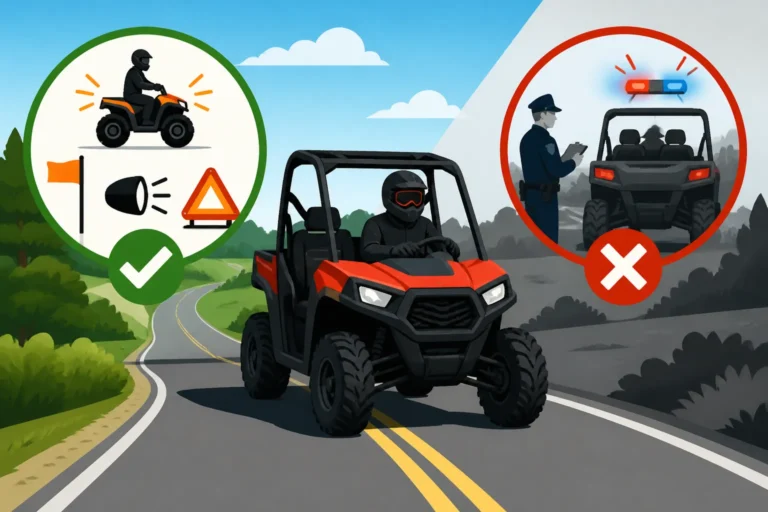
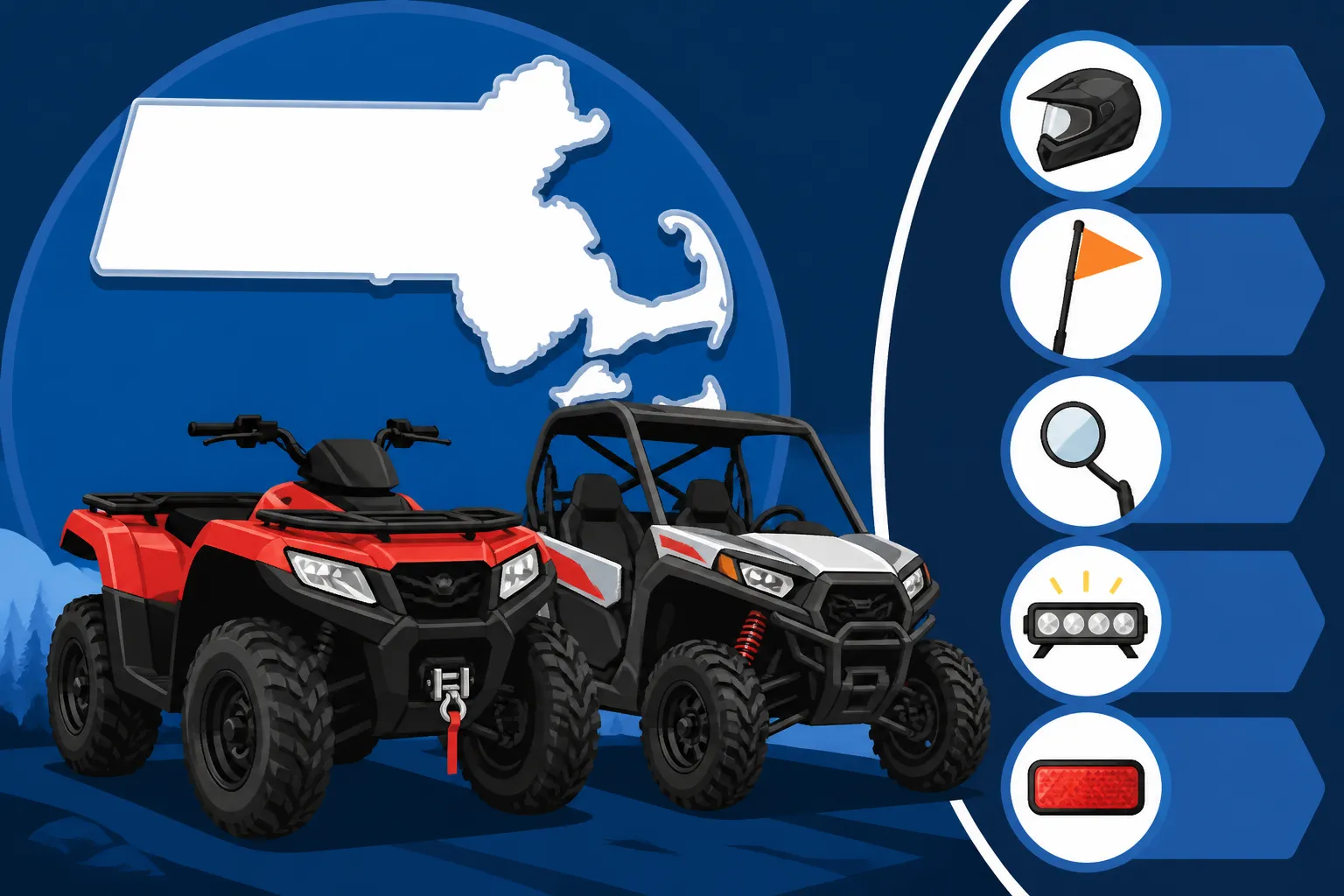
While many riders prefer to hit the trails during daylight hours, circumstances can change quickly. That's why [Massachusetts Lighting After Sunset] is a strict requirement. Your ATV or UTV must be equipped with at least one headlight and one taillight, both functioning properly, when you're operating the machine during the period from 1/2 hour after sunset to 1/2 hour before sunrise. This also applies during any other period of reduced visibility, like heavy fog or rain. Furthermore, your machine needs a red reflector on the rear, even if your taillight is functional.
Imagine this: you're exploring the trails and having such a great time that you lose track of the clock. Suddenly, the sun dips below the horizon, and the woods grow dim. If your lights aren't working, you become virtually invisible to other riders, hikers, or even emergency personnel. And let's not forget the sheer difficulty of navigating obstacles you can't see. Beyond the legal mandate, proper lighting is essential for preventing collisions and ensuring you can safely return to your staging area, even if your ride extends unexpectedly into the evening. Check your lights before every ride – a burnt-out bulb is an easy fix that could save you a lot of trouble.
Spark Arrestors: Protecting Our Forests
This piece of equipment might not be as immediately obvious as a helmet or brakes, but it is profoundly important, especially in the dry seasons. [Does a Massachusetts Trail Machine Need a Spark Arrester?] The answer is a resounding yes. Every ATV and UTV operated on public or private land in Massachusetts must be equipped with a U.S. Forest Service (USFS) approved spark arrester in good working condition.
What does a spark arrester do? It's a device fitted to your exhaust system that prevents glowing carbon particles (sparks) from escaping into the environment. These tiny sparks, if they land on dry leaves, grass, or pine needles, can quickly ignite a devastating wildfire. Given Massachusetts's lush forests and the inherent fire risk, this requirement is a critical environmental protection measure. Think of riding in a dry Berkshire autumn, with crunchy leaves underfoot. A single spark from an unarrested exhaust could wipe out acres of pristine forest, destroy wildlife habitats, and even threaten homes. Environmental Police officers are particularly vigilant about spark arresters, especially during dry periods, and a violation can result in significant fines. It's not just about a component; it's about being a responsible steward of our beautiful outdoor spaces.
Noise Control: Mufflers and Sound Limits
There's nothing quite like the roar of a powerful engine, but when you're sharing trails and respecting the natural quiet of our forests, that roar needs to be tamed. Massachusetts laws are very clear about controlling the noise your ATV or UTV makes, and it's a point of frequent enforcement by the Environmental Police. Getting this wrong doesn't just annoy people; it can lead to citations and even erode public support for continued trail access.
Muffler Requirements Under Chapter 90B
Under Massachusetts Chapter 90B, all ATVs and UTVs must be equipped with a muffler. And not just any muffler, but one that is in "good working order and in constant operation to prevent excessive or unusual noise." [Massachusetts Muffler Requirements] This means no straight pipes, no gutted mufflers, and no modifications that significantly increase the sound output beyond what's considered reasonable. The purpose of this regulation is multi-faceted: it reduces disturbance to wildlife, minimizes disruption for nearby residents, and ensures a more peaceful experience for other trail users, such as hikers or horseback riders.
Consider a beautiful Saturday morning in October Mountain. You're out enjoying the trails, but so are families hiking, birdwatchers seeking solitude, and campers enjoying the peace. An excessively loud machine can shatter that tranquility, leading to complaints that directly impact the future of OHV access. Environmental Police officers are well-versed in what constitutes "excessive or unusual noise," and they won't hesitate to pull you over if your machine sounds like it's roaring more than it should. Keep your muffler in top shape, free from rust holes or modifications, to avoid unwanted attention.
Understanding Massachusetts Sound Limits
While Chapter 90B doesn't typically specify an exact decibel limit for OHVs in the way some other states might, the emphasis is firmly on "excessive or unusual noise." This often comes down to the judgment of the enforcing officer, but generally, if your machine is significantly louder than a stock, well-maintained version, you're likely running afoul of the law. The intent is to prevent machines from being a nuisance. [Massachusetts Noise Complaints About Quads] are a real thing, and they often stem from machines with modified or damaged exhaust systems.
Think about it from the perspective of someone living near a trail system or enjoying a quiet picnic in a state forest. Constant, loud engine noise can be incredibly disruptive. It's not just about what's legal; it's about trail etiquette and being a good neighbor. The Environmental Police frequently receive calls about noisy machines, especially on weekends, and they do respond. Ensuring your muffler is compliant means you're contributing to a more harmonious environment for everyone and helping to preserve the privilege of riding on public lands.
Aftermarket Exhaust Systems: What to Watch For
Many riders are tempted by aftermarket exhaust systems, often for a boost in performance or a "better" sound. However, this is where you need to be extremely cautious. While some aftermarket systems are designed to be compliant with noise and spark arrester regulations, many are not. It's critical to do your homework. Look for aftermarket mufflers and exhaust systems that explicitly state they are USFS-approved (for spark arresting) and meet specific sound limits, or are designed to be no louder than stock.
When considering a new exhaust, don't just go for the loudest option. A responsible manufacturer will provide specifications on sound levels and spark arrester compliance. Some companies, like SuperATV, offer a wide range of accessories, and if you're looking at their exhaust options, ensure you verify that any specific system you choose meets Massachusetts's stringent requirements. Installing a non-compliant exhaust system can quickly lead to a citation for excessive noise and the need to replace it, effectively costing you twice. Always prioritize compliance over raw performance or sound when it comes to exhaust systems in Massachusetts.
Important Documentation and Identification
Beyond the physical components attached to your ATV or UTV, there are crucial pieces of "equipment" that you need to have with you or prominently displayed on your machine. These are your official credentials, proving your machine is legally registered and ready to ride in Massachusetts. Forgetting these can be just as problematic as a missing headlight.
Registration Decals and Cards
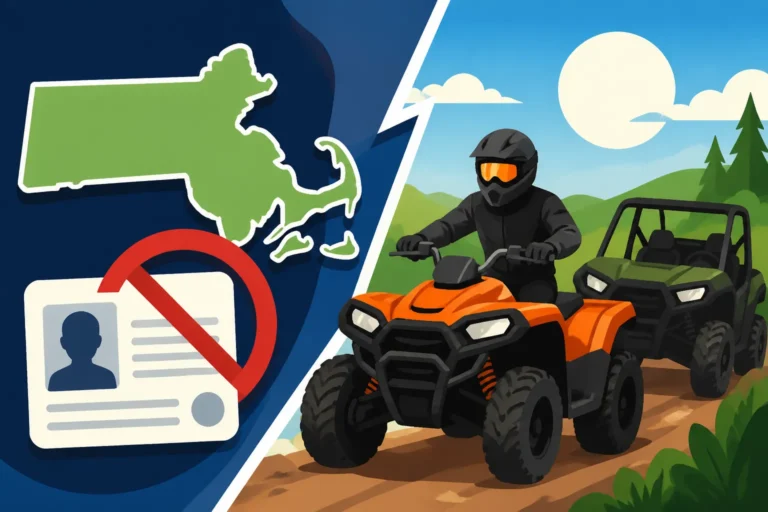
In Massachusetts, your ATV or UTV must be registered with the Massachusetts Environmental Police. Once registered, you'll receive a registration card and a set of decals. The decals are not just pretty stickers; they are proof that your machine is legally allowed on the trails. [Massachusetts Decal Placement Rules] dictate exactly where these decals need to go: one on each side of the forward half of the machine, clearly visible. You’ll also get an expiration decal, which typically goes on the left side of the machine. These rules are in place to allow Environmental Police officers to quickly verify a machine's registration status.
Equally important is the [Massachusetts Registration Cards Carried on Board] requirement. You must carry your registration certificate (the actual card, not just a picture on your phone) with you whenever you're operating the OHV. Think of it like carrying your driver's license for your car. In a real-world scenario, if an EPO stops you on a trail in Pittsfield State Forest and asks for your registration, fumbling to say you left it at home or can't find it will inevitably lead to questions and possibly a citation. Keep it in a waterproof bag in your riding jacket pocket or a secure storage compartment on your machine. It's a small piece of paper, but it's vital for a hassle-free ride.
Vehicle Identification Number (VIN)
Every ATV and UTV has a unique Vehicle Identification Number (VIN), typically stamped on the frame. This 17-character code is essentially your machine's fingerprint, identifying its manufacturer, model, year, and specific unit. [Massachusetts Requires a VIN on the Application] when you register your machine, and for good reason. The VIN is critical for tracking ownership, preventing theft, and proving the machine's identity.
It's essential that your VIN is clear, legible, and intact on your machine. If the VIN plate or stamping is obscured by mud, paint, or damage, it can raise red flags for law enforcement. Imagine trying to register a used machine only to find the VIN is barely readable, or an EPO stopping you and being unable to verify your machine's identity. This can lead to delays, investigations, and a lot of headaches. Always ensure your VIN is accessible and readable. If you buy a used machine, inspecting the VIN for clarity and signs of tampering should be a top priority.
Safety Certificates for Young Riders
While not "equipment" that attaches to your machine, a safety certificate is a crucial piece of documentation that many young riders must possess and carry. Massachusetts has stringent age requirements for operating ATVs and UTVs, particularly for those under 18. [Massachusetts Safety Certificates Under 18] outlines that riders between 10 and 16 years old need to complete an approved OHV safety course to operate on public lands, and they must carry that certificate with them.
For example, a 15-year-old operating a quad in Beartown State Forest is legally required to have completed the two-part safety course (classroom and skills test) and have the physical certificate on their person. This isn't just about knowing how to operate the machine; it's about understanding the laws, safe riding practices, and environmental responsibilities. An EPO will ask to see this certificate, just like they'd ask for your adult registration. Forgetting it can result in penalties for both the young rider and the supervising adult. So, if you have a young rider in your family, ensure they've taken the course and always carry their certificate.
Recommended Gear for a Safe and Enjoyable Ride
While Massachusetts laws mandate certain equipment, responsible and experienced riders know that the bare minimum isn't always enough for a truly safe and enjoyable day out. Investing in additional personal protective equipment (PPE) and on-machine accessories can significantly enhance your comfort, safety, and ability to handle unexpected situations on the trail.
Beyond the Bare Minimum: Personal Protective Equipment
Your DOT-approved helmet is paramount, but it's just the start when it comes to protecting yourself. Consider these additional items of PPE as essential investments in your well-being:
- Eye Protection: Goggles or a full-face helmet visor are critical. Riding at speed on a dusty trail, or pushing through brush, means you're constantly exposed to flying debris, dust, insects, and low-hanging branches. A small stone or a branch flicking into your eye could cause a serious injury or cause you to lose control. Don't rely on sunglasses; they won't offer adequate protection.
- Gloves: Sturdy riding gloves offer multiple benefits. They protect your hands from blisters, abrasions, and impacts from branches. They also provide a better grip on the handlebars, especially when wet or muddy, which is crucial for control on challenging terrain.
- Sturdy Over-the-Ankle Boots: Your feet and ankles are vulnerable to impacts, crushing injuries, and scrapes. Regular sneakers offer almost no protection. Invest in boots designed for riding, with good ankle support and sturdy soles that can grip footpegs.
- Long-Sleeved Shirt and Pants: Even on a warm day, long sleeves and pants made of durable material protect you from scrapes, cuts, and abrasions from brush, as well as sunburn. Layering is key for comfort in varying New England weather conditions.
Imagine you're maneuvering through a tight section of trail in Pittsfield State Forest, and a springy branch snaps back, whipping your arm. If you're wearing short sleeves, you'll feel that sting, and likely get a nasty scrape. With proper PPE, you brush it off and keep riding. These aren't just comfort items; they are extensions of your safety strategy.
Essential On-Machine Accessories
Outfitting your machine with a few key accessories can be a game-changer, especially if you venture into more remote areas or ride in groups.
- Winch: A winch is arguably one of the most valuable accessories, particularly for UTVs and larger ATVs. It's your get-out-of-jail-free card when you get stuck in mud, sand, or snow, or need to pull a downed tree off the trail. [Winches for a Steep Climb] can be invaluable on Massachusetts's often-challenging terrain. If you regularly ride solo or far from assistance, a winch moves from "nice to have" to "essential."
- Recovery Straps/Tow Rope: Even with a winch, having a durable recovery strap or tow rope is smart. It allows you to pull other stuck riders out, or for them to pull you. Look for non-elastic, high-strength straps designed for vehicle recovery.
- First-Aid Kit: This is non-negotiable for any outdoor activity. A well-stocked first-aid kit can handle minor cuts, scrapes, insect bites, and sprains, which are common occurrences on the trail. Make sure it's waterproof and easily accessible.
- Tool Kit: A basic tool kit with wrenches, screwdrivers, zip ties, and duct tape can help you fix minor mechanical issues like a loose bolt or a snapped cable, preventing a long walk back to the truck.
- GPS/Map and Compass: While many modern machines have built-in GPS, having a physical map and compass, or a reliable GPS unit with pre-loaded trail maps, is crucial for navigation. Cell service can be spotty in remote parts of our state forests, and you don't want to get lost. Companies like SuperATV offer robust accessories, including winches and storage solutions, that can help you carry these essentials securely.
Communication and Navigation Tools
Riding with friends adds a layer of safety, but communication is key. And even with all the tech in the world, knowing your way around the wilderness is paramount.
- Two-Way Radios/Intercoms: For group rides, two-way radios allow for instant communication between riders, making it easier to warn of obstacles, call for a stop, or coordinate breaks. UTVs can benefit greatly from helmet-mounted intercom systems for clear driver-to-passenger communication without yelling over engine noise.
- Satellite Communicator/Personal Locator Beacon (PLB): If you frequently ride in areas with no cell service – and Massachusetts definitely has them, especially in the Berkshires, leading to [Cell Dead Zones in the Berkshire Hills] – a satellite communicator (like a Garmin inReach or Spot device) is a lifesaver. These devices allow you to send emergency messages and your location even when out of range of traditional cellular networks.
- Offline Maps on a Smartphone: Download offline maps of your riding area before you leave home. Many apps allow you to do this, providing detailed topographical maps that don't require a cell signal to use your phone's GPS. This complements, but does not replace, a dedicated GPS unit or physical map.
Being prepared with these recommended items elevates your riding experience from merely legal to genuinely safe, enjoyable, and self-sufficient. Don't underestimate the value of being ready for anything the trail throws at you.
Maintaining Your Machine for Compliance and Safety
Having the right equipment is only half the battle; keeping it in top-notch condition is the other, equally critical, part. A well-maintained machine is not only safer and more reliable, but it also ensures you remain compliant with Massachusetts's regulations. Neglecting maintenance can quickly turn a legal piece of equipment into a liability.
Pre-Ride Checks: Your First Line of Defense
Think of a pre-ride check as your machine's daily physical. Before every single ride, take a few minutes to walk around your ATV or UTV and perform a quick but thorough inspection. This simple routine can prevent a minor issue from becoming a major problem or even a safety hazard on the trail.
Here’s a quick checklist to run through:
- Tires: Check tire pressure, and inspect for cuts, bulges, or excessive wear. Properly inflated tires improve handling and reduce the risk of flats.
- Fluids: Verify engine oil, coolant, and brake fluid levels. Low fluids can quickly lead to overheating or brake failure.
- Lights: Test headlights, taillights, and any brake lights. Ensure all bulbs are working, as required for visibility during low-light conditions.
- Brakes: Squeeze the brake levers/pedal. Do they feel firm? Do they engage quickly? Listen for any grinding or unusual noises.
- Throttle: Ensure the throttle operates smoothly and snaps back to idle when released.
- Steering: Check for excessive play or looseness in the handlebars or steering wheel.
- Spark Arrester/Muffler: Visually inspect your muffler for any holes, loose connections, or modifications that could make it excessively loud. Confirm your spark arrester is intact.
- Loose Nuts/Bolts: Give your machine a quick once-over, especially on critical components like suspension and wheels.
This quick routine might seem tedious, but catching a loose lug nut or a flickering headlight in your driveway is infinitely better than discovering it miles deep in the woods of a state forest. It’s a proactive step that keeps you safe and legal.
Regular Maintenance Schedule
Beyond the daily pre-ride check, adhering to a consistent, more in-depth maintenance schedule is vital. Just like your car, your ATV or UTV has recommended service intervals from the manufacturer. These typically include oil changes, air filter cleaning/replacement, spark plug inspection, drive belt checks, and chassis lubrication. [Massachusetts Annual Maintenance Costs] can be kept in check with diligent upkeep.
Ignoring these scheduled maintenance tasks is a recipe for disaster. A clogged air filter can lead to poor engine performance and increased emissions. Worn drive belts can leave you stranded. Neglecting oil changes can cause catastrophic engine damage. Regular maintenance not only prolongs the life of your machine but also ensures that all its critical safety and compliance equipment, like brakes and spark arresters, remain in optimal working condition. Keeping detailed records of your maintenance can also be beneficial, especially if you ever decide to sell your machine. A well-documented service history adds value and provides peace of mind to a future buyer.
Addressing Equipment Issues Promptly
It's tempting to put off fixing a minor issue – a slightly dim taillight, a muffler with a small hole, or a brake lever that's a bit spongy. However, for a Massachusetts rider, these small neglects can quickly compound into bigger problems, both in terms of safety and legality. The moment you notice an issue with any mandatory equipment, address it.
Riding with known faulty equipment isn't just irresponsible; it can be illegal. An Environmental Police Officer who spots a non-functioning headlight or an excessively loud exhaust can issue a citation on the spot. Even if it's a "minor" issue, it still falls under the non-compliance umbrella. Furthermore, riding with compromised equipment significantly increases your risk of an accident. What if that slightly spongy brake fails entirely on a steep descent? Or the dim taillight leads to a rear-end collision on a dusty trail? Don't gamble with your safety or your wallet. Prioritize fixing any equipment issues immediately to ensure your machine is always trail-ready, safe, and fully compliant with Massachusetts law.
Penalties for Non-Compliance
It bears repeating: Massachusetts takes its OHV laws seriously. The equipment requirements aren't suggestions; they are mandates backed by legal consequences. Ignoring them can lead to more than just a stern talking-to; it can result in financial penalties, legal liabilities, and even the seizure of your machine in severe cases. Understanding these potential repercussions should be a strong motivator for ensuring your machine is always up to par.
Fines and Citations for Missing or Faulty Equipment
If an Environmental Police Officer (EPO) encounters you on a trail and finds your ATV or UTV is missing required equipment or has equipment that is not in proper working order, you can expect to receive a citation. [Massachusetts Penalties for Illegal Riding] often include fines, and these can vary depending on the specific violation. Forgetting to carry your registration card, having a non-functioning headlight during required hours, or operating with an excessively loud muffler are all grounds for a ticket.
Imagine this scenario: you're just pulling into the parking area at Beartown State Forest, excited for a ride. An EPO is also there, doing a routine check. They notice your left headlight isn't working, and your machine's numbers aren't quite the right height. Instead of heading out on the trails, you're now facing a fine and potentially being told you cannot ride until the issue is rectified. These fines add up, and repeat offenses can lead to escalating penalties. It's a costly lesson to learn when a simple pre-ride check or a timely repair could have prevented it.
Safety Risks and Liabilities
Beyond the immediate financial hit of a fine, the greater concern with non-compliant equipment lies in the amplified safety risks and potential legal liabilities. If you're involved in an accident and your machine was found to be lacking mandatory safety equipment – such as working brakes, proper lighting, or an approved spark arrester – your liability could be significantly increased.
For example, if you collide with another rider because your brakes failed, and it's discovered they were severely worn or improperly maintained, you could be held fully responsible for any damages or injuries. Even if [Does Massachusetts Require Insurance on a Registered ATV?] with a standard liability policy, an insurance company might dispute a claim if they find your negligence in maintaining mandatory safety equipment contributed to the accident. Similarly, if your machine caused a wildfire due to a faulty or missing spark arrester, you could face extensive fines for environmental damage, cleanup costs, and even criminal charges, far outweighing the cost of a compliant part. The legal and financial implications of neglecting equipment can be truly devastating, making proactive maintenance and compliance an absolute must for every Massachusetts ATV and UTV rider.
| Equipment Category | Mandatory in Massachusetts | Why It's Crucial | What to Check |
|---|---|---|---|
| Safety Gear (Rider) | DOT-Approved Helmet | Protects against head injury for all riders. | DOT sticker, no cracks/damage, proper fit. |
| Machine Equipment | Working Brakes | Essential for stopping and controlling the machine. | Fluid levels, pad wear, firm feel, no grinding. |
| Headlight & Taillight | Visibility during low light & at night. | All lights functional, correct color, proper aim. | |
| Red Rear Reflector | Passive visibility from the rear. | Clean, intact, properly mounted. | |
| Spark Arrester | Prevents wildfires. | USFS approved, no damage, securely attached to exhaust. | |
| Functioning Muffler | Controls noise levels, prevents excessive sound. | No holes, no modifications, not excessively loud. | |
| Documentation | Registration Decals | Proof of legal registration. | Placed on forward half of machine, clearly visible. |
| Registration Card | Legal proof of ownership & registration. | Carried on person or machine, legible. | |
| VIN (Vehicle ID Number) | Unique machine identification. | Clear, legible, no tampering. | |
| Youth Safety Certificate | Required for riders 10-16 on public land. | Carried by rider, valid certificate. | |
| Recommended Gear | Eye Protection | Shields eyes from debris, branches, sun. | Goggles or full-face helmet visor. |
| Gloves | Protects hands, enhances grip. | Durable, good fit, full finger. | |
| Sturdy Boots | Protects feet/ankles, improves grip. | Over-the-ankle, good sole, adequate support. | |
| Long Sleeves/Pants | Protection from scrapes, sun. | Durable material, weather-appropriate. | |
| Winch | Self-recovery from stuck situations. | Properly installed, rated for machine weight, functional. | |
| First-Aid Kit | Addresses minor injuries. | Waterproof, well-stocked, easily accessible. | |
| GPS/Map | Navigation in areas with no cell service. | Offline maps, dedicated unit, physical map backup. | |
| Two-Way Radio/PLB | Communication, emergency signaling. | Functional, charged, tested. |
Disclaimer
This article is for general informational purposes only and does not constitute professional advice. Laws, prices and regulations vary by location and change over time. Consult a qualified professional for guidance on your specific situation.