When a DCR Forest Can Send You Home Early
A DCR forest ride can end before you planned if a trail closes, conditions become unsafe, or staff direct riders out of an area. Knowing what can trigger an early departure—and what your registration does and doesn’t guarantee—helps you respond calmly and avoid a wasted trip.
Why a DCR forest may end your ride early
A Massachusetts OHV registration allows you to meet a registration requirement; it does not guarantee that a particular trail will be open for the whole day. Trail access can change because of conditions, maintenance, safety concerns, or forest operations. A valid sticker cannot override a closure or an instruction from authorized staff.
Closures may affect a single trail, part of a forest, or a wider area. A gate, sign, announcement, or direct instruction may tell riders where access ends and whether they need to leave. Do not assume that a trail is open just because it was open on a previous visit, appears on an older map, or is being used by other riders.
Common reasons for a change include:
- Storm damage or difficult trail conditions. Heavy rain, flooding, fallen trees, or other damage can make a route unsafe or more vulnerable to further harm. Riding around a blocked section can widen damage or send riders onto an unauthorized route.
- Maintenance or repair work. Crews may need to close a trail or road while they work. Even a short-term closure can affect how you get back to the parking area.
- Fire danger or another immediate hazard. Dry conditions, fire activity, or a safety incident may lead to restrictions. The reason may not be visible from the trailhead.
- Resource protection. A closure may protect sensitive ground or habitat, or prevent additional damage when a trail is in poor condition.
- Forest operations or an organized activity. Work, an event, or another planned use may make part of the area unavailable to riders.
These are examples, not a promise that every DCR forest follows the same process or posts every change in the same way. For current conditions, check the information available from DCR and the specific forest before you travel. The broader Massachusetts Trail Planning and Closures and Massachusetts Trail Conditions Before You Tow topics can help you build that check into your trip planning.
A seasonal opening is not a guarantee of daily access, either. Massachusetts riding opportunities may be limited to designated routes and a particular operating season, and local conditions can change within that period. Review Massachusetts DCR Riding Season rather than assuming the dates or routes from a past visit still apply.
What an early closure means for your registration and plans
A registration sticker, a parking arrangement, and permission to ride are related but separate issues. Your registration does not reserve a trail or create an entitlement to ride through a temporary closure. Parking access also does not mean every riding route is open. Check the forest’s current instructions, including any notices posted at the entrance or trailhead.
| What you have | What it helps with | What it does not guarantee |
|---|---|---|
| Massachusetts OHV registration | Meeting the registration requirement for a machine | That a specific trail is open |
| An out-of-state registration | Showing the machine’s home-state registration | Permission to ride in Massachusetts; check Massachusetts Has No Reciprocity for Visitors |
| Parking access or payment | Accessing a parking area under its terms | That OHV trails are open or that you may use every route |
| A map or trail information from an earlier visit | Planning a route based on the information available then | That conditions, closures, or permitted routes have not changed |
| A clear route on the ground | Showing where a trail appears to continue | Permission to go past a closure sign or staff direction |
Massachusetts riders should confirm the state’s registration rules before traveling, especially if the machine is registered elsewhere. A home-state sticker may not be enough; see Massachusetts Requires Its Own Registration. And even a registration that is valid for Massachusetts does not replace a trail-specific closure notice.
Do not treat a route as open just because you have already paid to park, made a long drive, or unloaded your machine. Those costs can be frustrating, but they do not change the access rules. If the riding area is closed, use only the routes that remain open under the posted instructions. If there is no clear legal way to reach an open route, ask staff rather than improvising.
A forest may also close the route you intended to use without closing the entire property. In that situation, ask whether another designated OHV route remains available and how to reach it. Do not infer that an adjacent road, trail, or cut-through is an acceptable substitute. The distinction between open land and an open riding route matters: Massachusetts Registration and Trail Access explains why registration and access are not the same thing.
What to do when staff tell you to leave
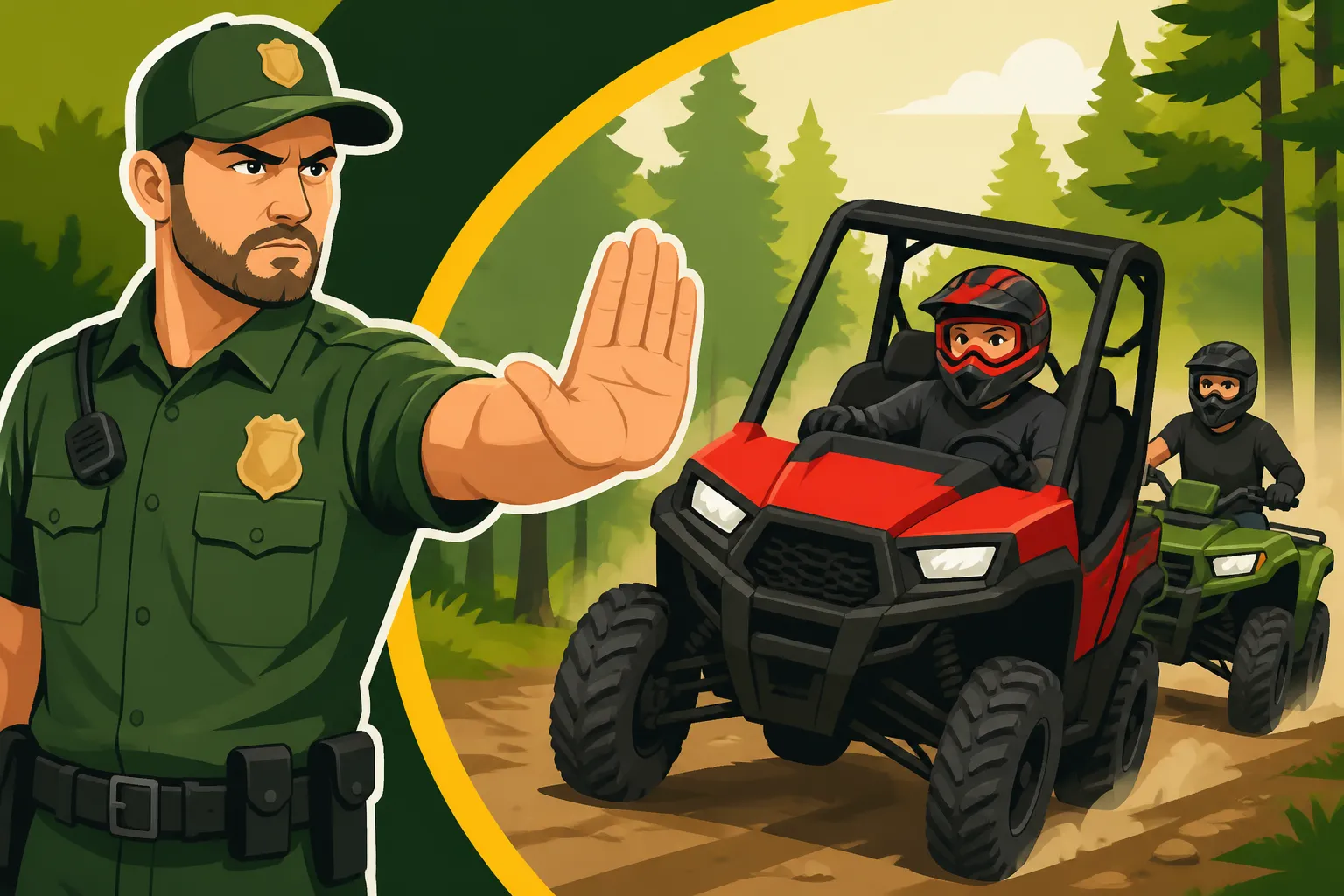
If staff or an authorized officer tells you that you must leave an area, follow the direction. Ask calmly for clarification if you are unsure whether the closure applies to one trail, the riding area, or the whole site. You can ask which route to take back to the parking area, whether another designated route remains open, and whether there is a safe way to retrieve a machine or trailer.
Keep the conversation practical. Do not ride past a barrier to “take a quick look,” continue after being told the route is closed, or move a sign so you can pass. A closure is not a negotiation based on how far you traveled or how soon you planned to turn around. If the instruction is unclear, stop in a safe place and ask before proceeding.
If you are on the trail when a closure is announced, focus on getting back by an authorized route. Do not create a new path around a blocked section. If you cannot tell which way is safe and permitted, contact the forest office or the appropriate staff member using the directions provided at the site. In an immediate emergency, use the appropriate emergency service.
It also helps to keep your registration card and other required documents accessible. Knowing where they are can make a conversation at a trailhead or with an officer more straightforward. For the specific requirement, see The Registration Card You Must Carry in Massachusetts. Documents do not give you permission to ignore a closure, but having them ready can help resolve unrelated questions without delaying your return.
If you believe the direction was mistaken, comply first and ask about the concern through the appropriate official channel afterward. Do not turn a disagreement into a confrontation at a gate or on a trail. Make a note of the location, time, posted notice, and the route or area affected while details are fresh. If you want to ask about a specific forest’s operating status, [Questions Worth Asking a Berkshire Forest Office] offers useful examples of the kind of information to request.
How to reduce the chance of a wasted trip
No preparation can guarantee that a forest will remain open all day, but a few checks can help you avoid arriving with outdated assumptions. Plan a backup day or activity if conditions are uncertain, and avoid building a long trip around one trail when access may change.
Before leaving home:
- Check for current notices. Look for recent closure or condition information from DCR or the specific forest. An old trip report or a saved map may not reflect a new restriction.
- Confirm the route and season. Make sure the route is designated for the type of machine you plan to ride and that it is within the current operating period. Do not assume every trail in a state forest permits every OHV.
- Check registration and parking separately. Confirm that your machine meets Massachusetts registration requirements, then check the forest’s parking and access information. A sticker is not a trail pass or a guarantee of access.
- Plan a legal way back. Consider how you will return if a segment closes. Do not rely on using an unmarked road, private land, or a route that is not open to OHVs.
- Give your group a simple closure plan. Agree to stop at signs, stay together when possible, and turn back by an allowed route if access changes.
For the trail system itself, use information that is specific to the forest and the date of your trip. If a notice is hard to interpret, contact the relevant office before you tow. You can ask whether the OHV route is open, whether a temporary closure affects the full route or only a section, and whether any special access instructions are in effect. Avoid treating an unanswered call or an old web page as confirmation that a route is open.
Keep a backup plan that does not depend on pushing past a closure. That might mean choosing a different day, using an alternative permitted riding area after confirming its rules, or ending the ride and returning safely. If you are traveling with a group, make sure everyone knows that a closure applies to the group—not just the first rider who reaches the sign.
The main practical rule is simple: registration gets you part of the way, but current access conditions decide whether you can ride a particular route. Check before traveling, follow posted restrictions, and treat a staff direction to leave as the end of that ride in the affected area.
Disclaimer
This article is for general informational purposes only and does not constitute professional advice. Laws, prices and regulations vary by location and change over time. Consult a qualified professional for guidance on your specific situation.