What the $34.95 Online Safety Course Covers
A $34.95 online safety course can look like the whole requirement, but Massachusetts riders may need more than an online lesson to earn a safety certificate. Here’s what the course typically teaches, what it doesn’t replace, and how to check the steps that apply before you ride.
What the online course is designed to teach
The online course is the learning part of off-highway vehicle safety education. Its purpose is to help riders recognize common hazards, understand responsible operation and prepare to make safer decisions on trails and other permitted riding areas. It is not a substitute for learning the rules that apply to a particular place or age group.
Expect the lessons to cover topics such as:
- Basic machine operation: Familiarizing yourself with controls and how an ATV or UTV responds to steering, braking and changes in terrain.
- Protective equipment: Understanding why a properly fitted helmet and other protective gear matter, and when to use them.
- Pre-ride checks: Developing a habit of checking the machine before setting out. That can include controls, brakes, tires, lights and other safety-related components.
- Riding within your ability: Recognizing that speed, terrain, visibility and experience affect how much control you have.
- Hazards and risk management: Watching for uneven ground, obstacles, changing trail conditions and other riders. A safe decision may mean slowing down, stopping or choosing another route.
- Sharing riding areas: Being alert to other trail users and avoiding actions that could damage land or create unnecessary conflict.
- Rules and responsibility: Learning that registration, age restrictions, supervision and permission can affect whether and where someone may ride.
The precise lesson sequence, terminology and testing format can vary by course provider. Read the course description before enrolling and check that it is the Massachusetts-approved option for the certificate you need. A course that teaches general ATV safety is not automatically accepted for every state requirement.
The online class is also different from a machine-specific orientation. A lesson can explain what to inspect and why it matters, but it cannot confirm that your particular machine is safe or that you can handle it well. Read the owner’s manual, learn where the controls are, and ask a qualified instructor or dealer about features you have not used before.
If you are sorting out the full certificate process, Two Parts to the OHV Safety Certificate explains why an online course may be only one step. You can also check Massachusetts Safety Certificates Under 18 for the broader age-related context.
What the online course does not replace
The most important point is that completing the online lessons does not necessarily mean you have completed every part of Massachusetts safety education. The certificate process may include an in-person component, such as instruction or a skills evaluation. Check the current course instructions before assuming that an online completion screen is the final credential.
| Online course may provide | You may still need to do |
|---|---|
| Lessons on safety, responsible riding and basic operation | Attend the required in-person session |
| Review questions or a knowledge assessment | Complete any required practical skills evaluation |
| A record showing the online portion is complete | Follow the provider’s instructions for receiving the certificate |
| General guidance on equipment and hazards | Meet registration, supervision and riding-location rules |
The practical portion matters because knowing a safety principle and applying it on a machine are different things. A rider may understand how braking works but still need instruction on controlling speed, turning or stopping safely. For details on the hands-on portion, see Massachusetts In-Person Skills Test and What Riders Have to Do on the Skills Test.
Nor does a safety certificate replace registration. If your machine needs to be registered, course completion does not register it, provide a decal or authorize riding on land where OHVs are not allowed. Start with Do You Need to Register an ATV in Massachusetts? if registration is also on your checklist.
A certificate also does not grant access to private land or turn a public road into an ATV trail. Riders still need to follow applicable restrictions on age, supervision, landowner permission and where riding is allowed. For a broader overview of operating rules, see Massachusetts ATV Laws Under Chapter 90B. If you are under 18, the relevant certificate and supervision requirements can depend on your age and activity; review Massachusetts Rules for Young Riders on Public Land rather than relying on the course alone.
Finally, the course is not a repair class, a guarantee that a rider is ready for every trail, or a substitute for supervision where supervision is required. A new rider should practice in a lawful, controlled setting with an appropriate machine before attempting rougher terrain.
How to prepare and get more from the lessons
Online learning is easiest to complete when you treat it as training rather than a formality. Set aside enough uninterrupted time to read the material and work through any knowledge checks carefully. Skimming to reach the completion screen may leave gaps that matter when a trail situation changes quickly.
- Confirm you have the right course. Check that the course is accepted for the Massachusetts OHV safety certificate you are seeking. If you are unsure, contact the provider or the state office responsible for the program before paying or beginning.
- Check the full process first. Find out whether there is a separate in-person class, skills evaluation or registration step. The state’s course information and the provider’s instructions should make clear what is required after the online part.
- Use a device and connection that work reliably. If the course includes videos or saves progress online, a stable connection can reduce the chance of losing your place. Review the provider’s technical requirements before starting.
- Take notes on safety decisions. Focus on why a rule or technique matters. For example, note how speed affects control on uneven ground, or why a rider should pause when visibility or trail conditions are poor.
- Ask about unfamiliar terms. If a lesson refers to a control, component or riding situation you do not understand, consult the owner’s manual or ask an instructor before practicing.
- Keep proof of completion. Save the confirmation or record the provider gives you. Follow the instructions for any later classroom or skills session, and ask how the certificate itself is issued and carried.
If the required next step is an in-person session, plan for it separately. It may require advance scheduling, a particular location or attendance by a parent or guardian for younger students. Requirements and available dates can change, so check the current instructions before making travel plans. Where Massachusetts Holds Its OHV Classrooms and Massachusetts Parent Attendance Requirements can help you identify questions to verify.
The course’s listed $34.95 price is not a guarantee of the current cost. Course fees and enrollment arrangements can change, and the online portion may not include every cost or step in the certificate process. Confirm the current fee, what it covers and whether there are separate charges before enrolling. For an overview of the process beyond the online material, see How to Get a Massachusetts Safety Certificate.
Before you ride after completing the course
Finishing the course is a useful milestone, but it is not the final check. Before riding, confirm that the certificate process is complete, that you understand the rules for the rider’s age and that the machine is properly registered if required. Also confirm that the planned area allows the type of machine you intend to ride.
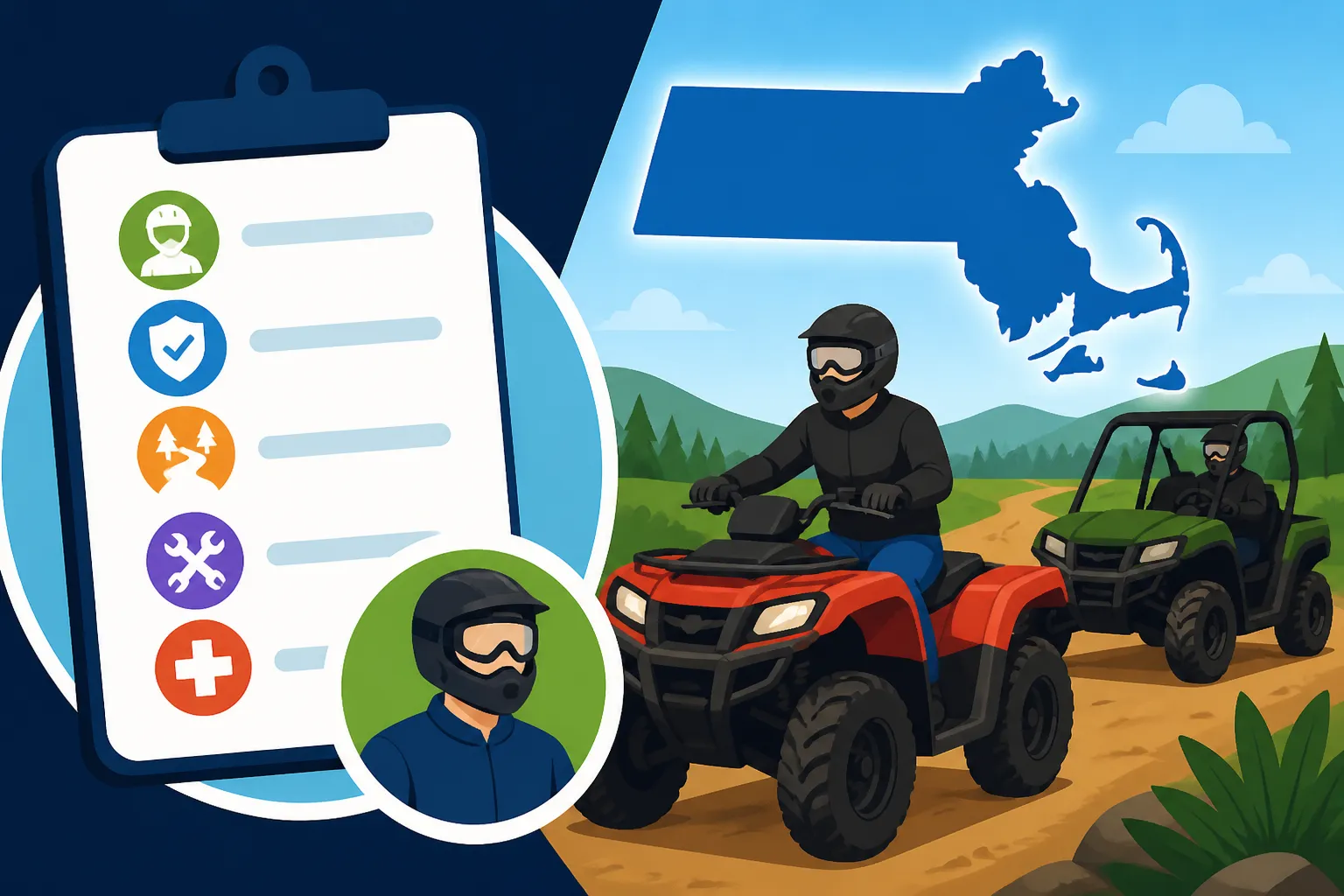
Use this checklist:
- Certificate: Have you completed every required course component, not just the online lessons?
- Age and supervision: Do the rules for the rider’s age require supervision, a particular machine size or other conditions?
- Registration: Does the machine have the registration and identifying materials it needs? Review Massachusetts Requires Its Own Registration if the machine is from another state.
- Riding location: Is the route open to your kind of vehicle, and do you have permission if it is private land?
- Machine condition: Are the brakes, tires, controls and required equipment in working order?
- Protective gear: Is the helmet properly fitted, and does the rider have suitable gear for the conditions?
- Ride plan: Do you know the route, likely hazards and what you will do if conditions are worse than expected?
A certificate is evidence of completed safety education; it is not a promise that a rider can manage every machine or situation. New riders benefit from simple practice, a suitable machine and a conservative pace. Experienced riders benefit too: familiarity can make it easy to skip checks or take a trail feature for granted.
If a course page or certificate instruction is unclear, ask the provider or the relevant Massachusetts office before riding. Confirm exactly what counts as completion, whether any additional session is required, and what proof the rider must carry. That small check can prevent a frustrating surprise at the next step—and help ensure the course serves its real purpose: safer, more responsible riding.
Disclaimer
This article is for general informational purposes only and does not constitute professional advice. Laws, prices and regulations vary by location and change over time. Consult a qualified professional for guidance on your specific situation.