Massachusetts Insurance Proof at a Trailhead
Getting ready to ride in Massachusetts and unsure whether you need to show insurance at the trailhead? The short answer is that the state does not generally require ATV or UTV insurance, but a private park, event organizer, or specific access arrangement may set its own conditions. Knowing what to carry—and what to confirm before you leave—can prevent a paperwork mix-up from becoming a wasted trip.
Is insurance proof required to ride in Massachusetts?
Massachusetts does not have a general insurance mandate for off-highway vehicles such as ATVs and UTVs. That means a rider is not ordinarily required to show an insurance card just to register a machine or begin a ride on an authorized route. The important qualification is that a lack of a statewide insurance requirement does not mean every riding location or event has identical rules.
Start by separating insurance from the documents and permissions that may actually be required. A Massachusetts registration, a safety certificate when applicable, and permission to use the land are different things. Insurance proof does not replace any of them.
For example, a Massachusetts registration sticker is not proof of insurance. A rider may still need to meet the state’s registration rules, even if the machine is insured. See Massachusetts Requires Its Own Registration for the distinction between a Massachusetts registration and an out-of-state sticker. Riders should also understand which registration documents need to travel with the machine; The Registration Card You Must Carry in Massachusetts covers that requirement.
Likewise, insurance does not give a rider permission to use a trail. Access depends on the land manager’s rules, the trail’s status, and any required permit or written permission. A public forest, a private riding park, and an organized event can each have different conditions. Before making a long drive, check the current access instructions for the particular place you plan to ride.
| Situation | Is insurance proof generally required? | What to confirm |
|---|---|---|
| General Massachusetts OHV registration | Not as a general insurance requirement | Current registration documents and any applicable safety certificate |
| Authorized public-land riding | No general statewide insurance mandate | Trail access, seasonal rules, registration, and land-manager requirements |
| Private riding park | The park may set its own entry conditions | Whether proof of coverage is required and what forms are accepted |
| Organized ride or event | The organizer may impose conditions | Event rules, participant requirements, and any coverage documentation |
| Riding with a permit or special arrangement | Depends on the specific terms | The written permit or permission and the issuing authority’s instructions |
The table is a starting point, not a substitute for checking current rules. If an organizer or property owner asks for insurance proof, that can be a condition of participating or accessing the property even where the state does not generally require insurance.
The distinction also matters if you are visiting from another state. Having an insurance card from home does not mean your registration or trail access requirements are satisfied in Massachusetts. Review Massachusetts Rules for an Out-of-State Sticker before assuming that another state’s paperwork is enough.
What to carry to a trailhead
If you already insure your ATV or UTV, carrying proof of coverage is sensible even when no one has told you it is mandatory. A current insurance identification card or policy document can help answer questions quickly if an event organizer, private park, or other party requests it. But do not treat the insurance card as the only paperwork worth bringing.
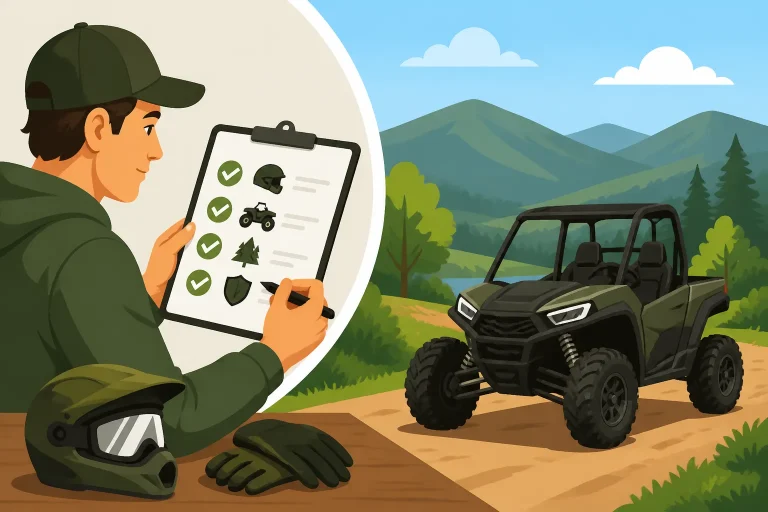
A practical trailhead document check includes:
- Registration documents: Carry the Massachusetts registration card and make sure the machine displays the required decal or sticker. Review Massachusetts Registration Paperwork Checklist if you are unsure what belongs in your riding kit.
- Safety certificate, when required: Riders under 18 have certificate-related requirements. The details depend on age and circumstances; see Massachusetts Safety Certificates Under 18.
- Land access information: Bring any required permit, written permission, reservation confirmation, or event check-in information. A registration or insurance policy does not authorize riding on land where access is prohibited.
- Insurance proof, if applicable: Bring the identification card or other document your insurer or event organizer says is acceptable.
- Emergency and contact details: Keep the insurer’s claims number and policy contact information somewhere accessible, especially if riding with a group or far from home.
Keep documents protected from rain, mud, and damage. A sealed pouch in a pocket or secured storage compartment can work for paper copies. If you carry digital documents, save them for offline access rather than relying on cell service. Some forest areas have limited or no reception, and a phone screen is not useful if the relevant file is only in an account that cannot load.
Do not assume that a digital card will be accepted in every setting. A state office, private park, or event organizer may have a specific process for checking documents. If the requirement matters to entry, ask before traveling whether a paper copy is needed or whether a saved digital copy is acceptable.
An insurance card often shows the named insured, policy dates, and covered vehicle information, but the format varies by insurer. If the document does not clearly identify the ATV or UTV, or if the machine is covered under a broader policy, ask the insurer what document best demonstrates coverage. A payment receipt or a screenshot of a premium transaction usually does not establish what a policy covers.
Also check that the document is current and matches the machine or owner involved. If you recently bought the vehicle, changed ownership, or added it to a policy, make sure the policy information has been updated. A card for another household vehicle does not establish that the off-road machine itself is covered.
When a park, event, or land manager may ask
The most common reason to bring insurance proof is not a general statewide trailhead rule. It is a condition set by a particular access provider or event. Private parks may require riders to sign waivers, follow facility-specific rules, or meet conditions that are not the same as public-land requirements. Read Massachusetts Private Park Waivers and Rules before heading to a privately operated riding area.
Organized rides can also have their own requirements. An event organizer may ask participants to provide proof of coverage, sign documents, or agree to specified conduct. The exact request depends on the event, so check its registration materials rather than relying on what was required at a different ride. Insurance a Massachusetts Event Organizer Carries explains why organizer coverage and a participant’s personal policy are separate issues.
A written permit or land-use agreement may include its own conditions as well. Read the actual document and ask the issuing office or property owner if a requirement is unclear. If it says proof must be shown at check-in, bring the form of proof they identify. If you are told that insurance is not required, it can still be useful to keep your policy information with you for an accident or other claim.
For public land, check the rules for the specific property and activity rather than assuming every trailhead operates like a private park. Massachusetts has no general OHV insurance mandate, but other requirements can apply to riding access. Parking charges, permits, and trail availability are separate questions from insurance; Massachusetts DCR Parking and Access Fees is useful when planning a visit to a DCR property.
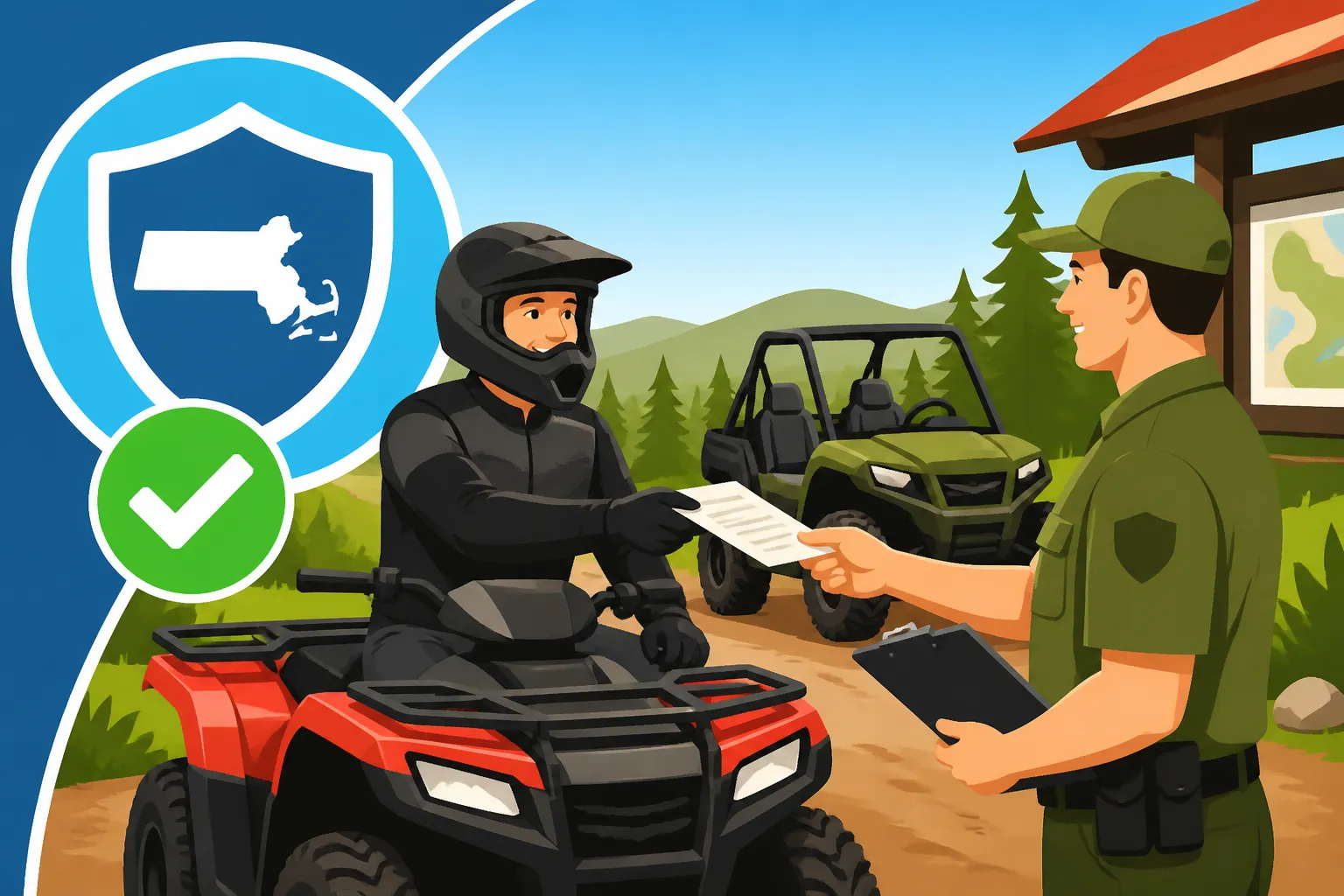
If someone at a trailhead asks you for proof, calmly clarify what they need and why. It may be a site-specific entry condition, a rule for an organized event, or a request to verify a different document. Ask whether an insurance card is enough, whether they need a declarations page, and whether a paper copy is required. If the request appears inconsistent with written instructions, contact the responsible office or organizer before riding rather than arguing at the gate.
Do not assume a request for insurance proof means the state has made insurance compulsory for all riders. Conversely, do not assume the absence of a state mandate overrides a private facility’s conditions. A property owner or organizer can set conditions for access to its facility or event, subject to applicable law and the terms it has communicated.
How to confirm coverage and avoid a trailhead problem
Insurance language can be confusing because a standard vehicle policy may not cover an ATV or UTV used off road. Coverage can depend on the type of machine, how it is used, where it is operated, who is riding, and whether the policy includes liability, collision, or theft protection. Do not infer coverage from the fact that the vehicle is registered, financed, or stored at a home address.
Before relying on a policy, ask the insurer specific questions:
- Is this particular ATV or UTV listed or otherwise covered?
- Does the policy apply while riding off road, and are there restrictions on where it may be used?
- Who is permitted to operate the machine?
- Does coverage apply at private parks, organized events, or out-of-state riding areas?
- What proof should be carried, and can the insurer provide a document that identifies the machine?
- What should the rider do after a collision, and what information must be reported?
Get answers in writing when possible, particularly if a park or event has made proof of coverage a condition of entry. An insurer’s confirmation can help resolve an ambiguity, but it does not change a facility’s rule or substitute for required registration and access paperwork.
If you are deciding whether to buy coverage, consider the risk rather than assuming that “not required” means “not useful.” A collision can involve damage to another person’s property, an injury, or damage to your own machine. The policy types and exclusions differ, so compare the actual coverage and ask about limitations that matter to your riding plans. For broader context on the state requirement, see Massachusetts Has No Insurance Mandate.
A simple pre-trip routine can reduce confusion:
- Identify the land manager or organizer. Determine whether you are riding on public land, at a private park, or as part of an event.
- Check the current access rules. Look for registration, permit, age, safety-certificate, waiver, and insurance conditions.
- Contact the responsible office if anything is unclear. Ask exactly what documents are required at the trailhead and whether digital copies are accepted.
- Check the machine’s paperwork. Confirm that registration information is current and that required documents are carried on board.
- Verify any insurance policy. Make sure it covers the machine and the planned use, and bring the proof requested by the site or organizer.
- Keep copies accessible offline. Store paper documents securely or save electronic files locally so they remain available without cell service.
The main takeaway is straightforward: Massachusetts does not generally require ATV or UTV insurance proof at every trailhead, but specific parks, events, or access agreements may set their own conditions. Check the rules for the place you are visiting, carry the registration and other required documents, and verify that any insurance policy actually covers the machine and use you have in mind.
Disclaimer
This article is for general informational purposes only and does not constitute professional advice. Laws, prices and regulations vary by location and change over time. Consult a qualified professional for guidance on your specific situation.