Where to Find the VIN on an ATV or Side-by-Side
It can be incredibly frustrating when you're trying to register your beloved ATV or side-by-side in Massachusetts, or even just sell it, and you hit a wall trying to find that all-important Vehicle Identification Number. Without it, you're stuck! This guide is here to walk you through exactly where to look for the VIN on your off-road machine, whether it's an ATV or a side-by-side, so you can get moving with your plans.
Why the VIN is So Crucial for Your Machine
The Vehicle Identification Number (VIN) isn't just a random string of letters and numbers; it's the unique fingerprint of your ATV or side-by-side. Think of it as your machine's social security number. In Massachusetts, this number is absolutely essential for a whole host of reasons, and without it, you'll find yourself hitting dead ends with critical tasks like registration and insurance.
First and foremost, when you go to register your machine with the Massachusetts Environmental Police, they're going to ask for that VIN. It's a mandatory field on the application, and it allows them to properly identify your specific vehicle in their system. Whether you're registering a brand new machine or one you just bought used, the VIN is how it gets officially recognized. For new machines, you'll usually have a Manufacturer's Certificate of Origin (MCO) which clearly lists the VIN, but for used machines, you'll be looking for it directly on the vehicle itself. Without the VIN, you simply can't complete your [Massachusetts Registration Paperwork Checklist] or finalize your application. The Environmental Police use this number to create your registration record, link it to you as the owner, and issue your unique [Massachusetts Issues Decals and a Card].
Beyond registration, the VIN plays a pivotal role in ownership transfers. If you're buying a used ATV or side-by-side from a private seller in Massachusetts, verifying the VIN on the machine against the VIN on the [Massachusetts Requires a Bill of Sale for a Used One] is absolutely paramount. This ensures you're buying the exact machine you intend to, and that the seller is indeed the rightful owner. It's a critical step in preventing fraud and making sure you have a clear chain of ownership. When the seller provides a bill of sale, ensure that the VIN is accurately recorded on it. Tools from services like LawDepot can help both buyers and sellers generate comprehensive bills of sale that include all necessary details, including the VIN, ensuring everything is properly documented for the transfer.
The VIN is also your first line of defense against theft. If your machine is ever stolen, the VIN is what law enforcement agencies use to track it down and identify it. It's how they can confirm whether a machine has been reported stolen, which is a crucial check you should make yourself before purchasing a used ATV. You can use the VIN to perform a [Checking Whether a Used Quad Was Reported Stolen] search through various online databases or by contacting law enforcement directly. Furthermore, while Massachusetts doesn't mandate ATV insurance, many riders opt for it for peace of mind. Your insurance company will definitely need the VIN to accurately identify your machine and provide coverage. It's a vital piece of information for any policy, whether it's for comprehensive coverage or just liability.
Essentially, the VIN is the cornerstone of your machine's identity, ensuring legal ownership, proper registration, and a measure of security against theft. Taking the time to locate and verify it is a small effort that saves you a lot of potential headaches down the road.
Common VIN Locations on ATVs
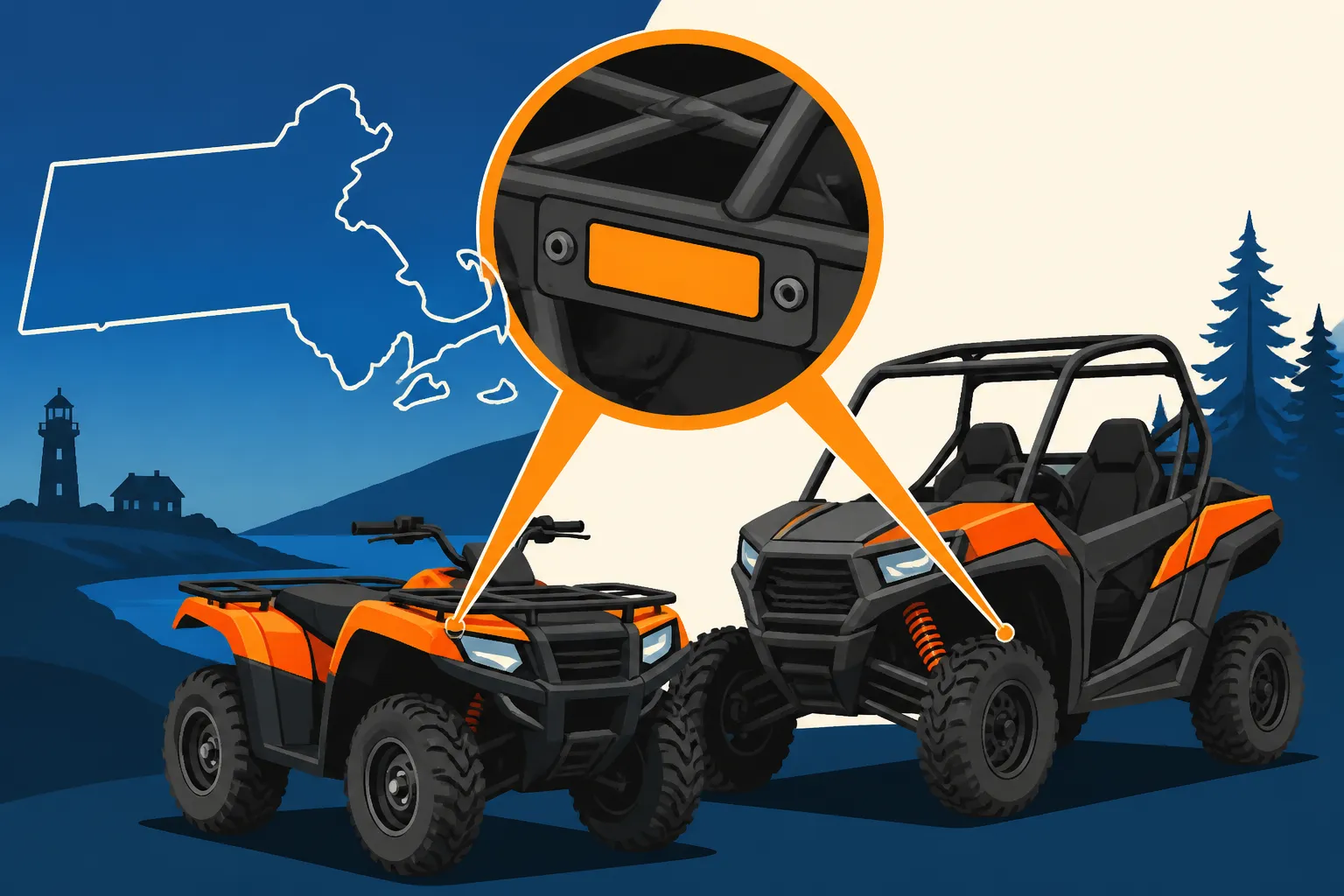
Finding the VIN on an ATV can sometimes feel like a scavenger hunt, but once you know the usual suspects, it becomes a lot easier. Manufacturers typically place the VIN in a few standardized, easy-to-access locations, although the exact spot can vary slightly depending on the make, model, and year of your specific quad.
One of the most common places to find the VIN on an ATV is on the frame, near the steering neck. If you stand in front of your ATV and look down at the frame where the handlebars attach, you'll often see the VIN stamped directly into the metal or affixed on a small metal plate. This area is usually sturdy and less prone to damage from impacts or debris during riding. Take a flashlight and wipe away any dirt or mud that might be obscuring the numbers. Sometimes, it might be on the right side of the frame, just below the handlebars.
Another frequent spot is on the frame, underneath the front fender. You might need to crouch down and look up under the plastic bodywork to spot it. Again, it will be stamped into the metal frame. This location is a bit more protected from general wear and tear but can still accumulate dirt and grime.
For some models, particularly older ones or specific brands, you might also find the VIN on the engine case. This is less common than the frame locations but still worth checking if the primary spots come up empty. Look for it stamped into the metal block of the engine itself, usually on a flat, visible surface. Be careful here, as the engine can be hot if the machine has recently been running.
The VIN itself is a 17-character alphanumeric code. It won't have any 'I', 'O', or 'Q' characters to avoid confusion with '1' and '0'. It's usually clear and legible, either deeply stamped or etched into the metal. If it's a sticker, ensure it hasn't been tampered with or become unreadable due to weather exposure.
Here's a quick table summarizing the most likely spots for ATVs:
| Location Type | Specific Area | Notes |
|---|---|---|
| Frame | Steering neck (right side, under handlebars) | Very common, often stamped directly. |
| Frame | Underneath front fender (right or left side) | Slightly more protected, may require crouching. |
| Engine Case | Flat surface on the engine block | Less common, check after other frame locations. |
| Manufacturer's Sticker | Attached to the frame or a major component | May be present on some models in addition to stamped VIN. |
When you're searching, remember to have a rag handy to clean off any accumulated mud, grease, or debris. Sometimes the VIN is simply hidden under a layer of the trail's finest souvenirs! Once you've found it, write it down accurately, double-checking each character against what's on the machine, especially if you're preparing for [Massachusetts Requires a VIN on the Application].
Common VIN Locations on Side-by-Sides
Side-by-sides, or UTVs, are generally larger and have more bodywork than ATVs, which means their VIN locations can sometimes be a bit different, drawing parallels to how you might find a VIN on a car or truck. However, like ATVs, manufacturers tend to stick to a few tried-and-true spots to make identification straightforward.
One of the primary places to check for the VIN on a side-by-side is on the frame, typically visible from the wheel wells. If you look into the front driver's side wheel well, you'll often find the VIN stamped on the frame rail that runs behind the tire. This location is often chosen for its durability and visibility, even with the body panels in place. It might be on a small metal plate riveted to the frame or etched directly into the steel.
Another very common and often easiest place to find the VIN on a side-by-side is on the driver's side door jamb or threshold. Similar to cars, some UTVs will have a sticker or plate containing the VIN and other important manufacturing information right where the driver's door closes. For machines without traditional doors, check the sill or the frame member that runs along the bottom of the opening. This spot is usually clean and unobstructed.
For many utility-focused side-by-sides, particularly those with a dump bed or cargo box, the VIN might be found underneath the cargo bed. You may need to lift the bed or tilt it to gain access to the frame underneath. Look along the frame rails in this area for the stamped VIN. This location is well-protected from most impacts but can get very dirty, especially if your UTV sees a lot of work on a farm or construction site.
Some manufacturers also place the VIN under the driver's or passenger's seat. This requires lifting the seat cushion or removing a small access panel, but it's a secure spot that's well-protected from the elements.
Just like with ATVs, the VIN on a side-by-side will be a 17-character code. Take your time, use a good light source, and don't be afraid to wipe away dirt or dust to ensure you're reading it correctly. Accuracy is key, especially when dealing with official paperwork like that needed for [Massachusetts Transfer and Duplicate Fees] or new registrations.
Here’s a summary for side-by-sides:
| Location Type | Specific Area | Notes |
|---|---|---|
| Frame | Driver's side frame rail (visible through wheel well) | Very common, often robustly stamped. |
| Body/Frame | Driver's side door jamb/threshold | Easy to find, often on a sticker or plate, like a car. |
| Frame | Underneath cargo bed (may require lifting) | Protected but can get dirty; good for utility models. |
| Interior Frame | Under driver's or passenger's seat | Requires lifting seat or panel; very protected. |
| Manufacturer's Sticker | Various locations, often on frame or console | Supplemental to stamped VIN, check for tampering or damage. |
Remember, the goal is to find a clear, untampered VIN. If anything looks suspicious, it's a red flag. Always verify the VIN with any ownership documents, like a [Massachusetts Requires an MCO for a New Machine] or a bill of sale, before finalizing a purchase.
What to Do If You Can't Find or Read the VIN
Sometimes, despite your best efforts, the VIN on your ATV or side-by-side can be incredibly elusive, or worse, unreadable. This can happen for several reasons: perhaps years of mud and grime have caked over it, or rust has taken its toll, or in very rare cases, the stamping might be faint or even partially obliterated. Don't panic, but know that this situation requires a bit more legwork, especially if you're trying to register the machine in Massachusetts.
Your first step, if you're having trouble, is to thoroughly clean the areas where the VIN is commonly found. Use a stiff brush, some degreaser, and good old-fashioned elbow grease. Sometimes a wire brush (used gently) can help remove stubborn rust or paint that's obscuring the numbers. A strong flashlight held at different angles can also help reveal faint impressions on the metal. Take your time and check every nook and cranny. It's truly amazing what a bit of cleaning can reveal.
If the VIN is truly unreadable or appears to be missing, and you're the current owner trying to register, you'll need to contact the Massachusetts Environmental Police (MEP) directly. They are the registering authority for ATVs and side-by-sides in the state, not the RMV, and they deal with these unique situations. Explain your predicament honestly. They may have a procedure for VIN verification, which could involve bringing the machine to an MEP office or having an officer inspect it. They might be able to help you locate a hidden VIN or guide you on how to proceed. It's far better to be proactive and seek their guidance than to try and guess or invent a VIN.
When you originally acquired the machine, did you get a bill of sale or a Manufacturer's Certificate of Origin (MCO)? These documents should have the VIN clearly listed. This paperwork is your strongest proof of the machine's identity and your ownership. Even if the VIN on the machine is unreadable, if you have a valid MCO or a well-documented [Massachusetts Requires a Bill of Sale for a Used One], the Environmental Police might be able to use that information to proceed with registration. For those purchasing privately, always insist on a comprehensive bill of sale. Tools like those from LawDepot can assist both parties in creating a legally sound document that includes the VIN, protecting everyone involved.
In scenarios where the machine's VIN is completely unidentifiable and you lack sufficient ownership documentation, the situation becomes more complex. This is where you might run into issues with proving legitimate ownership, which is a big concern for the Environmental Police due to theft prevention. They might question how you came into possession of a machine with no clear identification. This is a common problem for machines purchased without proper paperwork, or for older machines that have simply deteriorated significantly. The Environmental Police need to be able to verify the machine's origin and ensure it hasn't been stolen or involved in other illegal activities. Without a verifiable serial number, they have very little to go on.
Another important consideration for potential buyers is to be extremely wary of any machine for sale where the VIN appears to be tampered with, ground off, or replaced. This is a major red flag and could indicate a stolen vehicle or one involved in illegal activities. Always conduct a thorough inspection and, if possible, run the VIN through a database to check its history before handing over any money. If you're [Buying From a Private Seller in Massachusetts], ensuring the VIN is present and clear is one of the most important checks you can make to protect yourself.
Ultimately, persistence in cleaning and searching, combined with transparent communication with the Massachusetts Environmental Police, will be your best path forward if your VIN seems to be playing hide-and-seek. They are there to help ensure all machines are properly and safely registered.
Disclaimer
This article is for general informational purposes only and does not constitute professional advice. Laws, prices and regulations vary by location and change over time. Consult a qualified professional for guidance on your specific situation.