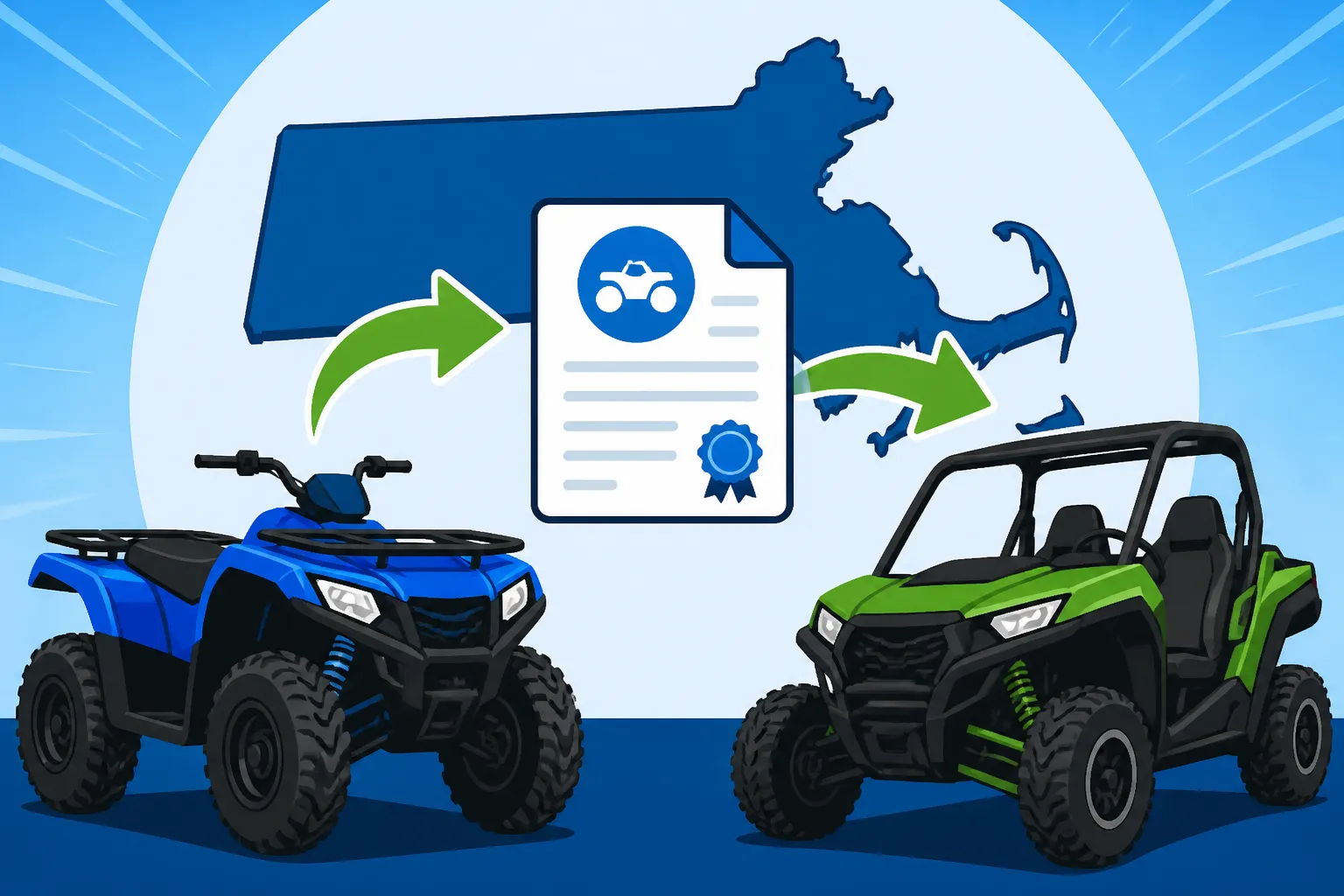
Massachusetts Registration Transfer to a New Machine
So, you've decided it's time for an upgrade, or maybe you found an irresistible deal on a new-to-you ATV or UTV here in Massachusetts. That fresh machine is probably sitting there just begging for some trail time, but before you hit the dirt, you've got a crucial step to take: transferring your existing registration. It can feel a bit confusing, especially since OHV registration isn't quite like registering a car, but don't fret! This guide will walk you through the entire process of how to move your Massachusetts OHV registration to your new pride and joy, making sure you avoid any unnecessary hiccups with the Environmental Police.
Why Transferring Your OHV Registration Matters
It's easy to assume that if you've already got a valid registration sticker for your old ATV, you can just peel it off and stick it on the new one, or simply use the same registration card. Unfortunately, that's not how it works here in the Bay State, and trying to do so could land you in hot water. The rules for off-highway vehicles are specific, and understanding them is the first step to a smooth transfer.
It's Not Like a Car Plate
When you buy a new car, you often have the option to transfer your existing license plate from your old vehicle to the new one, especially if you're trading it in at a dealership. This is a pretty common practice and often saves you a bit of hassle. However, with ATVs and UTVs in Massachusetts, your registration is tied much more directly to the specific machine's Vehicle Identification Number (VIN) rather than just being a general "permit to ride" for you as the owner. The Environmental Police issue specific decals and a registration card for each individual OHV. So, while you're still the owner, the physical registration documents (the decals and card) are unique to the machine they were issued for.
This means you can't just move your stickers from one quad to another, even if both are yours. Each machine requires its own distinct registration to be legally operated on designated trails or private land with permission. Trying to swap decals will immediately raise red flags for any officer checking your machine, leading to potential fines and a lot of explaining. It's truly a hassle you want to avoid, so understanding this fundamental difference is key.
The Machine, Not the Rider, Is Registered
Think of your ATV or UTV registration as a birth certificate for that specific vehicle. It details the machine's make, model, year, and most importantly, its VIN. While your name is on the registration as the owner, the core of the registration itself identifies the machine. This is why when you transfer a registration, you're not just updating your personal information; you're essentially telling the state, "I no longer own that machine with that VIN, and now I own this new machine with this new VIN, and I want to apply my existing registration to it."
This distinction is crucial for tracking ownership, ensuring proper sales tax collection, and maintaining safety records. Each machine needs its own unique identifier in the state's system. When an Environmental Police officer checks a machine's registration, they're looking to confirm that the decals and the registration card physically displayed on the vehicle match the VIN of that specific machine, and that the registration is current. If you've got a new machine but are still displaying the decals from an old one, it simply won't match, and that's a problem.
The Step-by-Step Process for Transferring Your OHV Registration
Alright, let's get down to the nitty-gritty. Transferring your registration might seem like a lot, but by breaking it down into manageable steps, you'll find it's quite straightforward. The process involves some paperwork and a visit to the Environmental Police, who handle all OHV registrations in Massachusetts, not the RMV. For more on this, you might find [Why the Environmental Police Register ATVs, Not the RMV] helpful.
Gather Your Paperwork for Both Machines
This is perhaps the most critical part: having all your ducks in a row. You'll need documentation for both the machine you're transferring from and the machine you're transferring to.
For the Old Machine (the one you're transferring from):
- Your current Massachusetts OHV Registration Card: This proves you were the registered owner of the machine you're transferring from.
- Proof of its disposal (if you've already sold it): A bill of sale is perfect here. If you're selling it to a private party, using a reliable template from a service like LawDepot can ensure all the necessary details, like the VIN, sale price, and buyer/seller information, are included. This helps cover you and provides proper documentation.
For the New Machine (the one you're transferring to):
- Proof of Ownership:
- New Machine (never registered before): You'll need the Manufacturer's Certificate of Origin (MCO). This is essentially the "birth certificate" for a brand-new machine. We've got more details on this in [Massachusetts Requires an MCO for a New Machine].
- Used Machine (bought from a dealer or private seller): You'll need a proper bill of sale from the previous owner. This document must include the make, model, year, VIN, sale price, and the names and addresses of both the buyer and seller. Again, if you're buying privately, having a comprehensive bill of sale, possibly generated through a service like LawDepot, can protect both parties and streamline the registration process.
- Sales Tax Form ST-6 or Exemption Form ST-6E: Massachusetts requires sales tax to be paid on the purchase of an ATV or UTV. If you bought from a dealer, they usually handle this for you. If it was a private sale, you're responsible for filing and paying the 6.25% sales tax yourself. You’ll need to present Form ST-6. If the machine was a gift, you might be eligible for an exemption and would use Form ST-6E. More on this can be found in [Massachusetts Sales Tax Forms at Registration] and [Massachusetts Exemption Form ST-6E].
- Your Massachusetts Driver's License or ID: To prove your identity and residency.
- The completed OHV Registration Application: You can usually download this from the Mass.Gov website or pick one up at an Environmental Police office. Make sure the VIN of the new machine is correctly listed on the application, as highlighted in [Massachusetts Requires a VIN on the Application].
Here's a quick checklist table to help you keep track:
| Document Category | For Old Machine (Transferring From) | For New Machine (Transferring To) |
|---|---|---|
| Proof of Previous Reg. | Current MA OHV Registration Card | N/A |
| Proof of Ownership | Bill of Sale (if sold) | MCO (new) OR Bill of Sale (used) |
| Sales Tax Documentation | N/A | Form ST-6 (paid sales tax) OR Form ST-6E (exemption) |
| Identification | N/A | Your MA Driver's License/ID |
| Application | N/A | Completed OHV Registration Application |
| Payment | N/A | For transfer fee and any new registration fees if applicable |
Filling Out the Application
When you get to the OHV registration application, you'll clearly indicate that you are performing a "transfer" of an existing registration. The form will ask for details about both your old and new machines. Double-check all the VINs, makes, models, and serial numbers. Any discrepancy can cause delays. Remember, the goal is to seamlessly shift your registration from one specific machine to another in the state's records.
Be sure to fill out every section completely. Leaving blanks can lead to your application being sent back, which just prolongs the process. If you’re unsure about any section, it’s always best to ask an Environmental Police staff member when you submit the application. They are generally helpful and can clarify any ambiguities.
What Happens to Your Old Decals
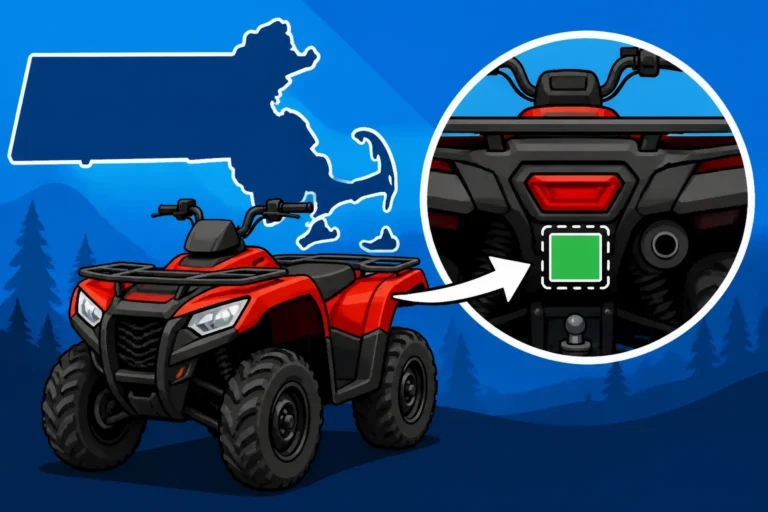
Once the transfer is complete, your old machine's decals are effectively void. You cannot and should not use them on any other machine. It’s a good practice to physically remove them from the old machine, especially if you're selling it. This ensures there's no confusion and helps prevent someone else from inadvertently (or intentionally) trying to use a non-valid registration. The state will issue brand new decals and a registration card for your new machine, which you will then affix according to [Massachusetts Decal Placement Rules].
The state essentially cancels the registration associated with the old VIN and issues a new one for your new VIN. This is why the process is more than just an update; it's a formal change of the registered machine. Your registration card is the ultimate proof of valid registration, and [Massachusetts Registration Cards Carried on Board] explains why it's so important to have it with you when you ride.
The Associated Fees
Yes, there's a fee for this! In Massachusetts, transferring an OHV registration from one machine to another comes with a specific cost. Currently, this transfer fee is generally separate from the initial registration fee you might pay if you were registering a brand-new machine without an existing transfer.
You can expect to pay a transfer fee of [Massachusetts Transfer Fee of $16.50]. This fee covers the administrative cost of processing the change in their system and issuing new decals and a registration card for your new machine. It's a modest fee, but an important one to budget for. Always check the official Mass.Gov website or call the Environmental Police for the most current fee schedule, as these figures can shift over time. Make sure you have the correct form of payment, whether it's a check, money order, or credit/debit card, as accepted methods can vary.
Common Scenarios and Considerations
Life happens, and sometimes your situation doesn't fit neatly into a single box. Here are a few common scenarios and what to keep in mind when transferring your OHV registration.
Selling Your Old Machine
Often, you're transferring your registration because you've sold your old ATV or UTV to make way for the new one. This is a very common situation. When you sell your old machine, make sure you provide the buyer with a proper bill of sale. This protects both you and the buyer. A detailed bill of sale, perhaps from a reputable source like LawDepot, should clearly state that the machine is sold "as-is" and include the date, price, VIN, and signatures of both parties. This document is not only crucial for the buyer to register their new purchase but also serves as your proof that you no longer own the machine, which is essential for your transfer application.
Remember, once you sell it, the registration on that old machine is no longer yours to use. The buyer will need to register it in their own name, and you'll be applying your existing registration status to your new machine. It's not about passing on the sticker, but about proving you had a valid, active registration to transfer.
What if There's a Gap Between Sales?
Sometimes, you might sell your old machine, and then a few weeks or months go by before you find the perfect new one. Is your registration "transferrable" indefinitely? Not quite. The concept of transferring relies on you having an active registration to move. If your old registration expired while you were between machines, you're not technically "transferring" it anymore. Instead, you'd be applying for a new registration for your new machine, even if you were the previous owner of a registered OHV.
It's best to try and coordinate your sale and purchase as closely as possible if you want to take advantage of the transfer process and its lower fee. If there's a significant gap and your old registration expires, you'll simply follow the process for [How to Register an ATV in Massachusetts] as if you were a first-time registrant for that machine, which usually entails paying the full new registration fee for a [Massachusetts Two-Year OHV Registration] or [Non-Resident OHV Registration].
Registering a New Machine Without a Transfer
There might be situations where you're not transferring a registration at all. Perhaps this is your very first ATV or UTV purchase, or you're adding a second machine to your garage and want both to be registered simultaneously. In these cases, you wouldn't be doing a "transfer." Instead, you'd simply be registering a new machine from scratch.
This process is still handled by the Environmental Police. You'll need all the same documentation for the new machine (MCO or bill of sale, sales tax forms, ID) but you won't need to provide details about an "old" machine to transfer from. The fees will also be different; you'll pay the standard new registration fee, which for residents is currently [Massachusetts Charges $44 for Residents] for a two-year sticker. It's a straightforward process, just without the "transfer" designation.
Tips for a Smooth Transfer
Nobody wants to make multiple trips to an office or deal with rejections. Here are a few pointers to ensure your registration transfer goes as smoothly as possible.
Double-Check Everything Before You Go
Before you even leave your driveway, take five minutes to lay out all your documents and go through them item by item. Does the VIN on your MCO or bill of sale match the VIN on the machine itself, and on your application? Do all names and addresses match your ID? Have you signed everywhere necessary? Have you got your payment method ready?
Missing even a small detail can lead to delays. The Environmental Police staff are diligent, and they will catch discrepancies. It’s much easier to fix an error at home than to find out you need to go back for a forgotten document or a missing signature after you’ve already driven to their office. Keeping a copy of all your paperwork, especially the bill of sale for your old machine and for your new one (which you can easily generate and print from a service like LawDepot), is always a smart move. This way, if anything gets misplaced or questions arise later, you have your own records.
When to Visit the Environmental Police
While some transactions can be done by mail, transferring an OHV registration often benefits from an in-person visit. This allows you to clarify any questions on the spot and get immediate confirmation that your paperwork is in order. Check the Environmental Police website for their OHV registration office hours and locations. Sometimes, certain regional offices might be better equipped to handle these types of transactions.
Consider visiting during off-peak hours if possible. Weekday mornings are often less busy than lunchtimes or late afternoons. Also, be mindful of the riding season. Just before the official opening of trails in May, or during prime riding season, offices can be busier. Getting your transfer done in the shoulder seasons can mean shorter wait times. Remember, you want to get your new machine legal and ready for the trails as soon as possible, so planning your visit strategically can save you valuable riding time.
Keeping Your Records Organized
Once your transfer is complete, you'll walk away with a new registration card and decals. Make sure to immediately apply the decals to your new machine according to [Massachusetts Decal Placement Rules]. Keep your new registration card in a safe, accessible place on your ATV or UTV when you ride, as [Massachusetts Registration Cards Carried on Board] states it must be carried. Many riders keep it in a waterproof bag in a storage compartment or even laminated in their wallet.
It's also a good idea to create a physical or digital folder for all your OHV-related documents. This includes bills of sale, past registration cards, maintenance records, and any safety certificates you or your family members hold. This organized approach will make future transactions, like renewals or further transfers, much easier and less stressful. Having a clear paper trail for your machines is invaluable, especially if you ever decide to sell it again.
Disclaimer
This article is for general informational purposes only and does not constitute professional advice. Laws, prices and regulations vary by location and change over time. Consult a qualified professional for guidance on your specific situation.