Massachusetts Issues Decals and a Card
It can be incredibly frustrating to navigate the paperwork and physical requirements for registering an ATV or UTV in Massachusetts. You’ve gone through the process, paid your fees, and now you’re wondering what exactly you should expect to receive and, more importantly, what you need to do with it all. This guide is here to cut through the confusion, explaining precisely what Massachusetts issues after a successful OHV registration – the decals and the card – and how to make sure you're always riding legally and responsibly.
The Basics of Massachusetts OHV Registration Output
When you successfully register your off-highway vehicle (OHV) in Massachusetts, you're not just getting a green light to hit the trails; you're also receiving tangible proofs of that registration. It's not like registering your car with the Registry of Motor Vehicles (RMV) where you might get a traditional metal license plate. Instead, the Massachusetts Environmental Police, who handle all OHV registrations, provide specific items that serve similar purposes in the off-road world. Understanding these elements is crucial for every rider, whether you're a seasoned trail enthusiast or just getting your first side-by-side.
The Registration Card: Your Proof of Ownership and Permission to Ride
First and foremost, you will receive a registration card. Think of this as your OHV's ID. It’s a physical document, usually a durable card, that contains vital information about your machine and its registered owner. This card is direct proof that your ATV or UTV is legally registered with the state, allowing you to ride on designated public trails and private land with permission.
This card isn't just a formality; it's a critical document that an Environmental Police Officer will expect to see if you're stopped on the trail. It shows that you've completed all the necessary steps, including paying the required fees and, if applicable, the sales tax. Without this card, even if your machine has the correct decals, you could face delays or even citations because you can't immediately verify your legal right to operate the vehicle. It's your compact, official record of compliance.
The Decals: Visual Proof for the Environmental Police
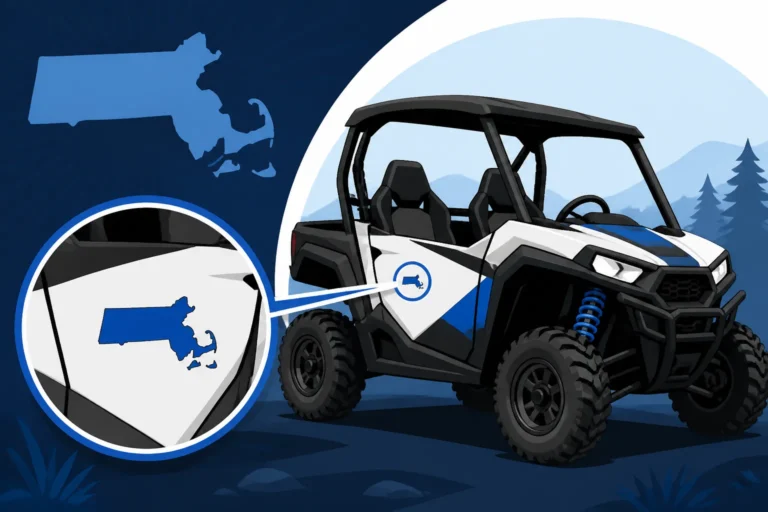
In addition to the card, you'll get a set of registration decals. These aren't just decorative stickers; they are specifically designed to be highly visible and easily identifiable from a distance. Massachusetts issues decals that typically include a unique registration number, similar to a license plate number, along with an expiration indicator. These decals are your OHV's public display of its registered status.
The decals act as a quick visual cue for law enforcement. An Environmental Police Officer patrolling a state forest can quickly see if a machine is registered and, often, when its registration expires, simply by looking at the decals. They are designed to withstand the elements, being exposed to dirt, mud, sun, and rain. The color of the decals usually changes annually to make it even easier to spot expired registrations, so you'll definitely want to pay attention to that when you renew your registration.
Understanding Your Massachusetts OHV Registration Card
Your Massachusetts OHV registration card is much more than just a piece of paper or plastic. It's a comprehensive document that consolidates all the essential details about your off-highway vehicle and its legal status. Knowing what's on it, why you need to carry it, and what to do if it goes missing is vital for every responsible rider. This card is your immediate defense against questions about your machine's legality.
What Information Your Card Contains
When you receive your Massachusetts OHV registration card, you'll notice it’s packed with specific information. It typically includes the owner's name and address, the OHV's unique Vehicle Identification Number (VIN), the make, model, and year of the machine, and its registration number. You'll also see the effective date and expiration date of the registration. It’s a detailed summary of your registration transaction, all in one place.
Sometimes, riders overlook the importance of checking this information immediately. It's always a good idea to quickly review your card for any discrepancies as soon as you receive it. A typo in the VIN or an incorrect address could lead to issues down the road if an officer tries to verify your details. If you ever notice an error, contact the Environmental Police’s Boat and Recreation Vehicle Safety Bureau right away to get it corrected. Accuracy on this card is paramount for smooth sailing (or, in this case, smooth riding).
Why You Must Carry It On Board
Massachusetts law is very clear about the [Massachusetts Registration Cards Carried on Board]. Every time you operate your registered ATV or UTV, you are legally required to have your current registration card with you. This isn't just a recommendation; it's a non-negotiable rule. Environmental Police Officers frequently perform checks at trailheads and out on the trails themselves, and they will ask to see this card.
Imagine you're out enjoying a beautiful fall day on the trails of October Mountain State Forest. You've got your machine running perfectly, you're wearing your helmet, and you're respecting all the rules. Suddenly, an Environmental Police Officer pulls up. The first thing they'll likely ask for, after a friendly greeting, is your registration card. If you don't have it, even if your decals are perfectly placed and current, you could face a citation for not possessing the required documentation. It’s an easy mistake to make, especially if you’re used to leaving your car’s registration in the glovebox and forget to transfer your OHV card to your riding gear. Keep it in a waterproof bag in your pocket, tank bag, or a secure compartment on your machine.
Replacing a Lost or Damaged Registration Card
Life happens. Maybe your registration card slipped out of your pocket on a rocky trail, got soaked in a sudden downpour, or simply went missing during a garage cleanout. Don't panic, but don't ignore it either. Riding without your card is a violation, so getting a replacement should be a priority. The Environmental Police understand these things occur.
The process to replace a lost or damaged card typically involves contacting the Environmental Police’s registration unit and submitting a request, often with a small fee for a duplicate. It's not as complex as registering a new machine, but it does take time. While you wait for your new card to arrive, you might consider carrying proof of your replacement request if you absolutely must ride, though it's always safest to have the official card. For information on general duplicate fees, you can check out [Massachusetts Transfer and Duplicate Fees]. Always ensure you have a current, legible registration card before heading out on any public lands.
Decoding Your Massachusetts Registration Decals
The decals issued by Massachusetts for your ATV or UTV are more than just pretty stickers; they are functional components of the state's enforcement and identification system. Understanding their purpose, what they communicate, and how to maintain them is crucial for staying compliant and avoiding unnecessary hassles with law enforcement. These decals are your OHV’s visible signal of legality.
The Two-Part Decal System: Number and Expiration
When you receive your registration decals, you'll typically find a two-part system at play. There's a main decal that displays your unique Massachusetts OHV registration number, usually a combination of letters and numbers. This is like your off-road license plate number. Alongside this, you’ll also receive a smaller, separate expiration decal, which clearly shows the year your current registration is valid until. This dual system makes it easy for officers to quickly identify your machine and check its current registration status.
The main number decal remains constant for the life of your registration number, assuming you don't change machines or owners in a way that generates a new number. However, the expiration decal changes every time you renew. This allows for simple, cost-effective updates without having to replace the larger, more complex numbered decal annually. It’s a practical system designed for efficiency on both the rider's and the state’s end.
Understanding the Decal Colors and Years
One of the clever ways Massachusetts aids in enforcement is through the use of different color expiration decals for different registration periods. Each renewal year typically has a distinct color associated with it. This color-coding system makes it incredibly easy for Environmental Police Officers to spot an expired registration from a distance, even before they can read the tiny print on the decal.
For example, if the current year's decals are bright orange, and an officer sees a machine with last year's blue decal, they immediately know that machine's registration is likely expired. This visual cue acts as a quick flag. Therefore, when you receive your new decals after renewing your registration, always pay attention to the color. It's a quick and easy way to know if you're up to date and can avoid being caught with an expired sticker, which is a common citation. Remember to install the new decals as soon as they arrive! [Massachusetts ATV Registration Renewal] outlines the process.
Replacing Lost, Damaged, or Peeling Decals
Just like with your registration card, decals can suffer wear and tear, get lost, or peel off due to weather, mud, or accidental scrapes. Riding with missing, illegible, or improperly affixed decals is considered a violation, even if your machine is technically registered. The decals need to be clearly visible and readable at all times.
If you find that your decals are peeling, faded, or have gone missing, you’ll need to request replacements from the Massachusetts Environmental Police. This process is similar to replacing a lost card and also typically involves a small fee. Don't try to "fix" a peeling decal with tape, as this can make it even harder to read and may not be accepted by an officer. It's always best to get official replacement decals to ensure full compliance. For specifics on cost, you can refer to [Massachusetts Duplicate Sticker at $5.50]. Taking the time to properly clean the surface before applying new decals will also help them adhere better and last longer.
Proper Placement of Your Massachusetts OHV Decals
Once you have your shiny new Massachusetts OHV registration decals in hand, the next critical step is applying them correctly. This isn't just about aesthetics; it's about compliance and ensuring your machine is easily identifiable by law enforcement. Massachusetts has specific rules regarding where these decals must be placed to ensure maximum visibility. Getting this wrong can lead to unnecessary questions or even a citation.
Decals on an ATV: Sides and Visibility
For ATVs, Massachusetts law requires that your registration decals be placed on both sides of the machine, clearly visible. This means the numbered main decal and the expiration decal should appear on both the left and right sides of your quad. The common practice is to place them on the forward half of the machine, often on the fenders or side panels, where they are least likely to be obscured by the rider or mud.
The exact height and size requirements are important. The numbers on the decals generally need to be at least 3 inches high with a half-inch stroke, ensuring they are easily legible from a reasonable distance. When applying, make sure the surface is clean, dry, and free of grease for optimal adhesion. Many riders choose a flat, prominent spot on the plastic bodywork, avoiding areas that flex too much or are prone to heavy abrasion. For more details on specific placement, see [Massachusetts Decal Placement Rules] and [Massachusetts Decals on Both Sides].
Decals on a Side-by-Side: Front, Rear, and Sides
Side-by-sides (UTVs) often have a bit more bodywork, which might seem to offer more options for decal placement, but the rules remain strict. While the exact location can vary slightly depending on the UTV's design, the general requirement is that the decals must be affixed to both sides and also typically to the front and rear of the machine, or in locations that ensure visibility from all angles. Some regulations may specify placement on the forward half of the machine.
Given the larger size of UTVs, finding a flat, easily visible spot can sometimes be a bit easier than on an ATV. Many owners opt for the main body panels, doors, or even dedicated decal areas if the manufacturer has provided them. Just like with ATVs, ensure the area is clean before application. The expiration decal often accompanies the main number decal on one of these prominent locations, commonly on the left side of the machine, so that it's readily observable. You can read up on the specifics for side-by-sides in [Massachusetts Decal Placement on a Side-by-Side].
Decal Placement for Snowmobiles
While this guide primarily focuses on ATVs and UTVs, it's worth noting that snowmobiles, as another category of OHV, also have specific decal placement requirements in Massachusetts. For snowmobiles, the decals are usually placed on each side of the cowl or body, toward the front, and must be clearly visible. The principle is the same: maximum visibility for identification by Environmental Police.
The cold, snowy environment presents unique challenges for decal adhesion and durability. Riders often take extra care to ensure the surface is warm and dry before applying decals to prevent them from peeling off in freezing temperatures. Regardless of the machine type – ATV, UTV, or snowmobile – the underlying goal is for law enforcement to quickly and easily identify the registered status of your vehicle.
| OHV Type | Required Decal Placement (Typical) | Key Consideration |
|---|---|---|
| ATV | Both sides, forward half (fenders/side panels) | Must be clearly visible; avoid rider obstruction |
| Side-by-Side | Both sides, front, and rear (body panels/doors) | Must be visible from all angles; ensure flat surface |
| Snowmobile | Both sides of cowl/body, toward the front | Ensure good adhesion in cold weather; unobstructed view |
The Purpose Behind the Card and Decals
You might wonder why Massachusetts has this specific system of cards and decals for OHV registration, rather than a traditional vehicle title like a car or truck. There are very distinct reasons for this approach, rooted in the nature of off-highway vehicles, the environments they operate in, and the specific goals of state oversight. It’s designed to be effective for the Environmental Police.
Enforcement and Identification for Environmental Police
The primary purpose of the registration card and decals is to facilitate enforcement and identification by the Massachusetts Environmental Police. Unlike a car that has a license plate easily scanned by roadside cameras or police cruisers, OHVs operate off-road, often in remote areas. The visible decals allow officers to quickly determine if a machine is registered and current from a distance, or when making a quick pass on a trail.
The registration card, carried by the operator, provides immediate, detailed verification. If an officer needs to check details like the VIN, owner information, or registration dates, the card has it all. This system is tailored for the unique challenges of patrolling forests, fields, and other off-road environments. It helps ensure that only legally registered machines are using designated trails, which in turn helps manage trail use and minimize illegal riding. Without this system, it would be nearly impossible to regulate who is riding where, leading to chaos and potentially more closures.
Connecting Registration to the OHV Trail Fund
Another crucial, though often unseen, purpose of your registration fee is its direct contribution to the [The OHV Trail Fund Your Sticker Pays Into]. A significant portion of the funds collected from OHV registrations goes directly into this fund, which is specifically earmarked for the development, maintenance, and expansion of OHV trails and riding areas across Massachusetts. This includes work in places like the Berkshire forests – Beartown, October Mountain, and Pittsfield State Forests.
So, when you pay your registration fee, you're not just buying a legal right to ride; you're actively investing in the future of off-roading in the state. The card and decals are your tangible proof that you've contributed to this system. It's a way for the state to collect necessary funds from the user group that benefits directly from the infrastructure. This financial link ensures that the trail system can be sustained and improved, providing more opportunities for riders like you. You can learn more about how fees support trails in [Massachusetts Registration Fees Fund Trails].
Contrast with Traditional Vehicle Titles
Many people are used to cars and trucks having a Certificate of Title, which proves legal ownership. However, in Massachusetts, ATVs and UTVs are not issued a traditional title. Instead, the registration card serves as your primary proof of legal operation, and a Manufacturer's Certificate of Origin (MCO) or a bill of sale acts as your proof of ownership. This distinction often causes confusion for new riders or those accustomed to car ownership.
The reason for this lies partly in the historical classification of these vehicles and their intended use. OHVs are generally not considered "street legal" and are not intended for public roads, which is where vehicle titling becomes most critical for lending, insurance, and resale purposes. While the lack of a title can sometimes make private sales feel a bit less formal, especially compared to selling a car, a proper bill of sale (which you can often find templates for through services like LawDepot) along with the registration card, is sufficient for proving ownership and registering the machine. For more on this, check out [Why the Environmental Police Issue a Card, Not a Title]. When buying a used machine, always insist on a clear bill of sale and ensure the VIN matches all documents.
Common Mistakes and How to Avoid Them
Even experienced riders can sometimes make simple mistakes with their OHV registration card and decals. These errors, while seemingly minor, can lead to inconvenient stops, fines, and even suspension of riding privileges. Being aware of the most common pitfalls can help you avoid them and ensure your riding days are hassle-free.
Forgetting to Carry Your Registration Card
This is perhaps the most frequent mistake riders make. You're excited to hit the trails, you've geared up, checked your machine, and driven to the trailhead. But in your haste, you forget to transfer your registration card from your wallet or desk to your riding jacket or machine compartment. As discussed earlier, [Massachusetts Registration Cards Carried on Board] are required by law, and an Environmental Police Officer will ask to see it.
To avoid this, create a habit: every time you get your riding gear ready, make a mental or physical checklist. Many riders keep their card in a small, waterproof pouch that’s permanently stored in their riding jacket pocket or attached to their machine’s handlebars. Another tip is to keep a photo of your registration card on your phone, though this should not be considered a substitute for the physical card, it can sometimes help in a pinch if an officer is understanding, but always rely on the physical document.
Incorrect Decal Placement or Missing Decals
Another common issue is improper decal placement or simply riding with missing decals. Maybe you put them in a spot that gets obscured by mud, your riding gear, or the machine's accessories. Or perhaps a decal peeled off on a rough section of trail, and you didn't notice. Both scenarios can lead to problems. The Environmental Police are trained to look for these decals, and if they can't find them or read them, it raises a red flag.
When applying your decals, take your time. Read the [Massachusetts Decal Placement Rules] carefully and ensure the surface is clean and dry. Choose a flat, prominent spot on both sides of your ATV or side-by-side where the decals will remain visible from a distance, even when the machine is dirty. Regularly check your decals before and after rides, especially after washing your machine, to ensure they are still firmly attached and legible. If a decal is damaged or missing, request a replacement promptly.
Riding with Expired or Illegible Decals
While it might seem obvious, riding with an expired registration is a surefire way to get a ticket. Life gets busy, and sometimes renewal notices get lost in the mail or forgotten. Similarly, decals that are so faded, torn, or mud-caked that they are illegible are just as problematic as missing ones. An officer needs to be able to read the numbers and expiration year clearly.
Massachusetts OHV registrations are typically for a two-year term for residents, or one-year for non-residents. Make a note of your expiration date on your calendar or phone. The Environmental Police usually send renewal reminders, but it's ultimately your responsibility to ensure your registration is current. When your new decals arrive, replace the old ones immediately. Don't procrastinate! For Massachusetts residents, the term is [Massachusetts Two-Year OHV Registration] and for visitors, it's [Massachusetts Non-Resident OHV Registration]. Staying on top of renewals and ensuring your decals are always fresh and visible is key to uninterrupted riding fun.
Keeping Your Massachusetts OHV Documentation Current
Maintaining up-to-date documentation for your off-highway vehicle in Massachusetts is an ongoing responsibility, not a one-time event. Beyond the initial registration, there are several scenarios that require you to interact with the Environmental Police to keep your card and decals current and accurate. Ignoring these updates can lead to legal issues and prevent you from enjoying the trails.
Renewing Your OHV Registration and Receiving New Decals
The most common reason for updating your documentation is the renewal of your OHV registration. Massachusetts OHV registrations typically expire on specific dates, and it's essential to renew them before they lapse. When you successfully complete the renewal process, the Environmental Police will issue you new expiration decals, and sometimes a new card if there are significant changes or updates to the format.
You can usually renew your registration through the [Massachusetts Online Registration System] or by mail. Keep an eye out for renewal notices, but don't rely solely on them. Set a personal reminder based on the expiration date on your current card. Once the new decals arrive, remove the old ones and apply the new ones promptly. This ensures that your machine visually reflects its current registration status, preventing any confusion or unwarranted stops by law enforcement. Remember, the color of the expiration decal often changes each year, making expired registrations easy to spot.
Updating Your Address or Other Information
Life changes, and sometimes so does your address or other personal information. If you move to a new town or city within Massachusetts, or if there's a change in the primary owner's name, you are required to update your registration records with the Environmental Police. Your registration card holds your official address, and it's important that this information remains accurate.
To update your information, you'll need to contact the Environmental Police’s Boat and Recreation Vehicle Safety Bureau. They will guide you through the process, which usually involves submitting a form with your updated details. While you might not receive a completely new set of decals for a simple address change, you will likely receive an updated registration card reflecting the correct information. Keeping your records accurate ensures that important communications, like renewal notices, reach you and that your official documentation is always correct in the event of an inspection or incident. You can find out more about moving with a machine here: [Massachusetts Registration for a New Resident].
Transferring Registration After a Sale or Purchase
Whether you're selling your registered ATV or UTV or purchasing a used one from a private seller, the registration must be transferred to the new owner. This is a critical step that ensures the machine's legal ownership and operational responsibility correctly shift. If you are the seller, you want to ensure the registration is out of your name. If you are the buyer, you need to register it in yours to legally operate it.
When selling, make sure you provide the buyer with a proper bill of sale (which LawDepot can help you draft), and inform them of their need to register the machine. As a buyer, you'll need that bill of sale and the previous owner's registration information to complete your new registration with the Environmental Police. They will then issue you a new registration card and decals under your name. For details on the fees associated with this process, consult [Massachusetts Transfer Fee of $16.50]. Neglecting to transfer registration can leave the original owner liable for incidents involving the machine or prevent the new owner from legally riding. Always ensure this process is completed thoroughly and accurately after any sale or purchase.
Disclaimer
This article is for general informational purposes only and does not constitute professional advice. Laws, prices and regulations vary by location and change over time. Consult a qualified professional for guidance on your specific situation.