Leaving a Forest Trailhead Tidy
A ride can be respectful on the trail and still leave a mess at the trailhead: muddy tire marks, snack wrappers, loose straps, or a trailer blocking the next vehicle. In Massachusetts, trailheads are shared spaces and access can be affected by how riders use them. This guide explains how to pack out your mess, load safely, and leave a forest parking area ready for the next visitor.
Make a trailhead cleanup part of your ride
Trailhead tidying is easiest when it is part of your routine, not a last-minute scramble after the machine is already strapped down. A quick check before unloading and another before leaving can catch the small things riders often miss: a drink bottle tucked near a tire, a muddy rag on the ground, or a tie-down that slipped under the trailer.
Pack for the mess you will bring home
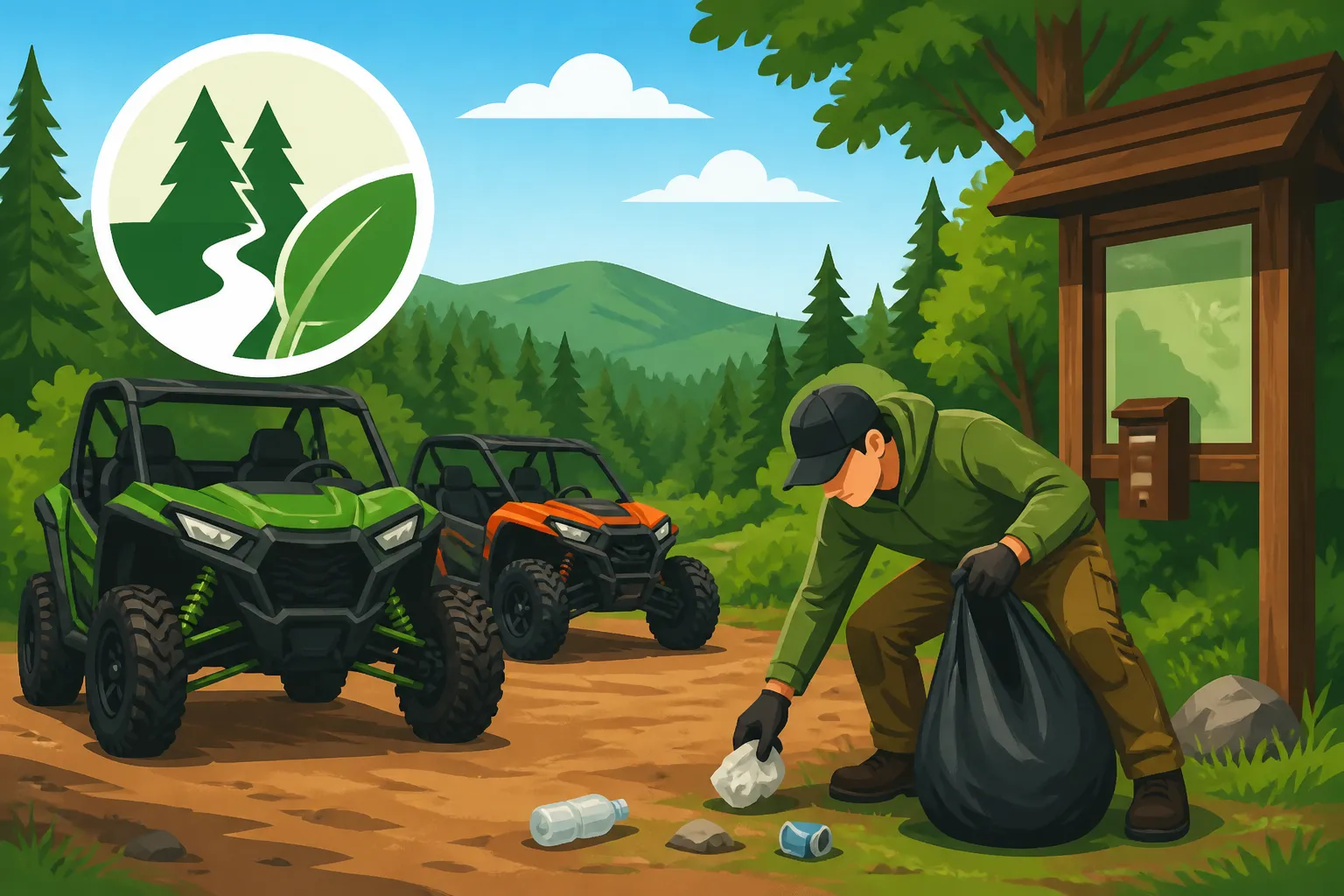
Keep a few cleanup supplies in the tow vehicle or trailer: a sturdy trash bag, a smaller bag for food scraps, gloves, a hand brush, and a rag or absorbent material for minor drips. A lidded container can help keep muddy gear and used rags separate from clean items. If you carry tools or spare parts, give them a designated spot so a loose bolt or broken strap does not get left behind.
The goal is to take everything you brought with you back out. That includes packaging, cans, food scraps, broken zip ties, used gloves, and any parts replaced during a trail-side repair. Even biodegradable food waste can attract wildlife and make a parking area look neglected. Do not assume a bin will be available, or that a bin near a public facility is intended for bulky gear or vehicle-related waste. Pack a bag and take your refuse with you.
A simple habit helps: before the ride, choose one place for trash and one place for dirty gear. For example, keep an empty bag secured inside the truck and a washable tote near the trailer ramp. When everyone knows where things go, fewer items end up on the ground while riders are changing boots or securing machines.
Check the ground before and after unloading
Before you unload, look over the space around your vehicle and trailer. Check for broken glass, sharp debris, soft ground, or a layout that could make it difficult for another vehicle to maneuver. If the parking area is muddy or uneven, avoid spinning tires to reposition a trailer. A small adjustment made slowly is less likely to churn the surface or send stones toward people nearby.
Once the machines are unloaded, take a quick look at the space you occupied. Pick up anything that fell, sweep away loose debris only if you can do so without pushing it into vegetation or a drain, and collect muddy gear before it gets tracked farther across the lot. If your machine leaks fluid, do not wash or hose it into the ground. Contain a small drip with absorbent material, take the used material with you, and address the leak before riding again.
This is also a good time to check the area around the loading ramp. A strap or tool can slide beneath a trailer and be hard to see from standing height. Walk around the whole rig rather than relying on a glance through the rearview mirror.
Park, unload, and load without crowding others
Trailheads can feel busy even when there are only a few groups present. Trucks need room to turn, trailers need space to line up, and people may be walking between vehicles with helmets or gear in their hands. A little patience during unloading can prevent blocked access, close calls, and unnecessary damage to the parking area.
Leave room for the next vehicle
Park within the area intended for vehicles, and avoid taking more space than your rig needs. Do not block gates, access roads, signs, emergency access, or the path another driver needs to back out. If the lot is filling, do not create an informal second row that traps parked vehicles or forces people to unload in a travel lane.
A large trailer can make this especially tricky. Before backing in, take a moment to understand how other vehicles are positioned and where they will need to exit. If a passenger is helping, agree on simple signals and keep them visible to the driver. Do not ask someone to stand in a blind spot or between a moving vehicle and a fixed object.
When a lot is crowded, it may be tempting to park on the edge of the grass or pull onto an unmarked shoulder. Resist that impulse unless signs or staff clearly indicate that it is allowed. A patch of grass can be wet, fragile, or part of the forest edge rather than overflow parking. Follow posted instructions and look for designated parking instead. Conditions and access rules can differ among places such as Beartown State Forest, October Mountain State Forest, and Pittsfield State Forest, so check the rules for the specific site before setting out. Massachusetts Trailheads With Trailer Parking
Keep unloading calm and contained
Set up your unloading area so that ramps, helmets, fuel containers, and tools stay within your parking space. Keep children and pets away from moving vehicles and machines. Do not start a machine while someone is fastening a strap or standing near the ramp, and avoid revving while other groups are getting organized.
If you need to warm up a machine or troubleshoot it, be considerate of nearby visitors. A trailhead is not a good place to run an engine longer than necessary, especially close to people, campsites, or a posted quiet area. Check your machine before leaving home when possible: a loose component or mechanical problem discovered in the lot can mean extended engine noise, spilled fluids, or parts scattered across the ground.
Think about the route out, too. When loading, keep the trailer positioned so you can leave without backing through another group’s staging area. A few minutes spent arranging the rig carefully is usually easier than trying to untangle traffic while people are loading around you. For more on sharing narrow routes once you leave the lot, see Yielding on a Narrow Berkshire Trail.
Respect the forest beyond the parking space
A tidy trailhead is not only about litter. It also means keeping vehicles and gear within the areas intended for them, respecting posted restrictions, and avoiding actions that push dirt, water, or noise into sensitive parts of the forest.
Avoid idling, unnecessary noise, and avoidable spills
Turn the engine off when you do not need it running. Besides reducing noise and exhaust, this makes it easier to hear people moving around the parking area. Do not use a machine to spin in place, clear a path through mud, or test acceleration. Those actions can scatter stones, disturb other visitors, and leave ruts that make an already soft area worse.
If fuel is part of your riding setup, handle containers carefully and keep them upright and secure. Refuel only where it is permitted and where you can do so safely; do not pour fuel onto the ground or into a drain. Bring any contaminated absorbent material or cleanup supplies home for appropriate disposal. A persistent leak is a reason to stop and fix the issue, not to leave a stain behind and head onto the trail.
Noise also carries farther than it may seem in a quiet forest. Give other visitors space, keep voices at a reasonable level, and avoid playing music that can be heard across the lot. These small choices matter near popular areas in the Berkshires, where hikers, campers, and other trail users may be arriving at the same time.
Use maps and signs as planning tools, not permission
Before the trip, confirm that the area is open to the type of machine you plan to ride and that you understand where riding is allowed. A parking lot being accessible does not automatically mean every nearby road or trail is open to ATVs or UTVs. Follow signs, barriers, and official site guidance. Do not drive around a closed gate or use an unmarked route to reach a trail.
A mapping tool such as onX Offroad can help with trip planning and orientation, but it should not replace posted signs or official land-manager information. Before you leave home, review the route and identify the correct parking area. If you use onX Offroad to keep a route handy, treat it as a navigation aid—not proof that a trail is currently open or that motorized use is allowed on every segment.
Also plan for the practical details: where to park, how much space your trailer needs, and whether you can turn around without entering an unauthorized area. If there is uncertainty about access or a closure, choose a confirmed route rather than relying on a line displayed on a map. Massachusetts Trail Planning and Closures and Checking Rules Before a Long Drive to the Berkshires are useful starting points for planning a trip responsibly.
Use a simple departure checklist
People are often tired by the time they get back to the lot. Machines may be muddy, everyone is thinking about the drive home, and the trailer can take longer to load than expected. A short, repeatable checklist helps make sure cleanup does not get skipped at the end of a good ride.
Do one final walk-around
Before pulling away, walk around the vehicle, trailer, and the area where you unloaded. Check the ground for trash, loose hardware, straps, food wrappers, and personal items. Look beneath the trailer and around the tires, where small objects can disappear from view.
Use this checklist as a starting point:
| Check | What to look for |
|---|---|
| Ground around the rig | Wrappers, cans, broken straps, tools, and dropped parts |
| Trailer and ramp | Secure ramps, tie-downs, and anything that could fall during travel |
| Vehicle and machine | Fluid leaks, loose components, and muddy gear that needs containing |
| Parking position | Clear access for other vehicles, gates, signs, and emergency routes |
| Waste | Trash and used cleanup materials packed out for proper disposal |
| Route out | A safe, legal path that does not cut through vegetation or a closed area |
Do not leave unwanted equipment, damaged parts, or full trash bags beside a sign or at the edge of the lot. If you find an existing mess, do not assume it is yours to fix at the cost of leaving your group unsupervised or blocking traffic. Prioritize your own cleanup, and report a significant hazard or problem through the appropriate land-manager contact.
Make the routine work for a group
For a family or group ride, assign one person to check the parking area while another confirms the machines and trailer are secure. Rotate the job so it does not always fall to the same rider. If children are part of the group, give them a simple task such as checking their own gear for wrappers, under adult supervision and away from moving vehicles.
A group leader can make the last check part of the ride plan: “We load, everyone checks their space, then we leave together.” That avoids the awkward moment when one vehicle pulls out while someone else is still gathering belongings or walking back across the lot. Keeping a shared route or meeting plan in onX Offroad can help a group stay organized, but continue to follow the site’s signs and directions on the ground.
If you are visiting a new area, such as a forest you have not ridden before, arrive with enough time to read the signs and unload without rushing. A rushed departure is when trash gets missed, straps get left behind, and drivers make poor choices in a crowded lot. For broader trail etiquette, Massachusetts Trail Etiquette Locals Expect and Leaving a Forest Trailhead Tidy offer related guidance.
Leave the site ready for someone else
Before starting the drive home, ask one last question: would the next rider be able to use this space without dealing with something your group left behind? If the answer is no, take another minute to fix what you can. The ideal departure is ordinary and uneventful: machines secured, waste packed out, no blocked access, and no new damage to the ground.
That standard protects more than appearances. Clean, orderly trailheads are easier for everyone to share, and responsible use helps preserve access for future visits. Whether you are heading home from a day in the Berkshires or another Massachusetts riding area, leaving the parking space as you found it is one of the simplest ways to show respect for the forest and the people who use it.
Disclaimer
This article is for general informational purposes only and does not constitute professional advice. Laws, prices and regulations vary by location and change over time. Consult a qualified professional for guidance on your specific situation.