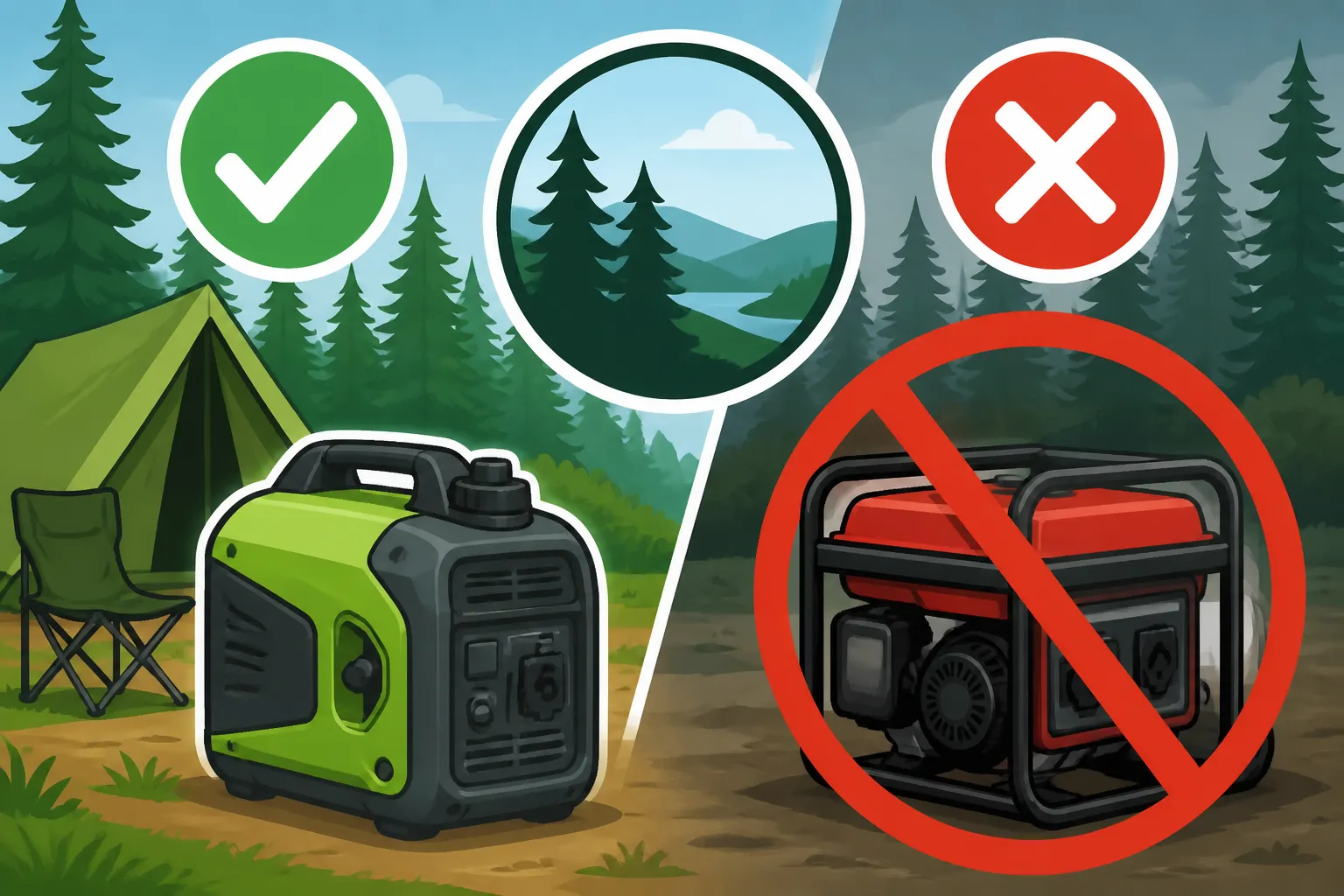
Generator Rules at a State Forest Campsite
A generator can make a camping weekend more comfortable, but rules at a Massachusetts state forest campsite may depend on the campground and the site’s current conditions. Before packing one for an ATV or UTV trip, confirm that generators are allowed, when they may run, and where they can be placed. A quiet campsite and safe setup matter as much as having power.
Confirm the rules for your specific campsite
Do not assume that a generator is allowed simply because a campsite has room for one, or because generators are permitted at another campground. Check the current rules for the exact state forest campground where you plan to stay. Policies, operating hours, and temporary restrictions can differ by location and may change.
Start with the campsite reservation information and any rules provided by the campground or forest office. If the information does not answer your question, contact the office before you travel. Ask specifically whether portable generators are allowed, whether they must be a certain type, and whether there are limits on operating hours or noise. If you are planning around a ride, Reserving a State Forest Campsite for a Ride Weekend can help you think through the reservation side of the trip.
The phrase “state forest campsite” can cover different arrangements, so identify what you have booked. A developed campground may have posted quiet hours, designated sites, or rules that do not apply to dispersed camping elsewhere. A trailhead parking area is not automatically a campsite, and permission to park a vehicle does not mean you can camp or run a generator there.
| Question to ask | Why it matters |
|---|---|
| Are portable generators allowed at this campground? | A general camping reservation does not confirm generator permission. |
| Are there specific operating hours? | A generator may be allowed but restricted during quiet periods. |
| Are there noise or equipment limits? | The campground may set expectations beyond basic courtesy. |
| Where may the generator be placed? | Safe placement and keeping equipment out of shared areas are important. |
| Are temporary restrictions in effect? | Fire conditions, maintenance, or campground notices may affect what is allowed. |
| Does the rule apply to my particular site? | Site layout and campground type can affect what is practical and permitted. |
If the answer is unclear, ask the question in plain terms: “May I run a portable generator at my reserved site, and during what hours?” Keep any written confirmation with your reservation details. At check-in, read posted notices too. A prior answer does not override a new restriction posted at the campground.
This is especially important when planning a Berkshire weekend around riding. Camping access and trail access are separate matters; a campsite booking does not establish that a nearby trail is open or that your machine may use it. Check Massachusetts Camping Near Riding Areas and Massachusetts Trail Conditions Before You Tow as part of the same trip plan.
Quiet hours and considerate generator use
A generator can disturb nearby campers even when it is technically permitted. Sound travels through a campground, especially at night, and a machine that seems quiet beside your tent may be much more noticeable at the next site. Follow posted quiet hours and any generator-specific schedule exactly. If the campground does not publish a clear schedule, ask rather than treating silence as permission to run it late.
The campground’s quiet-hours rule is the minimum standard, not a target for running equipment right up to the limit. Consider charging a battery or powering essential devices earlier in the day, then shutting the generator down before neighbors settle in. Avoid repeated short starts and stops if you can arrange charging in a more efficient block.
Read Quiet Hours at a State Forest Campground before setting your expectations. For a group trip, agree on generator use before arriving: what needs power, when it will be used, and who will monitor it. That avoids a late-night disagreement about a rule everyone should have checked in advance.
A useful approach is to plan for the least disruptive option that meets your needs:
- Use a generator only when necessary. Charge devices before the trip, bring charged battery packs, and reduce avoidable power use.
- Run it during permitted hours, not merely when it seems unlikely to bother someone. Posted rules take priority over personal judgment.
- Keep the run time predictable. Let nearby campers know if a brief daytime charging period is likely to be noticeable.
- Turn it off when you leave the site. Do not leave a running generator unattended.
- Stop if staff ask you to. A campground employee or forest official may address a specific problem even if you believe you are following the general schedule.
The most considerate choice may be to leave the generator at home. If your trip only requires charging a phone, camera, or small light, a battery pack may be quieter and easier to manage. If you need power for medical equipment or another essential purpose, contact the campground in advance and explain what you need. Do not assume an exception exists; get clear instructions about whether the site can accommodate it and what backup plan you should have.
Safe placement, fuel, and fire precautions
Permission to operate a generator does not remove the need for a safe setup. Follow the manufacturer’s instructions and the campground’s directions. Never run a fuel-powered generator inside a tent, vehicle, camper, shed, or other enclosed or partly enclosed space. Exhaust can contain carbon monoxide, an odorless gas that can cause serious injury or death. Keep the machine outdoors and well away from places where exhaust could enter sleeping or occupied areas.
Choose a stable location that does not block a path, neighboring site, vehicle access, or emergency route. Keep it away from dry leaves, brush, cooking flames, and other potential ignition sources. Do not place it where people could trip over it or where exhaust and noise are directed toward another campsite. If the campground provides a designated location or spacing instruction, use that rather than improvising.
Fuel deserves particular attention. Carry and store it only as permitted by the campground and in suitable containers. Keep fuel away from heat, flames, and the generator’s hot parts. Refuel only after the equipment has been shut off and allowed to cool as directed by its manufacturer. A spill should be handled promptly and reported when necessary; do not wash fuel into soil, a drainage area, or a waterway.
Dry conditions can make even ordinary campsite activity riskier. Check for current fire restrictions and follow posted instructions on fires, smoking, and fuel-powered equipment. A generator is not a substitute for a campfire, and permission to use one does not mean that all flame or fuel activities are permitted. For seasonal context, see Campfire Rules in a Dry Berkshire Autumn and confirm current notices with the campground before departure.
A practical pre-trip safety check includes:
- Inspect the generator, cord, plugs, and fuel container for damage or leaks.
- Confirm the exact location where it can operate without obstructing people or vehicles.
- Pack a suitable outdoor-rated extension cord if needed, and keep connections protected from water as directed by the equipment instructions.
- Keep children and pets away from hot surfaces, moving parts, and fuel.
- Shut the generator down if there is a spill, unusual noise, smoke, overheating, or another sign of trouble.
- Make sure everyone in the group knows how to shut it off safely.
Never try to make a generator quieter by enclosing it in a box, covering it, or placing it under a tarp. Improvised sound barriers can trap heat or redirect exhaust and create a serious hazard. If noise is a concern, choose quieter equipment, reduce the hours of use, or use battery power instead.
Plan the generator around the whole ride weekend
Generator rules are one part of trip planning, not a replacement for checking camping, parking, and riding requirements. A campsite reservation does not guarantee a parking space for a trailer, authorize an ATV or UTV to travel between the campground and a trail, or provide permission to ride on nearby land. Confirm each part separately.
Before leaving, make a short checklist:
- Verify the reservation dates, site location, check-in instructions, and campground contact details.
- Confirm generator permission, operating hours, placement instructions, and any current restrictions.
- Check whether the campground has separate rules for fuel storage, pets, quiet hours, or group size.
- Confirm trail status and machine access for the planned riding area.
- Check parking and access charges that may apply to your visit.
- Bring a backup power plan in case the generator cannot be used.
For broader trip planning, Checking Rules Before a Long Drive to the Berkshires is useful when you need to confirm details with a forest office. Also keep in mind that a campsite or parking fee does not necessarily function as an OHV trail pass; Massachusetts Trail Access Without a Pass explains why those permissions should not be treated as interchangeable.
If your generator is prohibited, the cleanest solution is to adapt your power needs rather than risk a citation, a safety problem, or conflict with other campers. Charge equipment before arrival, use battery packs where suitable, or choose a campground whose current rules clearly allow the setup you need. If power is essential, settle that question before booking or hauling your machine.
A little planning makes the difference between a useful convenience and a noisy, unsafe complication. Confirm the campground’s current rules directly, obey any posted hours, keep the generator outdoors and safely positioned, and have a quiet backup plan. That leaves more time for the ride and less uncertainty at the campsite.
Disclaimer
This article is for general informational purposes only and does not constitute professional advice. Laws, prices and regulations vary by location and change over time. Consult a qualified professional for guidance on your specific situation.