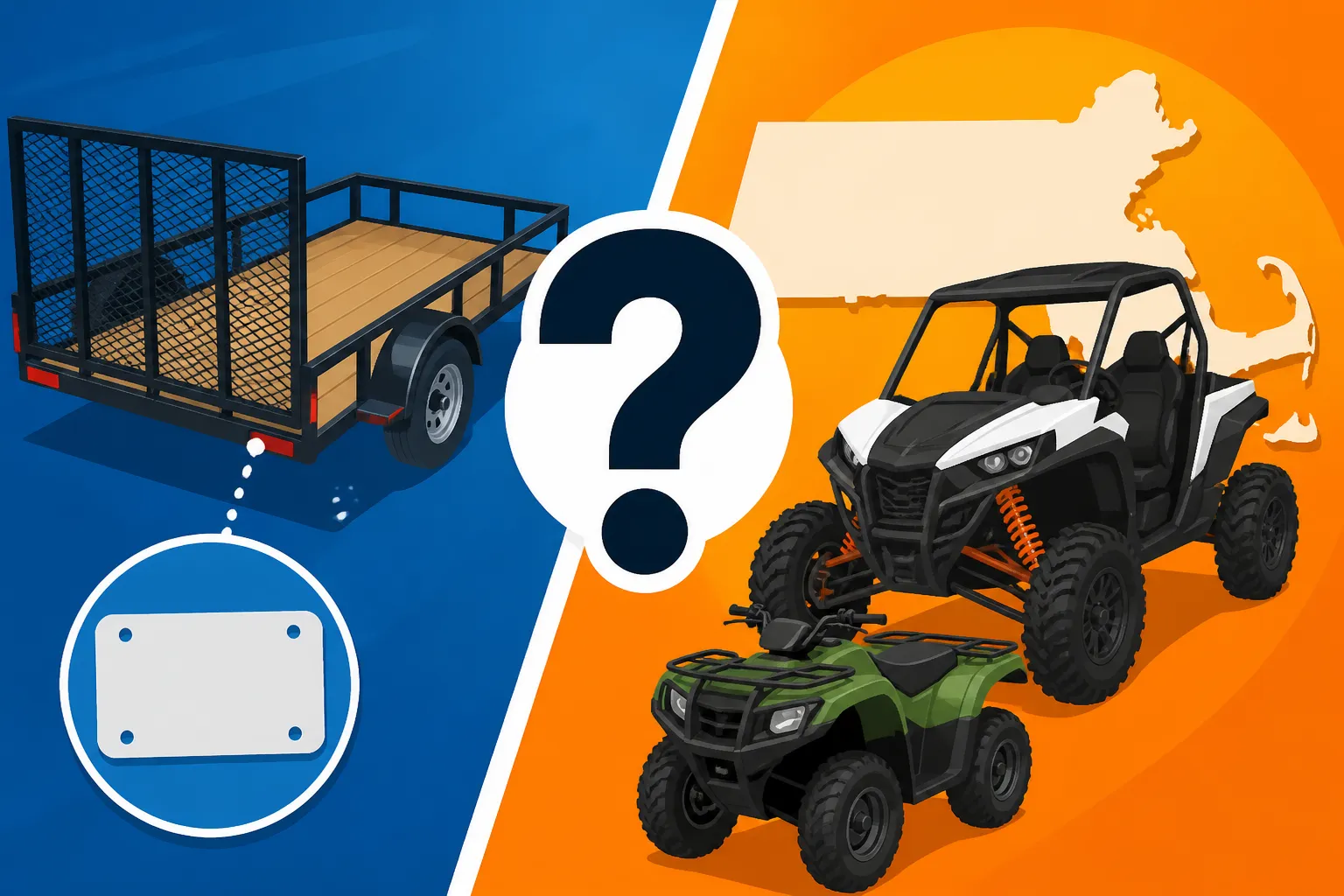
Does a Utility Trailer Need Its Own Massachusetts Plate?
It’s a common scenario for us Bay State ATV and UTV riders: you’ve got your machine all registered, decals proudly displayed, and you’re itching to hit the trails. But then comes the practical question of how to get it there. Many of us rely on a trusty utility trailer, and that’s when the nagging doubt creeps in: does this trailer need its own license plate in Massachusetts, or does it somehow piggyback on my truck’s registration? It's a point of confusion for many, and getting it wrong can lead to headaches, fines, and wasted time. This guide will clarify everything you need to know about registering your utility trailer in Massachusetts, especially when it's hauling your beloved off-road machine.
Understanding Massachusetts Trailer Registration Basics
When you own an ATV or UTV in Massachusetts, you're dealing with a specific set of rules under Chapter 90B, handled by the Environmental Police. But your utility trailer? That’s a whole different beast in the eyes of the law, falling squarely under the purview of the Massachusetts Registry of Motor Vehicles (RMV). It’s easy to get these two confused, especially since they're both about getting your gear where it needs to go, but understanding this fundamental difference is crucial.
The Core Difference: Utility Trailer vs. The Machine
Think of it this way: your ATV or UTV is registered as an Off-Highway Vehicle (OHV) so you can legally ride it on designated trails and private land with permission. That registration sticker proves your machine is legitimate for its intended use. However, the utility trailer you use to transport that machine is classified as a "trailer" – a vehicle designed to be towed by another motor vehicle – and it has its own set of rules for operating on public roads.
Unlike your ATV, which gets a [Massachusetts Two-Year OHV Registration] (if you're a resident) or a [Massachusetts Non-Resident OHV Registration], your trailer's registration is about its use on roads where cars, trucks, and other plated vehicles travel. If your trailer, whether loaded with an ATV, firewood, or yard waste, ever leaves your private property and rolls onto a public street, road, or highway, it absolutely needs to be properly registered and plated with the RMV. There's no exception just because it's carrying another registered vehicle.
When a Plate Becomes Non-Negotiable
For any utility trailer in Massachusetts, a license plate becomes a non-negotiable requirement the moment it touches a public way. This isn't just a suggestion; it's a legal mandate. The plate serves several critical functions:
- Identification: In the event of an accident, a traffic stop, or if the trailer is involved in an incident, the plate provides immediate identification for law enforcement.
- Road Use Fees: Registration fees contribute to the upkeep and maintenance of the public road infrastructure that the trailer utilizes.
- Safety and Compliance: The registration process often ensures that the trailer meets basic safety standards, such as proper lighting and braking, which are essential when sharing the road with other drivers.
Imagine you're heading out to [Beartown State Forest Riding in Massachusetts] for a weekend of trail riding. You load up your side-by-side onto your utility trailer, hook it up to your truck, and pull out of your driveway. From that moment until you pull into the trailhead parking lot, your trailer is operating on public roads and highways. If it doesn't have a valid Massachusetts license plate, you're not just risking a ticket; you're operating outside the law.
Navigating the Massachusetts Registry of Motor Vehicles (RMV)
So, you've established that your utility trailer needs a plate. Now, how do you go about getting one? This is where the Massachusetts Registry of Motor Vehicles (RMV) comes in. It’s a different agency with different procedures than the Environmental Police who handle your OHV registration.
RMV's Role in Trailer Registration
Unlike your OHV, which you might [Registering an ATV With the Environmental Police] directly, all road-going vehicles, including utility trailers, fall under the jurisdiction of the RMV. They manage vehicle titles, registrations, and driver's licenses for traditional motor vehicles. This means you'll be interacting with RMV forms, RMV staff, and following RMV regulations to get your trailer squared away.
The process for registering a trailer with the RMV is similar to registering a car, though often simpler since trailers don't require an inspection sticker. You'll need to submit the necessary paperwork, prove ownership, and pay the required fees. Don't go to the Environmental Police for this; they only handle off-road machines. It's a common mix-up, but remember: if it’s on the road, it’s the RMV.
The Specifics for Utility Trailers Hauling OHVs
When it comes to trailers specifically used for hauling ATVs or UTVs, the core requirements remain the same as any other utility trailer. However, there are a few nuances to be aware of:
- Weight Classes: Trailers are often categorized by their Gross Vehicle Weight Rating (GVWR) or their empty weight, and this can sometimes influence fees or specific regulations. Most standard utility trailers used for ATVs fall into categories that require full registration. You'll need to know your trailer's weight capacity and its actual empty weight for the registration application.
- Proof of Ownership: For a brand-new trailer, you’ll typically need a Manufacturer’s Certificate of Origin (MCO) to prove you own it. This is similar to how [Massachusetts Requires an MCO for a New Machine] when you register an ATV. If you bought a used trailer from a private seller, you’ll need a Bill of Sale that clearly identifies the trailer and the transaction. Speaking of documents, if you're ever in a pinch for official forms like a bill of sale, services like LawDepot can be incredibly helpful for drafting legally sound documents for private sales.
- Sales Tax: Just like when you purchase an ATV, if you bought your trailer from a dealer or even privately, you will likely owe Massachusetts sales tax on the purchase price. The RMV will want proof that this tax has been paid or an exemption claimed before they issue a plate. This mirrors the [Massachusetts Sales Tax on an ATV Purchase] process. If you purchased the trailer out-of-state and brought it into Massachusetts, you'd be looking at a [Massachusetts Use Tax on a Machine Brought Home] situation, which also needs to be squared away.
Exemptions and Special Considerations
While the general rule is that if your utility trailer rolls on a public road, it needs a plate, there are always a few specific scenarios or considerations that might make you wonder if you're an exception. Let's break those down.
Private Land Use Only
This is the biggest "out" for trailer registration. If your utility trailer never, ever touches a public road, street, or highway, then it generally does not need to be registered with the Massachusetts RMV. This applies to trailers that are exclusively used:
- Around a Private Estate: Perhaps you have a large property in the Berkshires, and you use your trailer to haul equipment, firewood, or your ATV from one part of your land to another. If it stays entirely on your property, a plate isn't required.
- Within a Private Riding Park: Some private riding parks might allow you to use a small utility trailer to move your machine or gear around their premises. As long as it doesn't leave the park's private roads and enter a public way, you're usually in the clear.
- On a Farm: Farmers often use utility trailers extensively to move feed, tools, or even small farm equipment within the boundaries of their farm. Again, if it stays off public roads, registration isn't necessary.
The key here is "private land only." The moment a single tire crosses onto a publicly maintained road, even for a short distance, the expectation is that it should be registered. There's no grey area for "just a little bit" on a public road.
Trailers Below a Certain Weight Threshold
Many states have weight exemptions for small, lightweight trailers, meaning they don't need a plate if they're under a certain gross weight. However, Massachusetts is quite strict on this. For most general utility trailers, regardless of how small or light they are, if they are designed to be towed by a motor vehicle and are operated on public ways, they need to be registered and plated.
There isn't a broad exemption for "light trailers" for typical utility use on public roads in Massachusetts. Specialized equipment, like certain types of dollies or farm implements when used exclusively for agricultural purposes, might have specific exemptions, but a general utility trailer intended to haul your ATV or anything else you might pick up at the hardware store will almost certainly require registration if it's hitting the pavement. Always assume your trailer needs a plate if it's leaving your property.
Homemade and Custom Trailers
What if you're handy and built your own utility trailer specifically to haul your prized UTV? Registering a homemade trailer has its own set of hoops to jump through, but it's absolutely doable. You can't just slap a "homemade" sign on it and call it good.
The RMV needs to ensure that homemade trailers meet basic safety standards and can be properly identified. The process typically involves:
- Obtaining a VIN: You'll need to apply to the RMV for a Vehicle Identification Number (VIN) assignment for your homemade trailer. This often requires an inspection by an authorized agent (sometimes the State Police) to verify it's roadworthy and to record its specifications.
- Proof of Materials: You might need to provide receipts for the materials used to build the trailer, especially the axle, wheels, and frame. This helps establish legitimate ownership.
- Bill of Sale (if applicable): If you bought components from various sources, you'd keep records. If you bought an entire kit or a partially assembled frame, you’d need proof of that purchase.
- Application and Fees: Once a VIN is assigned and the trailer passes any required inspections, you can then proceed with the standard registration application, just like a manufactured trailer.
It's more involved than registering a new trailer from a dealer, but it ensures that even custom-built units are safe and accountable on Massachusetts roads.
Paperwork, Fees, and Practical Advice
Getting your utility trailer registered doesn't have to be a daunting task, but it does require attention to detail and having all your ducks in a row. A little preparation can save you a lot of time and frustration at the RMV.
What You'll Need at the RMV
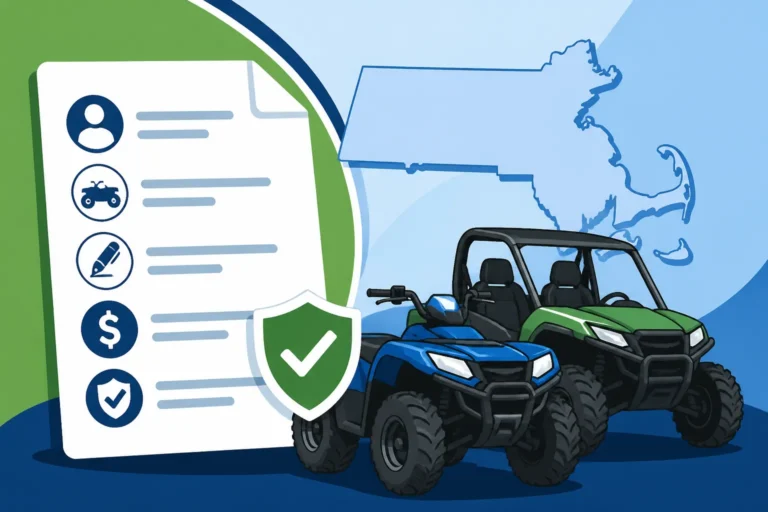
To successfully register your utility trailer, gather these documents before you head to the RMV:
- Application for Registration & Title: This is the primary form you'll fill out, available on the RMV website or at any service center.
- Proof of Ownership:
- For a new trailer: The Manufacturer's Certificate of Origin (MCO).
- For a used trailer: A Bill of Sale from the previous owner (ensure it includes the trailer's description, VIN, sale price, and buyer/seller information). If the trailer was titled in another state, you might need that title too.
- Proof of Massachusetts Insurance: While Massachusetts does not mandate insurance for your ATV itself, it absolutely requires liability insurance for any vehicle (including a trailer) that will be registered for use on public roads. Your insurance agent will typically stamp the RMV-1 form, certifying coverage.
- Identification: A valid Massachusetts driver's license or state ID.
- Payment: For registration fees and sales tax (if applicable).
Having a [Massachusetts Registration Paperwork Checklist] handy for all your vehicles, including your trailer, can make these processes much smoother.
Understanding Registration Fees and Terms
Trailer registration fees in Massachusetts are typically assessed annually, and they can vary based on the trailer's weight class or type. It’s always best to check the official Massachusetts RMV website for the most current fee schedule, as these figures can change.
Unlike the [Massachusetts Two-Year OHV Registration] you might get for your ATV, trailer registrations often run for a one-year term and need to be renewed each year. Be mindful of the expiration date to avoid riding with an unregistered trailer, which can lead to penalties. The fees you pay for your trailer go towards general road funds, distinguishing them from [Massachusetts Registration Fees Fund Trails] which are specifically allocated for OHV trail maintenance.
Smart Practices for Hauling Your OHV
Beyond the legalities of registration, there are some essential practical tips for safely and legally hauling your ATV or UTV with a utility trailer in Massachusetts:
- Secure Your Load: This cannot be stressed enough. Use multiple heavy-duty tie-downs to secure your ATV or UTV to the trailer. Check them before you leave, and again after a few miles, as things can shift.
- Proper Lighting: Ensure your trailer's brake lights, turn signals, and running lights are all fully functional. This is a safety requirement and something law enforcement officers will certainly check.
- Safety Chains: Always use safety chains, crisscrossing them under the trailer tongue, to connect the trailer to your tow vehicle. This is a critical backup in case the primary hitch fails.
- Weight Distribution: Load your ATV or UTV so that roughly 10-15% of the total trailer weight (trailer + machine) rests on the trailer tongue. Too little or too much tongue weight can lead to dangerous swaying.
- Carry Documents: Always have your trailer’s registration card, your driver’s license, and proof of insurance in your tow vehicle. This is akin to the rule that [Massachusetts Registration Cards Carried on Board] your OHV.
- Plan Your Route: When you're [Hauling a Machine to a Berkshire Forest] or [Trailering Over the Berkshires], be aware of road conditions, tight turns, and potential low clearances if you have a tall machine on your trailer.
By taking care of your trailer's registration and following smart hauling practices, you ensure your journey to the trails is as legal and safe as your ride on them.
| Scenario for a Utility Trailer in Massachusetts | Registration Status Required | Primary Agency | Key Documents (Examples) |
|---|---|---|---|
| Hauling an ATV on a public road | Registered and Plated | RMV | MCO/Bill of Sale, RMV-1, Proof of Insurance |
| Moving firewood on private property only | Not Required | N/A | N/A |
| Purchased new from a dealer | Registered and Plated | RMV | MCO, RMV-1, Proof of Insurance, Sales Tax |
| Purchased used from a private seller | Registered and Plated | RMV | Bill of Sale, RMV-1, Proof of Insurance |
| Homemade trailer on a public road | Registered and Plated | RMV | VIN Assignment, Material Receipts, RMV-1, Proof of Insurance |
| Trailer operating only within a private park | Not Required | N/A | N/A |
Disclaimer
This article is for general informational purposes only and does not constitute professional advice. Laws, prices and regulations vary by location and change over time. Consult a qualified professional for guidance on your specific situation.