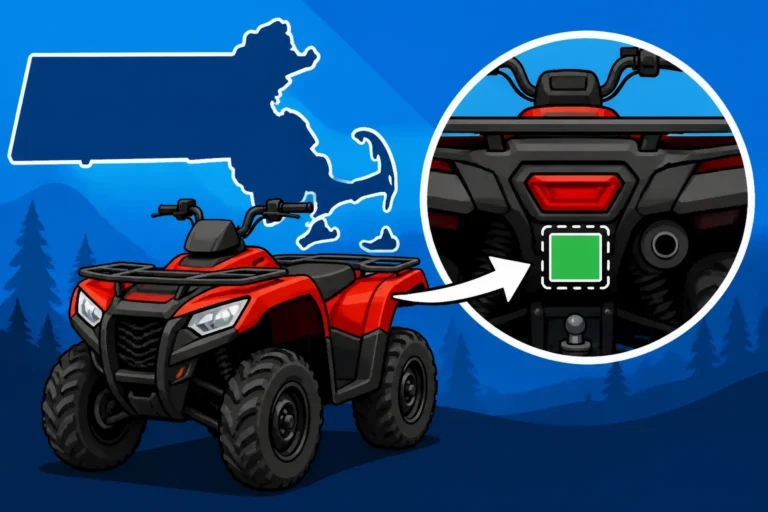
Decals 3 Inches High
It’s incredibly frustrating when you’re trying to do the right thing and register your ATV or UTV in Massachusetts, but the rules around decals feel like a confusing maze. From understanding the specific size requirements to knowing exactly where to slap those stickers, it can feel like you need a law degree just to get out on the trails. This guide is here to cut through that confusion, giving you a clear, detailed roadmap to ensure your off-highway vehicle (OHV) decals are perfectly compliant with Massachusetts law.
The Foundation: Why Massachusetts Requires OHV Registration
Before we dive deep into the nitty-gritty of decals, it’s important to understand why Massachusetts has these rules in the first place. It’s not just about bureaucracy; it’s about safety, trail maintenance, and ensuring everyone who uses the state's limited OHV trails is accounted for and contributing to their upkeep. Ignoring these foundational requirements can lead to hefty fines and a spoiled day out.
The Environmental Police and Your Machine
Unlike many other states where the Department of Motor Vehicles (DMV) handles vehicle registrations, Massachusetts has a unique system. For OHVs like ATVs and UTVs, the registration process falls under the purview of the Massachusetts Environmental Police (MEP). This isn't just a quirk of state law; it reflects the primary areas where these machines are operated – largely on state forests, conservation lands, and other natural environments. The MEP are the folks on the ground, patrolling trails and ensuring riders are following the rules that protect both the environment and other recreational users. They are also the ones who issue the official registration decals and cards. It's crucial to remember that their focus isn't just on highway safety, but on responsible outdoor recreation. They’re looking for proper equipment, adherence to age laws, and, of course, correctly displayed registration. This is why understanding their specific requirements for decals is paramount, as they are the primary enforcement agency you'll encounter on the trails. If you have questions about the process, it's the Environmental Police you'll be calling, not the RMV. For more on this, check out [Why the Environmental Police Register ATVs, Not the RMV].
What Registration Entails Beyond Just a Sticker
Getting your OHV registered in Massachusetts is much more than simply acquiring a decal. It’s a multi-step process that involves providing proof of ownership, potentially paying sales tax, and then finally receiving your official registration materials. For a new machine, you'll typically need a Manufacturer's Certificate of Origin (MCO), while a used one requires a bill of sale. These documents establish your legal ownership, which is a prerequisite for registration. Once everything is approved and the fees are paid, you'll be issued not only the decals but also a registration card. This card is just as important as the stickers themselves; it contains vital information about your machine and its registration status. Think of it as your OHV's ID card. You absolutely must carry this card with you whenever you're operating your machine off-road. An Environmental Police officer can and will ask to see it, and not having it can be just as problematic as not having the decals displayed properly. It's a complete package, and every part of it needs to be respected. For detailed information on what paperwork you need, consider reading [Massachusetts Registration Paperwork Checklist].
Consequences of Not Displaying Correct Decals
You might think a small decal issue is minor, but in Massachusetts, the Environmental Police take compliance seriously. Operating an unregistered OHV, or one with improperly displayed decals, isn't just a slap on the wrist. Fines can be significant, and in some cases, your machine could even be impounded. Imagine planning a fantastic weekend ride through October Mountain State Forest, only to have it cut short because your decals aren't visible or are the wrong size. It’s a real bummer, and it's easily avoidable. Beyond the immediate legal repercussions, having correctly displayed decals signals to law enforcement and other riders that you are a responsible operator who understands and respects the rules. It contributes to the overall safety and reputation of the OHV community. It's not just about avoiding a ticket; it's about being a part of the solution for responsible trail access and enjoyment. Don't let a simple sticker mistake ruin your adventure; make sure you understand the rules.
Understanding Your Massachusetts OHV Decals
Massachusetts OHV decals are not just decorative; they are the visual proof of your machine's legal registration. Understanding their purpose, what they communicate, and how they differ based on your residency is crucial for compliance. It's a two-part system designed for clarity and easy identification by enforcement officers.
The Two-Part System: Decals and Registration Cards
When you successfully register your ATV or UTV with the Massachusetts Environmental Police, you don't just get a sticker. You receive a comprehensive registration package. This package always includes two main components: the physical decals that you affix to your machine, and a wallet-sized registration card. The decals, typically two matching stickers, bear your unique registration number, the state abbreviation "MA," and the year of expiration. They are designed for quick visual verification by anyone, from a fellow rider to an MEP officer, that your machine is currently registered. The registration card, on the other hand, is a more detailed document. It contains the same registration number, along with your name, address, the machine's make, model, VIN, and the specific expiration date. This card serves as your official proof of registration and ownership, providing a layer of detail that the decals cannot. You are legally required to carry this card with you at all times while operating your OHV. It's not enough to just have the decals; the card is your official paperwork. For more on this, see [Why the Environmental Police Issue a Card, Not a Title] and [Massachusetts Issues Decals and a Card].
Resident vs. Non-Resident Decals: Key Differences
Massachusetts recognizes that not everyone who rides its trails lives within its borders. To accommodate visiting riders while still ensuring all machines are properly registered, there's a distinction between resident and non-resident OHV decals. The primary difference lies in the term of registration and, consequently, the cost. A Massachusetts resident typically registers their OHV for a two-year period, receiving decals with a two-year expiration. This provides a longer window of validity, reducing the frequency of renewals. Conversely, a non-resident registration is valid for one year. This shorter term is designed for those who may only visit the state periodically, or for a specific riding season. While the aesthetic of the decals might look similar, the expiration date printed on them will clearly reflect the term of your registration. It's critical to ensure you're applying for the correct type of registration based on your residency, as misrepresenting your status can lead to issues down the line. Each type of registration serves its purpose, but knowing which applies to you is the first step in compliance. If you're a Bay State resident, more details can be found in [Massachusetts Two-Year OHV Registration]. If you're visiting from out of state, then [Massachusetts Non-Resident OHV Registration] will be of interest.
Expiration Dates and Renewal Decals
Every Massachusetts OHV registration has a clear expiration date, which is printed directly on your decals and registration card. For resident registrations, this is typically December 31st of the second year of your registration period. For non-residents, it's December 31st of the current year. It's your responsibility as the OHV owner to keep track of this date and ensure your registration is renewed before it expires. The Environmental Police do their best to send out renewal notices, but relying solely on these can be risky. Life happens, mail gets lost, and sometimes those notices just don't arrive. A great habit is to mark your calendar or set a reminder on your phone well in advance of the expiration date. When you renew, you'll receive new decals that reflect the updated expiration year. These new decals are designed to be placed over or replace the old ones, clearly showing current registration. Displaying expired decals is akin to riding unregistered, so always ensure your machine's stickers are up-to-date before heading out to the trails. It’s a simple step that can save you a lot of hassle.
Getting the Decal Dimensions Right: The 3-Inch Rule and More
This is where many riders get tripped up, and it's precisely why clarity here is so vital. Massachusetts has specific, non-negotiable requirements for the size and appearance of your OHV registration numbers. Getting these details wrong can make your decals non-compliant, even if you have a valid registration.
The Mandatory 3-Inch Height for Numbers
The absolute cornerstone of Massachusetts OHV decal rules is the requirement that your registration numbers must be at least three inches high. This isn't a suggestion; it's a legal mandate. This height ensures that your registration numbers are clearly visible from a reasonable distance, allowing Environmental Police officers to easily identify your machine. Whether you're riding a nimble ATV or a larger side-by-side, these numbers must meet this minimum height. When you receive your official decals from the Environmental Police, they will already meet this requirement, assuming you've been issued the standard set. However, some riders, particularly those who might try to create their own supplemental decals or replace damaged ones with aftermarket options, often overlook this critical dimension. A number that is 2.5 inches high, while seemingly close, is still non-compliant. Don't eyeball it; if you're ever in doubt, use a ruler or tape measure to confirm the height. The readability of your registration number is paramount for enforcement and safety. This is exactly what Decals 3 Inches High refers to.
Stroke Width and Color Contrast for Visibility
Beyond just the height, the visibility of your registration numbers also depends on their stroke width and color contrast against your machine. The numbers and letters should have a stroke (the width of the line that forms the character) of at least one-half inch. This ensures that the characters don't look spindly or get lost against the background, further enhancing readability. Think about how difficult it can be to read fine print from a distance – the same principle applies here. Furthermore, the numbers and letters must be of a color that contrasts sharply with the background color of your OHV. If your ATV is dark green, black numbers would be virtually invisible. Bright white or yellow numbers would provide the necessary contrast. Conversely, if your machine is bright yellow, dark numbers would be appropriate. The goal is maximum legibility under various lighting and trail conditions. The official decals provided by the Environmental Police are designed to meet these contrast requirements, typically featuring a standard white background with black lettering, or vice-versa, to stand out. If you're customizing or replacing decals, always prioritize contrast over aesthetics to stay compliant. More on this can be found in [Numbers With a Half-Inch Stroke].
What to Do If Your Manufacturer Decals Don't Meet Specs
Many ATVs and UTVs come from the factory with various graphics and branding, often including spaces intended for registration numbers. However, these pre-designed areas, or even the manufacturer's own number plates, might not adhere to Massachusetts's strict 3-inch height or half-inch stroke width requirements. This can create a conundrum for owners who want their machine to look clean but also stay legal. The solution is straightforward: you must use decals that meet Massachusetts's specific dimensions, regardless of what the manufacturer provides. This might mean placing your official state-issued decals over a portion of the factory graphics or on a different, clearer area of your machine that allows for proper display. You cannot simply use the manufacturer’s smaller numbers or assume their designated plate is sufficient. Your primary obligation is to meet state law. If you're concerned about aesthetics, you might find clear decal protectors or consider having a professional shop apply your official numbers in a way that minimizes impact on your machine's look while ensuring full compliance. The law prioritizes readability and proper identification above all else.
Proper Placement: Where Your Decals Belong
Once you've got the right decals, understanding where to put them is the next critical step. It’s not just about slapping them on any flat surface; Massachusetts law specifies exact locations to ensure visibility and consistency across all registered OHVs.
Decals on Both Sides of Your Machine
Massachusetts law is quite clear: your OHV registration decals must be displayed on both sides of your machine. This requirement applies to both ATVs and UTVs. The purpose is simple – it allows an Environmental Police officer or other authorized personnel to identify your machine regardless of which side they are approaching from. Imagine an officer observing riders on a trail; if the numbers are only on one side, they might miss identifying a machine moving in the opposite direction or parked at an angle. For ATVs, these typically go on the rear fenders or the plastic bodywork near the seat. For UTVs, they might be on the side panels, doors, or bed area, as long as they meet all other placement rules. The key is visibility and accessibility from either flank of the machine. Don't be tempted to put both stickers on one side, or hide one in a less visible spot. Both need to be prominently displayed and clearly legible. This critical detail is covered in [Massachusetts Decal Placement Rules] and [Decals on Both Sides].
Where the Expiration Decal Actually Goes
In addition to your main registration numbers, you'll also receive a smaller, separate decal that indicates the registration's expiration year. This sticker, often a different color or design to signify its purpose, has its own specific placement rule. It must be affixed on the left side of the machine, near the main registration numbers. This provides a quick visual cue to enforcement officers about the currency of your registration without having to read the full number or inspect the main decal closely. For most ATVs, this means finding a spot on the left rear fender or body panel. For UTVs, it would be on the left side, typically on the body or door. It's not meant to be hidden or placed where it's difficult to see. It should be easily identifiable as the "expiration year" sticker. While the primary decals show the full registration number, this smaller sticker reinforces the validity and reduces confusion. Ensure it's not obscured by mud, equipment, or other accessories. For specific guidance on this, refer to [Where the Expiration Decal Goes on Your Quad].
Ensuring Forward Half Visibility
Beyond the specific side placement, Massachusetts law also mandates that your decals be placed on the forward half of your OHV. This means they shouldn't be tucked away at the very back of the machine, or so low down that they are obscured by mud, tires, or other components during operation. The "forward half" rule is about ensuring maximum visibility when the machine is in motion or parked in a typical orientation. For ATVs, this usually means the rear fenders, just behind the rider, are a common and compliant spot. For UTVs, the side doors or even the front portion of the bed can work well. The spirit of this rule is to ensure that the numbers are clearly presented in the primary line of sight when viewing the machine from the sides. Avoid placing them underneath cargo racks, behind spare tires, or anywhere they might be easily blocked. When applying your decals, step back and look at your machine from various angles to confirm that your chosen placement truly maximizes their visibility on the forward half of your OHV. This ensures compliance with guidance like [Decals on the Forward Half].
Common Decal Missteps and How to Avoid Them
Even with the best intentions, it's easy to make mistakes with OHV decals. Knowing the most common pitfalls can help you avoid unnecessary tickets, frustration, and a ruined riding day. From damaged stickers to incorrect application, a little foresight goes a long way.
Peeling, Fading, and Lost Decals: Replacement Protocol
Off-road riding is tough on machines, and that includes the decals. Exposure to sun, mud, water, branches, and general wear and tear can cause decals to peel, fade, or even come off entirely. A decal that is no longer legible or completely missing is considered non-compliant, just like having no decal at all. If you notice your decals are deteriorating, it's your responsibility to replace them promptly. The good news is that the Massachusetts Environmental Police offer a process for obtaining duplicate decals. You'll typically need to fill out a form and pay a small fee to get new stickers. Don't try to "fix" a peeling decal with tape, or ride with a heavily faded one hoping no one notices. That's a gamble you don't want to take. Order replacements as soon as you notice an issue. Keep in mind that you might also need a duplicate registration card if yours is lost or damaged. Being proactive about replacing worn decals shows responsibility and keeps you compliant. The cost is minimal compared to a fine. For more information, check [Massachusetts Transfer and Duplicate Fees] or [Replacing a Card You Lost].
Incorrect Placement and Its Implications
We’ve talked about placing decals on both sides, on the forward half, and the expiration decal on the left side. Deviating from these specific placement rules is a common mistake and can lead to issues. For example, placing your decals too low where they're easily obscured by mud, or tucking them away under a seat or inside a storage compartment, is non-compliant. The goal of the rules is visibility, and any placement that hinders that visibility defeats the purpose. An Environmental Police officer needs to be able to quickly and easily read your registration numbers without having to search for them or get uncomfortably close to your machine. Incorrect placement suggests either a misunderstanding of the rules or, worse, an attempt to hide your registration. Both can result in a citation. Before you permanently affix your decals, take a moment to visualize how they will look when the machine is in use and what an officer approaching from various angles would see. It’s worth taking the extra time to get it right the first time.
DIY Decals Versus Official State-Issued Ones
With all the customization options available for ATVs and UTVs, some riders might be tempted to create their own registration numbers or purchase aftermarket decal kits. While these might look cool or match your machine's aesthetic perfectly, there's a significant caveat: they must meet all Massachusetts legal requirements. This includes the mandatory 3-inch height, half-inch stroke width, and proper color contrast. Many aftermarket options, while stylish, often fall short on these specific dimensions. Furthermore, official state-issued decals often have security features or specific numbering sequences that law enforcement recognizes immediately. Using unofficial decals, even if they technically meet the size requirements, can raise questions and potentially lead to additional scrutiny from the Environmental Police. While services like LawDepot might provide templates for official documents like a bill of sale, they don't typically handle the creation of state-specific registration decals. When it comes to your actual registration numbers, it's always safest and most compliant to use the decals provided directly by the Massachusetts Environmental Police. Don't leave it to chance; stick with the official ones to avoid any doubt or legal issues.
| Decal Requirement | Detail | Compliance Check |
|---|---|---|
| Height | Minimum 3 inches high | Use a ruler to verify. |
| Stroke Width | Minimum 0.5 inches (half-inch) | Ensure lines are thick enough, not spindly. |
| Color Contrast | Sharp contrast with background | Dark on light, or light on dark, for readability. |
| Placement | On both sides of the machine | Ensure one on left, one on right. |
| Location | On the forward half of the machine | Not hidden at the very rear or under obstacles. |
| Expiration Decal | Left side, near main numbers | Clearly visible, not obscured. |
| Condition | Legible, not peeling or faded | Replace immediately if damaged or unreadable. |
Disclaimer
This article is for general informational purposes only and does not constitute professional advice. Laws, prices and regulations vary by location and change over time. Consult a qualified professional for guidance on your specific situation.