Packing a Cooler for a Full Berkshire Riding Day
A full Berkshire riding day can turn uncomfortable fast when lunch gets warm, water is buried under gear, or a cooler shifts around in the truck bed. A little planning makes food easier to reach and safer to eat. This guide covers what to pack, how to keep it cold, where to store it, and how to plan around a day on Massachusetts trails.
Plan your cooler around the ride
Check the day before you pack
Start with the ride plan, not the grocery list. A short outing near a trailhead calls for a different setup than a long day with a drive between riding areas and few convenient places to stop. Check the route, expected weather, access rules, and any trail notices before deciding how much food and water to bring. Trail availability and conditions can change, so confirm the details for your chosen area through the appropriate official channels. Massachusetts Trail Conditions Before You Tow is a useful topic to review before loading up.
In the Berkshires, a morning can feel cool at the parking area and much warmer once the sun is out. Beartown State Forest, October Mountain State Forest, and Pittsfield State Forest are familiar names to riders, but don’t assume every route or facility is open or suitable for your machine. Check the riding season and local access details for the forest you plan to visit; Massachusetts DCR Riding Season explains why timing matters.
Build your cooler plan around realistic breaks. If you expect to return to the truck at lunchtime, you can keep most food in a larger cooler there and take only water or a small snack with you. If you will be away from the vehicle for hours, prioritize portable foods that can stay secure and are easy to eat during a safe, stationary break. Route tools such as onX Offroad can help you organize a ride plan, but treat app information as a planning aid—not a substitute for checking official trail rules, closures, and signs.
Choose foods that travel well
The best trail lunch is filling, easy to handle, and not fussy. Sandwiches, wraps, sturdy fruit, cut vegetables, cheese, and individually packed snacks are usually simpler to manage than meals that need reheating or a lot of utensils. Avoid packing foods that will become messy if a container tips, especially if your cooler is sharing space with riding gear.
Think in terms of a few small eating occasions rather than one elaborate meal. For example, you might pack a substantial lunch, a midmorning snack, and something for the drive home. That makes it easier to stop before hunger turns into fatigue, and it prevents the common problem of unloading a large cooler at the end of the day with half the food untouched.
If anyone in your group has a food allergy or dietary restriction, label their food clearly and keep it separate from shared items. Bring serving utensils or individual portions so people are not reaching into the same container with dusty gloves. And be honest about what you will actually eat: a simple lunch you enjoy is more useful than an ambitious meal that stays packed all day.
Keep food and drinks cold
Pack the cooler in layers
Pre-chill the cooler if you can, and start with food and drinks that are already cold. A cooler has to work harder when it is filled with warm cans, room-temperature ingredients, or containers straight from a warm vehicle. Use frozen water bottles or ice packs as part of the cold load; they can help keep food cool and provide drinking water as they thaw.
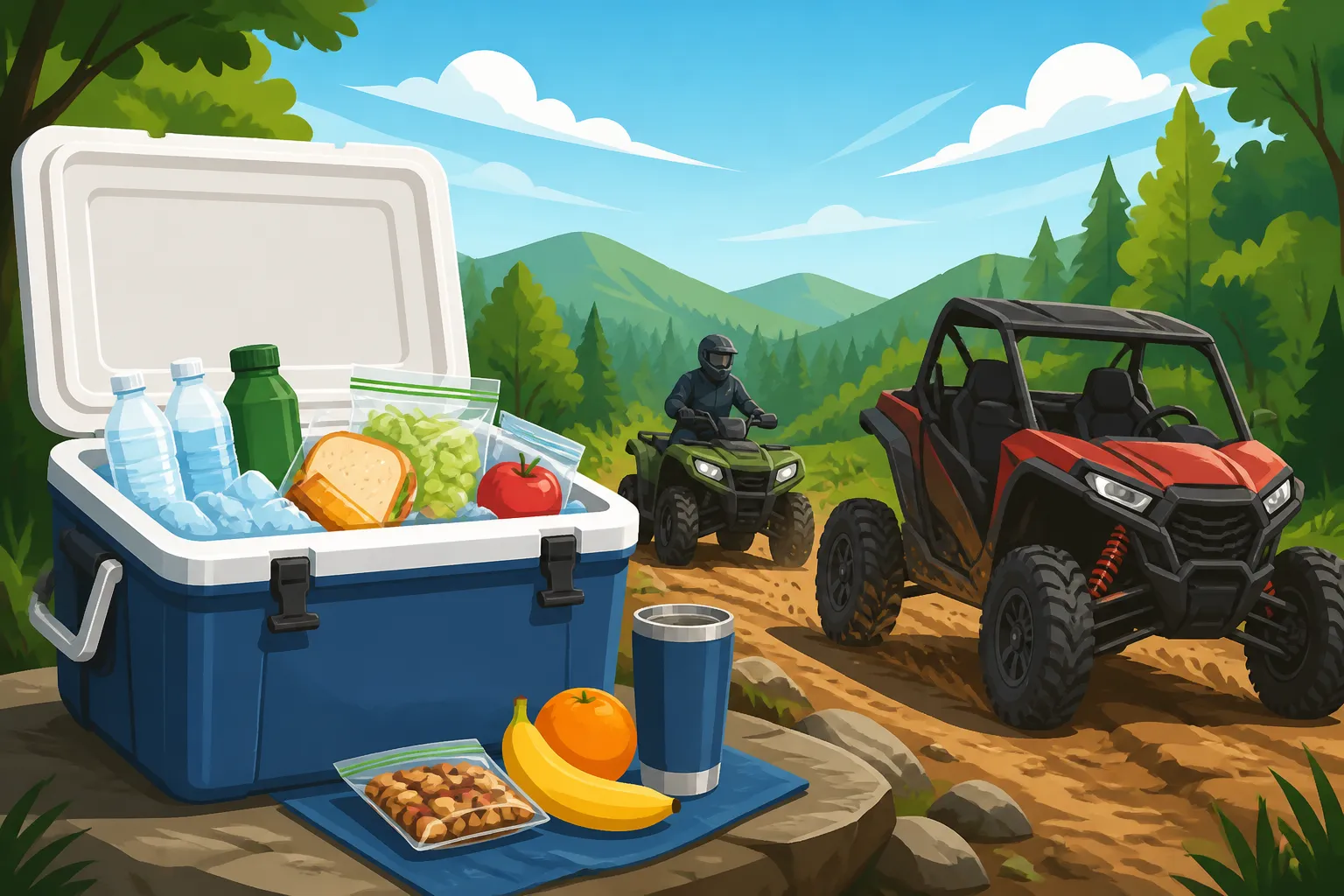
Pack food in a deliberate order. Put items you will need later toward the bottom and snacks or lunch near the top. Keep raw meat separate from ready-to-eat food, and use leakproof containers to prevent juices from reaching sandwiches, fruit, or drinks. If you are bringing perishable food, keep it cold rather than relying on the cooler to chill it down after packing.
A simple arrangement might look like this:
| Cooler area | What to pack | Why it helps |
|---|---|---|
| Bottom | Ice packs or frozen bottles | Creates a cold base for the food |
| Lower middle | Less frequently used perishables | Keeps them cool and out of the way |
| Upper middle | Lunch containers and snacks | Makes the main break easier to manage |
| Top | Items for the first stop | Reduces digging and time with the lid open |
| Separate bag or cooler | Drinking water and frequently used drinks | Avoids opening the food cooler repeatedly |
Perishable foods should stay at refrigerator temperature or colder. Don’t leave them sitting in a warm vehicle for an extended period, and don’t assume that a cooler is still cold enough just because ice remains somewhere inside. If the cooler has a thermometer, use it. When in doubt about whether a perishable item stayed safely cold, it is better not to eat it.
Reduce warm-air exposure
Every time the lid opens, warm air gets in. Keep the cooler in a shaded spot when possible, and avoid setting it in direct sun for the entire day. If lunch is the main reason you need the cooler, open it once at the planned break instead of repeatedly checking what is inside.
A practical setup is to keep the main food cooler in the parked vehicle and bring a smaller drink cooler if you need cold drinks throughout the day. That way, the food cooler stays shut while people refill water or grab a beverage. Separate coolers can also make it easier to keep food organized and reduce the chance that a bottle leaks over lunch.
Do not put a large cooler on an ATV or UTV unless the machine is designed and equipped to carry it securely. A loose cooler can shift, affect handling, block access to controls, or come free over rough ground. If you do use a rack-compatible container, follow the vehicle manufacturer’s load guidance, secure it properly, and make sure it does not interfere with visibility or safe operation. For many riders, leaving the cooler in the tow vehicle and planning a return break is the simpler choice.
Pack enough water and easy-to-eat food
Make hydration easy to reach
Water deserves its own plan. Don’t bury every bottle beneath food and ice, and don’t count on remembering to drink only when you feel thirsty. Keep drinking water in a place that is easy to reach during a safe stop, and bring more than you expect to need if the day is hot or physically demanding. Hydration on a Summer Berkshire Ride offers more context for planning drinks around warm-weather riding.
For a group, assign each person their own bottle or hydration container rather than relying on one shared supply. That makes it easier to notice when someone has barely drunk anything. Bring extra water in the vehicle as a reserve, especially when the route takes you away from services. Sports drinks can be useful for some riders, but they are not a replacement for having plain drinking water available.
Keep your water container separate from fuel, cleaning products, and anything that could leak or contaminate it. A bottle that has been rolling around beside oily tools or muddy equipment may be unpleasant to drink from, even if the cap is closed. Secure bottles in a holder or bag so they do not bounce around or become a distraction while riding.
Choose snacks for quick, safe stops
Trail snacks should be simple to open and eat only after you are stopped in a safe place. Useful options include granola bars, crackers, trail mix, dried fruit, or other compact snacks that suit your group. If you pack chocolate or anything likely to melt, keep it in the cooler or leave it at home on a hot day.
Avoid snacking while the machine is moving. Even a small wrapper or bottle can distract a rider, and eating with gloves on can make it harder to maintain control. Plan a few short pauses instead. Those stops can also give the group a chance to check how everyone is feeling, adjust clothing, and make sure nobody is running low on water.
For a cool start, pack a warm drink in an insulated bottle rather than expecting a cold cooler to solve every comfort problem. A Berkshire morning can feel chilly before the ride, while midday conditions may be quite different. Packing for a Cool Mountain Morning can help you think beyond food when planning for changing conditions.
Store, serve, and clean up responsibly
Keep the cooler secure at the trailhead
A cooler should be stable during transport and out of the way once you park. In a truck bed, secure it so it cannot slide during the drive. Inside an SUV, keep it positioned where it will not become a hazard if the vehicle stops suddenly. Avoid blocking access to emergency supplies, a first-aid kit, or equipment you may need before lunch.
If the group will be away from the vehicle, keep food in closed containers and do not leave scraps or open packages around the parking area. Wildlife can be attracted to food and rubbish, so pack everything away promptly. Keep food waste in a sealed bag until you can dispose of it appropriately, and never leave it on the ground or tucked beside a trail.
At a busy trailhead, be mindful of other visitors and keep your picnic setup compact. The cooler does not need to spread across a parking space or block access to a loading area. Before you go, check the relevant trailhead and parking information; Massachusetts Trailheads With Trailer Parking is a useful planning topic if you are hauling a trailer.
Make the lunch stop part of good trail etiquette
Choose a place where you can stop without blocking the trail, a gate, or another group’s access. Stay within designated riding and parking areas, and follow posted instructions. If other visitors are nearby, keep voices and equipment noise reasonable. The principles in Massachusetts Trail Etiquette Locals Expect apply to breaks as much as they do to riding: share space, avoid unnecessary disturbance, and leave the area as you found it.
Take a quick inventory before leaving: food containers, wrappers, bottle caps, napkins, and any utensils. A reusable trash bag in the vehicle makes cleanup easy, while a second small bag can hold food scraps or anything messy. Do not leave waste in a cooler compartment or on the ground while heading back out for another loop.
Before packing up for the drive home, check that all food is either stored safely or discarded, and that the cooler is closed securely. If the weather has turned wet or the trails are muddy, give yourself time to clean up without rushing. Leaving a Forest Trailhead Tidy is a good reminder that a thoughtful visit includes the parking area, not just the trail.
A little preparation keeps the food part of the day from becoming another source of stress. Pack the cooler for the route you actually plan to ride, keep water accessible, store perishables carefully, and make stops where they are safe and considerate. That way, lunch supports the ride instead of interrupting it.
Disclaimer
This article is for general informational purposes only and does not constitute professional advice. Laws, prices and regulations vary by location and change over time. Consult a qualified professional for guidance on your specific situation.