Massachusetts Riding With a Group of Ten
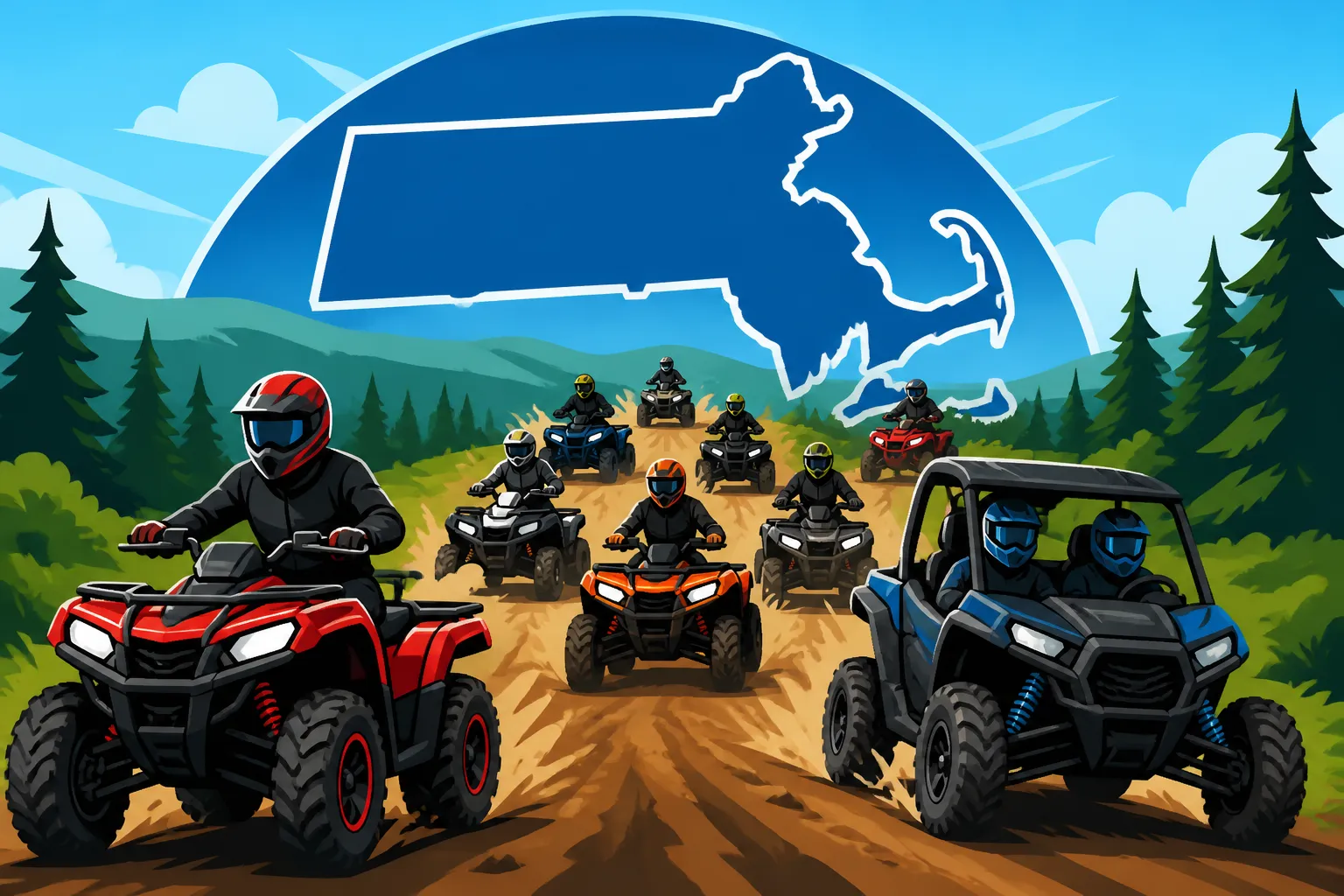
A ten-machine ride can feel organized in the driveway and chaotic as soon as the trail narrows, someone misses a turn, or a machine needs attention. In Massachusetts, the bigger challenge is planning a route and group size that fit the land you’re riding. This guide covers how to prepare, ride together, and check local rules before everyone hauls in.
Can a group of ten ride together in Massachusetts?
Group size depends on the riding area
A group of ten is not automatically permitted everywhere just because each rider and machine is properly registered. Rules can depend on the land manager, the specific trail system, whether the ride is a private outing or an organized event, and any temporary closures or access limits. Before setting a date, contact the office responsible for the riding area and ask specifically whether a group of ten machines may ride together.
That distinction matters in the Berkshires, where designated OHV opportunities are limited and land-use rules vary. A group might be able to ride a particular route on an authorized trail system but still be prohibited from using nearby roads, informal woods paths, or trails that look connected on a map. Start with [Massachusetts ATV Trails: Three Berkshire Forests] and then confirm the current rules for the location you intend to use.
For a private outing, ask whether there is a group-size limit, a reservation or permit requirement, or a rule about multiple groups traveling together. For an organized ride open to members, guests, or the public, ask whether the event needs advance approval. Don’t assume that calling it a club ride or gathering friends makes it exempt from event rules. [Permits for an Organized Ride on State Land] is a useful place to start when the ride is more than an informal trip among friends.
Ten people is not always ten machines
When you ask about group limits, be precise about what you mean by “ten.” A group of ten riders on ten machines takes up more trail space than ten people riding in a smaller number of vehicles. A side-by-side may carry passengers, while a quad generally has a different footprint and operating pattern. Tell the land manager how many machines you expect, what types they are, and whether any passengers or young riders will be with you.
That detail can matter on narrower routes. A route that accommodates individual quads may not be suitable for side-by-sides, and a ten-machine line can create a long gap between the front and rear riders. Check [Massachusetts Trails That Allow Side-by-Sides] before planning a mixed group, and ask whether the specific trail system allows the machines you’re bringing.
If there is a limit, don’t try to work around it by splitting the group on paper while keeping everyone together on the trail. Ask whether separate start times or genuinely separate groups are allowed. The answer may depend on how the land manager defines a group and how busy the riding area is. The discussion in [Massachusetts Group Size on a Forest Trail] can help frame the questions to ask.
| Planning question | Why it matters | What to confirm |
|---|---|---|
| How many machines are coming? | Machine count affects trail space and congestion | Whether the limit counts riders, machines, or both |
| What types of machines will be used? | Trail width and access rules may differ | Whether quads and side-by-sides are both allowed |
| Is this a private ride or an organized event? | Events may have separate approval requirements | Whether a permit, notice, or reservation is needed |
| Which routes are on the plan? | Not every visible path is an authorized OHV trail | Which marked trails are open to your machine type |
| Are young riders attending? | Age, supervision, and certificate rules may apply | Required supervision, certificates, and engine-size restrictions |
| What are the day’s conditions? | Closures and damage can change what is safe or open | Current access, parking, weather, and trail conditions |
Plan the route before the convoy reaches the trailhead
Confirm the legal route, not just the apparent route
A line on a phone map is not proof that an ATV or UTV may ride there. Maps can show roads, private land, hiking paths, old woods roads, and trails that are closed or not authorized for OHV use. Build your route around information from the land manager, posted signs, and the rules for the specific forest or riding area. If any section is unclear, leave it out until you can confirm access.
Tools such as onX Offroad can be useful for organizing a route, sharing a meeting point, or keeping your group oriented. Treat the app as a planning aid rather than permission to ride. Cross-check the route against official information, and pay attention to gates, signs, and closures when you arrive. A path that appears to connect two legal areas may cross land where motorized riding is not allowed.
For a group ride, send the same route information to everyone before the day of the trip. Include the staging location, intended loops, planned turnaround points, and a backup plan if a route is closed. onX Offroad or another mapping tool may help everyone understand the plan, but don’t rely on a single rider’s phone as the group’s only source of navigation. [Massachusetts Trail Conditions Before You Tow] is worth reviewing before committing to a long drive with several trailers.
Pick a route that works for the least experienced rider
A group ride is only as smooth as the route’s hardest section. A steep climb, loose rock, deep ruts, or a narrow turn can be manageable for an experienced rider and stressful for a newcomer. Ask about trail difficulty and recent conditions, then choose a route that suits the least experienced person in the group—not only the riders who want the biggest challenge.
This is especially important when riders are on different machines. A route that is comfortable for a short, nimble quad may be awkward for a wider UTV. If your group includes side-by-sides, ask about width restrictions and turning space instead of assuming that a route shown as open will fit every vehicle. Leave room to turn around safely if a trail becomes unsuitable.
Massachusetts also has specific requirements for young riders, including rules on age, supervision, and safety certificates. Don’t leave those checks until the morning of the ride. Review [Massachusetts Safety Certificates Under 18] and [Massachusetts Rules for Young Riders on Public Land] if anyone under 18 is joining. Confirm that the proposed ride, the machine, and the supervision plan are appropriate for that rider.
Keep ten machines moving safely together
Set a simple ride structure
Before starting, identify a lead rider and a sweep rider. The leader knows the planned route and watches for closures or hazards; the sweep stays behind the last rider and makes sure nobody is left alone after a stop. Choose riders who are comfortable communicating and making conservative decisions, not simply the fastest people in the group.
Agree on a few basic rules before helmets go on: keep a visible gap, don’t pass within the group without a clear signal, stop at agreed regroup points, and tell the group if you need to pull over. The leader should avoid disappearing around a bend, while the sweep should not feel pressured to catch up by riding faster than is safe. If the line becomes stretched out, stop somewhere safe and bring the group back together.
For a ten-machine ride, two smaller riding pods may be easier to manage than one long train, but only use that approach if the land manager allows it and the groups can travel independently without creating congestion. Decide who belongs in each pod and where they will regroup. Avoid splitting at a fork without a clear instruction; a wrong turn can turn a relaxed ride into a search effort.
Build in breaks, communication, and a no-pressure pace
A rider who is uncomfortable, overheated, or worried about keeping up may not speak up if the group is rushing. Make planned stops part of the route rather than treating them as delays. Choose safe locations where the group can pull completely out of the way, check on each other, and let faster riders wait without blocking the trail.
Agree on how riders will communicate if the group gets separated. Phone service can be unreliable in wooded or hilly areas, so don’t assume that a call or message will always go through. Give everyone the route and meeting points in advance, and make sure each rider knows what to do if they lose sight of the group. Keeping an offline map available can help, but no app replaces a simple regroup plan. If you use onX Offroad, make sure riders know how to access the route before service drops.
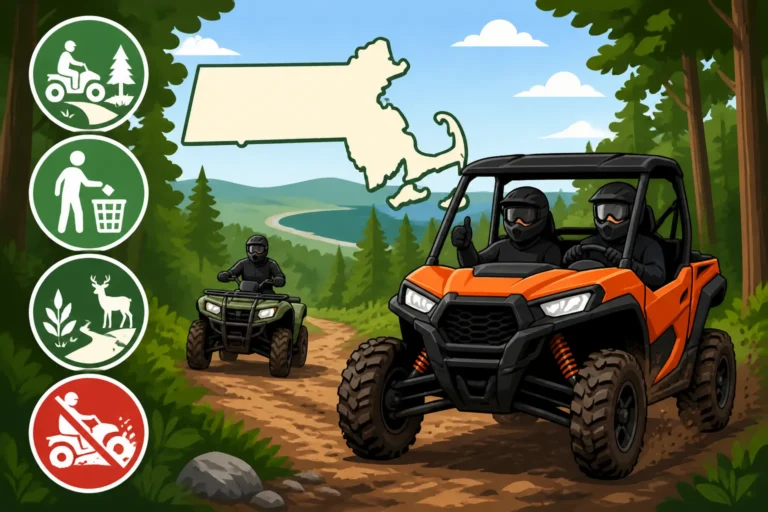
Use courteous trail behavior throughout the ride. Slow down near other trail users, leave space, and don’t crowd hikers or other riders. Stay on authorized routes and avoid spinning tires or widening the trail to get around a difficult spot. [Massachusetts Trail Etiquette Locals Expect] offers practical reminders for sharing trail space, while [What an Environmental Police Officer Checks at a Trailhead] can help you think through what to have ready before setting out.
Prepare for the day and know when to change the plan
Make a group checklist before departure
The best time to catch missing paperwork or a mechanical issue is before everyone is parked at the trailhead. Ask each rider to confirm their machine is registered as required, the registration card is available, and the machine meets applicable equipment rules. The group should also verify that riders have the documents and safety items required for their situation. For registration details, see [The Registration Card You Must Carry in Massachusetts].
Have each rider do a basic pre-ride check, including tires, brakes, lights, fuel, and any machine-specific items that could become a problem on the route. For UTVs, check passenger restraints and make sure everyone understands how to ride as a passenger. Pack water, weather-appropriate layers, basic tools, and a first-aid kit. A ten-person group can bring more supplies than a solo rider, but it can also take longer to coordinate if something goes wrong.
Share the meeting location and arrival expectations clearly. Confirm where trailers may park and whether there are parking charges or access procedures. Don’t assume every vehicle can fit at the same staging area. If a forest office or manager provides a particular parking instruction, pass it to the entire group—not just the person who made the call.
Be ready to shorten, split, or cancel the ride
Conditions can change between planning and arrival. Heavy rain, storm damage, mud, a closure, or a crowded trailhead may make the original route a poor choice. Decide in advance that the leader can shorten or cancel the ride without argument. That keeps a group from pressing ahead simply because several people have already made the drive.
If the trail is too busy for ten machines to move without blocking other users, wait, choose a permitted alternative, or ride at another time. Don’t use a road or unofficial trail as a shortcut around congestion. If the group needs to separate, do so only in a way that complies with the area’s rules and leaves each subgroup with a clear route, leader, and regroup plan.
A little preparation can make a large group feel less like a convoy and more like a coordinated day outdoors. Check the rules with the land manager, plan for the machines and riders you actually have, and make it easy for anyone to speak up or turn back. When the group respects the trail and each other, the ride is more likely to end with everyone—and every machine—back at the staging area.
Disclaimer
This article is for general informational purposes only and does not constitute professional advice. Laws, prices and regulations vary by location and change over time. Consult a qualified professional for guidance on your specific situation.