Massachusetts Riding Areas Reachable in a Day
Finding a legal ATV or UTV ride that fits into one day can be harder than it sounds in Massachusetts. Riding opportunities are concentrated in a few areas, and a forest that looks promising on a map may not allow your machine on its trails. This guide explains which regions are realistic day trips, what to check before hauling out, and how to avoid a wasted drive.
Where Massachusetts day rides are concentrated
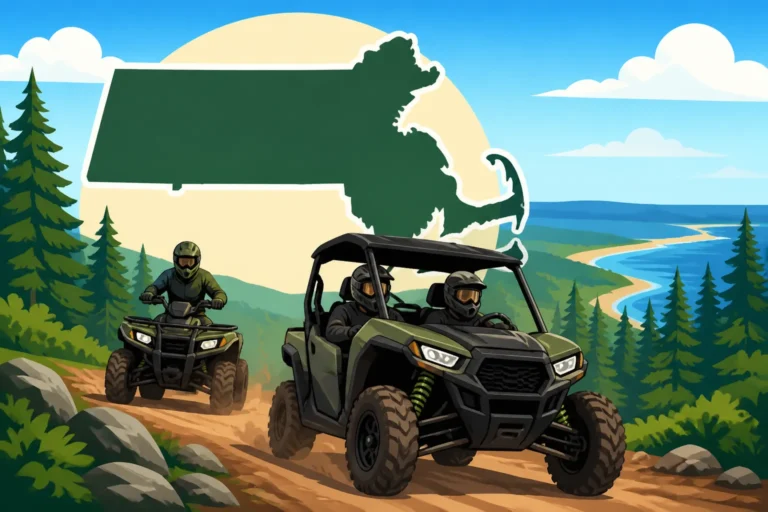
For riders looking for designated public OHV trails, the practical starting point is western Massachusetts, especially the Berkshires. The state’s best-known riding areas are Beartown, October Mountain, and Pittsfield State Forest. They are separate destinations, not one connected trail system, so plan to unload and ride at a specific forest rather than assuming you can travel between them on public roads.
That concentration matters if you live farther east. A ride may still be possible as a day trip from Boston or Worcester, but the drive, trailer loading, parking, and return trip can make the day feel long. From Springfield and other parts of the Pioneer Valley, the Berkshire forests are generally more manageable as a day outing. Check the route and travel conditions before you commit, particularly if you are hauling a trailer.
| Riding area | General location | Best fit for | Day-trip planning note |
|---|---|---|---|
| Beartown State Forest | Monterey and the southern Berkshires | Riders willing to plan around a designated forest trail network | Confirm the riding area is open and identify the correct trailhead before towing |
| October Mountain State Forest | Near Lee, Lenox, and other central Berkshire communities | Riders looking for a substantial Berkshire ride | Allow time for travel within the forest area and check current trail conditions |
| Pittsfield State Forest | Near Pittsfield and the northern Berkshires | Riders approaching from the north or west | Verify access, parking, and any seasonal restrictions before setting out |
Beartown State Forest for a southern Berkshire ride
Beartown State Forest is a natural option for riders traveling to the southern Berkshires. It can work well when you want a dedicated riding destination rather than a day built around several stops. The area’s trails are not a substitute for permission to ride on every forest road or neighboring property, so stick to authorized routes and posted directions. [Beartown State Forest Riding in Massachusetts]
Before you leave, check whether the trail system is open and whether weather has affected access. A map can help you understand the general layout, but it cannot tell you by itself whether a route is currently open to your machine. Using a planning app such as onX Offroad can help you review the area and organize a route; still, confirm access rules with the relevant land manager rather than treating a mapped line as permission to ride.
October Mountain and Pittsfield for central and northern Berkshire trips
October Mountain State Forest is another major Berkshire destination. Its location near Lee and Lenox can make it a convenient target for riders approaching from central or southern parts of the region. As with any public riding area, don’t assume that every road shown within a large forest is open to ATVs or UTVs. Follow posted signs and ride only on routes authorized for your vehicle. [October Mountain State Forest Riding in Massachusetts]
Pittsfield State Forest offers another choice, particularly for riders coming from the northern Berkshires or the Pittsfield area. The three forests have distinct access points and trail conditions, so choosing one based on your starting point and the kind of ride you want is more practical than trying to sample multiple forests in one day. [Pittsfield State Forest Riding in Massachusetts] For an overview of how these destinations fit together, see [Massachusetts ATV Trails: Three Berkshire Forests].
How to choose the right day-trip destination
A good day ride is not just a question of distance. Consider how much of the day you want to spend driving, whether your machine is allowed on the trails, what parking is available, and whether recent conditions could change your plan. If you are coordinating with friends, agree on the destination and meeting point before anyone loads a trailer.
Start with your home base and the time you have
Riders in western Massachusetts can often build a more relaxed day around a Berkshire forest because less of the schedule may be consumed by the drive. From farther east, be honest about the door-to-door time. The trip includes more than driving: loading machines, securing equipment, stopping for fuel, finding the correct entrance, unloading, and packing up again all take time.
For example, a group leaving from the Boston area might decide that an early start is worthwhile for one full riding day, but it may not make sense to add a second forest or a long lunch stop. A rider near Springfield may have more flexibility to arrive later or stay longer on the trails. Those are planning differences, not guarantees about travel time; traffic, weather, and the exact trailhead can change the day considerably.
Set a turnaround time before you leave. If the ride is running late, an agreed cutoff can prevent the group from setting off on an unfamiliar route near closing time or driving home exhausted. A paper map or downloaded map is useful when cell service is weak; onX Offroad may help with offline planning, but it does not replace signs, closures, or official access rules.
Match the machine to the trail rules
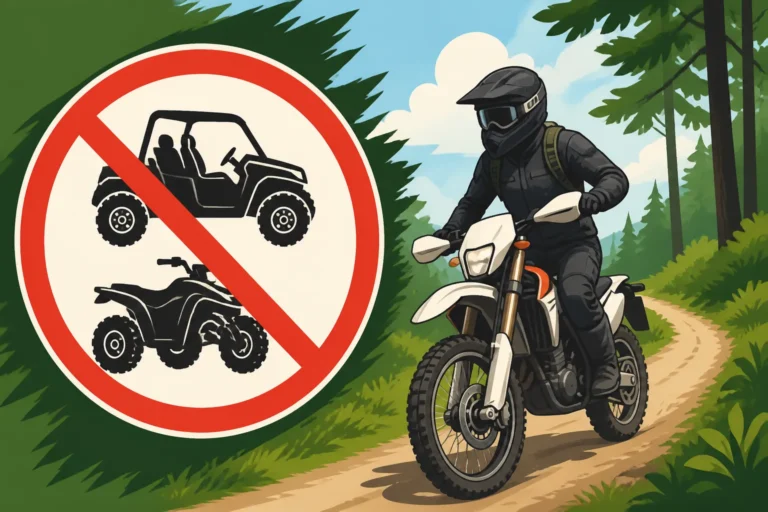
Do not assume that a UTV can use every route an ATV can, or that a wide side-by-side will fit comfortably on a narrow trail. Vehicle size and trail designation matter. Check the rules for your exact machine before making the trip, especially if you are taking a side-by-side or a dirt bike. [Massachusetts Trails That Allow Side-by-Sides]
Also check that the machine is properly registered for riding in Massachusetts and that the required registration card is available to carry. An out-of-state registration should not be treated as automatically valid for Massachusetts riding. Review [Massachusetts Registration and Trail Access] and [Massachusetts Has No Reciprocity for Visitors] before a cross-border trip. A little paperwork checking at home is far easier than discovering an issue at the trailhead.
What to check before you tow
A trail can be closed, muddy, damaged, or otherwise unsuitable even when it appears on a map. A quick check before departure helps prevent the frustrating scenario of arriving with a loaded trailer only to find the planned ride is unavailable. It also gives you time to choose another date or destination instead of making a rushed decision at the gate.
Confirm seasonal access and trail conditions
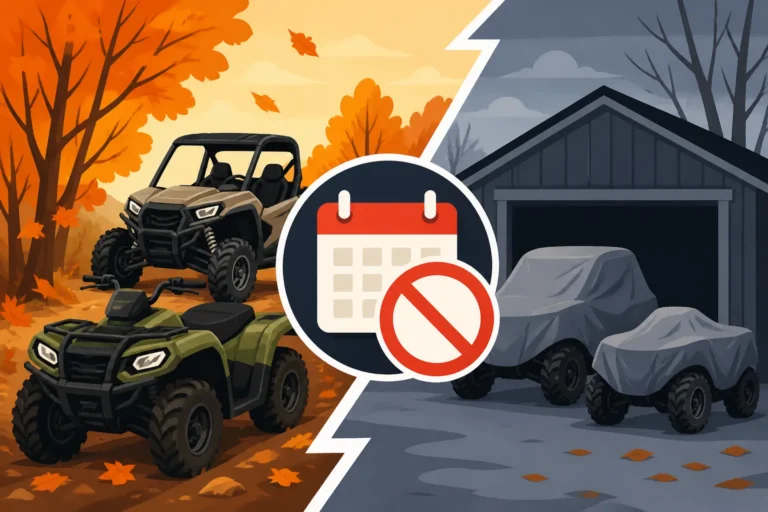
Massachusetts public riding areas can have seasonal operating windows, and storms or maintenance can affect access. Don’t rely on a search result, old social-media post, or saved route as proof that a trail is open today. Check the forest’s current information and contact the appropriate office when the status is unclear. [Massachusetts DCR Riding Season]
Pay particular attention after heavy rain. Soft ground and damaged trails can make riding unpleasant and may worsen erosion or other trail impacts. If conditions are poor, postponing the trip is often the better choice. [Massachusetts Trail Conditions Before You Tow] When using onX Offroad or another map tool, compare its information with official notices and posted signs; mapping tools can support planning, but they are not the authority on current closures.
Make a simple backup plan before you load. That might mean choosing a different date, planning a non-riding stop in the area, or identifying another destination whose access you have independently confirmed. Avoid switching to an unverified forest road or private trail simply because your first choice is closed.
Verify parking, permits, and what your sticker covers
Registration and trail access are related, but they are not necessarily the same thing. A registration sticker does not automatically mean that every forest, trail, or parking area is open to your machine. Check whether the destination has parking requirements, permits, gates, or other access conditions before you go. [Massachusetts Has No Separate Trail Pass]
If you are unsure which office handles a question, ask directly about the exact forest, vehicle type, date, and trailhead you plan to use. A useful question is: “Is this specific ATV or UTV allowed on the designated OHV trails, and is the trailhead open for riding on the day we plan to visit?” That is more likely to get a practical answer than asking generally whether the forest is open.
Make the ride smoother from departure to trailhead
A well-planned day trip can still go sideways if the group arrives at the wrong entrance, forgets required documents, or expects every rider to have identical equipment and experience. A short pre-departure routine keeps small problems from eating into your riding time.
Pack for the drive and the ride
Before leaving, confirm that the machine is secured properly, the trailer is ready for the trip, and everyone knows where to meet. Bring registration documents and any required safety documentation, along with water, food, basic tools, and weather-appropriate clothing. Conditions in the Berkshires can feel different from those at home, especially when the day starts cool and warms up later.
If the group has several machines, decide who is carrying a first-aid kit, tire-repair supplies, and basic recovery equipment. You do not need to duplicate every item in every vehicle, but everyone should know where shared gear is stored. Agree on a simple regrouping plan in case riders become separated, and avoid relying on a phone signal being available throughout the forest.
Trail etiquette matters, too. Keep noise and speed under control, yield appropriately, and leave room for other forest users. A group that rides considerately is less likely to create conflict with hikers, neighboring landowners, or other riders. [Massachusetts Trail Etiquette Locals Expect]
Keep the plan realistic for the group
A long day in a forest may be tiring even for experienced riders. If a beginner is joining, plan a pace that lets them ride confidently rather than turning the outing into a race to cover distance. With a mixed group, agree on the route and regrouping points in advance. If someone needs a break, stop where it is safe and considerate instead of stretching the group apart.
Give yourself enough daylight to load and secure the machines before heading home. That is especially important if the group has been riding in changing weather or on unfamiliar trails. A calm end to the day is worth more than squeezing in one last loop when everyone is already tired.
The simplest planning sequence is to select one authorized riding area, verify current access and vehicle rules, confirm registration and parking requirements, then check travel and weather conditions before departure. For a single-day Massachusetts ATV or UTV ride, the Berkshires are the most practical place to begin exploring—but the details of the specific forest matter more than a pin on a map.
Disclaimer
This article is for general informational purposes only and does not constitute professional advice. Laws, prices and regulations vary by location and change over time. Consult a qualified professional for guidance on your specific situation.