Massachusetts Mud Season and Trail Damage
Spring thaw can turn a familiar Massachusetts trail into a soft, rutted mess, and riding through it may leave damage that lasts long after the mud dries. This guide explains why mud season is hard on ATV and UTV trails, how to judge whether conditions are too wet, and what to do instead of risking damage, a closure, or a frustrating recovery.
Why mud season damages Massachusetts trails
Freeze and thaw leave trails vulnerable
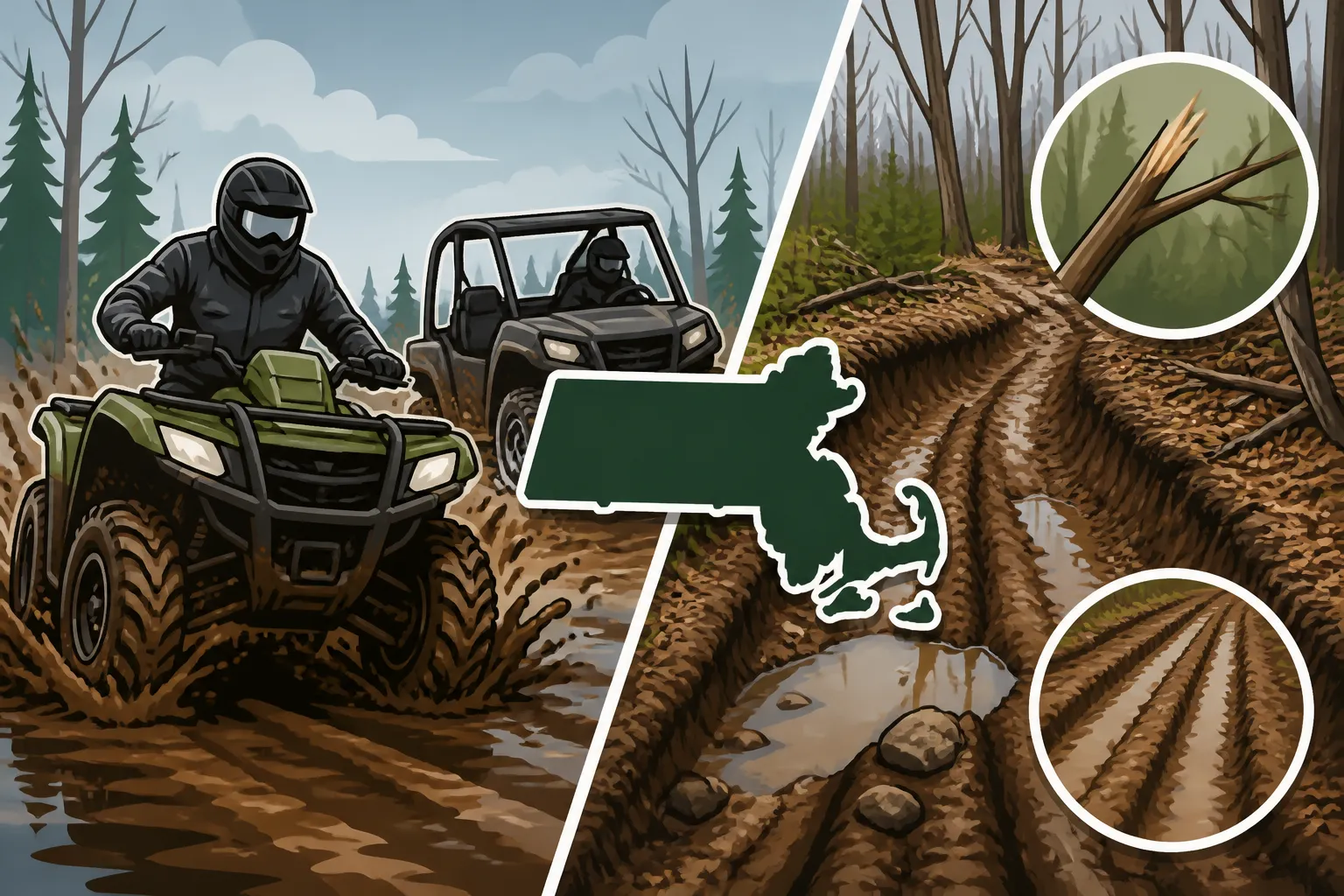
Mud season is not just a matter of getting muddy tires. As the ground thaws, moisture can saturate the soil while the surface still looks firm in places. A machine’s weight then presses into ground that has little ability to support it. Tires can churn loose soil, deepen ruts, and push water into areas that were previously draining.
Freeze-thaw cycles make the problem less predictable. A route that seemed solid during a cold morning can soften as temperatures rise. The reverse can happen, too: frozen patches may sit alongside wet, unstable sections. This uneven mix makes it easy to misjudge traction and difficult to keep tires on a durable line.
The damage can linger. Deep ruts collect water, and water can widen or lengthen them as it flows downhill. Riders may then steer around the worst spots, creating extra tracks that expand the disturbed area. On a narrow trail, one attempt to bypass a muddy patch can turn into several parallel lines of damage.
Trail damage affects access for everyone
Ruts and torn-up soil are not only a maintenance concern. They can make routes harder to travel for other riders, increase erosion, and create hazards where the trail crosses a slope or drains toward a wet area. A machine that slips sideways or sinks can also block the route, leaving other riders with limited room to pass safely.
Repeated damage can put continued access at risk. Massachusetts OHV riding is limited to designated places and operating periods, and closures or restrictions can affect where riders are allowed to go. Before planning around a familiar route, check current local information and review Massachusetts Trail Planning and Closures through the relevant official source. The listed internal topic is [Massachusetts Trail Planning and Closures].
How to tell when a trail is too wet to ride
Look for conditions, not just a calendar date
There is no single spring date when every trail is ready. Conditions vary with elevation, shade, soil, drainage, recent rain, and overnight temperatures. A low section exposed to sun may dry sooner than a shaded stretch higher on a hill, while a route with poor drainage can remain soft even after a stretch of dry weather.
Before leaving home, look for signs that the ground is still saturated: standing water, visible runoff, muddy approaches, soft shoulders, or reports of fresh ruts. Recent rain is a useful warning, but it is not the only factor. A thaw after a cold spell can leave the surface deceptively soft, and a trailhead that looks dry does not guarantee the full route is ready.
If you are considering a Berkshire ride, check the applicable forest information before towing out. Beartown, October Mountain, and Pittsfield State Forest are among the places riders may research, but access depends on the designated trail system and applicable rules. For conditions specific to one location, see Massachusetts Trail Conditions Before You Tow as a topic to look up with the managing office or official trail information. The linked title is [Massachusetts Trail Conditions Before You Tow].
Use early warning signs on the trail
Once you arrive, assess the ground before committing to a long route. A muddy entrance, pooled water, or tire marks that hold standing water can signal that the trail is not ready. Watch for places where the soil moves underfoot or where shallow ruts have already become channels. If the trail is visibly soft near the entrance, turning around early is usually better than discovering a worse section farther in.
Pay attention to what your tires are doing. If they spin without moving the machine forward, sink with light pressure, or throw clumps of soil, stop rather than applying more throttle. Spinning tires can dig quickly, and extra momentum may carry a machine into a rut or wet shoulder. Do not try to create a new line around a muddy section; that can widen the disturbed area and may put you off the authorized route.
When you are unsure, treat uncertainty as a reason to pause. Check with the forest office or the responsible land manager rather than relying on an old social media post or a previous visit. Online mapping tools such as onX Offroad can help you understand where a route appears to run, but a map does not establish that a trail is open or dry. Confirm access and conditions through the official source before riding.
What to do when conditions are wet
Turn around instead of forcing a pass
It can feel wasteful to unload the machine, find a wet approach, and head straight back to the trailer. Still, continuing through a soft section can make a manageable muddy spot much worse. If the designated trail is saturated, turn around using the existing route and avoid widening the trail to make a new turnaround. Keep other riders in mind and leave the passage as you found it.
Do not assume that a larger tire, more horsepower, or four-wheel drive makes wet conditions harmless. Those features may help a machine move, but they do not prevent soil from being displaced. A heavier UTV may press deeper into soft ground, while a spinning ATV tire can cut a rut before the rider has time to react. If a machine becomes stuck, repeated attempts to power out can deepen the hole and damage more ground.
If you need to recover a machine, avoid dragging it across vegetation or creating a shortcut around the trail. Pause and consider the safest way to retrieve it without expanding the damage. If you are with a group, keep machines on the established route and avoid crowding a narrow, unstable section. A slow, careful exit is preferable to several riders attempting to force the same muddy passage.
Choose a different day or a different plan
If an OHV route is closed or too wet, look for another legal activity rather than assuming a nearby road or trail is an acceptable substitute. Roads, rail trails, conservation land, and private property may have their own restrictions. Massachusetts riding access is location-specific, so confirm that the alternative route is actually open to your machine and type of use.
Use a weather and trail check before loading the trailer, and be ready to change plans. onX Offroad may help with route planning and orientation, particularly when comparing possible destinations, but do not treat a mapped line as permission to ride. Verify current closures, designated routes, and local requirements with the responsible agency. For broader preparation, Massachusetts Trail Closures After a Storm is another relevant topic to review alongside official updates. The exact linked title is [Massachusetts Trail Closures After a Storm].
A simple pre-trip check can prevent a long, disappointing drive:
- Confirm that the riding area is open to your machine and intended use.
- Check for closure notices or seasonal restrictions from the land manager.
- Review recent weather and ask about thaw or drainage conditions if the information is unclear.
- Make a backup plan that does not depend on riding an unapproved route.
- If conditions look worse at the trailhead than expected, leave without entering.
How riders can help protect trails
Stay on designated routes and avoid creating bypasses
When a wet patch appears, riding around it can seem like the easiest solution. But leaving the established trail may damage nearby ground, widen the corridor, or take you into an area where riding is not allowed. Even a short detour can encourage the next rider to follow the same line, eventually creating a second track.
Stay on the authorized route and do not cut across vegetation, drainage areas, or closed sections to get around a puddle. If a route is impassable, turn back. Local trail groups and land managers may have specific ways to report a problem; use those channels rather than attempting repairs or rerouting on your own. For context on how organized work supports riding access, read [Massachusetts Clubs That Maintain Trails].
Ride gently when conditions are suitable, too. Avoid sharp, unnecessary turns that tear up the surface, keep a steady pace, and do not spin tires for entertainment. On a narrow route, allow space between machines so riders can respond to changing ground conditions without crowding each other into the edge.
Report problems and plan for the season
If you find a damaged or blocked route, record where it is and what you observed. A clear description of the trail segment, nearby junction, or trailhead can be more useful than a general message saying that a forest is muddy. If you can safely note whether the issue involves standing water, a washout, a fallen tree, or a closure sign, include that detail when contacting the managing office.
Do not assume that trail work is appropriate just because a spot looks rutted. Moving soil, cutting brush, clearing obstructions, or altering drainage may require authorization. Contact the responsible land manager or trail organization and follow its directions. Unapproved work can create new problems or interfere with planned maintenance.
Seasonal access matters as much as trail condition. Massachusetts riding areas may have defined operating periods, and a route that is closed for the season is not an invitation to test whether it looks rideable. Review [Massachusetts DCR Riding Season] and [Massachusetts Mud Season and Trail Damage] as related topics, then confirm the rules for the specific place you intend to visit. A little patience during spring thaw helps protect the trail for the rest of the riding season.
| What you notice | Why it matters | Safer response |
|---|---|---|
| Water standing in tire tracks | The surface may be holding water and remain unstable | Do not ride through or widen the tracks |
| Tires sink or spin with light throttle | Soil may not support the machine | Stop and turn back on the established route |
| Fresh ruts or torn-up shoulders | Other riders may already be damaging the trail | Avoid adding another line; report the location |
| Closure or restriction notice | Access rules may prohibit riding regardless of appearance | Follow the notice and verify with the land manager |
| A route looks dry at the entrance but changes farther in | Conditions can vary across a trail system | Reassess often and turn back at the first unsafe section |
Mud season can disrupt the first rides of the year, especially when the weather changes quickly and the trailhead is a long drive from home. But choosing not to ride a saturated route is part of responsible trail use. Check official access information, pay attention to what the ground is telling you, and turn back before tires turn a soft trail into a lasting problem.
Disclaimer
This article is for general informational purposes only and does not constitute professional advice. Laws, prices and regulations vary by location and change over time. Consult a qualified professional for guidance on your specific situation.