Massachusetts Ticket Costs for Riders
Riding an ATV or UTV in Massachusetts is a fantastic way to explore the beauty of the Bay State's trails, but it can quickly turn into a financial headache if you're not fully aware of the rules. Many riders, especially those new to the state or visiting from elsewhere, get caught off guard by the strict regulations and the often-surprising cost of violations. This guide is here to shed light on the potential ticket costs you could face as an off-highway vehicle (OHV) rider in Massachusetts, helping you understand not just the fines, but also the broader implications of breaking the law.
The Initial Sting: Understanding Common Violations and Their Immediate Costs
When you're out enjoying the trails, the last thing you want is an encounter with a Massachusetts Environmental Police Officer that ends with a citation. It's not just about the immediate fine; it’s about understanding the specific regulations that, if overlooked, can lead to a costly day. Many common violations stem from simple oversights or a lack of awareness about Massachusetts's unique approach to OHV regulation.
Riding Unregistered or Without Proper Decals
One of the most frequent reasons riders find themselves facing a fine in Massachusetts is operating an unregistered machine or failing to display the proper decals. It's easy to assume your out-of-state registration is sufficient, or to simply forget to renew, but Massachusetts has very specific requirements. The state requires all ATVs and UTVs used on public or designated private land to be registered with the Massachusetts Environmental Police. This isn't just a suggestion; it's law.
The frustration often comes from the fact that while some states have straightforward registration processes, Massachusetts involves a specific procedure. If you're a resident, you'll need to secure a [Massachusetts Two-Year OHV Registration], while visitors from out of state require a [Massachusetts Non-Resident OHV Registration]. The fines for riding an unregistered machine can be significant, often starting at a base amount that increases with repeat offenses. Beyond the registration itself, ensuring your decals are correctly placed and visible is paramount. Officers routinely check for compliance with [Massachusetts Decal Placement Rules] and verify that your [Massachusetts Registration Cards Carried on Board] are accessible. A missing or improperly affixed decal can lead to a fine, even if your machine is technically registered. It’s a common mistake that can easily be avoided by double-checking everything before you head out. These fines are not trivial; they are designed to encourage compliance and fund the state's OHV program, as detailed in [Massachusetts Registration Fees Fund Trails].
Age and Supervision Violations: Sean's Law
Massachusetts has some of the strictest laws in the nation concerning youth ATV and UTV operation, often referred to as "Sean's Law." This legislation was enacted to prevent serious accidents involving young riders, and it carries significant penalties for non-compliance, not just for the child but for the supervising adult as well. Many parents are shocked to learn the severity of the fines and the potential liability they face if their child is caught riding outside the law.
Understanding [Sean's Law and Massachusetts Youth Riders] is critical. For instance, riders under 14 are generally prohibited from operating ATVs and UTVs except in very specific, sanctioned events. There are also strict engine size limits based on age, forming a [Massachusetts Age and Engine Size Ladder]. Violations here can result in substantial [Massachusetts Fines for Riding Under 14], which can impact both the young rider (if applicable) and the supervising adult. Furthermore, [Massachusetts Parent Liability for a Young Rider] is a serious consideration, as adults can be held directly responsible for their child's infractions. This includes fines, and in some severe cases, can even involve legal action if an accident occurs. Officers are particularly vigilant about these rules because they relate directly to safety. Ensuring a young rider has their [Massachusetts Safety Certificates Under 18] when required is also a key part of compliance, as it demonstrates they've undergone proper training. The penalties reflect the state's unwavering commitment to youth safety, making it imperative for families to know and follow these rules to avoid costly citations and potential harm.
Riding Where You Shouldn't: Public Ways, Private Land, and Protected Areas
One of the biggest misconceptions among off-road enthusiasts, particularly those unfamiliar with Massachusetts law, is where they can actually ride. The allure of an open dirt road or an unposted trail can be strong, but venturing onto unauthorized terrain is a surefire way to rack up expensive tickets. Massachusetts is particularly stringent about land access and protection.
Illegal Road and Public Way Riding
It's a common sight in many parts of the country: ATVs and UTVs traveling short distances on rural roads. However, in Massachusetts, this is almost universally illegal, and it’s a violation that officers enforce rigorously. Many riders mistakenly believe that if a road isn't paved, or if it's a quiet back road, it falls under the "off-road" category. This is simply not the case in the Bay State.
The short answer to [Can You Ride an ATV on the Road in Massachusetts?] is a resounding no. The law explicitly [Massachusetts Bans Riding on Public Ways], which includes paved roads, unpaved public ways, and even shoulders. The fines for this type of violation can be hefty, and they often include additional charges if the machine is found to be unregistered or improperly equipped. An environmental police officer will assess whether the area you're riding constitutes a "public way" based on specific legal definitions, which often extends beyond what a casual observer might assume. There are very limited exceptions, such as [Massachusetts Rules for Crossing a Road] at a right angle after coming to a complete stop, but even these have strict conditions. Trying to bypass traffic or simply get from one trail segment to another via a public road can lead to a significant fine, potential vehicle impoundment, and a frustrating court appearance.
Trespassing and Riding on Restricted Land
Another major source of tickets for OHV riders in Massachusetts is trespassing. It might seem obvious that you shouldn't ride on private property without permission, but the issue extends to many types of land that riders might mistakenly perceive as public access. This includes town conservation areas, certain state lands, and private woodlots that haven't been explicitly posted.
[Massachusetts Trespass Law for Riders] is clear: you need permission to be on private land. If caught riding without explicit written consent, the fines can be substantial. Beyond just monetary penalties, trespassing can lead to more serious legal consequences, especially if there's any perceived damage to property or if the landowner presses charges. This isn't just about avoiding a "No Trespassing" sign; it's about actively seeking [Massachusetts Requires Written Permission] from landowners before you set tire on their property. Even state and municipal lands have specific designations; not all are open to OHVs, and some might require special permits or only allow riding during certain seasons. For example, some conservation lands are designated for passive recreation like hiking and absolutely prohibit motorized vehicles. While aftermarket accessories from brands like SuperATV can certainly enhance your authorized trail riding experience, like sturdy skid plates for protection or enhanced lighting for visibility, they won't protect you from a trespassing charge if you're on land where you shouldn't be. Ignorance of land ownership or access rules is not a defense, and the fines reflect the state's strong protection of property rights and public land management plans.
Environmental Damage and Restricted Zones
Massachusetts takes environmental protection very seriously, and this extends directly to OHV operation. Certain sensitive areas, like beaches, dunes, wetlands, and specific forest ecosystems, are entirely off-limits to motorized vehicles due to the potential for ecological damage. Violating these restrictions can lead to some of the most severe penalties a rider can face.
The state explicitly [Massachusetts Bans Beach and Dune Damage] from OHV use. Riding in these fragile ecosystems not only disrupts wildlife habitats but can also cause erosion and long-term harm to the landscape. Fines for environmental damage are typically much higher than for simple registration infractions, and they can escalate quickly depending on the severity and extent of the damage. For instance, creating ruts in a wetland or disturbing nesting areas near a beach can result in thousands of dollars in fines, and potentially even restitution for environmental restoration efforts. These areas are often clearly marked, but even if they aren't, it's the rider's responsibility to know and respect ecological boundaries. Officers are trained to identify signs of environmental damage from OHV use and will not hesitate to issue citations. Beyond the immediate fines, such violations can also lead to public outcry and further restrictions on legal riding areas, impacting the entire OHV community.
Equipment, Conduct, and Other Costly Mistakes
Beyond where you ride and whether your machine is properly registered, there are several other factors that can lead to costly tickets in Massachusetts. These often relate to safety, responsible operation, and ensuring your machine meets state-mandated specifications. Overlooking these details can not only result in fines but also compromise your safety and the safety of others on the trails.
Equipment Non-Compliance
Massachusetts has specific requirements for the equipment on your ATV or UTV, designed to ensure safety and minimize environmental impact. Failing to meet these standards can lead to tickets during routine checks or if you're involved in an incident. These aren't just minor suggestions; they are enforceable laws.
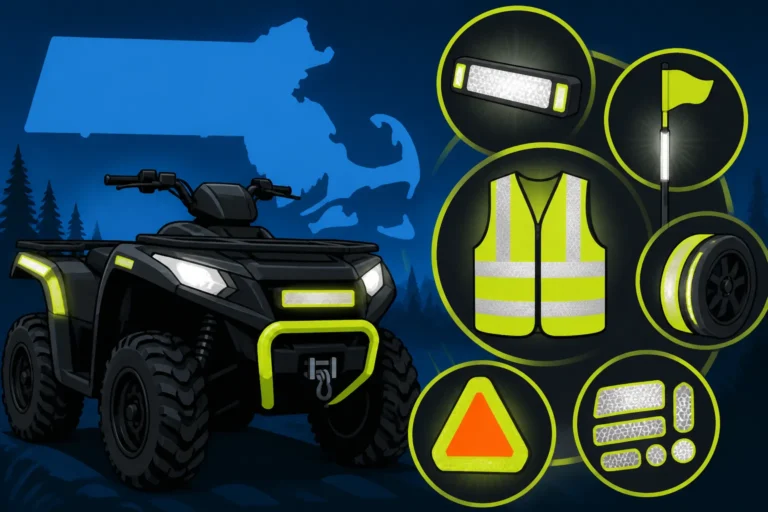
The most critical safety equipment requirement is the helmet. [Massachusetts Helmet Law for Every Rider] mandates that all OHV operators and passengers, regardless of age, wear a compliant helmet whenever riding. The fines for riding without a helmet can be significant, emphasizing the state's commitment to preventing head injuries. Similarly, your machine's exhaust system must comply with [Massachusetts Muffler Requirements]. Excessively loud exhausts are a common cause for complaints and citations, as they disturb wildlife and nearby residents. Officers can issue fines if your machine exceeds specified noise levels. Lastly, riding after dark requires proper illumination. [Massachusetts Lighting After Sunset] mandates specific headlight and taillight configurations to ensure visibility. A dim headlight or a missing red reflector can be enough for a fine. Investing in reliable lighting, perhaps even aftermarket options from companies like SuperATV, can help you meet these requirements and improve your safety on the trail. These equipment checks are not arbitrary; they are part of a broader safety effort that every rider is expected to uphold.
Operating Under the Influence (OUI) and Reckless Operation
These are among the most serious violations an OHV rider can commit in Massachusetts, carrying severe penalties that extend far beyond a simple fine. Operating any motorized vehicle, including an ATV or UTV, while impaired or in a reckless manner, is a criminal offense with lasting consequences.
[Massachusetts DUI Law and Off-Road Machines] applies just as strictly on trails and unpaved areas as it does on public roads. If an Environmental Police Officer suspects you are operating an OHV under the influence of alcohol or drugs, you can face charges similar to those for operating a motor vehicle on a highway while intoxicated. Penalties can include substantial fines, suspension of your driver's license (even if the OHV doesn't require one), mandatory substance abuse programs, and even jail time. Beyond OUI, reckless operation – such as excessive speed, dangerous maneuvers, or riding in a manner that endangers others – also carries stiff penalties. What constitutes reckless operation is often at the discretion of the officer but typically involves behavior that shows a wanton disregard for safety. The fines for these offenses are significantly higher than for other violations, and they can lead to the immediate impoundment of your machine. In severe cases, [Getting a Seized Quad Back From the State] can be a long and expensive process, if it's even possible. These serious charges underscore the importance of responsible operation and avoiding any behavior that could jeopardize yourself or others.
Court Costs and Escalation
Receiving an OHV ticket in Massachusetts isn't always the end of the financial story. Depending on the nature of the violation, you might find yourself facing additional expenses through the legal system, and repeated offenses can lead to escalating penalties that quickly become prohibitive.
If you decide to contest a ticket, or if the violation is severe enough to require a mandatory court appearance, you will inevitably incur [Massachusetts Court Costs for a Citation]. These administrative fees for processing your case, even if you are ultimately found not guilty, can add hundreds of dollars to your total expenses. Furthermore, judges have the discretion to impose additional penalties beyond the initial fine, such as community service or enhanced fines for repeat offenders. Massachusetts law is designed to discourage recidivism, meaning that if you are cited multiple times for the same type of offense, the fines and consequences will generally increase with each subsequent violation. In the most severe cases, particularly for serious safety infractions or environmental damage, an officer has the authority to seize your machine on the spot. Recovering it involves significant impoundment fees, storage costs, and potentially the successful resolution of your legal case. This entire process can be extremely expensive and time-consuming, highlighting why prevention through adherence to regulations is always the best approach. While a high-quality winch from SuperATV can get you out of a tough spot on the trail, it won't pull your machine out of police impound.
Here’s a look at some common violations and the typical types of costs you might encounter:
| Violation Type | Initial Financial Impact | Potential Additional Costs | Other Consequences |
|---|---|---|---|
| Unregistered OHV | Monetary Fine | Court Fees, Impoundment | Machine seizure possible |
| Improper Decal Placement | Monetary Fine | Officer discretion, warning possible | |
| Underage Rider (Sean's Law) | Substantial Monetary Fine | Parent Liability, Court Fees | Machine seizure, license suspension (adult) |
| Riding on Public Way | Monetary Fine | Court Fees, Impoundment | Machine seizure, legal action |
| Trespassing on Private Land | Monetary Fine | Court Fees, Restitution | Property damage charges, legal action |
| Riding in Restricted Environmental Zones | Very Substantial Monetary Fine | Environmental Restoration, Court Fees | Machine seizure, criminal charges |
| No Helmet | Monetary Fine | Increased injury risk | |
| Excessive Noise (Muffler) | Monetary Fine | Compliance order, machine inspection | |
| No Lights After Dark | Monetary Fine | Increased accident risk | |
| Operating Under the Influence (OUI) | Very Substantial Monetary Fine | License Suspension, Court Fees, Education | Machine seizure, jail time, criminal record |
| Reckless Operation | Substantial Monetary Fine | Court Fees, Impoundment | Machine seizure, license suspension, criminal record |
Understanding the various ticket costs and potential legal ramifications associated with OHV riding in Massachusetts is not just about avoiding a hit to your wallet. It's about respecting the land, ensuring your safety and the safety of others, and preserving access for all responsible riders. By staying informed about registration, age requirements, land access, and equipment regulations, you can enjoy the fantastic riding opportunities the state has to offer without the unwelcome surprise of a costly citation. Always double-check your paperwork, know your riding area, and remember that responsible riding benefits the entire OHV community.
Disclaimer
This article is for general informational purposes only and does not constitute professional advice. Laws, prices and regulations vary by location and change over time. Consult a qualified professional for guidance on your specific situation.