Massachusetts Fines for Riding Under 14
Riding ATVs and UTVs in Massachusetts can be an incredible experience, offering access to beautiful trails and outdoor adventures. However, the Bay State has some of the strictest laws in the nation when it comes to off-highway vehicle (OHV) operation, especially concerning young riders. It can be incredibly frustrating for parents who just want their kids to enjoy the outdoors, but the penalties for letting a child under 14 ride an ATV or UTV illegally can be severe, impacting both your wallet and your peace of mind. This guide will walk you through the specific fines and consequences associated with underage ATV and UTV operation in Massachusetts, helping you understand the rules and avoid costly mistakes.
Understanding Massachusetts' Strict Youth ATV Laws: Sean's Law
Massachusetts stands out for its firm stance on youth ATV operation, primarily due to "Sean's Law," enacted in 2010. This legislation was a direct response to a tragic accident involving a young rider, underscoring the state's commitment to rider safety, particularly for children. For many parents, these rules feel incredibly restrictive, especially if they grew up in an era where riding a quad on the back forty was just part of being a kid. But the reality in Massachusetts is very different now, and understanding these foundational laws is crucial for anyone with a young enthusiast in their family.
The Heart of the Matter: The Under-14 Ban
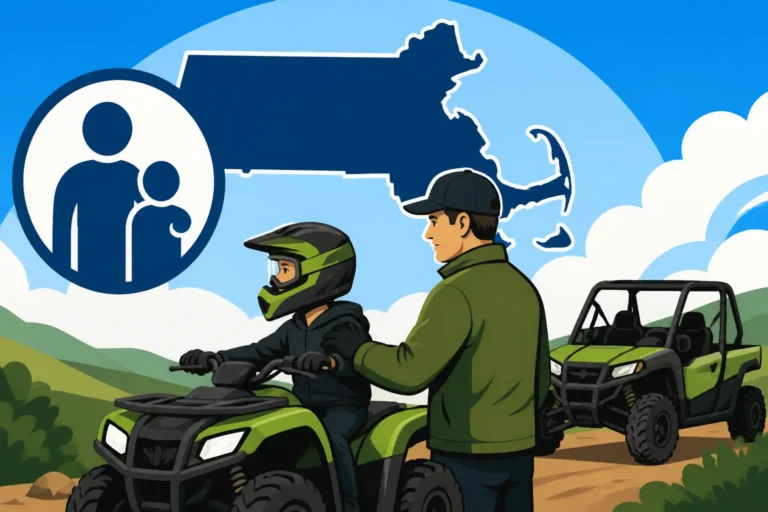
The absolute cornerstone of Massachusetts's youth OHV laws is the outright ban on anyone under the age of 14 operating an ATV or UTV. This isn't just a recommendation or a guideline; it's a hard-and-fast rule, and it applies even on private land. Many people mistakenly believe that if a child is riding on their own property, away from public roads, the rules don't apply. This simply isn't true in Massachusetts. The law is designed to protect young riders from themselves, as studies have shown that children under 14 often lack the cognitive and physical development necessary to safely operate these powerful machines.
Imagine a family with a wide-open backyard in a rural part of the state. A 12-year-old, eager to try out an ATV, is given permission by a well-meaning parent to ride loops around the property. From the family's perspective, this is a safe, controlled environment. However, if an Environmental Police officer receives a complaint or happens to observe this activity, that parent could face significant fines, regardless of the perceived safety of the situation. It's a tough pill to swallow for many, but the law aims to prevent injuries by removing the opportunity for unsupervised or inappropriate riding by this age group entirely. The spirit of [Sean's Law: The 2010 Ban Named for a Boy] is to safeguard children, and the penalty structure reflects the seriousness with which the state approaches this issue.
Beyond the Ban: Age and Engine Size Limits for Older Youth
While the focus here is on the under-14 ban, it's important to recognize that the regulations don't simply disappear once a child turns 14. Massachusetts employs an age and engine size ladder, meaning that even older youth have specific restrictions. For instance, [Massachusetts Riders 14 to 16 and 90cc] face limits on the engine displacement of the machines they can operate. These riders are generally restricted to ATVs with engine sizes of 90cc or less. Furthermore, they are typically required to complete an approved OHV safety course and must be under the direct supervision of an adult who is at least 18 years old and holds a valid driver's license.
These additional layers of regulation for older children further highlight how seriously Massachusetts treats youth OHV safety. The goal isn't just to prevent the youngest from riding, but to ensure that when youth do start operating ATVs and UTVs, they do so with proper training, appropriate equipment for their size and skill level, and responsible adult oversight. The under-14 ban is the most restrictive piece of this puzzle, but it's part of a larger framework designed to minimize risk across all youth age groups. It serves as a stark reminder that even a slight misunderstanding of the rules can lead to legal trouble, even if your intentions are purely to foster a love for the outdoors.
What Happens When a Child Under 14 Is Caught Riding Illegally?
The moment an Environmental Police officer encounters a child under 14 operating an OHV, a series of consequences is set in motion. This isn't just a minor slap on the wrist; the state views this as a serious violation of public safety. For parents, this can be a shocking and distressing experience, suddenly facing legal ramifications for what might have seemed like harmless fun. It's important to be prepared for the realities of these encounters, both financially and beyond.
The Immediate Financial Impact: Fines for Riding Under 14
When a child under 14 is found operating an ATV or UTV in Massachusetts, the fines can be substantial. While I can't provide specific dollar amounts because they can change, the penalties are designed to be a deterrent and are generally not trivial. The critical point here is that these fines are typically levied against the parent or legal guardian, not the child themselves. This makes sense, as the law recognizes that children of this age are not legally responsible for such actions, and it places the onus squarely on the adults in charge. [Massachusetts Parent Liability for a Young Rider] means that as the adult, you are responsible for ensuring your child complies with the law.
Imagine you're at a remote camp in the Berkshires, and your 13-year-old takes a joyride on a friend's quad. An Environmental Police officer, perhaps on routine patrol or responding to a landowner complaint about unauthorized riding, spots them. You, as the parent, could receive a citation carrying a significant monetary fine. These fines are often escalating, meaning that repeat offenses or additional violations (like riding on prohibited land or without a helmet, even if by an older child) could lead to even higher penalties. It's not just a warning; it's a financial hit that can quickly add up, especially if you also face court costs or administrative fees to resolve the citation. This is why it's absolutely critical for parents to understand and enforce the age restrictions, even when it feels like a battle.
Beyond the Money: Other Consequences for the Rider and Family
While the financial fines are the most immediate and tangible consequence, the repercussions of a child under 14 riding illegally can extend further. One of the most severe potential outcomes is the impoundment of the machine itself. Yes, that's right – the ATV or UTV your child was operating could be seized by law enforcement. Getting an impounded machine back can be a lengthy, costly, and frustrating process, often involving storage fees, administrative hurdles, and proof of legal ownership, all on top of any fines already incurred. This means not only are you out the money for the fine, but you could temporarily lose access to your machine and incur additional expenses to retrieve it.
Furthermore, these incidents can prompt mandatory educational requirements. While not a direct fine, a judge or the Environmental Police might require the parent, and sometimes even the child (if of an appropriate age for certain courses), to attend OHV safety courses. This adds time and effort to an already stressful situation. Beyond the legal system, there's the very real emotional toll and safety concerns. The entire purpose of [Massachusetts Has the Strictest Youth ATV Law] is to prevent serious injuries or fatalities. An illegal riding incident, even without a physical injury, serves as a stark reminder of the inherent dangers and can create lasting anxiety for families. It highlights the importance of open conversations with children about the rules and the reasons behind them, stressing safety over immediate gratification.
The Role of Law Enforcement: Environmental Police Enforcement
In Massachusetts, when it comes to off-highway vehicles, the law enforcement landscape looks a little different than for cars or trucks. You won't typically see local police or the State Police handling most ATV or UTV violations. This specialized enforcement is intentional, reflecting the unique nature of OHV operation and the environments in which these machines are used. Understanding who to expect on the trail and their powers is key to navigating the Bay State's OHV regulations.
Who Enforces These Rules?
The primary agency responsible for enforcing Massachusetts's OHV laws, including those pertaining to underage riding, is the Massachusetts Environmental Police. These officers are specifically trained in environmental laws, including those related to recreation on state land, waterways, and wildlife areas. They patrol state forests, parks, and other public lands where OHVs are permitted, as well as investigate complaints on private property. This specialized focus means they are highly knowledgeable about the nuances of Chapter 90B, the section of Massachusetts General Laws that governs OHVs.
If you're riding in a [Beartown State Forest Riding in Massachusetts] or [October Mountain State Forest Riding in Massachusetts], it's an Environmental Police officer you're most likely to encounter. They have full law enforcement authority, meaning they can pull you over, issue citations, and even make arrests if necessary. It's not uncommon for them to conduct checks at trailheads or on trails themselves, verifying registrations, safety certificates (for appropriate age groups), and compliance with age restrictions. Their presence underscores the state's dedication to responsible OHV use and protecting both riders and the natural environment. They're often the ones answering questions about [Who to Call About a Massachusetts OHV Registration] or clarifying complex regulations.
Common Scenarios Leading to Fines
While every situation is unique, there are common scenarios that often lead to Environmental Police intervention and subsequent fines for illegal underage riding. The most obvious is a child under 14 simply being observed operating an ATV or UTV, whether on a public way, an unauthorized trail, or even private land. Remember, the ban applies universally. An officer might be on patrol and see a young rider, or they might be responding to a complaint from a concerned citizen or a property owner. [Massachusetts Penalties for Illegal Riding] cover a wide range of infractions, but underage operation is one of the most serious.
Consider a situation where a child, too young to ride, crosses a public road to get from one part of a property to another. Even a brief moment on a paved or public dirt road can draw attention and is a clear violation. Or perhaps a neighbor, aware of the laws, observes a 10-year-old repeatedly riding an ATV in their yard and decides to call the Environmental Police. Officers are obligated to investigate these reports. It's not just about active patrols; community vigilance plays a significant role in enforcement. To avoid these situations, it's crucial to understand not only the age ban but also [Massachusetts Bans Riding on Public Ways] and [Massachusetts Requires Written Permission] from landowners, which can apply even to older riders. The rules are comprehensive, and ignorance is rarely an accepted defense.
Avoiding Fines: Responsible Riding and Education
Nobody wants to face fines or other penalties, especially when the goal is to enjoy the outdoors. The key to avoiding issues with Massachusetts's strict youth ATV laws lies in a two-pronged approach: thorough education and strict adherence to the rules. It means understanding the spirit of the law, not just its letter, and prioritizing safety above all else. For families, this often means making tough choices and sometimes delaying the introduction to OHV riding until a child is legally and physically ready.
Educating Your Young Rider
The first and most critical step is to educate yourself, and then your young rider, about the laws. It's not enough to simply say, "You can't ride until you're 14." Explain why the law exists: the dangers, the physical and cognitive requirements for safe operation, and the tragic incidents that led to its creation. [Why Under-14 Riders Are Banned on Private Land Too] is a crucial piece of this conversation. When a child understands the serious safety reasons behind the rules, they are more likely to respect them, even if they're disappointed. This might mean having frank discussions about serious injuries that can occur, even at low speeds or on seemingly safe terrain.
For youth who are old enough to ride (14 and over), completing the [Massachusetts Two-Part Safety Course] is not just a legal requirement for riding on public land, it's an invaluable educational experience. This course covers everything from basic machine operation and maintenance to trail etiquette, environmental considerations, and, crucially, a deep dive into Massachusetts OHV laws. It instills a sense of responsibility and provides the necessary skills for safer riding. Even if your child isn't old enough for the course, reviewing similar safety materials together can be beneficial, building a foundation of knowledge for when they are ready.
Legal Riding Opportunities for Youth
Just because a child can't ride a full-size ATV before 14 doesn't mean they're entirely excluded from the OHV world. Massachusetts does provide very limited, specific exceptions for young riders to participate in sanctioned events. For example, [Massachusetts Riders Under 10 and Sanctioned Events] might be allowed to ride certain youth-appropriate machines in highly controlled, organized competitive or training events. Similarly, [Massachusetts Riders 10 to 14 in Races] can participate in approved, sanctioned races, typically under strict supervision and with specific rules regarding machine size and course design. These events are not casual trail rides; they are highly regulated environments with medical staff on site and stringent safety protocols.
If your child is truly passionate about OHV riding and falls into one of these eligible age categories for sanctioned events, research local clubs and organizations that host such activities. These groups are often well-versed in the state's regulations and can provide guidance on legal participation. When considering these opportunities, always ensure the event is genuinely "sanctioned" by a recognized body and that all safety protocols, including appropriate helmets and protective gear, are strictly enforced. The goal is to nurture a love for the sport responsibly and legally, ensuring that your child's first experiences with OHVs are safe, structured, and within the bounds of Massachusetts law.
| Age Group | General Rule in Massachusetts | Exceptions / Requirements | Fines (for parents/guardians) |
|---|---|---|---|
| Under 14 | Strictly Prohibited from operating an ATV/UTV anywhere. | Limited to sanctioned, approved competitive events or organized training. | Significant monetary fines, potential machine impoundment. |
| 14-15 | May operate ATVs/UTVs 90cc or less. | Must complete approved OHV safety course. Must be under continuous visual supervision of adult (18+) with driver's license. | Fines for non-compliance (e.g., wrong machine size, no supervision, no certificate). |
| 16-17 | May operate ATVs/UTVs without engine size limit. | Must complete approved OHV safety course. Must be under continuous visual supervision of adult (18+) with driver's license. | Fines for non-compliance (e.g., no supervision, no certificate). |
| 18+ | May operate ATVs/UTVs of any size. | Must adhere to all general OHV laws (registration, land permission, etc.). Safety course recommended. | Fines for general OHV violations. |
Disclaimer
This article is for general informational purposes only and does not constitute professional advice. Laws, prices and regulations vary by location and change over time. Consult a qualified professional for guidance on your specific situation.