Massachusetts Rules for Crossing a Road
Navigating the beautiful trails and varied landscapes of Massachusetts on your ATV or UTV is an incredible experience, but it comes with a strict set of rules, especially when it involves public roads. It's a common point of confusion and frustration for many riders who just want to get from one great riding spot to another without breaking the law. This guide is here to untangle the complexities of Massachusetts law regarding crossing public ways, making sure you can enjoy your ride while staying safe and legal.
The Strict Reality of Massachusetts Road Laws for OHVs
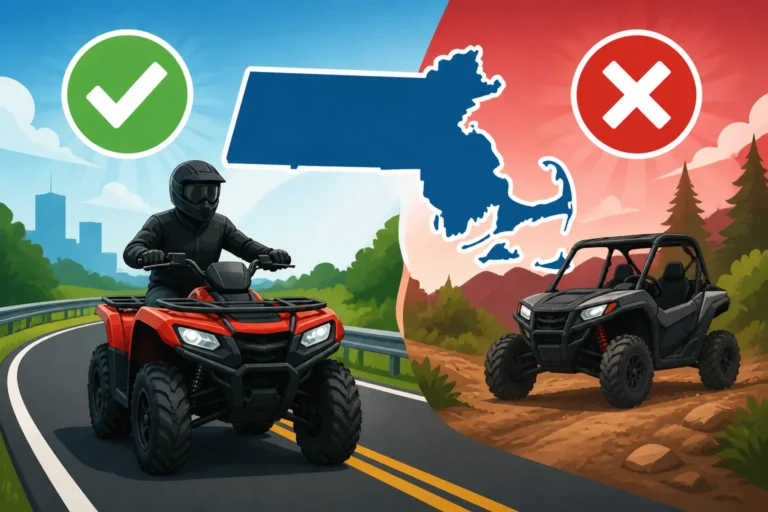
Let's get one thing straight right off the bat: Massachusetts has a very clear stance on off-highway vehicles (OHVs) and public roads. Unlike some other states, you cannot simply ride your ATV or UTV down a road, even a quiet dirt road, with the expectation of it being street legal. This isn't just a suggestion; it's a foundational principle of OHV operation in the Bay State, and understanding it is the first step to avoiding hefty fines or worse.
Why OHVs Aren't "Street Legal" in Massachusetts
The core issue lies in how Massachusetts law classifies ATVs and UTVs. They are designated as "off-highway vehicles," designed and intended for use off public roads. This means they generally lack the specific equipment and certifications required for vehicles that are permitted to operate on paved or maintained public ways. Think about it: a car has airbags, specific lighting configurations, turn signals, and crash-testing certifications that ATVs simply aren't built to include. Because of this fundamental difference in design and purpose, Massachusetts law explicitly prohibits their general use on public ways.
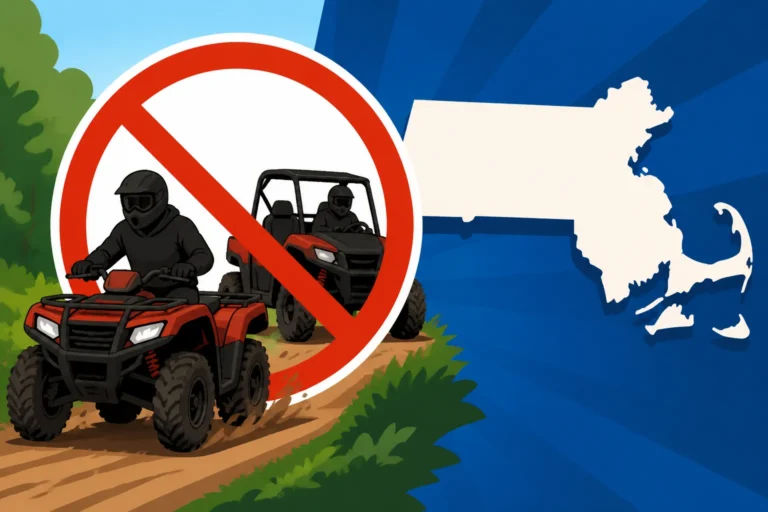
This prohibition extends far beyond just major highways. A "public way" in Massachusetts is broadly defined and includes just about any road or street that is maintained by the state, a county, or a municipality, regardless of whether it's paved, gravel, or even looks like a private lane. This definition often catches riders off guard, as they might assume a quiet, unpaved country road connecting two sections of trail is fair game. Unfortunately, that's rarely the case. It’s crucial to understand that [Massachusetts Bans Riding on Public Ways] and [Massachusetts Bans Riding on Highways] because these machines are simply not engineered or regulated for that environment. The legal framework is designed to keep everyone safe, both riders and other road users, by keeping specialized off-road machines where they belong: off-road.
The Limited Exception: Crossing a Public Way
Now, there is one narrow, highly regulated exception to this general prohibition: the right to cross a public way to get from one section of legal riding area to another. This isn't an invitation to ride on the road; it's strictly a means of traversing it. It’s a bit like taking a breath underwater – you can do it, but only for a very specific, limited purpose and duration, and only if you have the right equipment and training. This exception exists out of practical necessity, as many trail systems and riding areas are naturally divided by roads. Without it, interconnected trail networks would be impossible, forcing riders to trailer their machines for even the shortest distances, which is incredibly inconvenient.
However, this exception comes with a long list of explicit conditions, and straying from them can quickly land you in trouble. It's not a casual right; it's a carefully controlled privilege. The state allows it, but only because it’s understood that riders will execute these crossings with the utmost care, adherence to traffic laws, and respect for other vehicles on the road. The emphasis is always on minimal time spent on the public way and maximum safety precautions. Any deviation from these strict rules essentially negates the exception, and your crossing becomes an illegal operation on a public way, with all the associated penalties.
Step-by-Step: How to Legally Cross a Massachusetts Public Way
Successfully navigating a road crossing with your ATV or UTV in Massachusetts requires more than just a quick glance both ways. It demands a deliberate, step-by-step approach, ensuring all legal requirements are met before, during, and after the crossing. Think of it as a mini-mission, where every detail matters.
Pre-Crossing Requirements: What You Need in Place
Before your tires even touch the pavement of a public way, even for a crossing, your machine and your readiness need to be in order. The Massachusetts Environmental Police (MEP) don't differentiate between riding on a trail and a brief crossing when it comes to basic compliance.
First and foremost, your ATV or UTV must be properly registered with the state. This isn't optional for road crossings; it's absolutely mandatory. This means having your current registration decals affixed correctly and carrying your registration card with you. If you're a Massachusetts resident, you'll have a [Massachusetts Two-Year OHV Registration]. If you're visiting from out of state, you'll need a [Massachusetts Non-Resident OHV Registration]. An unregistered machine, even for a simple crossing, is an immediate violation and will definitely get the attention of law enforcement.
Beyond registration, certain safety equipment is critical. Your machine needs to have working headlights, a taillight, adequate brakes, a properly functioning muffler (no excessively loud exhausts!), and a spark arrester. These aren't just for night riding or trail use; they're essential for visibility and safety during a road crossing. When you're momentarily sharing space with cars, being seen is paramount. Consider adding aftermarket accessories like brighter LED headlights or additional taillights, perhaps from a brand like SuperATV, to increase your visibility. Good mirrors, while not strictly mandated for all OHVs, are also a fantastic idea to give you a better view of approaching traffic. You should also ensure your tires are in good condition for the momentary traction needed on pavement, especially if the road is wet. This comprehensive approach to equipment ensures that should an officer observe your crossing, you meet all the [Massachusetts Equipment Requirements].
Finally, if you have youth riders with you, or if you are a youth rider, remember the safety certificate requirements. Riders under 18 must have completed an approved OHV safety course. [Massachusetts Safety Certificates Under 18] are a prerequisite for anyone in that age bracket operating an OHV, and this includes making a legal road crossing. Parents, this responsibility falls squarely on you to ensure your child has the proper training and documentation.
The Crossing Procedure: Stopping, Yielding, and Direct Movement
Once your machine and documentation are in order, the actual crossing procedure is non-negotiable and highly specific. This is where most riders get into trouble if they aren't paying close attention.
The absolute first rule, without exception, is that [You Must Stop Before Crossing Any Public Way]. This means coming to a complete, full stop before entering the paved or unpaved surface of the public way. You cannot roll through or slow down and proceed; you must stop as if you were at a stop sign. This gives you time to assess the situation fully and ensures you're ready to yield.
After stopping, you must yield to all oncoming traffic, whether it's vehicles, pedestrians, or cyclists. This isn't a suggestion; it's a legal requirement. You wait until the road is completely clear and it is safe to proceed without impeding any other traffic. Remember, you are the guest on the public way, and your machine is not expected to be there by other drivers. Make eye contact if possible and ensure you have ample time to cross safely without forcing anyone else to brake or swerve.
Once the path is clear, you must cross the public way at approximately a 90-degree angle to the road and by the most direct route possible. The key here is direct movement. You are absolutely prohibited from riding along the public way, even for a short distance to find a better entry point to the trail on the other side. This means if the trail entrance on the other side is 50 feet down the road, you still cross directly, stop, and then might need to walk your machine to the trail entry point if permitted, or find another way. Riding even a few feet down the road is a violation. The crossing should be swift, efficient, and minimize your time on the public way. Maintain your attention, keep your speed appropriate for the short distance, and be ready to stop if an unforeseen hazard appears. Visibility is key here, and having extra lights (which SuperATV offers) can make a significant difference.
Age Restrictions and Supervision During Road Crossings
Massachusetts law places a significant emphasis on age and supervision when it comes to OHV operation, and these rules are especially critical during something as potentially risky as a road crossing. The state takes youth safety very seriously, and ignorance of these laws is absolutely no excuse.
Youth Riders and Crossing Rules
The most stringent rule for young riders in Massachusetts is enshrined in [Sean's Law and Massachusetts Youth Riders]. This law, passed in 2010, prohibits anyone under the age of 14 from operating an ATV or UTV on any public land, which, for the purposes of road crossings, effectively includes the public way itself. This means if you have a child under 14, they absolutely cannot operate their machine across a public road, even with adult supervision. They must dismount, and the machine must be walked across or operated by a legal adult. This can be a huge surprise to families who ride together, but it's a non-negotiable safety measure.
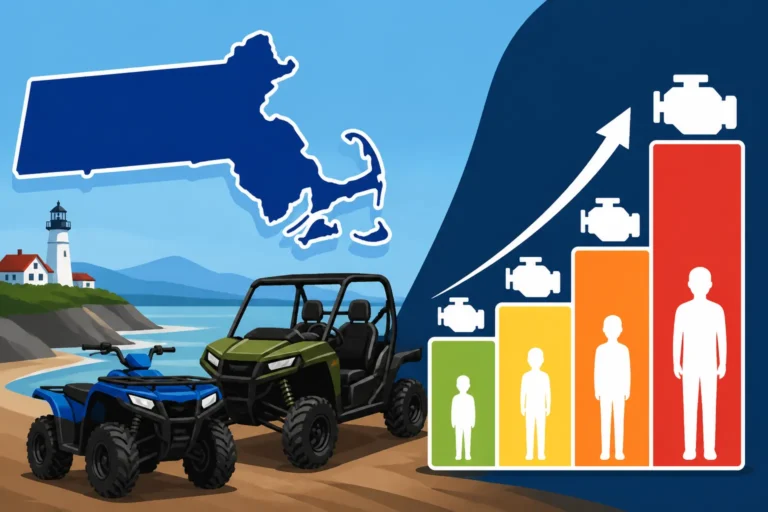
For riders aged 14 to 16, the rules are slightly different but still restrictive. They can operate an ATV (but typically not a UTV as the law is geared towards ATVs) on public lands if they are at least 14 years old, possess a valid OHV safety certificate, and are operating a machine with an engine size no greater than 90cc. Crucially, they must be under the direct supervision of an adult who is at least 18 years old. This [Massachusetts Supervising Adult Defined] must maintain continuous visual and verbal contact with the youth rider. During a road crossing, this means the adult needs to be right there, guiding the process, and ensuring the youth rider executes the stop, yield, and direct crossing maneuver flawlessly. If a rider is 16 years old and has a valid driver's license, the 90cc restriction is typically lifted, and the supervision requirement for road crossings may also be altered, as the driver's license implies a certain level of road awareness.
| Rider Age Category | Registration Required | Safety Certificate Required | Supervision Required | Engine Size Limit | Road Crossing Operation |
|---|---|---|---|---|---|
| Under 14 | Yes | Yes | Yes | Any | Cannot operate across |
| 14-16 (No Driver's Lic.) | Yes | Yes | Yes (18+ adult) | 90cc | Can operate across |
| 16-17 (With Driver's Lic.) | Yes | Yes | Yes | Any | Can operate across |
| 18+ | Yes | No | No | Any | Can operate across |
Implications for Side-by-Sides
Side-by-sides (SxSs or UTVs) present a few unique considerations, though the fundamental rules for road crossings remain the same. While they are often larger and more stable, they are still considered OHVs. The main distinction for a side-by-side driver relates to operator age and licensing. Generally, for anyone operating an OHV, including a side-by-side, on public land or crossing a public way, if they are 16.5 years or older, they must possess a valid motor vehicle driver's license. If they are under 16.5, they must possess an OHV safety certificate and comply with the supervision and engine size limits mentioned above. You can find more details on this in [Massachusetts Rules for a Side-by-Side Driver].
Another factor with side-by-sides is that they often carry passengers. When crossing a public way, all passengers must remain seated, wear appropriate safety gear (helmets are mandatory for all riders in Massachusetts, regardless of age, on any OHV), and follow the driver's instructions. The driver of a side-by-side has an even greater responsibility to ensure a safe crossing, given the potential for more occupants and the machine's larger size. Ensuring proper seatbelts are worn and everyone is safely secured before and during the crossing is critical. Just like with ATVs, having enhanced visibility through lighting or mirrors, perhaps from a reputable brand like SuperATV, is always a smart choice when dealing with public roads.
Avoiding Penalties and Common Mistakes
Nobody wants to cut short a great day of riding with a conversation with law enforcement, or worse, a costly ticket or machine impoundment. Unfortunately, improper road crossings are one of the most common ways OHV riders in Massachusetts find themselves on the wrong side of the law. Understanding the consequences and the typical pitfalls can help you steer clear of trouble.
What Happens If You Break the Rules
The Massachusetts Environmental Police are the primary enforcement agency for OHV laws, and they don't take violations lightly. If you're caught improperly operating your ATV or UTV on a public way – whether that means riding on it, crossing incorrectly, or doing so with an unregistered machine – the penalties can be significant. First, you're looking at fines. These aren't usually small, often starting in the hundreds of dollars for a single violation. These fines are designed to be a deterrent, reflecting the seriousness of operating an off-road machine in an environment it's not designed for.
Beyond just a financial hit, an Environmental Police Officer has the authority to seize your machine. Imagine your riding day ending abruptly with your ATV being loaded onto a tow truck, leaving you stranded. Getting your machine back involves more fees, court appearances, and a major headache that no rider wants. This is a very real possibility for repeat offenders or egregious violations. [Massachusetts Penalties for Illegal Riding] are in place for a reason, and officers are well-versed in enforcing them. Remember, [What an Environmental Police Officer Can Ask] includes proof of registration, safety certificates, and a general inquiry into your compliance with all OHV laws. Always be polite and cooperative, but ensure you understand your rights and responsibilities.
Common Misconceptions to Avoid
Many riders fall into traps born from misunderstanding or simply hoping for the best. One of the most common misconceptions is the "just a quick hop across the street" mentality. This leads riders to believe that if they're only on the public way for a few seconds, the rules somehow don't apply, or enforcement won't bother them. This is absolutely false. Whether it's one foot or one hundred feet, any illegal operation on a public way is a violation. The law doesn't make exceptions for duration.
Another trap is misidentifying a "public way." As we discussed, not all public ways are paved. Many dirt roads, gravel paths, or even unpaved sections that look like private access roads are, in fact, maintained by a town or state and therefore fall under the "public way" definition. Always assume a road is a public way unless you have explicit, verifiable information otherwise. When in doubt, don't risk it.
Finally, some riders think that because they're simply crossing, they don't need their registration card or proper safety gear. This is a critical mistake. Every requirement for operating an OHV legally on a trail applies equally to a road crossing. This means current registration, a valid safety certificate for youth riders, a helmet for everyone, and a machine in good working order with all required equipment. Ensuring your machine is always trail-ready, with all components functioning correctly, perhaps with quality parts from a trusted brand like SuperATV, is the best defense against being found non-compliant during a roadside check. By understanding and respecting these rules, you can ensure your Massachusetts riding adventures remain enjoyable and free of unnecessary legal trouble.
Disclaimer
This article is for general informational purposes only and does not constitute professional advice. Laws, prices and regulations vary by location and change over time. Consult a qualified professional for guidance on your specific situation.