Connecting Two Berkshire Forests Without Touching a Road
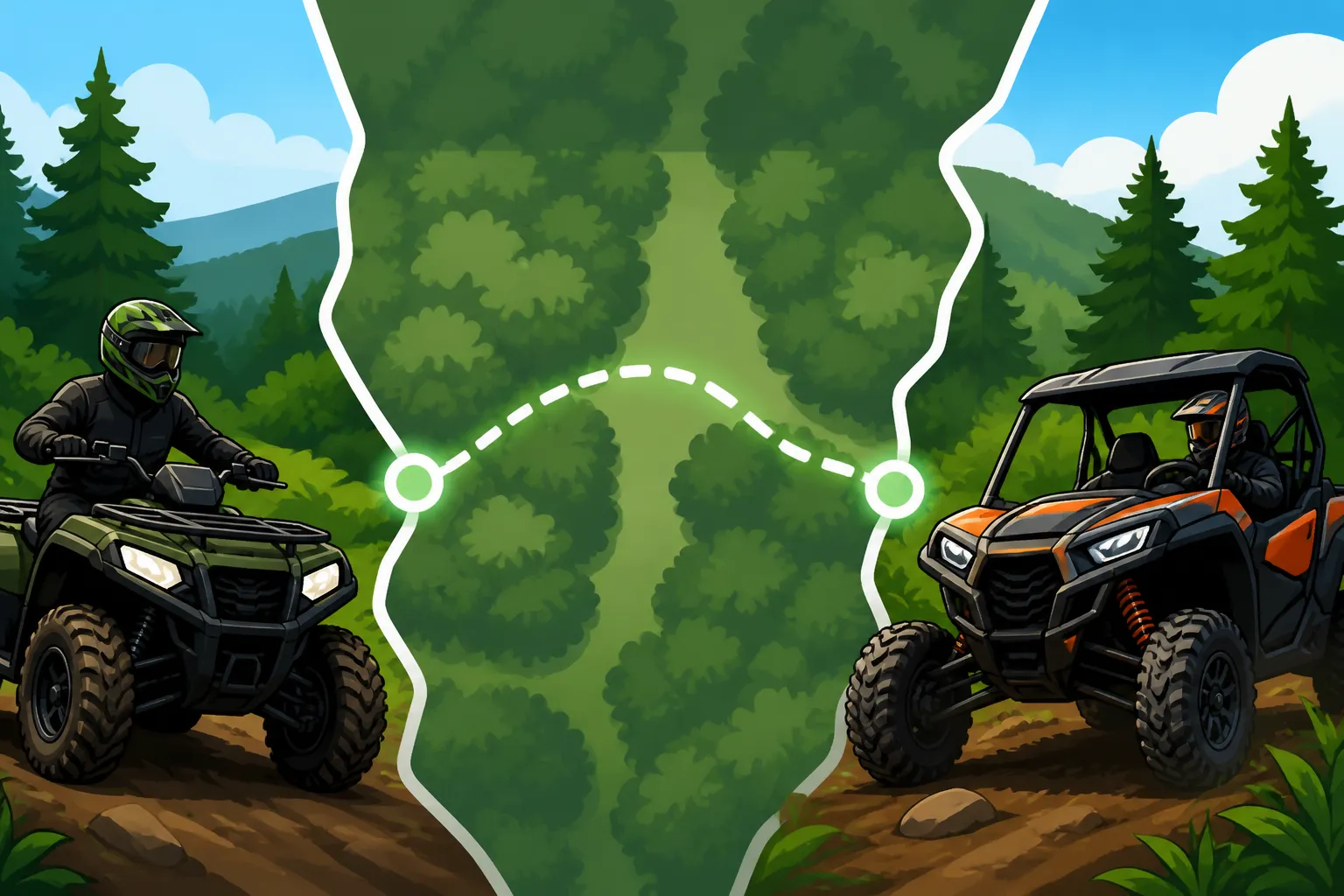
We all dream of those endless ribbons of dirt, where you can ride for miles without ever seeing pavement, connecting one incredible trail system to another. For ATV and UTV enthusiasts in the Massachusetts Berkshires, that dream often bumps up against the harsh reality of state laws and private land. This guide dives deep into the intricate challenges and limited possibilities of linking two Berkshire forests without ever touching a public road, offering realistic advice for navigating this tricky terrain.
The Dream vs. Reality: Why Road Connections Are So Tricky in Massachusetts
It’s a universal frustration for off-road riders: you’re looking at a map, and two fantastic trail systems are just a mile or two apart, separated by what looks like a harmless stretch of paved road or even a dirt path that feels like a trail. The temptation to just "connect the dots" can be immense, but in Massachusetts, the laws governing ATVs and UTVs are quite clear, making such connections far more difficult than many riders initially expect. This isn’t just about avoiding a ticket; it’s about understanding the foundational principles that shape our riding opportunities in the Bay State.
Massachusetts Bans Riding on Public Ways (Almost Always)
Let's get straight to the biggest hurdle: Massachusetts law, specifically [The ATV Law Lives in Chapter 90B], broadly prohibits the operation of ATVs and UTVs on public ways. This isn't some obscure bylaw; it’s a core piece of legislation designed to manage traffic, ensure safety for all road users, and protect public infrastructure. A "public way" isn't just a bustling highway; it includes pretty much any road, paved or unpaved, maintained by the state, a county, or a town, even if it feels remote and untraveled. That scenic gravel road winding through the woods? Very likely a public way. That quiet residential street leading to the trailhead? Definitely a public way.
The intent behind these laws is multi-faceted. There's the obvious concern for safety – ATVs and UTVs are designed for off-road terrain, not for mixing with cars and trucks, and they lack many of the safety features and road-legal equipment (like turn signals, specific lighting, and DOT-approved tires) required for street use. There are also environmental considerations, preventing machines from tearing up road shoulders or contributing to erosion. And, let's be honest, there's the noise factor; many communities are sensitive to the sound of off-road vehicles, and keeping them off public roads helps mitigate potential conflicts with residents. The frustration for riders is palpable because often, these public ways are the only physical barriers between large, otherwise contiguous tracts of rideable land. It feels like such a waste of potential trail miles. However, an Environmental Police officer isn't going to care about your frustration if they catch you riding on one; the [Massachusetts Penalties for Illegal Riding] can be significant, including fines and potential impoundment of your machine.
The Limited Exceptions to the Rule
Now, before you lose all hope, there are incredibly narrow exceptions to the "no public ways" rule, but they are crucial to understand as exceptions rather than opportunities for extended road travel. The most common exception allows for crossing a public way, provided it's done safely and at a designated point. Think of it like a pedestrian crossing a busy street: you don't get to walk down the street, but you can cross it to get to the other side.
Specifically, when you approach a public way on your ATV or UTV, you are required to come to a complete and full stop. You must then yield to any approaching traffic and proceed to cross the public way as directly and safely as possible, ensuring you minimize your time on the paved surface. This is not an invitation to drive a block or two down the road to get to another trail. It's a quick, direct traversal. For riders under 16 and a half, there are even stricter rules. While an adult rider might simply need to cross safely, younger riders often have additional requirements or may be prohibited from crossing certain roads unless supervised or at very specific designated points. Remember, [Road Crossings Change at 16 and a Half] for some rules, highlighting the emphasis on experience and maturity when even momentarily interacting with public roads. The Environmental Police strongly advise that riders consult local DCR offices or trail maps for clearly marked crossing points, as not all road intersections are permissible. These crossings are often well-signed or are part of an approved trail plan, so don't assume every dirt path that dead-ends at a road is a legal crossing.
Understanding the Berkshire OHV Landscape
The Berkshire Mountains, with their rolling hills, dense forests, and picturesque valleys, hold immense appeal for off-road enthusiasts. However, when it comes to riding, not all woods are created equal. Massachusetts has a very specific framework for where ATVs and UTVs are permitted, and understanding this landscape is key to planning any legal "connection" between riding areas. It's not like some other states where thousands of miles of multi-use trails stretch uninterrupted; here, designated areas are precious and often isolated.
The Three State Forests: Our Massachusetts Riding Hubs
For ATV and UTV riders in Massachusetts, the vast majority of legal, state-sanctioned riding takes place within just three incredible state forests, all nestled within the beautiful Berkshire region. These are our official playgrounds, maintained and managed by the Department of Conservation and Recreation (DCR), often with the help of dedicated local volunteer clubs.
First up is [Beartown's 25 Miles in Massachusetts], located primarily in Monterey and Great Barrington. Beartown offers a fantastic network of trails, often winding through mixed hardwoods and pines, with varied terrain that can challenge riders of different skill levels. You'll find a mix of wider forest roads and some more technical single-track sections here.
Next, we have [October Mountain's 30 Miles in Massachusetts], which is Massachusetts' largest state forest, spanning parts of Washington, Lee, Becket, and Lenox. This sprawling forest provides the most extensive network of trails, often featuring dramatic elevation changes, rocky sections, and plenty of opportunities for long, immersive rides. It's a real gem for those looking to put some miles on their machine.
Finally, there's [Pittsfield State Forest's 14 Miles in Massachusetts], situated in Pittsfield and Hancock. While smaller in terms of dedicated OHV mileage, Pittsfield still offers a robust riding experience, often characterized by its stunning views and diverse ecosystems. It's a popular spot for both local riders and those passing through the northern Berkshires.
These three forests collectively offer the bulk of legal ATV and UTV riding in the state. They are distinct trail systems, each with its own character and rules, but crucially, they are the places where your Massachusetts OHV registration allows you to legally operate your machine. The challenge, of course, is that while they are all in the Berkshires, they aren't directly connected by a continuous trail. You can't simply ride from Beartown to October Mountain without encountering roads or private land in between.
The Gaps In Between: Private Land, Towns, and Conservation Areas
The areas separating these designated state forest riding hubs are where the dream of seamless connections often dissolves into legal and practical complexities. Picture it: vast tracts of forestland and open space exist between Beartown and October Mountain, or October Mountain and Pittsfield. However, the overwhelming majority of this land is either privately owned, managed by towns, or designated as conservation areas with strict rules against motorized vehicle use.
On private land, the law is unambiguous: you cannot ride without explicit, written permission from the landowner. This is codified in [Massachusetts Landowner Permission in Writing], and it's not something to take lightly. Trespassing is a serious offense, and simply seeing an unposted trail doesn't grant you access. Many private landowners are understandably protective of their property, concerned about liability, property damage, and disruption. Building relationships with landowners to gain permission for a connector trail is a monumental task, often involving complex agreements, liability waivers, and ongoing maintenance commitments that are simply not feasible for individual riders.
Similarly, much of the remaining open space is controlled by towns (municipal lands), land trusts, or other conservation organizations. These areas, while often beautiful, are typically managed for passive recreation like hiking, birdwatching, or hunting, and ATVs and UTVs are explicitly prohibited. Town bylaws and conservation restrictions often ban motorized vehicles to protect sensitive ecosystems, prevent erosion, and maintain the quiet enjoyment of nature for non-motorized users. [Massachusetts Town Conservation Land Rules] can be very restrictive, and these regulations are enforced by local police and environmental agencies. Even utility easements, which might seem like natural corridors, are often subject to specific agreements that do not include public OHV use, and traversing them without permission is considered trespassing. The fragmented nature of land ownership and management in Massachusetts creates a veritable patchwork of rules, making any informal "connection" through these gaps virtually impossible without breaking the law.
Strategies for "Connecting" Without Breaking the Law
Given the strict regulations and fragmented land ownership in Massachusetts, the idea of seamlessly riding from one Berkshire state forest to another without touching a public road is, for the most part, a fantasy. However, that doesn't mean you can't experience all three incredible riding areas in the Berkshires during a single trip or riding season. It just means you need to adjust your strategy to comply with the law and ensure an enjoyable, stress-free adventure.
Trailering Between Trailheads
This is, without a doubt, the most common, practical, and legal method for "connecting" the various OHV trail systems in Massachusetts. Instead of trying to ride directly, you trailer your ATV or UTV from one trailhead to the next. While it might not have the romantic appeal of a cross-country journey on dirt, it's efficient, safe, and keeps you on the right side of the law.
The logistics are straightforward but require some planning. You'll need a reliable truck or SUV capable of towing your machine (or machines) on a trailer. After a ride in, say, Beartown State Forest, you load your ATV or UTV back onto the trailer, secure it properly, and then drive on public roads to the next designated trailhead, perhaps October Mountain. This allows you to experience the full range of trails across the different forests without risking a fine or impoundment for illegal road use. When you arrive at the new trailhead, you simply unload your machine, park your truck and trailer, and hit the trails again. Keep in mind that [Massachusetts Day Use Parking Costs] can apply at state forest trailheads, so always check the DCR website or specific forest information before you arrive. Some parking lots are free, while others have a fee, especially for out-of-state vehicles.
While trailering might seem like an interruption, it offers several advantages. It allows you to carry more gear, pack a full cooler, and gives you a chance to rest and refuel before the next leg of your adventure. It also minimizes wear and tear on your machine that comes from riding on pavement, which ATVs and UTVs are not designed for. The distances between the Berkshire forests aren't insurmountable by road; for example, the drive from Beartown to October Mountain is scenic and manageable. While you might dream of an epic ride from one forest to another, the reality of [Trailering Over the Berkshires] is simply the most responsible and enjoyable way to maximize your riding time across the state's designated OHV areas.
Here's a quick reference for estimated road travel times between the Berkshire's three main OHV forests, assuming ideal conditions:
| From Forest | To Forest | Estimated Drive Time (Road) |
|---|---|---|
| Beartown State Forest | October Mountain State Forest | 30-40 minutes |
| October Mountain State Forest | Pittsfield State Forest | 25-35 minutes |
| Beartown State Forest | Pittsfield State Forest | 45-55 minutes |
Note: These are approximate times and can vary based on traffic, road conditions, and your specific starting/ending points within each large forest.
Exploring Potential Legal Connectors (If They Exist)
The idea of a "legal connector" trail – a short, officially designated path that links two otherwise separate riding areas without being classified as a public way – is a tantalizing prospect for Massachusetts riders. Unfortunately, in the Berkshires, and indeed across much of the state, such designated connectors are exceedingly rare for ATVs and UTVs. This isn't to say they never exist, but they are far from common, and riders should never assume a connection is legal without explicit, official verification.
Sometimes, what appears on a map as a "woods road" or an old logging path might look like a perfect connector. However, as discussed, many of these are classified as public ways, even if they are unpaved, minimally maintained, and see little vehicular traffic. [Which Dirt Roads Count as a Public Way] can be a nuanced legal question, but generally, if a town or state maintains it or has a right-of-way, it's off-limits for ATVs and UTVs.
The most reliable way to explore any potential legal connectors is to consult directly with the DCR (Department of Conservation and Recreation) or the Massachusetts Environmental Police. These are the authorities responsible for managing state lands and enforcing OHV laws. You can reach out to [Who to Call About a Massachusetts OHV Registration] for clarification or inquire about specific trail maps that might indicate an approved crossing or short connecting segment. Similarly, checking the DCR's official OHV trail maps – available online or at ranger stations – is paramount. These maps clearly delineate authorized trails and any designated crossings. Do not rely on third-party mapping apps or anecdotal information from other riders, as rules and designations can change, and outdated information can lead to serious legal trouble. If you’re asking about a potential connection, be prepared to provide specific location details. Always remember that for [Massachusetts Permit Questions Riders Ask], the answer is almost always to stick to officially designated trails and to confirm any ambiguous sections with the authorities before you ride. The state is very conservative about opening new connective routes for motorized use due to environmental concerns, landowner relations, and safety considerations.
The Role of Local Clubs and Advocacy
While the individual rider faces significant challenges in "connecting" Berkshire forests, there's a powerful force at work behind the scenes: local ATV and UTV clubs. These organizations are the backbone of trail access and expansion in Massachusetts. They represent the collective voice of riders, working tirelessly to preserve existing opportunities and, yes, even to advocate for new ones, including potential connectors. If you want to see more riding opportunities or easier connections, getting involved with a club is one of the most impactful things you can do.
How Clubs Work Towards Trail Expansion
Local ATV and UTV clubs are far more than just groups of people who enjoy riding together. They are often formally organized, non-profit entities that collaborate closely with the DCR, the Environmental Police, and private landowners. A prime example is the Berkshire Trails Council, which plays a crucial role in maintaining and advocating for trails in the western part of the state. [How the Berkshire Trails Council Works With Rangers] is a testament to the essential partnership between riders and state agencies.
These clubs contribute in myriad ways to trail expansion and maintenance. Firstly, they volunteer countless hours to physically maintain existing trails, clearing brush, repairing erosion, and ensuring trails remain safe and passable. This demonstrates responsible stewardship, which is vital for building trust with land managers. Secondly, they act as advocates. Clubs meet with DCR officials, attend public hearings, and lobby state legislators to support new trail projects or the expansion of existing ones. They often spearhead efforts to negotiate with private landowners for access, sometimes securing easements or permission for short connector trails that might bridge a gap between larger systems. Finally, clubs are instrumental in education, helping to inform riders about rules, safety, and responsible riding practices. By joining a club, you're not just getting access to group rides; you're supporting the organized effort to create and maintain the very trails you want to ride. [Massachusetts Clubs That Maintain Trails] are always looking for new members and volunteers, and your participation directly strengthens the collective voice for OHV enthusiasts.
The Challenges of Creating New Connectors
While the efforts of local clubs are commendable, the path to creating new OHV connectors in Massachusetts is fraught with challenges. It's a long, slow, and often complex process that requires significant patience and resources. Many riders express frustration at the lack of new trails, but understanding these hurdles can help contextualize why progress seems so slow.
One of the biggest obstacles is funding. Developing new trails, conducting environmental impact studies, and acquiring easements or land can be incredibly expensive. While OHV registration fees do contribute to the [The OHV Trail Fund Your Sticker Pays Into], these funds often need to stretch across multiple projects and administrative costs statewide. Environmental concerns are another major hurdle. Massachusetts is a densely populated state with sensitive ecosystems. Any proposal for a new trail or connector must undergo rigorous environmental review to ensure it won't negatively impact wetlands, wildlife habitats, or water quality. This process can be lengthy and costly.
Landowner permission remains a critical factor. Even if public funds and environmental approvals are in place, gaining the consent of every private landowner along a proposed connector route can be incredibly difficult. Property rights are fiercely protected, and many owners are simply unwilling to allow motorized access due to liability concerns, privacy, or personal preference. Public opposition, particularly from residents in areas adjacent to proposed trails, can also derail projects. Concerns about noise, increased traffic, and potential devaluation of property are common and often vociferously expressed at public meetings. Lastly, the bureaucratic process itself, involving multiple state agencies (like DCR, Environmental Police, MassDOT, and local conservation commissions) can be slow and deliberate. The DCR often undertakes large-scale planning initiatives, such as the [Massachusetts Trail Master Plan Pilot], which can take years to develop and implement, reflecting the intricate dance of balancing recreation, conservation, and community interests. While the desire for new connectors is strong, the reality is that each proposed mile of trail faces a gauntlet of approvals and potential opposition.
Essential Gear and Planning for Berkshire Riding
Whether you're trailering between forests or simply enjoying a full day within one of the designated OHV areas, proper planning and the right gear are absolutely crucial for a safe and enjoyable experience in the Berkshire Mountains. The terrain can be challenging, the weather unpredictable, and cell service spotty. Being prepared isn't just about comfort; it's about safety and self-sufficiency when you're miles deep in the woods.
Navigation and Communication in Remote Areas
Riding in the Berkshires, especially in larger state forests like October Mountain, can quickly take you into remote areas where you're out of sight and earshot of others. Relying solely on your phone for navigation or communication is a risky gamble. While smartphones are incredibly useful, [Cell Dead Zones in the Berkshire Hills] are common, particularly in valleys or dense tree cover. A dead battery or a dropped phone can leave you disoriented and unable to call for help.
That's why a dedicated GPS unit loaded with detailed topographical maps is an invaluable piece of gear. These devices are rugged, battery-powered, and don't rely on cellular signals. Many riders also advocate for carrying a good old-fashioned [Carrying a Paper Map in a State Forest] of the area. Familiarize yourself with the map before you ride, understand key landmarks, and know your general direction of travel. A compass can be a lifesaver if your electronics fail. For group rides, two-way radios (walkie-talkies) are excellent for maintaining communication between machines, especially on dusty trails or around blind corners, where verbal commands or hand signals might not be effective. Always let someone know your planned route and estimated return time before you head out, and if possible, ride with at least one other machine. This "buddy system" is one of the most fundamental safety practices in off-road riding.
What to Pack for a Day on the Massachusetts Trails
A successful day on the trails starts long before you turn the key. Packing smart means anticipating potential issues and ensuring you have the essentials to handle minor mishaps or unexpected weather changes.
Here’s a detailed checklist of what to consider bringing for a full day of Berkshire riding:
- Hydration and Nutrition: At a minimum, bring plenty of water. Dehydration can set in quickly, even on cooler days, especially with the physical exertion of riding. Pack high-energy snacks like granola bars, nuts, or fruit to keep your energy levels up. A cooler with drinks and lunch is always a welcome sight during a break.
- First-Aid Kit: A well-stocked first-aid kit is non-negotiable. It should include bandages, antiseptic wipes, pain relievers, allergy medication, and any personal medications you might need. Knowing how to use what's in your [First Aid on a Remote Berkshire Loop] kit is just as important as having it.
- Basic Tools and Spare Parts: A multi-tool, tire plug kit, small air pump (either hand-operated or 12V), zip ties, duct tape, and a flashlight are essential. Consider bringing a spare belt for your UTV or ATV, especially if you're tackling more aggressive terrain. For added confidence on challenging trails, many riders rely on durable aftermarket parts. Products from brands like SuperATV are known for their robust construction, whether it's heavy-duty axles, reinforced A-arms, or even full skid plate systems that can help you navigate rocky Berkshire terrain without worrying about damaging your machine's underside. Packing a few spare bolts or small clamps can also save a day.
- Rain Gear and Layers: The weather in the Berkshires can change rapidly, especially at higher elevations. A lightweight, packable [Rain Gear in the Berkshires] jacket and pants can save you from an uncomfortable ride home. Even on warm days, a long-sleeve shirt or light jacket is good to have for cooler mornings or protection from branches. Remember to consider [What to Wear on a Cold Berkshire Morning] if you're riding in the shoulder seasons.
- Insect Repellent: Depending on the season, ticks and mosquitoes can be prevalent. Pack a strong insect repellent, especially in late spring and summer. Knowing [What Bug Spray to Pack for a Berkshire June] can make a huge difference in your comfort levels.
- Recovery Gear: A winch is a fantastic piece of equipment for self-recovery or helping a buddy out of a sticky situation. If your machine doesn't have one, consider a small, portable strap or rope. High-quality winches and recovery gear from SuperATV are a popular choice among serious riders for their reliability and pulling power.
- Trash Bag: Always practice "Leave No Trace" principles. Pack out everything you pack in, and perhaps a little extra if you spot any litter on the trails.
Being over-prepared is always better than being under-prepared when you're venturing into the Massachusetts wilderness.
Understanding the Massachusetts Regulatory Landscape
Riding an ATV or UTV in Massachusetts isn't just about hitting the trails; it's also about navigating a clear and sometimes complex regulatory landscape. To legally enjoy the state's designated riding areas, you need to understand and adhere to specific registration, safety, and environmental rules. Ignoring these can not only lead to fines but also jeopardize future access for all riders.
Registration and Safety Certificate Requirements
Before your wheels even touch a Massachusetts trail, your machine needs to be properly registered. For Massachusetts residents, this means securing a [Massachusetts Two-Year OHV Registration], which is a mandatory requirement. This registration provides you with a decal and a registration card that must be carried with you whenever you're operating your machine. It's how the state identifies your vehicle and ensures you're contributing to the trail fund that supports OHV recreation.
If you're visiting from out of state, don't assume your home state's registration is valid here. Massachusetts has its own rules for visitors, requiring a [Massachusetts Non-Resident OHV Registration]. This is typically a one-year sticker, and it's essential to obtain it before you plan to ride. Trying to ride on an out-of-state sticker or with no sticker at all will result in a citation from the Environmental Police.
Beyond machine registration, many riders also need an OHV safety certificate. This is particularly crucial for younger riders. [Massachusetts Safety Certificates Under 18] are required for anyone operating an ATV or UTV on public land if they are under 18 years of age. This course covers safe operating practices, environmental responsibility, and state laws, ensuring riders have a foundational understanding of what it means to be a responsible off-road enthusiast. Even if you're over 18, taking a safety course is highly recommended; it's a great way to brush up on skills and stay current with regulations. Remember, these requirements are not optional; they are a prerequisite for legal riding in any Massachusetts state forest.
Respecting Landowners and the Environment
The privilege of riding in Massachusetts comes with a profound responsibility to respect both private property and the natural environment. While designated trails in state forests are open for OHV use, the vast majority of land in the state is privately owned, and access requires explicit permission. As previously mentioned, [Massachusetts Landowner Permission in Writing] is not just a suggestion; it's a legal requirement. Riding on private land without permission is trespassing, which can lead to legal penalties and, perhaps more significantly, erode the goodwill that is essential for maintaining and potentially expanding future riding opportunities. Always be sure you know whose land you are on and if you have the proper authorization.
Environmental stewardship is equally critical. Off-road vehicles have the potential to impact sensitive ecosystems if not operated responsibly. Riders are expected to stay on marked trails, avoiding unauthorized routes that can lead to erosion, habitat disruption, or damage to vegetation. Crossing streams or wetlands inappropriately can harm water quality and aquatic life. The DCR and Environmental Police closely monitor trails for signs of misuse, and violations can lead to fines or even trail closures. Be mindful of noise levels, especially when riding near residential areas or other recreationists. [Massachusetts Muffler and Noise Rules] are in place to ensure machines are not excessively loud, which can lead to complaints and calls for stricter regulations. It's also vital to practice "Leave No Trace" principles: pack out all your trash, avoid disturbing wildlife, and leave the trails in better condition than you found them. Actions like [Massachusetts Bans Beach and Dune Damage] highlight the state's commitment to protecting fragile natural areas, and similar principles apply to all riding environments. By being a responsible and respectful rider, you help ensure that the Berkshire trails remain open and enjoyable for everyone, for years to come.
Disclaimer
This article is for general informational purposes only and does not constitute professional advice. Laws, prices and regulations vary by location and change over time. Consult a qualified professional for guidance on your specific situation.