How a Parent Registers a Quad for a Child
Bringing an all-terrain vehicle (ATV) into the family for a child can be incredibly exciting, filled with dreams of them learning responsibility and enjoying the great outdoors. But let's be honest, trying to figure out the maze of how to legally register that quad when the primary rider is a minor can feel like trying to solve a Rubik's Cube blindfolded. Many parents hit a wall wondering if the machine should be in their child's name, their own, or some combination. This guide is here to walk you through the process, clarifying the specific requirements in Massachusetts so you can get your child's quad properly registered and ready for the trails.
Understanding Ownership for Minors in Massachusetts
One of the biggest head-scratchers for parents is the concept of ownership when it comes to a child and an ATV. While your child might be the one riding the machine and seeing it as "theirs," the legal reality in Massachusetts is that a minor typically cannot enter into a contract or legally own a vehicle outright. This fundamental principle shapes how you'll approach registration.
Think about it this way: when you buy a car for a teenager, the title usually goes into an adult's name, even if the teen is the primary driver. The same logic applies to off-highway vehicles (OHVs) like ATVs in the Bay State. The state needs a legally responsible adult on the registration, not just because they're paying for it, but because they are the one accountable for the machine's lawful use and maintenance. This isn't meant to be a roadblock to family fun; it's simply a recognition of legal responsibility. It also ensures that if there's ever a question of who is truly accountable for the vehicle, there's a clear answer.
The Parent as the Registered Owner
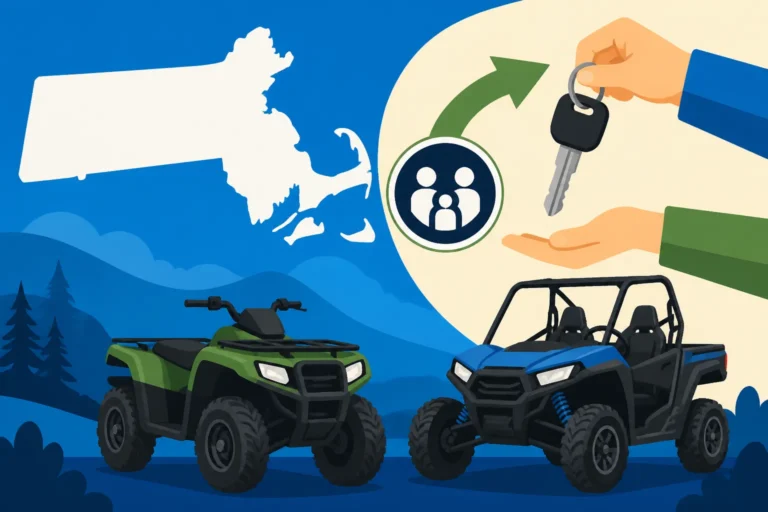
Given that a minor cannot legally own an ATV, it falls to the parent or legal guardian to be the official registered owner of the machine. This is a critical distinction that streamlines the entire process. When you go to register the ATV, all the paperwork – from the bill of sale to the application itself – will need to reflect your name as the owner, not your child's.
This doesn't mean the ATV isn't for your child; it simply means you, as the adult, are taking on the legal mantle of ownership. This role comes with responsibilities, of course, but it also simplifies the administrative burden of getting the machine registered. When dealing with the Massachusetts Environmental Police (who handle OHV registrations, not the RMV), they'll be looking for a responsible adult's information for all official records. It’s also important to remember that this adult ownership extends to all the financial responsibilities too, from the initial purchase to the ongoing registration fees and any potential maintenance costs. For most families, this is a natural fit, as parents are typically footing the bill anyway.
Step-by-Step Registration for a Child's Quad
Registering an ATV in Massachusetts, even when it's primarily for a child, follows a clear set of steps, but it's vital to ensure all documents reflect the parent or guardian as the owner. Let's break down exactly what you'll need to do.
Gathering Your Proof of Ownership
The first hurdle is proving that you, the adult, legitimately own the quad. This part is pretty straightforward but requires the right documentation depending on whether the machine is new or used.
If you're buying a brand-new ATV from a dealer, you'll need the Manufacturer's Certificate of Origin (MCO). This is essentially the birth certificate of the machine, and it must be issued in your name as the parent or legal guardian. The dealer should handle this when you make the purchase, ensuring your information is correctly listed as the initial owner. Don't leave the dealership without verifying that the MCO is accurately completed in your name. [Massachusetts Requires an MCO for a New Machine] explains this in more detail.
For a used ATV, whether you bought it from a private seller or an auction, you'll need a clear and complete bill of sale. This document is your proof that you acquired the machine and should clearly state your name as the buyer, the seller's information, the date of sale, the purchase price, and a full description of the ATV, including its Vehicle Identification Number (VIN). If you're creating a bill of sale yourself, using a reputable template from a service like LawDepot can ensure you cover all the necessary legal points. It's often helpful to have a physical copy, even if you are processing the registration online. [Massachusetts Requires a Bill of Sale for a Used One] provides additional insights into this crucial document. Make sure the VIN on the bill of sale matches the VIN on the actual ATV exactly. A mismatch here can cause significant delays in your registration.
Completing the Registration Application
Once you have your proof of ownership, you'll move on to the actual registration application. This form is available through the Massachusetts Environmental Police's online registration system or sometimes in person at their offices.
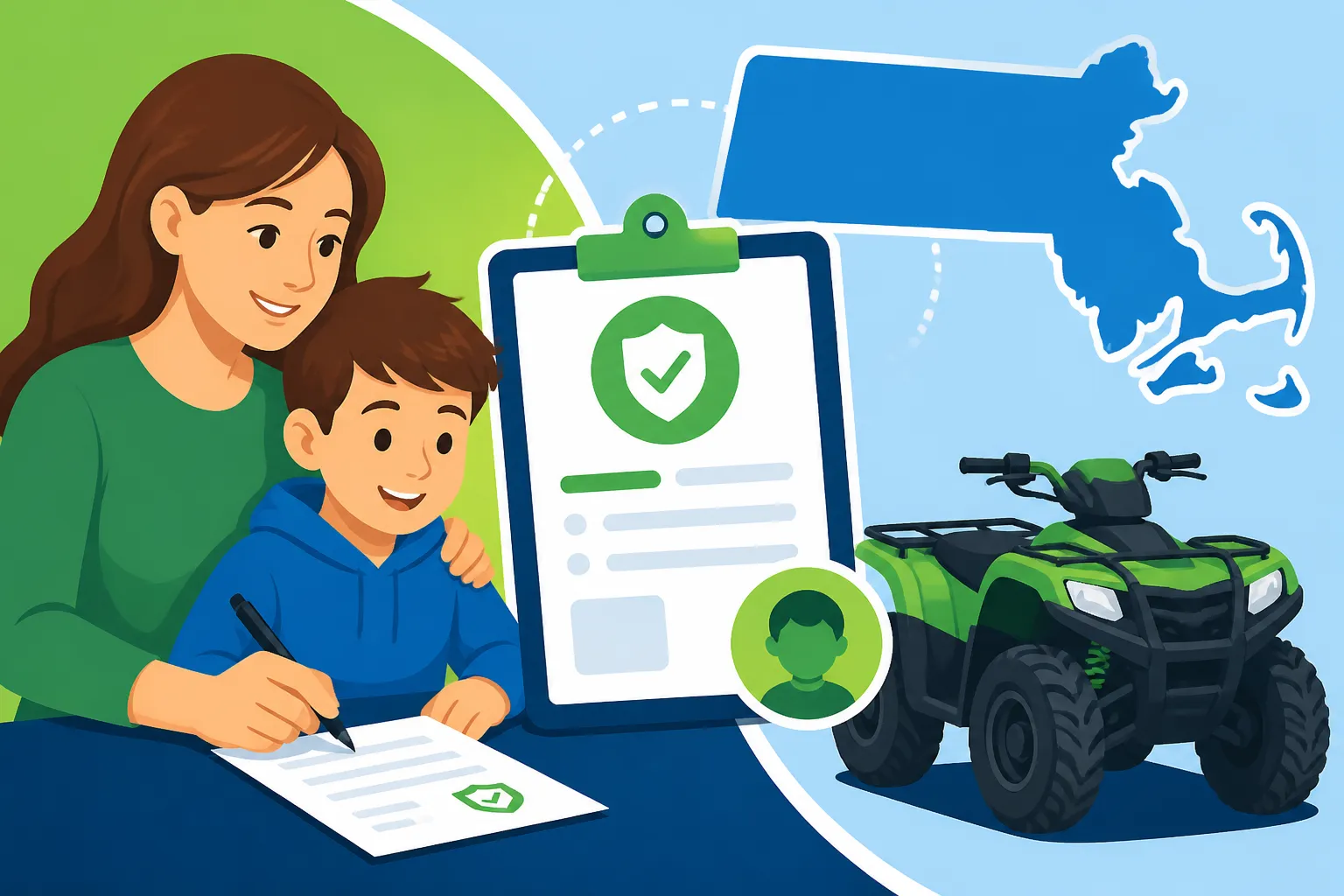
You'll need to fill out all sections of the application with your personal information as the parent/guardian: your full name, address, driver's license number, and contact details. The ATV's information, including its make, model, year, and VIN, will also be required. It’s important to be meticulous when entering the VIN; a single digit off can invalidate the entire application. The application will also ask about the primary operator, and while your child will be riding it, you're the one legally registering it.
Handling Sales Tax and Fees
Massachusetts requires sales tax to be paid on the purchase of an ATV, just like any other vehicle. If you bought the ATV from a licensed dealer, they will typically collect the 6.25 percent sales tax at the point of sale and remit it to the state on your behalf. This is generally the easiest way to handle it.
However, if you purchased a used ATV from a private seller, you are responsible for paying the Massachusetts use tax directly to the Department of Revenue (DOR). You’ll need to file a Form ST-6, Sales and Use Tax Return, and pay the tax yourself within 20 days of the purchase date. The registration office will verify that this tax has been paid or that you've filed the form correctly before they issue your registration. Skipping this step is a common mistake that can lead to delays. [Massachusetts Sales Tax Forms at Registration] offers guidance on these requirements.
When it comes to the registration fee itself, Massachusetts charges a set amount for residents for a two-year registration. For example, [Massachusetts Charges $44 for Residents] for the full term. This fee contributes to the state's OHV trail fund, helping to maintain and expand riding opportunities, which ultimately benefits your child and other riders.
Receiving Your Registration Card and Decals
After your application is processed and fees are paid, the Environmental Police will issue a registration card and a set of decals. The registration card will list you, the parent, as the owner of the ATV. This card must be carried on board the ATV whenever it's being operated on public lands or trails. It’s a crucial document and acts as your proof that the machine is legally registered. [Massachusetts Registration Cards Carried on Board] explains why this is so important.
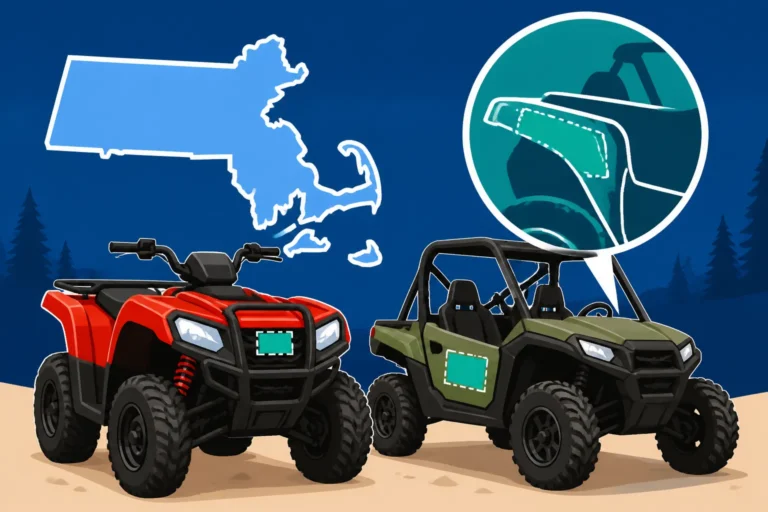
The decals are adhesive stickers that display the registration number and the expiration date. These need to be affixed to the ATV in specific locations to be clearly visible. Generally, this means on both sides of the forward half of the machine. The specific placement rules are designed for easy identification by law enforcement. Once these are applied, your child's quad is officially ready to roll!
Navigating Legal Requirements Beyond Registration for Young Riders
Getting the ATV registered in your name is a massive step, but it's only one piece of the puzzle. Massachusetts has some of the strictest laws in the nation concerning youth ATV riders, and as the parent, you are responsible for ensuring your child complies with all of them. These rules are in place for safety, and understanding them is paramount.
Age and Engine Size Restrictions
Massachusetts has a tiered system based on age and engine size, which can be a bit confusing at first glance. Generally, riders under the age of 14 are prohibited from operating ATVs on public or private land, with very few exceptions for sanctioned, supervised events. For riders between 14 and 16, there's an engine size limit, typically under 90cc, unless they are participating in an approved competition. And for those 16 and older, while engine size limits loosen, other rules still apply. It's really important to confirm your child's age and the ATV's engine size against the current regulations. [Massachusetts ATV Age Requirements] details these limits.
Safety Course and Helmet Laws
Every rider under the age of 18 in Massachusetts is required to complete an approved OHV safety course if they plan to ride on public land. As the parent, you'll likely need to attend part of this course with younger riders, or at least be very aware of its content. This course covers everything from safe operating procedures to environmental responsibility. Carrying proof of this safety certificate is a must on the trails. [Massachusetts Safety Certificates Under 18] outlines these requirements.
Furthermore, Massachusetts has a strict helmet law: every single person operating or riding as a passenger on an ATV must wear a helmet that meets federal safety standards. This isn't just a suggestion; it's the law, and it's enforced for the rider's protection. Always ensure your child has a properly fitted, DOT-approved helmet before they ever start the engine. [Massachusetts ATV Helmet Law] provides more information on this vital safety measure.
Supervision Requirements
For younger riders, even those who meet the age and engine size requirements, adult supervision is critical. A "supervising adult" is typically someone at least 18 years old who is capable of supervising the minor and maintaining visual and verbal contact. As the registered owner, you, as the parent, often become this supervising adult. This means you need to be actively engaged and present while your child is riding, especially when they're first learning or on new terrain. [Massachusetts Supervising Adult Defined] elaborates on the responsibilities of the supervising adult.
Navigating these rules might seem like a lot, but they are all designed to keep young riders safe and ensure responsible enjoyment of the sport. By taking the time to understand and adhere to these regulations, you're not just avoiding penalties; you're fostering a safe and respectful environment for your child to grow as a rider.
Essential Documents Checklist for ATV Registration
To help you keep track, here’s a quick checklist of the documents you’ll need to have ready when registering an ATV in your name for your child in Massachusetts. This ensures you have everything in order, whether you're using the [Massachusetts Online Registration System] or handling it in person.
| Document Type | New ATV Purchase | Used ATV Purchase | Notes for Parents |
|---|---|---|---|
| Proof of Ownership | MCO (Manufacturer's Certificate of Origin) | Bill of Sale | Must be in the parent/guardian's name. For used, LawDepot can assist with generating a comprehensive bill of sale. |
| Proof of Sales/Use Tax Payment | Dealer Receipt (showing tax paid) | Form ST-6 (filed & paid) | Dealer usually collects for new. Parent files Form ST-6 for private used sales. |
| Completed Registration Form | Yes | Yes | All parent/guardian information, ATV details, VIN. |
| Valid ID for Parent/Guardian | Yes | Yes | State-issued driver's license or ID card. |
| Proof of Massachusetts Residency | Yes | Yes | Utility bill, bank statement, or driver's license showing MA address. |
| Payment for Registration Fees | Yes | Yes | Check the current fee structure, like [Massachusetts OHV Registration Cost]. |
Having these documents neatly organized will make the registration process much smoother. Remember, the goal is always to present a clear, undisputed case that you are the responsible adult registering the ATV for legal operation. Once you’ve crossed all these T’s and dotted all the I’s, you’ll have the official registration card in hand, which, along with the decals, makes the quad legal to ride. Don't forget that [Why the Environmental Police Issue a Card, Not a Title] explains why Massachusetts doesn't provide titles for OHVs, which can be another point of confusion for new owners.
Disclaimer
This article is for general informational purposes only and does not constitute professional advice. Laws, prices and regulations vary by location and change over time. Consult a qualified professional for guidance on your specific situation.