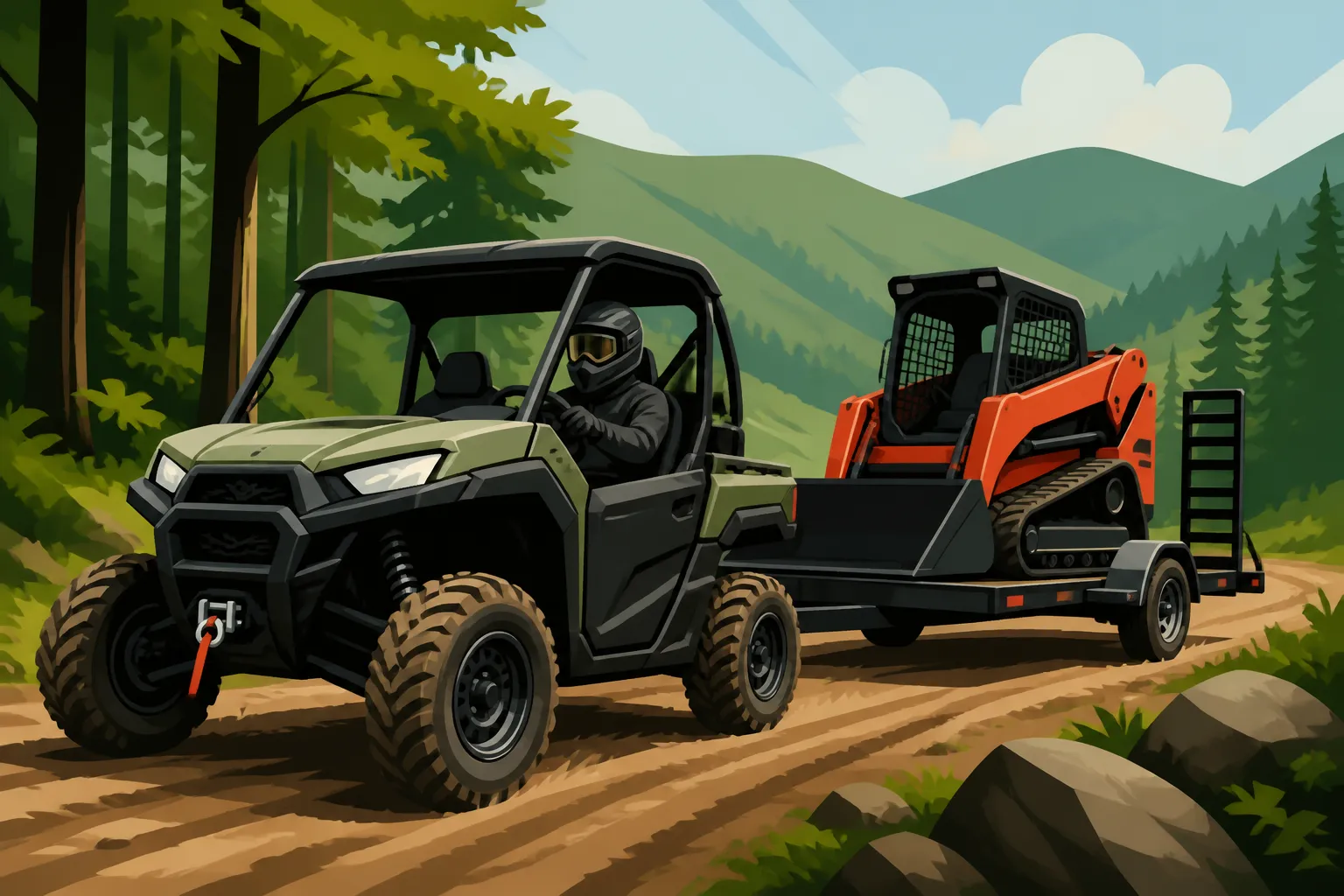
Hauling a Machine to a Berkshire Forest
There's nothing quite like the anticipation of a day (or a whole weekend!) spent exploring the beautiful Berkshire forests on your ATV or UTV. But before you can hit those stunning trails, there's the not-so-small matter of getting your machine there safely and legally. For many of us, this means hooking up a trailer, loading up the quad or side-by-side, and hitting the road – a process that, if not done correctly, can quickly turn a fun outing into a frustrating ordeal. This guide is here to walk you through everything you need to know about successfully hauling your off-road machine to its Berkshire adventure, ensuring you arrive ready to ride, not stressed out by transit woes.
Planning Your Haul: What to Consider Before You Leave
Successfully getting your ATV or UTV to a Massachusetts trail system like those in Beartown, October Mountain, or Pittsfield State Forests starts long before you even back the trailer out of the driveway. Careful planning is key to a smooth, safe, and legal journey. Thinking through these details upfront can save you a lot of headaches, potential fines, and even dangerous situations on the road.
Matching Your Tow Vehicle to Your Load
First things first: does your tow vehicle have what it takes? This isn't just about whether it can pull the trailer; it's about whether it can do so safely and within its manufacturer's specifications. Every truck, SUV, or even some larger cars have a maximum towing capacity, which includes the weight of the trailer and its contents. You need to know the dry weight of your trailer, the weight of your ATV or UTV, and then add in any extra gear, fuel, and supplies you're bringing along.
Overloading your tow vehicle isn't just illegal; it's incredibly dangerous. It compromises braking performance, steering control, and can put undue strain on your engine and transmission. Imagine trying to navigate one of those winding Berkshire roads, especially going downhill, with an overloaded trailer pushing your vehicle around. It's a recipe for disaster. Always check your vehicle's owner's manual for its specific towing limits, including tongue weight, which is the downward force the trailer hitch exerts on your tow vehicle. A good rule of thumb is that tongue weight should be 10-15% of the total trailer weight. If you're unsure, a trip to a local truck stop with a certified scale can help you determine your exact weights.
Choosing the Right Trailer for Your Off-Road Machine
The type of trailer you use also plays a significant role in your hauling success. While a small utility trailer might work for a single, lightweight ATV, a larger side-by-side or multiple machines will require something more substantial. There are essentially two main types: open and enclosed.
| Trailer Type | Pros | Cons | Best For |
|---|---|---|---|
| Open | Lighter, easier to maneuver, less wind resistance, generally more affordable. | Machines exposed to elements, dirt, and road debris; less security. | Short trips, single ATVs, budget-conscious. |
| Enclosed | Provides excellent protection from weather and theft; can double as storage. | Heavier, higher initial cost, more wind resistance, requires a more capable tow vehicle. | Long trips, multiple machines, UTVs, protecting valuable equipment. |
Consider whether you need a single-axle or tandem-axle trailer. Tandem axles offer better stability, especially at highway speeds and over uneven terrain, and provide a backup in case of a flat tire. They also distribute the load more evenly. Make sure your trailer's Gross Vehicle Weight Rating (GVWR) is more than sufficient for the weight of your machine(s) and gear. Don't forget proper ramp length and strength for loading and unloading, especially for a heavier UTV.
Pre-Trip Safety Checks and Essential Maintenance
Before you even think about loading up, perform a thorough safety check on your trailer and tow vehicle. This isn't optional; it's critical for everyone's safety on the road. Start with your trailer tires: check the pressure (including the spare!) and inspect for any cracks, bulges, or excessive wear. Underinflated tires can lead to blowouts, poor handling, and increased fuel consumption. Next, test all trailer lights – brake lights, turn signals, running lights. A faulty light can earn you a ticket and, more importantly, make you less visible to other drivers, especially when navigating dark, winding roads like some of the approaches to [October Mountain State Forest Riding in Massachusetts]. Ensure your trailer brakes are functioning correctly, if equipped, and that your safety chains are properly crossed under the hitch and securely attached to your tow vehicle. This critical step prevents the trailer from detaching entirely if the hitch fails. Finally, check your tow vehicle's fluid levels, tire pressure, and ensure your hitch receiver is clear of debris and the ball is properly lubricated.
Securing Your Machine: Straps, Chocks, and Common Mistakes
Once your tow vehicle and trailer are ready, the next crucial step is properly loading and securing your ATV or UTV. This is where many riders get it wrong, often leading to shifting loads, damaged machines, or even dangerous situations on the highway. Taking the time to do this correctly ensures your machine arrives at the [Massachusetts ATV Trails: Three Berkshire Forests] ready to ride.
Loading Your Machine Safely and Strategically
Before driving your machine onto the trailer, ensure the trailer is level and securely attached to your tow vehicle, or has its tongue jack and stabilizers properly deployed if detaching. Never load a trailer when it's unhitched from the tow vehicle unless it's designed for that and securely stabilized, as the tongue can pop up violently. When driving the ATV or UTV onto the trailer, do so slowly and carefully. Try to center the machine over the trailer axles to achieve proper weight distribution. Too much weight forward can overload your tow vehicle's rear axle and reduce steering control, while too much weight in the back can cause dangerous trailer sway. For most ATVs and UTVs, backing them onto the trailer is often recommended as it shifts the heavier engine weight slightly rearward, helping with balance and reducing tongue weight, especially on lighter trailers. Always secure the ramps after loading, either by stowing them or latching them firmly in place.
The Art of Strapping Down: Preventing Shifts and Damage
This is where the rubber meets the road, quite literally. You need robust straps – not flimsy bungee cords or old rope – that are rated for the weight of your machine. Ratchet straps are generally preferred for their ability to exert significant tension. Use at least four tie-down points, one at each corner of your ATV or UTV. Connect the hooks to strong, structural points on your machine, like the frame or a-arms, avoiding handlebars, plastic bodywork, or suspension components that might compress or be damaged.
Angle the straps outwards and forwards, creating an "X" pattern, to prevent both forward/backward and side-to-side movement. Cinch them down tightly, compressing the suspension slightly but not so much that you damage the shocks or bushings. The goal is to make the machine an integral part of the trailer's structure, unable to bounce or shift. After your first few miles of driving, pull over safely and re-check all your straps. They often loosen a bit as the machine settles, or due to road vibrations. It's a small step that can prevent a major incident. Chocks or wheel bonnets can provide an extra layer of security, especially for heavier UTVs, by physically preventing wheel movement.
Common Hauling Mistakes to Avoid
Many riders make simple errors that can have big consequences. One common mistake is using too few straps, or straps that are old and frayed. Always inspect your straps for wear and tear before each trip. Another error is strapping down the suspension too tightly, which can damage seals and components, or not tightening them enough, allowing the machine to bounce. Over-tightening can sometimes be as bad as under-tightening.
Failing to properly distribute the weight is another major issue. A trailer that's too heavy at the front or back will handle poorly, increasing the risk of sway or loss of control. If you have multiple machines, like two ATVs, ensure they are spaced to maintain balance. And remember to secure any loose gear inside the ATV or UTV's storage compartments or on the trailer itself. A loose fuel can or cooler can become a dangerous projectile during sudden braking or an accident. Also, if you’ve recently acquired your machine through a private sale, having a [Massachusetts Requires a Bill of Sale for a Used One] or other proof of ownership on hand can be useful if you encounter any unexpected stops or questions from law enforcement during your transit.
Legality and Logistics: Permits, Registration, and Road Rules
Navigating the roads of Massachusetts with a trailer requires understanding specific state regulations for both your tow vehicle, the trailer, and the machine you're hauling. It's not just about getting there; it's about getting there legally. A simple mistake can lead to fines, delays, or even more serious consequences.
Massachusetts Trailer Registration and Regulations
First and foremost, your trailer needs to be properly registered with the Massachusetts Registry of Motor Vehicles (RMV) and display a valid license plate. Even small utility trailers require registration. Ensure your registration is current and that you carry your registration paperwork in your tow vehicle. Massachusetts also has specific requirements for trailer equipment, including functional brake lights, turn signals, and often independent braking systems for heavier trailers.
When you're pulling a trailer, your speed limits can change. While Massachusetts generally allows vehicles to travel at posted limits, some highways or specific areas might have reduced speeds for vehicles with trailers. Always pay attention to road signs. Additionally, the overall length of your vehicle and trailer combination needs to be considered, especially on tighter turns or in urban areas. [Does a Utility Trailer Need Its Own Massachusetts Plate?] is a question many new haulers have, and the answer is almost always yes.
Your Machine's Registration and What to Carry
While you're hauling your ATV or UTV to a trail, it doesn't need to be registered for highway use, as off-highway vehicles are not street-legal in Massachusetts. However, the machine itself does need to be registered with the Massachusetts Environmental Police if you intend to ride it on public land like the state forests. Make sure your [Massachusetts Two-Year OHV Registration] or [Massachusetts Non-Resident OHV Registration] sticker is current and properly affixed to your machine.
More importantly, you must carry your current [Massachusetts Registration Cards Carried on Board] when you are riding. While you don't typically need it during transit on the highway, having a copy in your tow vehicle (perhaps in your glove box with your other vehicle documents) is a good practice. This documentation proves ownership and legal registration, which can be useful if you're stopped for any reason or involved in an incident. For any other temporary agreements, like borrowing a trailer or bringing a machine for a friend, having a simple document, perhaps one drafted using a platform like LawDepot, can clarify ownership and responsibility if questioned.
Route Planning and Navigating to the Berkshires
The Berkshire region is known for its beautiful, winding roads, some of which can be quite steep. Planning your route to your chosen forest, such as [Beartown State Forest Riding in Massachusetts] or [Pittsfield State Forest Riding in Massachusetts], is essential, especially when hauling a heavy trailer. Standard GPS units don't always account for vehicle length, weight, or low clearance points. Look for routes that avoid unnecessarily steep grades, tight turns, or narrow roads where maneuvering a trailer could be difficult or dangerous.
Consider potential fuel stops, as hauling a heavy load significantly reduces your fuel economy. It's wise to fill up before entering more rural areas where gas stations might be scarcer. Also, identify potential parking areas near the trailheads in advance. State forests often have designated trailer parking, but it can fill up quickly on busy weekends. Knowing where you're going and having a backup plan for parking can prevent frustrating circles and delays, getting you onto the trails faster.
Essential Gear for the Journey: Beyond Just the Machine
You've got the machine, the trailer, and the legalities sorted. But what about everything else? A successful trip to a Berkshire forest involves more than just the basics. Thinking through these additional items can make your journey safer, more comfortable, and ensure you're prepared for any eventuality, from a flat tire on the trailer to an unexpected downpour.
Tools and Emergency Roadside Kit
Even with meticulous preparation, things can go wrong on the road. A well-stocked emergency kit for your tow vehicle and trailer is non-negotiable. This should include:
- Spare tire for both your tow vehicle and your trailer. Check their pressure and condition regularly.
- Jack and lug wrench appropriate for both vehicles.
- Basic tool kit: Wrenches, pliers, screwdrivers, duct tape, zip ties.
- Tire repair kit: For minor punctures, a plug kit can get you to the next service station.
- Jumper cables or a portable jump starter.
- Reflective triangles or flares: Essential for roadside breakdowns to alert other drivers, especially on less-trafficked, winding roads in the Berkshires.
- First-aid kit: For minor cuts and scrapes or more serious emergencies.
- Fire extinguisher: Small automotive ones can be invaluable.
- Flashlight or headlamp: For nighttime repairs or inspections.
Don't forget to have a fully charged cell phone, but also consider carrying a paper map of the area, as cell service can be spotty in some remote Berkshire locations. [Cell Dead Zones in the Berkshire Hills] are a real concern, so don't rely solely on digital navigation.
Your Riding Gear and Supplies for the Trails
While not directly related to hauling, having your riding gear properly packed and accessible makes the transition from road to trail seamless. This includes your helmet (which is legally required in Massachusetts, regardless of age – see [Massachusetts ATV Helmet Law]), goggles, gloves, sturdy boots, and appropriate riding attire. Consider the weather, as the Berkshires can have unpredictable conditions. Layered clothing is often a good idea, and rain gear is always a smart addition, even if the forecast looks clear. [Rain Gear in the Berkshires] can save a day of riding from being cut short.
Beyond your personal gear, remember to pack essential supplies for your day on the trails:
- Extra fuel: While not required to be on the machine during transit, a securely stored fuel can is often a good idea for longer rides.
- Water and snacks: Staying hydrated and fueled is crucial.
- Small tool kit for your ATV/UTV: Basic tools for trailside adjustments or minor repairs specific to your machine.
- GPS device or paper trail map: For navigation once you're off-road.
- Recovery strap or small winch: If your machine gets stuck (and it happens to the best of us!).
- Small trash bag: Pack out everything you pack in!
Secure Storage for Valuables and Loose Items
Finally, think about securing everything else you're bringing. Wallets, phones, keys, and other valuables should always be kept on your person or in a locked compartment of your tow vehicle. Any loose items in the bed of your truck or on an open trailer should be tied down or secured in a storage box. This prevents them from flying out during transit, getting lost, or even causing damage to other vehicles. When parking your tow vehicle and trailer at the trailhead while you're out riding, remember to secure your vehicle and hitch lock your trailer to deter theft. [Massachusetts Trailheads With Trailer Parking] are usually fairly safe, but common sense precautions are always a good idea. Having a clear record of ownership for your equipment, whether through a traditional bill of sale or a digital document, can also simplify things should you ever need to report a theft. Services like LawDepot can assist in creating various legal documents, which might include an inventory of your equipment for insurance purposes.
Disclaimer
This article is for general informational purposes only and does not constitute professional advice. Laws, prices and regulations vary by location and change over time. Consult a qualified professional for guidance on your specific situation.