Registering a Quad Bought at a Massachusetts Auction
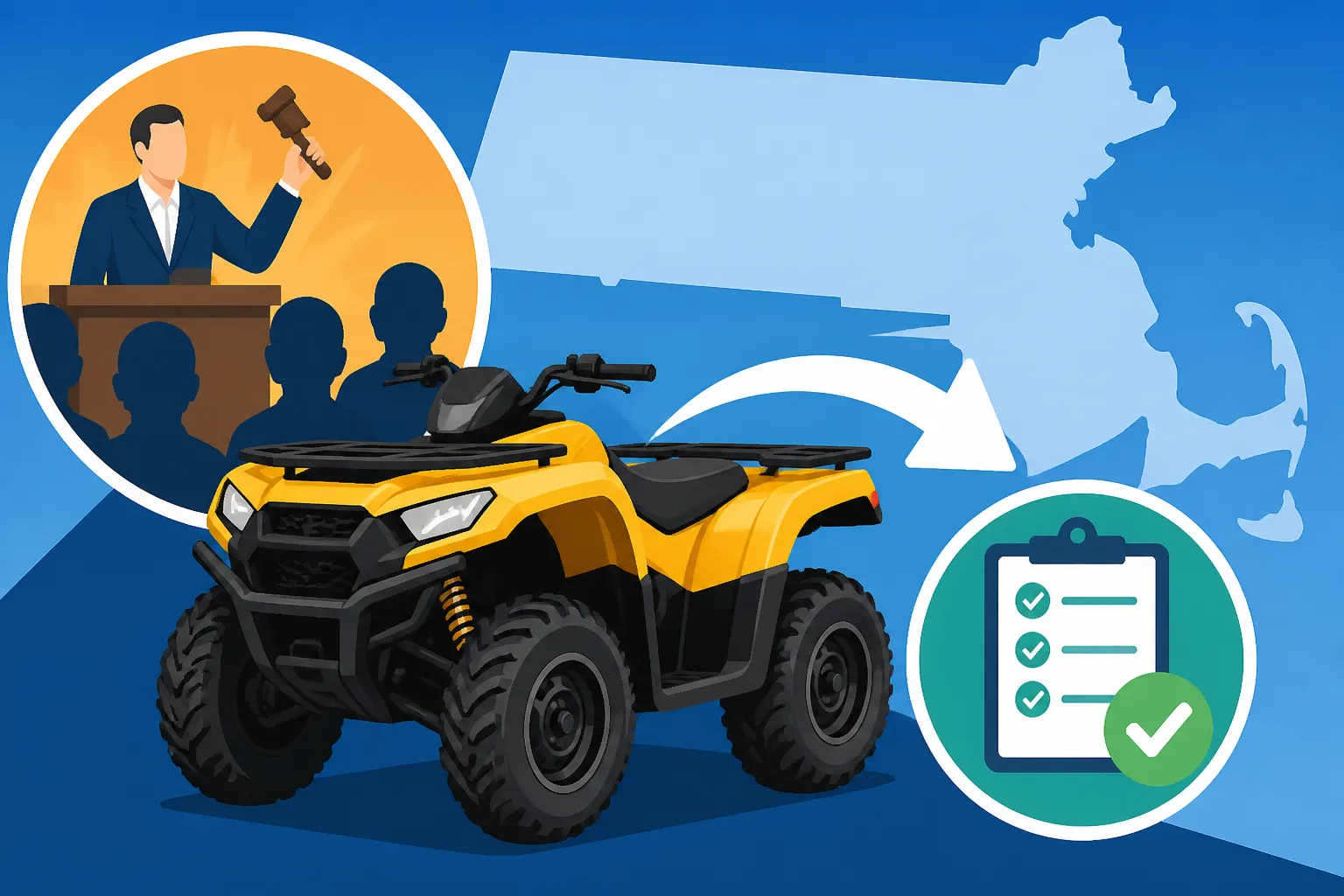
So, you snagged what you thought was a killer deal on a quad or side-by-side at an auction, only to get it home and realize that the paperwork side of things feels more like a riddle than a straightforward process. It's a common scenario, and many riders find themselves scratching their heads, wondering what exactly the Commonwealth of Massachusetts needs to get that machine legally registered. This guide is going to walk you through the often-confusing steps of registering an off-highway vehicle (OHV) that you bought at an auction, ensuring you have all your ducks in a row before you hit the trails.
The Unique Hurdles of Auction Purchases
Buying an ATV or UTV at an auction, whether it's an online sale, a municipal surplus auction, or a bankruptcy liquidation, can feel like a fantastic way to find a machine for less. However, the nature of these sales often means you don't get the same kind of meticulous documentation you'd expect from a private seller who's been riding the machine for years or a licensed dealership. This difference in paperwork is where the primary challenges for registration often arise.
Why Auction Paperwork Can Be Different
Auction houses are in the business of moving inventory quickly, and the provenance of every single item might not be their top priority. Sometimes these machines are repossessed, impounded, or part of a larger estate sale, meaning the original owner isn't always available to sign off on specific documents or provide a complete history. You might receive a simple bill of sale from the auctioneer, a basic receipt, or sometimes even just a gate pass. These documents, while valid for the transaction itself, often lack the specific details the Massachusetts Environmental Police need for registration purposes. They aren't looking to make things hard for you; they just need to ensure the machine is legitimately yours and that all taxes are accounted for.
The Missing Links You Might Encounter
One of the biggest issues is the absence of a clear, comprehensive bill of sale that includes all the required information. A typical private sale usually includes a detailed document with the seller's and buyer's full names and addresses, the sale price, the date, and crucial machine details like the Vehicle Identification Number (VIN). An auction receipt might only list the item number, a truncated description, and the final bid price. Furthermore, if the machine is new or nearly new, you might be missing the Manufacturer's Certificate of Origin (MCO), which is absolutely vital for a brand-new machine never before registered. Older, used machines might not have an MCO, but they still need a clear chain of ownership established through a proper bill of sale.
Essential Documentation for Auction-Bought OHVs
When you head to the Massachusetts Environmental Police's office (or use their online system), they're primarily concerned with two things: proving ownership and collecting the appropriate sales tax. For an auction purchase, you'll need to be extra diligent in gathering and sometimes creating the necessary documents.
A Robust Bill of Sale Is Key
Even if the auction house gives you a basic receipt, you'll likely need something more comprehensive to satisfy the Environmental Police. A proper bill of sale should clearly state:
- The full name and address of the seller (the auction house or the entity they represent).
- Your full name and address as the buyer.
- The date of the sale.
- The full purchase price.
- A complete description of the OHV, including the make, model, year, and crucially, the full [Massachusetts Requires a VIN on the Application].
- The signatures of both parties.
If the auction's document is lacking, you might need to ask them for a more detailed version. In some cases, if they can't or won't provide one, you may need to draft one yourself, listing the auction house as the seller and attaching their original receipt as proof of the transaction. Tools like LawDepot can be incredibly helpful for creating legally sound documents like a bill of sale, ensuring you don't miss any critical information that the state might require. This can save you a frustrating trip back and forth. [What a Bill of Sale Must Show to Register] is an important piece of information to be aware of.
The Manufacturer's Certificate of Origin If Applicable
For any off-highway vehicle that has never been registered before, even if it was sold at auction, you will need the [Massachusetts Requires an MCO for a New Machine]. An MCO is essentially the birth certificate of your OHV. It confirms that the machine is new, verifies its specifications, and proves it has not been previously titled or registered. If you bought a seemingly "new" machine at auction, but didn't receive an MCO, this is a red flag. It could indicate the machine was previously owned, even if unregistered, or that the auction house doesn't have the complete paperwork. Without an MCO for a new machine, you will face significant hurdles, potentially even preventing registration until you can obtain one from the original dealer or manufacturer, which can be a difficult task with an auction purchase.
Proof of Sales Tax Payment
Massachusetts collects a 6.25 percent sales tax on all OHV purchases, and you'll need to demonstrate that this tax has been paid before you can complete your registration. If you bought from a licensed Massachusetts dealer or auction house that collects sales tax, the tax should be listed on your bill of sale or receipt. If they didn't collect it (which is often the case with many auctions, especially those not specializing in vehicles), you are responsible for paying the [Massachusetts Sales Tax Forms at Registration] yourself. This is typically done through the Massachusetts Department of Revenue's MassTaxConnect system within 20 days of the purchase. You'll need to submit [Massachusetts Requires Form ST-6 Proof] or [A Sales Tax Form Called ST-6]. Don't skip this step, as the Environmental Police will verify tax payment as part of the registration process. Ignoring this can delay your registration and potentially incur penalties. [Paying the Sales Tax Before You Can Register] is non-negotiable.
Verifying the VIN
The Vehicle Identification Number (VIN) is paramount. It uniquely identifies your machine, similar to a car's VIN. You'll need to make sure the VIN on your bill of sale (or the one you create using a service like LawDepot) matches the VIN physically stamped on the frame of your ATV or UTV. The Environmental Police will cross-reference this. If there's any discrepancy, or if the VIN appears altered or missing, you'll have a much bigger problem on your hands. Always check the VIN before you finalize an auction purchase. The Environmental Police are particular about [Serial Numbers the Environmental Police Will Accept] and any issues will flag your application.
Navigating the Registration Process
Once you've got your paperwork in order, the actual registration process for an auction-bought quad or side-by-side follows similar steps to any other OHV registration in Massachusetts. The key difference is the diligence required in preparing your documents beforehand.
Step-by-Step for Auction Buys
- Gather Your Documents: As discussed, ensure you have a comprehensive bill of sale (potentially a self-generated one with the auction receipt attached), the MCO if it's a new machine, and proof of sales tax payment (or be prepared to pay it). [Massachusetts Registration Paperwork Checklist] can be a useful tool to make sure you have everything.
- Complete the Application: You'll fill out the official Massachusetts OHV registration application. This form will ask for your personal details, information about the OHV (make, model, year, VIN), and how you acquired it. Be clear about it being an auction purchase.
- Submit to the Environmental Police: The Massachusetts Environmental Police (not the RMV) handle all OHV registrations. You can often start the process online via their system, but for auction purchases with potentially non-standard paperwork, you might find it more straightforward to visit one of their regional offices in person. This allows you to speak directly with an officer if you have unique documentation circumstances. [Registering an ATV With the Environmental Police] is the official way to go.
- Pay Fees: You'll need to pay the registration fee. [Massachusetts OHV Registration Cost] for residents is typically for a two-year period. Non-residents have a different fee structure.
- Receive Your Decals and Card: Once approved, you'll receive a registration card and a set of decals. The card is your official proof of registration and must be carried with you whenever you're riding. The decals need to be affixed to your machine according to state regulations. [Why the Environmental Police Issue a Card, Not a Title] is an important distinction to understand in Massachusetts.
What to Expect at the Environmental Police Office
If you choose to register in person, be prepared for questions about your auction purchase. The officers might ask to see the original auction documents, your self-generated bill of sale, and proof of sales tax. This is their way of verifying the transaction. Having everything clearly organized and being able to explain the situation calmly will go a long way. They are there to help you comply with the law, not to trip you up, but they do have a responsibility to ensure every registration is legitimate.
Common Pitfalls and How to Avoid Them
Even with careful preparation, registering an auction-bought OHV can have its share of snags. Knowing what to watch out for can save you a lot of time and frustration.
Incomplete or Vague Bill of Sale
This is, by far, the most common issue. An auction receipt that simply says "ATV – $X,XXX" with no VIN, no seller's full address, or your full details won't cut it.
| Document Type | Standard Private Sale | Auction Purchase (Typical) | Auction Purchase (Ideal for MA Registration) |
|---|---|---|---|
| Seller | Individual's Full Name & Address | Auction House Name / Item # | Auction House Full Name & Address (or legally represented entity) |
| Buyer | Your Full Name & Address | Your Bidder # | Your Full Name & Address |
| Machine Details | Make, Model, Year, Full VIN | Brief Description (e.g., "Honda Quad") | Make, Model, Year, Full VIN |
| Price | Specific Sale Price | Winning Bid Price | Specific Sale Price (as bid) |
| Date | Date of Transaction | Auction Date | Date of Transaction |
| Signatures | Seller & Buyer Signatures | Often just auctioneer's digital stamp / no signatures | Auction House Rep. Signature (if available) & Your Signature |
| MCO (New) | Original MCO from manufacturer | Often missing | Original MCO (critical if machine is new and never registered) |
| Sales Tax Proof | Often paid directly to DOR by buyer | Buyer responsible for filing ST-6 | Buyer responsible for filing ST-6 (unless auction collected and remitted) |
- Avoidance: Before bidding, ask the auction house exactly what kind of documentation they provide for vehicle sales. If it's minimal, be prepared to draft a supplemental bill of sale yourself using resources like LawDepot, listing the auction as the seller and attaching their original receipt. This proactive step ensures you have a document that meets state requirements.
Unpaid Sales Tax
Many auction houses, especially those dealing in general goods, may not be equipped to collect and remit sales tax for vehicles. This doesn't exempt you; it just shifts the responsibility to you.
- Avoidance: Assume you'll need to pay the sales tax yourself. Factor this 6.25% into your budget when bidding. Make sure you file [Massachusetts Sales Tax Forms at Registration] (Form ST-6) and pay the tax through MassTaxConnect within 20 days of purchase. The Environmental Police will verify this before completing your registration.
Missing or Problematic VIN
A VIN that doesn't match the paperwork, is unreadable, or appears tampered with will immediately halt your registration. It could even lead to legal issues if the machine is found to be stolen.
- Avoidance: Always physically inspect the VIN on the machine before you buy it at auction. Take a photo. Compare it to any provided auction documentation. If something looks off, proceed with extreme caution or avoid the purchase altogether. [Checking Whether a Used Quad Was Reported Stolen] might be something you want to do as well.
No MCO for a New Machine
If you buy a seemingly new OHV at auction, but it lacks an MCO, you could be stuck. Without it, the state cannot verify it's a legitimate new machine.
- Avoidance: For "new" machines at auction, clarify beforehand if an MCO will be provided. If not, consider it a used machine and ensure you have a robust bill of sale that clearly indicates its used status.
By understanding these potential hurdles and preparing thoroughly, you can transform the often-tricky process of registering an auction-bought quad or side-by-side into a much smoother experience. It's all about being proactive and having your documentation squared away before you even think about hitting the trails.
Disclaimer
This article is for general informational purposes only and does not constitute professional advice. Laws, prices and regulations vary by location and change over time. Consult a qualified professional for guidance on your specific situation.