Massachusetts Registration for a Dealer Demo
Riding an off-highway vehicle (OHV) in Massachusetts, whether it's an ATV or a UTV, comes with its own set of rules, and for dealerships, navigating the registration process for demonstration models can feel like a whole different ballgame. It's not just about getting a sticker; it's about understanding the nuances of how a business registers a machine that isn't yet "owned" by a private individual but still needs to be legally operable for test rides and promotional events. This guide aims to clear up the confusion surrounding how to properly register a dealer demo machine in the Bay State, ensuring your dealership stays compliant and your customers can safely try out new models.
Understanding the "Dealer Demo" Machine in Massachusetts
When we talk about a "dealer demo" machine, we're really honing in on a specific category of OHV that serves a critical purpose for dealerships. These aren't just vehicles sitting on a showroom floor; they're active participants in the sales process, bridging the gap between potential buyers and their future rides. However, this active role means they can't just operate under the radar.
What Exactly Is a Dealer Demo?
A dealer demo, short for demonstration model, is an ATV or UTV that a licensed dealership uses for various business purposes before its eventual sale to a customer. Think of it as a working sample. This could mean letting a potential buyer take it for a spin on an approved test track, showcasing its capabilities at a local event, or even using it for dealer staff training. It's not the dealer's personal recreational machine, nor is it a customer's already-purchased vehicle. It exists in a unique gray area: owned by the business, but intended for customer interaction and eventual transfer of ownership. Because it's a new machine, the dealership would have received a Manufacturer's Certificate of Origin (MCO) for it, just like any other new inventory. [Massachusetts Requires an MCO for a New Machine] outlines why this document is so crucial.
The intention behind a dealer demo is temporary use by the dealership to facilitate sales, not long-term personal enjoyment by the dealer principal or staff. This distinction is vital because it influences the specific type of registration and the associated rules that apply. It’s a business asset, serving a commercial function, even if that function is showcasing fun.
Why These Machines Need Special Attention
The reason dealer demos need special attention when it comes to registration boils down to liability, legal compliance, and the integrity of the state's OHV system. Imagine a customer taking an unregistered demo out for a test ride and an accident occurs. Who is liable? What if that demo is being transported on public roads or even briefly crosses one without proper identification? The state of Massachusetts, through the Environmental Police, wants to ensure that any OHV operating within its borders, regardless of its ultimate purpose, is accounted for.
For a dealership, properly registering a demo machine isn't just a bureaucratic hurdle; it's a safeguard. It ensures that the machine is legally identifiable, making it easier to track in case of theft or an incident. It also provides a clear pathway for legitimate use on approved trails or demonstration areas, avoiding the significant [Massachusetts Penalties for Riding Unregistered] machines. Furthermore, it sets a professional precedent. When a dealership properly registers its demo fleet, it reinforces the message to customers about responsible OHV ownership and compliance with Massachusetts law. It's about operating above board, protecting both the business and its potential customers.
The Registration Process for a Dealer Demo
Registering a dealer demo machine in Massachusetts isn't dramatically different from registering a personal OHV, but there are specific considerations for businesses. The core principle remains the same: any OHV operated in Massachusetts, whether for recreation or demonstration, needs to be registered with the Environmental Police. [Registering an ATV With the Environmental Police] is the foundational process for everyone.
Gathering Your Documentation as a Dealer
Before you even think about filling out forms, you need to pull together the necessary paperwork. For a dealer demo, since it's a new machine, the most crucial document will be the Manufacturer's Certificate of Origin (MCO). This is essentially the birth certificate of the OHV and proves that the machine is new and has not been previously titled or registered. Ensure the MCO accurately reflects your dealership as the initial owner or purchaser.
Additionally, as a business, you'll need to provide your dealership's legal name, federal employer identification number (FEIN), and contact information. You’ll be applying as a business, not an individual. If your dealership uses any internal forms for tracking inventory or sales, such as those you might generate through platforms like LawDepot for internal record-keeping or when drafting a future bill of sale, these should be readily available, although they might not be submitted directly with the registration. The Environmental Police will want to see proof that the machine belongs to your legitimate business operation. A [Massachusetts Registration Paperwork Checklist] can be invaluable here to ensure you haven't overlooked anything.
Filing the Application with the Environmental Police
With your documents in hand, the next step is to complete the application. This is typically done through the online registration system or by mail. You’ll specify that this is a registration for a business machine. The application will ask for details about the OHV, including its Vehicle Identification Number (VIN), make, model, and year. Ensure all information is accurate to avoid delays. The Environmental Police will issue a registration card and a decal, not a title, for these machines, just as they do for all OHVs. [Why the Environmental Police Issue a Card, Not a Title] explains this distinction.
When completing the application, be explicit that the purpose of the registration is for a dealer demonstration vehicle. While there might not be a specific box for "dealer demo," you'll register it under your business name, clearly indicating its commercial use. This aligns with the requirements for [Massachusetts Registration for a Business Machine]. You'll pay the applicable registration fee, which, like all OHV registration fees in Massachusetts, contributes to the state's OHV trail fund. Remember, while sales tax is typically collected on new vehicle purchases, the demo isn't being sold yet, so sales tax isn't immediately relevant for the registration itself, but it will be when the machine is eventually sold to a customer. [Massachusetts Sales Tax Forms at Registration] become critical at that point.
What to Expect Post-Registration
Once your application is processed and approved, the Environmental Police will mail you the registration card and the required decals. It's crucial to understand that the [Massachusetts Registration Processing Time] can vary, so plan ahead, especially if you have an upcoming event where you intend to use the demo.
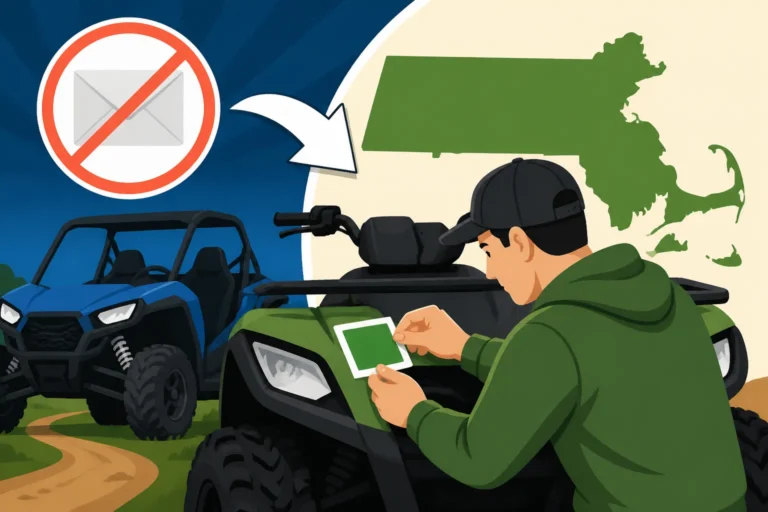
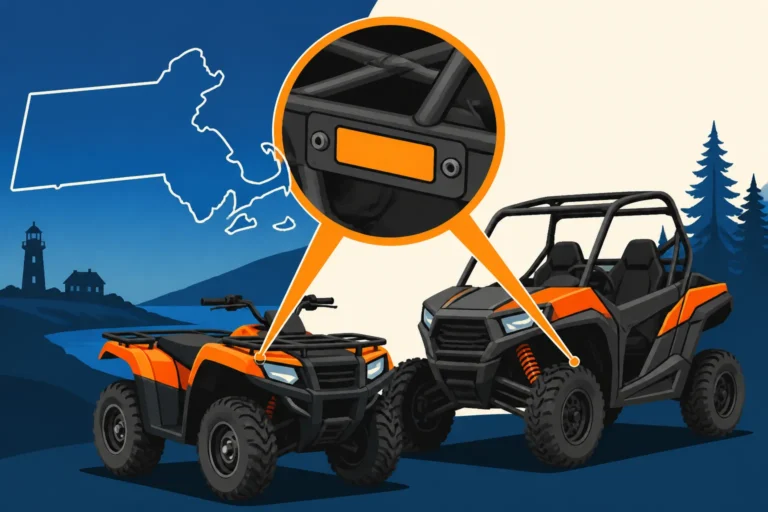
The registration card is your official proof that the machine is legally registered in Massachusetts. This card [Massachusetts Registration Cards Carried on Board] must be carried on the machine whenever it's being operated. For a dealer demo, this means it should be with the operator during test rides or demonstrations. The decals are equally important. You'll receive two decals, which need to be affixed to the forward half of both sides of the OHV, as detailed in [Massachusetts Decal Placement Rules]. There will also be a smaller expiration decal that goes on the left side, clearly showing when the registration expires. This visually identifies your demo machine as a legally registered OHV, essential for compliance and avoiding any misunderstandings with law enforcement.
Keeping Your Dealer Demo Compliant on Massachusetts Trails
Once your dealer demo machine is registered and you have your decals and registration card, the responsibilities don't end there. Compliance is an ongoing effort, especially for a vehicle that will eventually change hands. It's about ensuring every outing, every test ride, and every eventual sale adheres to state regulations.
Decal Placement and Card Carrying Requirements
As a dealership, you're setting an example for responsible OHV ownership. This includes meticulous adherence to decal placement and carrying the registration card. The two registration decals must be prominently displayed on the forward half of both sides of the machine, and the expiration decal affixed to the left side. These decals need to be clearly visible and kept in good condition. Faded, damaged, or improperly placed decals can lead to questions from Environmental Police officers.
The registration card, which is issued by the Environmental Police, is essentially the OHV's ID. Any individual operating the dealer demo, whether it's a staff member or a potential customer on a supervised test ride, must have this card on their person or readily accessible on the machine. This isn't just a suggestion; it's a legal requirement. Imagine a test rider getting stopped by an officer. Without that card, even if the decals are present, it could lead to complications and potential citations for the dealership. Therefore, maintaining a system where the correct card is always paired with the correct demo machine is paramount. [Massachusetts Issues Decals and a Card] makes it clear that both elements are essential for legal operation.
Transitioning a Demo to a Customer Sale
Eventually, your dealer demo will find its forever home with a customer. This transition is where the registration process shifts significantly. Once the machine is sold, its "demo" status ends, and it becomes a privately owned OHV. At this point, the customer will be responsible for registering the machine in their name.
The dealership, when selling the demo, will provide the customer with a proper bill of sale. Documents generated via a platform like LawDepot can be useful here, ensuring all necessary legal details are captured. The bill of sale, along with the original MCO (if it hasn't been used up during the demo registration, or if a new MCO is provided for the "first sale"), will be what the new owner uses to register the machine in their name with the Environmental Police. The existing dealer demo registration is not transferable to the new owner. It's a fresh start for the buyer, who will then pay their own registration fee and any applicable sales tax at the time of purchase. [What a Bill of Sale Must Show to Register] is a critical reference for ensuring the sale documentation is correct for the new owner's registration.
Avoiding Common Missteps and Penalties
Operating a dealership comes with many responsibilities, and ensuring proper OHV registration for your demo fleet is one of them. A common misstep is allowing an unregistered demo to be used, even briefly, for a test ride. Even if it's on private land, if that land is accessible to the public or if the machine crosses any public way, it needs to be registered.
Another pitfall is neglecting to renew the demo registration in a timely manner. Like all OHV registrations in Massachusetts, demo registrations have an expiration date. Letting it lapse, even for a short period, can lead to the same penalties as operating an entirely unregistered machine. Staying organized with renewal reminders and ensuring all documentation is current is key. If you're ever unsure about a specific situation, don't hesitate to reach out to the Environmental Police directly. They are the ultimate authority on OHV registration in Massachusetts, and [Who to Call About a Massachusetts OHV Registration] can save you a lot of headache. Proactive compliance not only protects your business from fines but also demonstrates your commitment to safe and legal OHV practices to your customers.
Here's a quick overview of the key differences and requirements:
| Feature | Individual OHV Registration | Dealer Demo OHV Registration |
|---|---|---|
| Applicant | Individual Name | Dealership Business Name |
| Purpose | Recreational/Private Use | Demonstration/Promotional Use, Sales Prep |
| Proof of Ownership | MCO (new) or Bill of Sale (used) | MCO (as initial dealer owner) |
| Registration Term | Typically two years for residents | Typically one or two years (check current) |
| Sales Tax at Reg. | Paid at time of initial registration | Not typically paid at demo registration |
| Sales Tax at Sale | N/A (already paid) | Paid by customer at time of purchase |
| Required Card & Decals | Yes | Yes |
| Transferable | No | No (customer registers new) |
Disclaimer
This article is for general informational purposes only and does not constitute professional advice. Laws, prices and regulations vary by location and change over time. Consult a qualified professional for guidance on your specific situation.