Massachusetts Registration for an Imported Machine
Bringing an ATV or UTV into Massachusetts from another country can feel like navigating a maze blindfolded, especially when it comes to getting it registered. You might have found an incredible deal abroad, inherited a unique machine, or even imported one for a specific purpose, only to hit a wall when the registration paperwork doesn't match what the Environmental Police usually see. This guide is here to demystify that process, walking you through the specific documentation, procedures, and potential hurdles you'll face to get your imported off-road machine legally registered and ready for Massachusetts trails.
The Unique Challenge of Importing an Off-Road Machine to Massachusetts
So, you've got this fantastic ATV or UTV that's made its way across borders, and now it's sitting in your garage, ready for adventure. But before you even think about hitting those beautiful Massachusetts trails, there's a crucial step: registration. And let me tell you, registering an imported machine is often a different ballgame than buying one new from a local dealer or even picking up a used one from a neighbor down the road. The standard procedures for proving ownership and tax payment can get incredibly complex when the machine wasn't originally destined for the U.S. market.
Why an Imported Machine Isn't Like a Local Purchase
When you buy a brand-new ATV or UTV from a Massachusetts dealer, they handle a lot of the initial paperwork. You walk out with a Certificate of Origin (MCO or MSO), they collect the sales tax, and you often just need to follow a few simple steps to get your sticker. A used machine purchased privately in-state usually comes with a clear bill of sale and a previous Massachusetts registration card. But an imported machine? It likely won't have an MCO that Massachusetts recognizes, and its bill of sale might be in a foreign language or lack the specific details the Environmental Police require. This lack of standard U.S. documentation is the primary hurdle. It's not that Massachusetts doesn't want your imported machine registered; it's that the system is designed for a specific set of documents you might not possess.
Imagine you've just brought in a vintage European quad that you restored yourself. It's a beauty, but it never had a U.S.-style MCO because it was never sold through a U.S. dealership network. Now you're standing at the Environmental Police office, and they're asking for documents that simply don't exist for your particular machine. This isn't an uncommon scenario, and it requires a different approach to ensure you can provide equivalent proof of origin and ownership that satisfies the state's requirements.
Navigating Customs and Documentation
The very first step in dealing with an imported machine actually happens long before you think about registration: at customs. When your ATV or UTV crosses the border into the United States, you receive customs documentation. This paperwork is absolutely vital, as it proves that the machine legally entered the country and that all applicable import duties were paid. Without this, you could face significant issues not just with registration, but potentially with federal authorities. Think of it as the machine's "passport" into the U.S.
It's not just about the legal entry; it's also about establishing a chain of ownership. Customs forms, declarations, and any associated invoices or bills of sale from the original seller (even if they're foreign) are your primary tools. You'll need to demonstrate that the machine was legitimately purchased and legally imported. If you used a broker or an import service, ensure you retain every piece of paper they provided. This initial documentation sets the stage for everything that follows. Without solid proof of legal import, the Massachusetts Environmental Police will have no basis to proceed with your registration, no matter how much you love your new machine.
Essential Paperwork for Massachusetts Registration
Okay, so you've got your imported machine, and you're ready to tackle the Massachusetts registration process. This is where meticulous organization and a deep understanding of what's required become your best friends. The Environmental Police need to be convinced that you are the rightful owner, that the machine is legitimate, and that any applicable taxes have been paid. This often means providing alternative forms of documentation compared to a standard in-state purchase. For a new machine, you'd typically need a [Massachusetts Requires an MCO for a New Machine], but that's rarely the case with imports.
Proving Ownership: More Than Just a Bill of Sale
For any ATV or UTV registration in Massachusetts, proving ownership is paramount. For a used machine, a simple [Massachusetts Requires a Bill of Sale for a Used One] is usually sufficient, but for an import, it can be much more involved. The Environmental Police need an unbroken chain of ownership. This means you need documentation that clearly shows who owned the machine before you, how it was transferred to you, and when.
If you purchased it from an individual abroad, you'll need a comprehensive bill of sale, ideally translated into English and notarized if possible. This document should include:
- Full names and addresses of both buyer and seller.
- A clear description of the machine (make, model, year, VIN).
- The purchase price.
- The date of sale.
- Signatures of both parties.
Should the foreign bill of sale lack critical information or be difficult to verify, you might need to supplement it with additional affidavits or statements. Sometimes, using a reputable service like LawDepot can help you generate a more formal, Massachusetts-compliant bill of sale if you're transferring ownership from a foreign entity to yourself, or if you're consolidating multiple foreign documents into a single, clear statement for the state. If you inherited the machine, documentation like a will or a death certificate, combined with proof of prior ownership, will be necessary. Essentially, the Environmental Police are looking for solid evidence that you didn't just find the machine or bring it in without proper legal transfer.
Addressing the Lack of a Certificate of Origin
One of the biggest headaches for imported ATVs and UTVs is the absence of a Manufacturer's Certificate of Origin (MCO or MSO). This document is standard for new machines sold in the U.S. and confirms the first retail sale. Without it, you're faced with providing alternative proof that the machine is legitimate and not stolen or illegally manufactured.
Here’s what you might need instead:
- Customs Import Documents: As mentioned, these are crucial. They prove the machine legally entered the country.
- Foreign Title or Registration: If the machine was previously registered in another country, provide those documents. Even if they're not in English, they show a history of legal existence. You might need to provide certified translations.
- Manufacturer's Statement (if available): Sometimes, a manufacturer, even a foreign one, can provide a letter or statement confirming the machine's specifications and that it was produced legitimately. This is rare but incredibly helpful if you can get it.
- Photographs and VIN Verification: You'll absolutely need clear photos of the machine, especially the Vehicle Identification Number (VIN). The Environmental Police will likely perform a VIN inspection to verify the number matches your paperwork and isn't tampered with. [Massachusetts Requires a VIN on the Application] for this very reason.
- Affidavits: In some complex cases, you might need to prepare an affidavit stating the history of the machine, why an MCO isn't available, and attesting to your legal ownership. Again, resources like LawDepot can assist in drafting legally sound affidavits.
The goal here is to construct a narrative of the machine's legitimate origin and ownership through various pieces of evidence, compensating for the missing MCO. It’s about building a solid case for your machine's legitimacy.
Sales Tax and Other Financial Hurdles
Massachusetts, like most states, wants its piece of the pie. When you register any ATV or UTV, you'll need to address sales tax. This is covered in more detail in articles like [Massachusetts Sales Tax on an Off-Road Machine]. For an imported machine, this can be tricky, as sales tax might not have been collected at the point of purchase if it was bought abroad.
You will likely be subject to Massachusetts' use tax. This is essentially a sales tax on items purchased outside the state but brought into Massachusetts for use. You'll need to calculate 6.25% of the machine's purchase price (or its fair market value if the purchase price is disputed or unclear) and pay this directly to the Massachusetts Department of Revenue. You can do this through their MassTaxConnect system. Keep all receipts and confirmation numbers, as the Environmental Police will require proof that this tax has been settled before they issue your registration.
Here's a quick rundown of what you might need for the financial side:
| Document Type | Purpose | Notes |
|---|---|---|
| Customs Invoice | Proof of import duties paid, declared value | Vital for establishing entry and initial value |
| Foreign Bill of Sale | Proof of purchase price | Used for calculating use tax; may require translation |
| Massachusetts Form ST-6 | Declaration of sales/use tax due | File this yourself for private/out-of-state purchases |
| Payment Confirmation | Proof that use tax was paid to MA Department of Revenue | Don't forget this! |
| Appraisal (if needed) | Establishes fair market value | Might be required if purchase price is deemed too low or unverified |
Remember, the total [Massachusetts Registration Costs at Purchase] will include not just the sticker fee, but also this sales/use tax component. Don't overlook it, or your registration application will be denied.
The Massachusetts Registration Process for Imports
With your mountain of paperwork in hand, it's time to actually get your imported machine registered. This process isn't something you can typically do online or at the local RMV branch. In Massachusetts, all off-highway vehicle (OHV) registrations are handled by the Environmental Police. Knowing what to expect when you interact with them can save you a lot of time and frustration.
Working with the Environmental Police
When you're ready to register, you'll need to visit an Environmental Police registration office. It's a good idea to call ahead and make an appointment, or at least confirm their operating hours and what specific documents they require for imported machines. Because these cases are less common, they might ask for additional information or clarification that isn't standard for an in-state purchase. You can find more information about this process in our guide on [Registering an ATV With the Environmental Police].
Here’s a general step-by-step approach:
- Gather ALL your documentation: This includes every bill of sale, customs form, foreign title, tax receipt, and affidavit you’ve prepared. Organize it clearly, perhaps in a binder, with tabs for easy reference.
- Fill out the Massachusetts OHV Registration Application: You can usually download this form from the state's website. Fill it out completely and accurately, ensuring the VIN matches exactly what’s on your machine and all your supporting documents.
- Physical Inspection: Be prepared for the Environmental Police to physically inspect your machine. They will verify the VIN, possibly check for certain safety equipment, and ensure the machine generally matches its description. This is a crucial step to confirm the machine's legitimacy.
- Submit Paperwork and Pay Fees: Once they are satisfied with your documentation and inspection, you'll submit everything and pay the registration fee. [Massachusetts Charges $44 for Residents] for a two-year sticker, and a non-resident sticker is slightly less for a one-year term.
- Receive Your Registration Card and Decals: If all goes well, you’ll walk out with your new registration card and decals. This card is important and should always be carried with you when riding. Our article [Massachusetts Registration Cards Carried on Board] explains why.
Be patient and polite. The Environmental Police officers are just doing their job to ensure that only legally owned and compliant machines are registered in the state. Your thoroughness in preparing your documents will greatly help smooth the process.
Common Pitfalls and How to Avoid Them
Registering an imported machine is rife with potential snags. Here are some common issues and how to preempt them:
- Incomplete or Unclear Documentation: This is the biggest one. A blurry scan of a foreign bill of sale with missing details won't cut it. Ensure everything is legible, translated, and contains all necessary information. If something is missing from an old foreign document, an affidavit (perhaps drafted with LawDepot) explaining the circumstances can be helpful.
- Untranslated Documents: If your original ownership papers are in a foreign language, get them professionally translated into English. A simple Google Translate printout won't usually be accepted. The translation should be certified.
- VIN Discrepancies: If the VIN on your machine doesn't match the documentation perfectly, or if it appears to be altered, you're going to have a serious problem. Double-check all numbers before you even head to the registration office.
- Unpaid Use Tax: Forgetting to pay the Massachusetts use tax before applying for registration is a common mistake. The Environmental Police will ask for proof of payment. Make sure you have this done.
- Assuming Online Registration: Remember, you cannot use the [Massachusetts Online Registration System] for an imported machine the first time. You must go in person due to the complexity and the need for physical inspection and detailed document review.
- Lack of Customs Paperwork: If you or a previous owner somehow managed to get the machine into the U.S. without proper customs declaration, you will face an uphill battle. Legal entry is non-negotiable.
The key to avoiding these pitfalls is preparation. Do your homework, gather every possible piece of supporting evidence, and present it clearly and concisely. Think like the Environmental Police: what would they need to see to be convinced this machine is legitimately yours and ready for the trail? While [Massachusetts Registration Processing Time] for standard applications can be quick, for imports, expect it to take longer due to the extra scrutiny.
Post-Registration Considerations for Your Imported Machine
Congratulations! You’ve navigated the bureaucratic labyrinth and successfully registered your imported ATV or UTV in Massachusetts. Now that your machine is legal, there are still a few important things to keep in mind to ensure you stay compliant and enjoy your riding safely.
Decal Placement and Carrying Your Card
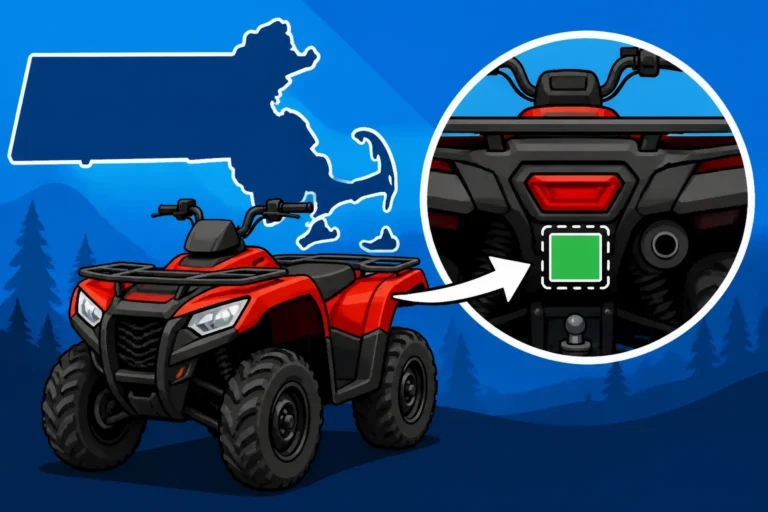
Once you receive your shiny new Massachusetts OHV decals and registration card, don't just toss them in a drawer. Proper decal placement is legally required. Our guide on [Massachusetts Decal Placement Rules] goes into detail, but generally, your registration decals must be clearly displayed on the forward half of both sides of your machine. The expiration decal goes on the left side. These aren't just for show; they allow Environmental Police officers to quickly verify that your machine is legally registered.
Equally important is carrying your registration card. This card serves as your proof of registration and must be readily accessible whenever you're operating the machine. Many riders keep it in a waterproof pouch in their gear bag, jacket pocket, or a secure compartment on the ATV/UTV itself. Imagine an Environmental Police officer stopping you on a trail in October Mountain State Forest and asking for your papers. You don't want to be caught without it, as it could lead to penalties for riding unregistered.
Understanding Massachusetts Riding Laws
Having a registered machine is only half the battle. Massachusetts has specific and often strict laws governing where and how you can ride ATVs and UTVs. These apply equally to your imported machine as they would to any locally purchased one. Ignoring these rules can lead to fines, citations, and even confiscation of your machine.
Key laws to remember include:
- Age and Safety Certificates: Massachusetts has strict age requirements for riders, particularly those under 16, who also need an OHV safety certificate.
- Helmet Law: Helmets are mandatory for all riders and passengers.
- Private Land Permission: You absolutely need written permission from landowners to ride on private property.
- Public Ways: Riding on public roads or ways is generally prohibited, with very limited exceptions for crossing.
- Designated Trails: You can only ride on designated and approved OHV trails in state forests and other authorized areas.
Understanding these regulations is crucial for a safe and legal riding experience. While your initial focus was on [Massachusetts Cost of Ownership Year One] and getting the machine registered, ongoing compliance with riding laws is just as vital. Take the time to familiarize yourself with these rules to ensure your imported machine brings you years of enjoyment on the trails, not headaches.
Disclaimer
This article is for general informational purposes only and does not constitute professional advice. Laws, prices and regulations vary by location and change over time. Consult a qualified professional for guidance on your specific situation.