Massachusetts Private Park Alcohol Rules
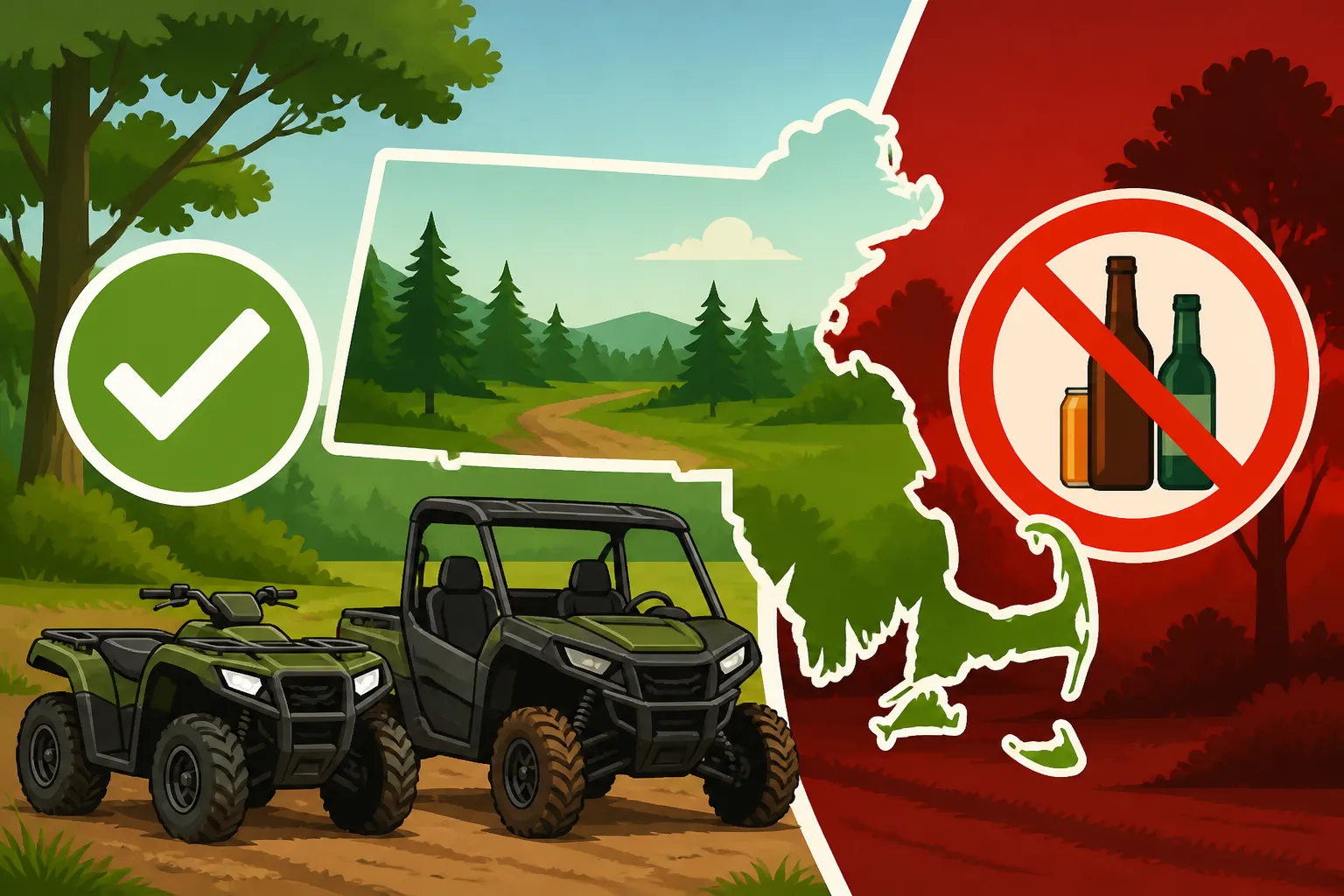
A private riding park may allow alcohol in some areas, ban it everywhere, or prohibit it only while riding is underway. The key distinction is that a park’s own policy is separate from Massachusetts law: permission to possess or drink alcohol does not make it legal or safe to operate an ATV or UTV while impaired.
Private park rules are set by each operator
Massachusetts does not have one alcohol policy that applies to every private ATV or UTV park. The operator sets site rules, and those rules may be stricter than what state law allows. A park could ban alcohol throughout the property, allow it only in designated camping areas, or prohibit drinking during riding activities. Rules may also differ for day-use visitors and overnight guests.
Do not assume that “private park” means alcohol is allowed. A waiver, online booking page, posted sign, or staff instruction may set conditions for entering or staying at the property. If a rule is unclear, ask the park directly before you arrive. Start with the park’s current written policies, including Massachusetts Private Park Waivers and Rules and [Massachusetts Private Park Quiet Hours], where relevant.
Ask specific questions rather than relying on a broad answer such as “alcohol is allowed.” For example:
- Is alcohol allowed anywhere on the property?
- If it is allowed, is it limited to a campsite or other designated area?
- Can visitors bring their own alcohol, or does the park restrict that?
- Are there rules about open containers, glass, or serving alcohol to other guests?
- Does the policy change during organized rides or events?
- Can a guest who has been drinking remain at the campsite if they are not riding?
- What happens if staff believe someone is impaired or has broken a park rule?
A park may prohibit alcohol even in a campsite, or may allow it there while banning it around the staging area and trails. Rules can also apply to passengers, spectators, and people who are not operating a machine. Check the policy for everyone in your group, not just the person holding the registration card.
| Situation | What to check | Practical approach |
|---|---|---|
| Drinking before a ride | State law and park rules | Do not operate if alcohol has impaired you |
| Alcohol at a campsite | Park policy and any posted restrictions | Confirm the designated areas and guest rules |
| Alcohol during an organized event | Event and operator requirements | Ask the organizer; an event can have stricter rules |
| A guest is drinking but not riding | Park conduct policy | Plan a sober way to move around or leave |
| Unclear signs or instructions | Ask park staff before consuming alcohol | Follow the stricter instruction until clarified |
Park staff may enforce rules as a condition of admission or continued access. Depending on the park’s policy, a violation could mean being told to stop drinking, being asked to leave, or losing permission to ride. Do not expect a debate about whether a rule is sensible to change the outcome at the gate. If the policy does not work for your group, choose another place to ride.
State law still applies on private property
A park’s permission to drink alcohol is not permission to operate an ATV or UTV while impaired. Massachusetts law prohibits operating recreational vehicles under the influence of alcohol or drugs. The rule applies to recreational vehicle operation, not just to riding on a public road. Riding on private land does not create an exception.
That distinction matters because visitors sometimes assume that a private trail, closed course, or campground is outside the reach of state law. It is not a safe assumption. A private park’s policy can govern whether alcohol is allowed on its property, while state law governs whether an impaired person may operate a recreational vehicle. Both sets of rules may apply at the same time.
There is no simple drink-count formula that makes riding safe or lawful. The effect of alcohol varies with the person, timing, food, fatigue, medication, and other factors. Feeling steady or believing that a ride is short does not reliably establish that you are fit to operate. The practical rule is simple: if you have been drinking, do not ride.
This also applies to a side-by-side. A larger machine, seat belts, or a slower route do not make impaired operation acceptable. If you need a refresher on the law and related riding restrictions, see Riding Under the Influence on a Berkshire Trail and Massachusetts Rules for a Side-by-Side Driver.
The people around an impaired operator can be put at risk, too. A rider may misjudge a turn, miss a trail sign, react late to another machine, or lose control on uneven ground. Trails and private riding areas can include blind corners, changing surfaces, other riders, workers, pedestrians, and parked vehicles. Alcohol can affect judgment and coordination before the operator recognizes the change.
If an officer or park employee asks about your conduct, be calm and follow lawful instructions. For more on the kind of checks riders may encounter, see What an Environmental Police Officer Can Ask. A park employee’s role is different from a law enforcement officer’s, but staff can still address violations of the property’s rules.
Plan drinking and riding as separate activities
The safest plan is to decide before the first drink that no one who drinks will operate a machine afterward. Do not rely on switching drivers only if someone “seems fine.” Instead, identify the sober operators in advance and make sure they will remain sober for the entire riding period.
If every operator in the group plans to drink, finish the riding before drinking begins. Put the machines away and do not restart them later to make a short trip across the property. A campsite may feel close to the trailhead, but a short distance still involves operating a recreational vehicle.
Build a practical plan around the park’s layout:
- Check the rules before booking. Read the current policy and ask about any unclear alcohol restrictions.
- Choose sober operators. Make sure the people responsible for driving or riding know they are staying sober.
- Separate riding time from drinking time. Once drinking begins, keep machines parked.
- Arrange transportation. If someone may need to leave, identify a sober driver or another safe way to get home.
- Keep keys secured. Do not leave keys accessible to someone who has been drinking.
- Respect staff instructions. Stop the activity and ask for clarification if a park employee raises a policy concern.
A passenger should not pressure a sober operator to take risks or assume responsibility for others’ decisions. Likewise, a person who has been drinking should not move a machine “just a little,” even within a campsite or parking area. Ask a sober person to handle any necessary movement, or leave the machine where it is.
For group trips, agree on these points before arrival. That is especially useful when the group includes people who are camping, spectators, or riders who may leave at different times. A clear plan avoids last-minute arguments about who is fit to ride, who can drive, or whether a park’s alcohol rule applies to a particular area.
Other park policies may matter alongside alcohol rules. A guest who is drinking still needs to follow requirements for age, helmets, pets, and noise. Review the operator’s specific rules, such as Massachusetts Private Park Minimum Ages, Massachusetts Private Park Helmet Rules, and [Massachusetts Private Park Pet Rules], if those topics affect your group.
What to do if the policy is unclear or a rule is broken
If you cannot find an alcohol policy online, contact the park before you travel. Ask for the current rules in writing or request a link to the official policy. Do not treat an informal comment from another visitor as confirmation; that person may be describing a different park, an older policy, or a different part of the property.
At check-in, pay attention to posted signs and any instructions from staff. If a sign conflicts with what you were told earlier, ask for clarification before opening alcohol or unloading machines. Keep the answer practical: where alcohol is allowed, who the rule applies to, and whether the restriction changes during an event or riding session.
If someone in your group has been drinking and wants to ride, stop the situation before the machine starts. Do not hand over the keys, and do not ride alongside them hoping to supervise. Ask a sober person to take over, keep the machine parked, and involve park staff if the person will not cooperate. If there is an immediate risk to someone’s safety, contact emergency services.
If staff say a rule has been violated, comply with the instruction and discuss any disagreement after the immediate issue is settled. Do not try to resolve a dispute by continuing to ride or refusing to leave an area. A park may have its own process for complaints, refunds, or removal from the property; check the written terms rather than assuming an outcome. State-law consequences are separate from any action the park takes, and may apply even if the park allowed alcohol on site.
The bottom line is straightforward: private park alcohol rules vary, so confirm the operator’s policy before you go. Even where drinking is permitted, Massachusetts law still prohibits operating a recreational vehicle while under the influence. Keep alcohol and riding separate, and arrange a sober plan for your group.
Disclaimer
This article is for general informational purposes only and does not constitute professional advice. Laws, prices and regulations vary by location and change over time. Consult a qualified professional for guidance on your specific situation.