Massachusetts Private Park Waivers and Rules
A private riding park can be easier to plan than a public trail system, but “private” does not mean rules-free. Before you tow an ATV or UTV to a Massachusetts park, check what its waiver covers, what registration it requires, and which restrictions apply to riders, machines and guests. This guide explains what to ask before you arrive—and what a signed waiver does not change.
Private parks are not the same as public trails
A private riding park sets its own access conditions. It may require advance reservations, a day-use pass, a waiver, a vehicle inspection or proof that each rider meets its age and safety rules. Those conditions can be different from one property to another, even when the parks are in the same region.
That is separate from the rules that apply under Massachusetts law. A park waiver is not a state registration, and paying an admission fee does not automatically authorize every rider or every machine to operate there. Likewise, a park’s permission to use its property does not grant permission to ride across neighboring land or connect to a public trail.
Think of access as two layers:
| What you need | Who sets or checks it | What it does |
|---|---|---|
| State-required registration or other legal compliance | Massachusetts authorities | Addresses state requirements for operating the machine |
| Park admission, reservation and waiver | The private park | Allows access under that property’s conditions |
| Rider qualifications and safety conditions | State law and the park | Determines who may ride and what precautions apply |
| Vehicle and route restrictions | The park, and sometimes state rules | Determines which machines may use which areas |
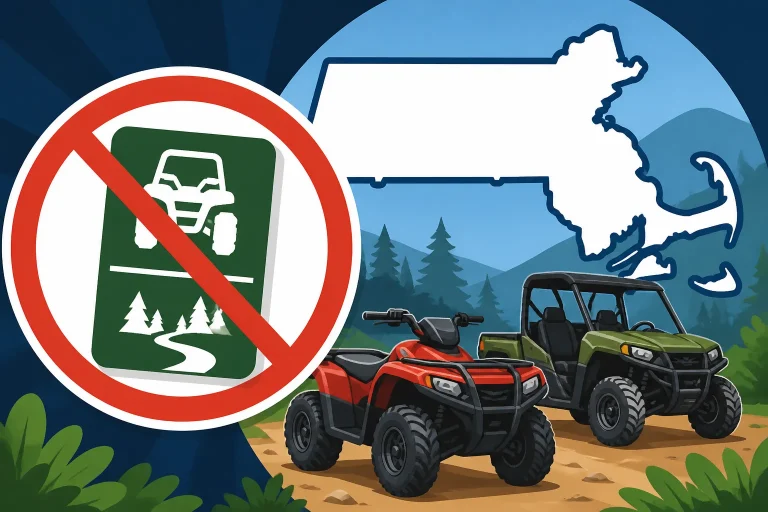
A state forest trail system is a different situation. Public-land access can depend on designated trails, operating seasons, permits, posted restrictions and other rules. A private park’s day pass does not work as a public-land permit, and a public-land sticker or registration does not guarantee admission to a private park. For broader context, see Massachusetts Private Park Age Minimums and Massachusetts Requires Its Own Registration.
“Private park” can also describe different kinds of places. Some are purpose-built riding facilities with a check-in process and marked routes. Others may be privately owned properties that allow riding only by invitation or under limited conditions. Do not assume that any land that looks rideable is open to the public. A gate, trail entrance or lack of a posted sign is not a substitute for the owner’s clear permission.
The practical rule is simple: get permission from the actual operator or landowner, understand the route you are allowed to use, and keep your state and park requirements separate in your mind. If the park is part of a larger property, ask whether the riding area has boundaries or no-go zones. A waiver for one parcel does not grant access to every road, field or trail nearby.
What a waiver does and does not do
A waiver is usually a written acknowledgement of risk and an agreement about the conditions of participation. The document may describe hazards such as uneven ground, rocks, steep slopes, other riders, changing weather, mechanical failures or collisions. It may also explain the park’s expectations about helmets, speed, supervision, alcohol, guests and conduct.
Read it before you sign, not while someone is waiting behind you at the check-in desk. If it is available online, review it before making a reservation. Make sure you know whether the form applies to one visit, a season, one person or everyone in your group. Ask how the park handles a rider who is under 18, a passenger, a visitor who arrives later, or a person who wants to ride a different machine than the one originally listed.
A signed waiver does not create unlimited access. It does not authorize riding on land the park does not control, cancel state law, make an unregistered machine lawful, or guarantee that an ATV or UTV can use every route. It also does not promise the park will stay open in all conditions. A property may close a route, restrict a machine or turn away a rider who does not meet its rules.
Nor should you treat the waiver as a complete statement of your legal rights. The effect and enforceability of waiver language can depend on the facts and applicable law. If a document is unclear or a serious dispute is involved, ask a qualified professional rather than relying on a quick verbal explanation at the gate.
For families, do not assume that a parent’s signature automatically answers every question about a minor’s participation or a waiver’s legal effect. Ask the park exactly which parent or guardian must sign, whether the young rider must be present, and what age or supervision conditions apply. The park may require a parent to stay on site or to accompany the rider, even when the parent is not riding. Its policy may be stricter than the minimum rule you expected.
A practical way to review the form is to look for:
- Who is covered: the rider, passengers, parents, guests or all participants.
- What activity is covered: riding, spectating, camping, events or use of facilities.
- What risks are described, and whether the wording covers the kind of riding planned.
- What the park requires you to do, including protective equipment and following staff instructions.
- Whether the form includes emergency contact or medical information.
- How photographs, cancellations, refunds or property damage are addressed.
- Whether the park requires a separate form for each visit or each rider.
If you disagree with a condition, ask before signing. Staff may clarify how a rule works, but a casual answer should not be assumed to change the written terms. If the park says a requirement is non-negotiable, decide whether you are comfortable with it before unloading.
Registration, reciprocity, permits and admission
One of the most common planning errors is treating park admission as the only paperwork issue. A private park controls entry to its property, but Massachusetts requirements for the machine may apply separately. Check the current state rules for the vehicle and the way you intend to operate it; do not assume that a home-state sticker will be accepted just because a private operator sells you a day pass. See Out-of-State OHV Stickers Are Not Valid in Massachusetts and Where a Visiting Rider Applies for a Massachusetts Sticker.
The operator may ask to see registration documents at check-in. Even if the park does not inspect them, that does not establish that the machine complies with state requirements. Keep required documents accessible and make sure the information matches the machine you bring. If you have recently bought the ATV or UTV, check that the paperwork is complete before you travel. A receipt or a park waiver may not substitute for the specific registration documents required by the state.
Ask the park whether it requires any additional permit or credential. The answer may depend on whether you are riding recreationally, attending an organized event, camping overnight or using a particular part of the property. A private facility may call its admission document a pass, permit, membership or day ticket, but the name does not make it a state-issued authorization.
There is no reason to assume a park uses the same process as another facility. Confirm:
- Whether reservations are required or walk-ins are allowed.
- Whether admission is for the rider, the machine, the vehicle load, or a combination.
- Whether each rider and passenger must complete a waiver.
- Which registration documents or identification the park wants to see.
- Whether the park issues a wristband, gate code, day pass or other access credential.
- Whether the pass covers all routes, or only a specific riding area.
- Whether a permit is needed for camping, an event or an additional activity.
- Whether the park has special requirements for out-of-state machines.
Do not confuse a private park’s decision to admit you with reciprocity between states. The park can set its own entry conditions, but it cannot rewrite Massachusetts requirements. If you are visiting from outside Massachusetts, confirm both state compliance and the park’s policy. For a new resident or a recently purchased machine, the registration process may also involve proof of ownership and tax paperwork. Start early enough to resolve missing documents before your planned trip.
The same distinction matters when a park is near a public forest or trail. A private access road may lead toward public land, but the park’s permission does not carry over to the public trail system. Check the public area’s own rules, seasonal status and access conditions before trying to connect routes. Massachusetts Private Park Waivers and Rules is not an access pass for state land, and neither is a private operator’s map.
If a staff member gives you a verbal exception, ask whether it is authorized and whether it can be confirmed in writing. This is particularly important for vehicle width, age limits, route closures and required safety equipment. At a busy check-in, an informal answer may not be shared by the person working the gate later in the day.
Rider, safety and vehicle rules to confirm
A park can set age minimums, supervision requirements and rider-qualification rules. These may differ from the rules at another private facility and may be more restrictive than a rider expects. Do not plan around a child’s age alone; ask about the machine’s engine size, the rider’s experience, the type of route and whether an adult must remain within a specified area or line of sight. For park-specific age conditions, review Massachusetts Private Park Age Minimums.
Helmets are a basic safety priority, but check the park’s actual policy before you leave home. Ask whether every operator and passenger must wear one, what standard the park accepts, and whether the requirement applies in the parking or staging area as well as on the trails. A helmet that looks suitable may not meet the facility’s stated standard. The park may also require eye protection, gloves, boots or other gear. See Massachusetts Private Park Helmet Rules for more on that topic.
Before the trip, inspect the machine rather than relying on the fact that it ran well last season. Check brakes, tires, steering, lights, throttle return and any protective equipment the park requires. A park may refuse a machine that appears unsafe, leaks fluid, has damaged controls or creates an excessive noise concern. For a side-by-side, check seat belts, doors or nets, lights and the condition of the passenger area. Ask whether passengers are permitted on the routes you plan to ride.
Vehicle dimensions can matter just as much as engine size. Narrow trails, gates, bridges and tight turns may rule out some UTVs even when the facility allows side-by-sides in general. Ask for the maximum width and any height or weight limits, and confirm whether the restriction applies to every route or only certain sections. A machine that fits the park’s main entrance may still be too wide for a particular trail. See Side-by-Sides Too Wide for a Berkshire Trail for an example of why route fit should be confirmed instead of guessed.
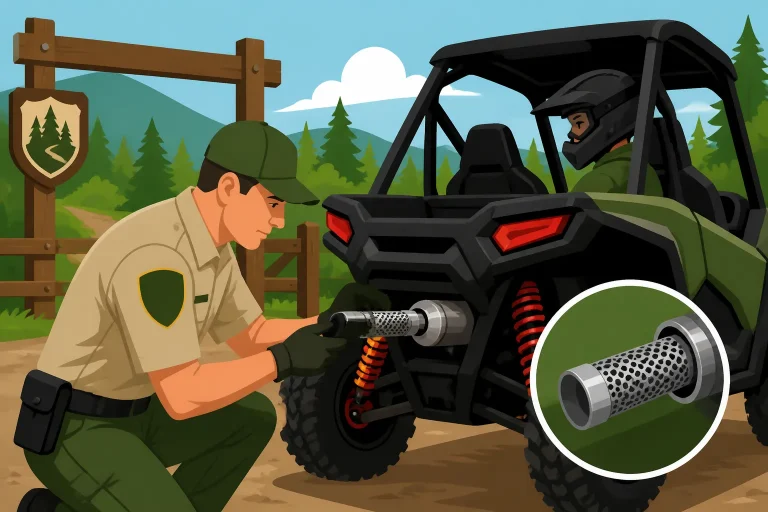
Noise and exhaust rules deserve an early check. A park may set a sound limit, inspect machines at entry or reject equipment that does not meet its policy. It may also require a spark arrester or another exhaust-related feature. Do not rely on a modification’s marketing description; ask what the park actually checks and how it measures compliance. More detail is available in Spark Arrestor Checks at a Park Gate and Sound Testing Before a Park Lets You In.
Other questions to ask include:
- Are there separate routes for different vehicle types or rider skill levels?
- Are passengers allowed, and what restraints or age rules apply?
- Are there speed limits, one-way sections or passing restrictions?
- Is riding after dark allowed, and what lighting is required?
- Can the park close a route because of mud, erosion, weather or maintenance?
- Does a machine need a working muffler, a particular exhaust setup or a visible number?
- Are fuel cans, tools or recovery equipment restricted at the riding area?
Rules can change by route or event. A UTV may be accepted for a wide main loop but excluded from narrow single-track. A youth machine may be permitted only in a designated area. A park may temporarily close a route after heavy rain to prevent damage. Confirm the details for the visit you have booked, rather than relying on an old map, a friend’s memory or a post about a previous season.
Property conduct, guests and everyday restrictions
The waiver is only one part of the park’s rules. The operator may have a separate handbook, posted signs or instructions that apply once you are on the property. These rules are not small print to ignore: they may cover where you can ride, how fast you can travel, where you can park, and what you must do when staff close a route.
Speed limits and riding direction deserve special attention. A trail that looks empty may have blind corners, hikers, workers or riders approaching from the other direction. Follow signs and staff directions even if you know the route. A posted speed limit is not a suggestion based on ideal conditions; slow down further when visibility is poor, the surface is loose or other users are nearby. Review Speed Limits Inside a Private Riding Park before setting expectations for your group.
Ask about guests who are not riding. A spectator may need to sign a release, check in or stay in a designated area. Children who are too young to operate a machine may still be subject to supervision requirements. A person who arrives separately may need to complete paperwork before entering. Do not assume that one rider’s reservation covers everyone in the truck or trailer.
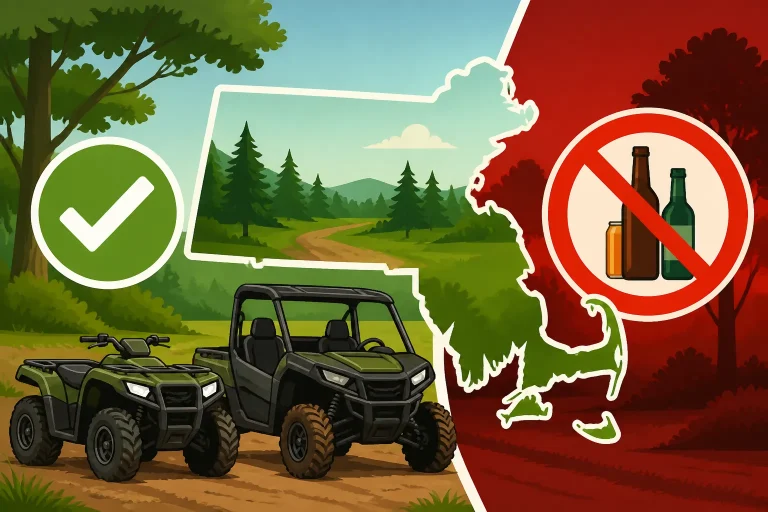
Alcohol and other impairing substances are a major safety concern around off-highway vehicles. Parks may prohibit possession or consumption in riding areas, prohibit riding after drinking, or set rules for alcohol at campsites and events. Find out the policy before bringing anything to the property, and do not ride while impaired. A private park’s rules do not reduce the danger to the rider, passengers or other visitors. See Massachusetts Private Park Alcohol Rules for a closer look at park policies.
Other conduct rules may cover:
- Staying on marked routes and avoiding closed or private sections.
- Yielding to other trail users and stopping when directed.
- Keeping a safe following distance and avoiding reckless riding.
- No wheelies, racing or riding under another person’s machine.
- No littering, dumping fluids, cutting vegetation or damaging property.
- Keeping machines out of buildings, swimming areas and pedestrian zones.
- Reporting a collision, injury, spill or property damage promptly.
- Keeping children and pets away from moving machines and active trails.
A park may hold a rider responsible for damage to its property or equipment. If the waiver or admission terms mention deposits, damage charges or responsibility for a recovery, ask how those provisions work before riding. Find out who evaluates damage, how it is documented and whom to contact if you disagree with a charge. Damage Deposits at a Private Riding Park covers another point worth checking in advance.
Respect staff instructions even if the written rules are not immediately available. Ask for a copy or a photo of the relevant sign if there is a disagreement. Do not turn a check-in dispute into an argument beside a busy trail entrance. If the park will not clarify a restriction, the safer choice is to stay off the affected route until you have an answer.
Camping, pets, noise and weather policies
Some parks allow camping, but that does not mean every admission pass includes an overnight stay. Camping may require a separate reservation, a designated site or a different waiver. Confirm whether you can camp with your machine, whether a trailer may remain at the site, and whether the riding area is open during the hours you plan to use it. Ask about quiet hours, generators, fires, waste disposal and the location of restrooms. See Massachusetts Private Park Camping Rules and Massachusetts Private Park Quiet Hours.
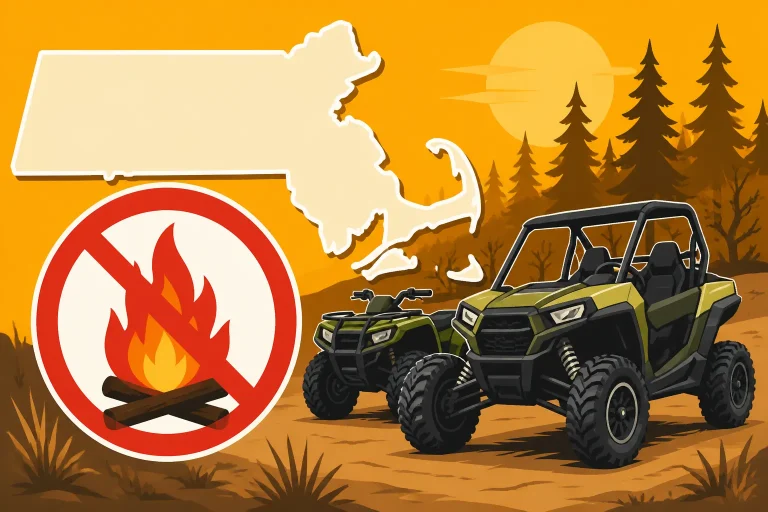
A campground’s rules can be stricter than the riding-area rules. The park may limit generator use, prohibit certain fires or require machines to be parked in a specific place overnight. If fire restrictions are in effect, follow the park’s current direction rather than relying on a rule from a previous visit. Bring only what the operator permits, and keep fuel storage and cooking equipment away from hot parts, sleeping areas and ignition sources.
Pets are another item to confirm rather than assume. A facility may allow dogs in some areas but prohibit them on trails, at events or in particular campsites. It may require a leash, proof of control or a cleanup plan. A dog loose near active machines can be at risk and can distract riders. Check Massachusetts Private Park Pet Rules before bringing a pet, and be prepared to leave the animal at home if the policy is unclear.
Noise can affect nearby residents, campers and other visitors. Follow quiet hours, avoid unnecessary revving in the parking area and do not idle a loud machine beside campsites. If the facility performs a sound check, arrive with the machine in the configuration you intend to ride. Removing or changing exhaust components after passing inspection may violate the park’s conditions and increase noise.
Weather and trail conditions can change access. Heavy rain, standing water, thawing ground or a storm may lead a park to close routes, delay opening or cancel an event. Riding a closed route can damage the property and may result in removal from the facility. Ask how the park announces closures and whether it offers a credit, reschedule or refund when conditions change. Do not assume that a reservation guarantees that every route will be open. For more on that issue, see Refunds When Rain Closes a Riding Park.
Bring a realistic plan for changing conditions. A route that was manageable in dry weather may become slippery or rutted after rain. Leave space in the schedule to stop, turn back or choose an easier route. Avoid pushing a group to continue just because you have paid for admission or traveled a long distance. If the park closes a trail, treat the closure as final unless staff reopen it.
For overnight stays, confirm the practical details too: check-in and check-out times, parking for the tow vehicle, trailer location, food storage, drinking-water availability and whether cell service is limited. Facilities differ, so do not assume a campsite has power, water or a place to store gear. If you need an accessible site or have a medical concern, discuss it with the operator before booking.
Plan your visit and deal with a problem calmly
A short call or email before departure can prevent a wasted trip. Give the park the details that affect access: machine type, approximate width, number and ages of riders, whether anyone will be a passenger, and whether you intend to camp. Ask about documents, required equipment, noise checks, route closures and check-in times. A general question such as “Can I ride there?” may not reveal a restriction that applies to your particular machine.
Use this checklist before leaving:
- Confirm the operating day, hours, reservation and admission process.
- Check current Massachusetts registration requirements for your machine and situation.
- Ask which documents the park wants at check-in.
- Read the waiver and park rules before arriving, especially for minors and passengers.
- Confirm age, supervision, helmet and other safety conditions.
- Verify machine width, sound, exhaust and route restrictions.
- Ask about weather closures, refunds, camping, pets and guests.
- Inspect the machine and pack the safety gear the park requires.
- Save the park’s contact information and directions, including a paper backup if service may be limited.
- On arrival, check posted notices and listen for any change in conditions.
Keep essential documents together and easy to reach. Store a copy of the waiver and confirmation on your phone, but do not depend only on a phone if service or battery power may be unreliable. If the park asks for a physical document or identification, have it available. Make sure everyone in your group knows where to check in and what to do if separated.
If a staff member refuses entry, stay calm and ask which requirement is not met. It could be a missing document, an age policy, a sound issue, a route restriction or a temporary closure. Ask whether there is a permitted alternative, such as leaving a passenger behind or using a different route. Do not try to ride around a gate or enter through an unstaffed access point. If you believe the decision conflicts with information you received, keep a record of the conversation and follow up with the operator later.
If someone is hurt or a collision occurs, stop riding and make the area as safe as you can without putting yourself in danger. Notify park staff promptly and follow emergency instructions. Document what happened, including the location, time, people involved and any damage. Do not move an injured person unless there is an immediate danger requiring it. The park may have an incident-report process; ask for a copy or confirmation that your report was received.
If the dispute involves an injury, damage charge, waiver or denial of access, preserve relevant paperwork and communications. A park employee’s explanation can help clarify a policy, but it is not a substitute for professional advice about a significant legal or insurance issue. Read any incident form before signing and ask for clarification if a statement does not accurately describe what happened.
A good visit depends on more than getting through the gate. Make sure the machine fits the routes, every rider understands the rules, and your group is willing to adapt if conditions change. Private parks can offer organized riding opportunities, but the operator’s permission is limited to the property and conditions it controls. Verify the details, ride within your ability and leave the trail in a condition the next group can use.
Disclaimer
This article is for general informational purposes only and does not constitute professional advice. Laws, prices and regulations vary by location and change over time. Consult a qualified professional for guidance on your specific situation.